
iTechGuides is reader-supported. When you buy through links on our site, we may earn an affiliate commission. As an Amazon Associate I earn from qualifying purchases. Learn more
An on-call week can affect sleep, focus, and plans even when you receive no pages. The possibility of being interrupted can keep you alert, make you think ahead to a call, or limit what you feel able to do. That makes on-call fatigue a work-design and recovery issue—not simply a matter of personal resilience.
Why a quiet on-call week can still leave you exhausted
Being on call means staying available for possible work, often outside normal hours. Even without a call, you may be listening for an alert, worrying about missing one, or holding off on plans in case you are needed. A quiet phone does not necessarily mean an uninterrupted night or a genuinely off-duty evening.
A 2020 online survey of 228 on-call workers across multiple professions found that 56% said their sleep was affected on on-call nights when they received no calls. In the same sample, 80% reported sleeping fewer than seven hours per night while on call. These are self-reports from the surveyed respondents, not estimates for every occupation or rotation. The study, “What Factors Influence the Sleep of On-call Workers?”, also asked about concerns that can persist before an alert arrives:
- 70% reported ruminating about interruptions to family or leisure time.
- 69% worried about missing a call.
- 69% reported preplanning in case of a call.
- 67% cited not being able to make plans.
Those percentages describe questionnaire responses in this Australian sample. They do not show that on-call work caused any particular respondent’s sleep problems, nor do they establish how common the same experience is in other groups.
#1 Best Overall

- Easily Stay On Track & Make The Most Of Your Time: ZICOTOs’ daily planner makes it easier than ever for you to stay organized, reduce stress & enjoy more free time! Arrange your schedule, priorities, to do’s and jot down plans & ideas on the daily notes section
- Smartly Plan Ahead & Boost Your Productivity: Absolutely clever & efficient! With the planner notebook you can break down your daily tasks into half-hourly focus blocks and map out priorities & follow-up duties to keep your day on track and enhance productivity
- Plenty Of Space For Efficient Planning: Stay focused & manage your time wisely! The 9.3x6.3” (inner pages) work planner & organizer notebook offers ample space for 80 days of life-changing planning with each day being spread across 2 pages - set yourself up for purposeful days
- Now Is The Best Time To Start: The daily planner is undated so you can start to add structure to your schedule and cultivate new planning habits right away! Beat procrastination, boost happiness & make each day count with the hourly planner
- Adds Beauty To Daily Planning: A gorgeous terracotta cover, chic gold foil letters, a golden ring wire and a clean, easy-to-use layout - enjoy the gorgeous and modern design of the undated daily planner!
What interrupted sleep and fatigue can do
Some sleep is still useful
A 2016 review of at-home on-call work concluded that getting some sleep during an on-call period remains a good strategy, even if sleep is interrupted or lower in quality. It may not be as restorative as an uninterrupted night, and waking can bring temporary performance impairment. The review also noted that field evidence about real-world effects and countermeasures was limited. Read the review on on-call sleep.
A separate 2016 systematic review identified eight eligible studies of at-home on-call work. All examined sleep; the authors found that sleep quantity appeared adversely affected and sleep quality was affected in most studies. Only one study examined stress physiology, which was too little evidence for meaningful conclusions about that outcome. Read the systematic review.
Rank #2

- A Tool for Empowerment — Use your time in the most productive way possible with this large daily planner notebook. Proactively set your agenda to stay focused and avoid distractions. This notebook planner combines your work and personal life into an effective structure
- Stay On Top of the Details — Take control of your workday. Manage your schedule by the hour with this daily to do planner. Make your task list, record follow up contacts and jot down general notes in the designated spaces of this undated planner or use this as a project planner for organization
- Your Personal Life Matters — Rest is equally as important as work. Block off time for social events, meditation and power naps with this daily organizer planner. Achieve your goals and have fun with your friends and family. Who says you can't do it all?
- Built to Take on the Go — This appointment planner for work is made of 120gsm double-sided paper. The sturdy cover withstands heavy use as you take it from the office to the gym. Know exactly where you left off with the built-in sash, and get straight to business no matter where you are
- Support Your Go-Getter Lifestyle — Whether you're a university student or a small business owner, this daily work planner helps you spend your time wisely. Schedule client meetings, brainstorm marketing ideas and check off your to-do list with these daily planners to keep you on track
Fatigue can affect safety-relevant abilities
NIOSH says fatigue can slow reaction time and reduce attention, concentration, short-term memory, and judgment. The degree of impairment varies; these effects are risks to consider, not a prediction that every tired worker will experience all of them. NIOSH’s fatigue guidance treats reducing fatigue risk as a shared responsibility for employers and workers.
Quick wins for a faster PC:
Fix the driver behind crashes, sound loss and screen glitchesFind Drivers →Clear out junk files and repair common Windows errorsFree Scan →Scan for outdated or missing drivers - takes under a minuteDriver Scan →One example of why population labels matter: a 2022 survey of 164 US neurointerventionalists found that 54% reported burnout, 39% having fallen asleep at the wheel, 23% a motor-vehicle crash or near-crash, and 34% fatigue-related medical errors. These are self-reports from a specialized physician group; they should not be presented as rates among on-call workers generally. Read the neurointerventionalist survey.
Rank #3

- Undated and Flexible – Start using this planner any day of the year without wasting a single page. Whether you're goal-setting in January or regrouping mid-year, it adjusts to your flow. Great for students, professionals, or anyone building routines on their own terms.
- Two-Page Daily Layout – Each day is thoughtfully spread across two pages with space to plan hourly schedules, set priorities, check off to-dos, and jot down ideas. It’s a layout that gives you room to breathe, reflect, and take action – one day at a time.
- Hourly Scheduling Made Easy – Use the dedicated time-blocking column to structure your entire day, from early meetings to evening workouts. Ideal for time-sensitive goals, appointment tracking, and productivity planning without digital distractions.
- Clean and Spacious Design – Includes clearly marked spaces for priorities, task checklists, notes, and follow-ups. The open layout keeps you visually organized so you can focus on what matters, without flipping back and forth or feeling boxed in.
- Thick Paper, Elegant Finish – Features 100gsm paper that resists bleed-through, paired with soft pinstripes and a sturdy gold spiral binding. A pleasure to write on and beautiful enough to leave out on your desk or bring on the go.
How to assess whether an on-call rotation is workable
There is no single rotation design established as best. When reviewing a schedule or raising a concern, look beyond page counts and consider the full pattern of availability, interruption, and recovery:
- Call burden: How often are you assigned standby, and how often does it lead to contact or a call-in?
- Interruption pattern: At what times do calls arrive? How long do they last? Are there repeated awakenings, and does work extend beyond the scheduled shift?
- Recovery opportunity: Is there protected sleep or off-duty time after interrupted sleep or work? Are rest breaks possible?
- Coverage and backup: Is there a second responder or escalation path, or does one person carry every event?
- Risk on waking: Must you make safety-critical decisions immediately after waking? Is there a transition or backup arrangement?
These questions are practical ways to examine factors discussed in research and fatigue guidance, not a ranking of rotation models. The evidence does not establish one schedule as universally safe or ideal.
Rank #4
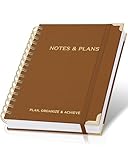
- Easily Stay On Track & Make The Most Of Your Time: ZICOTOs’ daily planner makes it easier than ever for you to stay organized, reduce stress & enjoy more free time! Arrange your schedule, priorities, to do’s and jot down plans & ideas on the daily notes section
- Smartly Plan Ahead & Boost Your Productivity: Absolutely clever & efficient! With the planner notebook you can break down your daily tasks into half-hourly focus blocks and map out priorities & follow-up duties to keep your day on track and enhance productivity
- Plenty Of Space For Efficient Planning: Stay focused & manage your time wisely! The 8.4x6.1” work planner & organizer notebook offers ample space for 105 days of life-changing planning with each day being spread across 2 pages - set yourself up for purposeful days
- Now Is The Best Time To Start: The daily planner is undated so you can start to add structure to your schedule and cultivate new planning habits right away! Beat procrastination, boost happiness & make each day count with the hourly planner
- Adds Beauty To Daily Planning: A gorgeous camel linen cover, chic golden letters, a gold ring wire and a clean, easy-to-use layout, elastic band - enjoy the lovely and modern design of the undated daily planner!
What workers and managers can do
For workers: protect recovery where you can
When the schedule allows, give yourself enough time to sleep after a shift. NIOSH also recommends a sleep space that is dark, comfortable, quiet, and cool. Those conditions may support sleep, including daytime sleep after a call, but they cannot remove the strain of anticipating alerts or compensate for repeated interruptions. See NIOSH’s sleep and work guidance.
Recommended Free Tools
Do not block, mute, or otherwise risk missing an emergency alert to create a quieter sleep environment. Any changes to notification settings should preserve the response requirements of your role.
Best Value

- ACTIVITY LOG NOTEPAD FOR WORK – Structured activity log book and time log designed as a work log and task tracker with expanded tracking space
- TRACK WORK WITHOUT RELYING ON MEMORY – Use this work log, time log, and task tracker to maintain detailed workflow records and accountability
- TIME TRACKING LOG FOR WORK, PROJECTS & CLIENT TASKS – Track workflow and tasks using a structured productivity planner and task tracker format It also works as an activity log notebook, call log notepad, time tracker notebook, and employee activity log for detailed work records.
- ANALOG TIME TRACKING THAT WORKS – Written tracking improves recall, reduces errors, and increases execution accuracy
- STRUCTURED TIME & TASK LOGGING SYSTEM – Organized layout provides clear tracking for workflow, tasks, and time entries
For managers and organizations: treat fatigue as a work-design issue
Consider whether coverage is predictable, backup is available, recovery can be protected after interrupted sleep, and workers have a way to report fatigue or unsafe readiness. NIOSH’s 2020 guidance for nurses, managers, and other healthcare workers during crises discusses planning for seven or more hours of sleep, recovery time as needed, rest breaks, and protected time between shifts. That is crisis-focused healthcare guidance—not a universal scheduling rule for every occupation. Read the NIOSH guidance for healthcare workers during crises.
Its authors describe fatigue management as a shared responsibility: planning should protect workers and patients while helping organizations sustain services during public-health crises. The broader takeaway is that an individual sleep routine cannot substitute for reasonable coverage and recovery arrangements.
How much recovery time should you get after an overnight call?
The sources here do not establish one recovery interval that applies to every job, call, or jurisdiction. The relevant questions include how much sleep was lost, whether work continued after the call, the next shift’s demands, and whether the role requires safety-critical decisions. Workers and managers should use applicable workplace policies and requirements and address fitness for duty when fatigue could make work unsafe, rather than treating a single number as universal.
Quick Recap
Product prices and availability are accurate as of the date/time indicated and are subject to change. Any price and availability information displayed on Amazon at the time of purchase will apply.

