
The Tool Desk
Outbyte PC Repair FREERepair Windows errors before they cause bigger problemsFix Now →Outbyte Driver Updater FREEFix the driver behind crashes, sound loss and screen glitchesFind Drivers →iTechGuides is reader-supported. When you buy through links on our site, we may earn an affiliate commission. As an Amazon Associate I earn from qualifying purchases. Learn more
To reverse a standard CPU case fan’s airflow, remove it, turn it around so it faces the opposite way, and reinstall it. Turning the fan is a physical change, not a setting. Before you flip it, confirm which direction it is meant to blow, because the fan’s own markings and the manufacturer’s guidance are the reliable reference.
Why a standard fan can’t be reversed in software
A standard case fan pushes air in the direction its blades are angled to move it. Fan speed is controlled through the motherboard or a fan controller, but that control only changes how fast the blades spin, not which way air moves. If you want intake where the fan currently exhausts, the fan has to be reoriented. Manufacturer guidance used for this article describes direction changes only through physical orientation or through fans designed with reverse blades.
Step 1: Identify the fan’s intended airflow direction
Look at the fan frame before you touch anything. Corsair states that its fans carry arrows showing both blade rotation and airflow direction, though the arrows’ location varies by product series. Corsair’s guide on reading fan direction explains how to find them.
Do these 3 things before closing this tab:
1Clear out junk files and repair common Windows errors2Fix the driver behind crashes, sound loss and screen glitches3Repair Windows errors before they cause bigger problemsNoctua uses a different visual cue. Its guidance states that with the circular Noctua logo sticker facing you, air moves toward you. For an intake fan, the sticker faces into the case; for an exhaust fan, it faces outward. Noctua’s airflow direction FAQ covers this rule.
#1 Best Overall
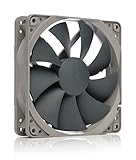
- High performance cooling fan, 120x120x25 mm, 12V, 4-pin PWM, max. 1700 RPM, max. 25.1 dB(A), >150,000 h MTTF
- Renowned NF-P12 high-end 120x25mm 12V fan, more than 100 awards and recommendations from international computer hardware websites and magazines, hundreds of thousands of satisfied users
- Pressure-optimised blade design with outstanding quietness of operation: high static pressure and strong CFM for air-based CPU coolers, water cooling radiators or low-noise chassis ventilation
- 1700rpm 4-pin PWM version with excellent balance of performance and quietness, supports automatic motherboard speed control (powerful airflow when required, virtually silent at idle)
- Streamlined redux edition: proven Noctua quality at an attractive price point, wide range of optional accessories (anti-vibration mounts, S-ATA adaptors, y-splitters, extension cables, etc.)
Use the arrows or the model’s documentation first. Do not rely on a general “support strut side” convention alone. Thermaltake describes an orientation convention in its chassis airflow guide but excludes its SWAFAN reversible-blade models from it, so unusual or reverse designs need their own documentation.
Step 2: Reorient a standard fan
- Shut down the PC, switch off the power supply, and unplug the cable. Working on components with power connected risks both damage and injury.
- Disconnect the fan’s cable from the motherboard header or fan hub if it blocks access to the mounting screws.
- Remove the screws that hold the fan to the chassis or radiator bracket. Support the fan so it does not drop, and keep the screws in a labeled container.
- Turn the fan around so the arrows, or the logo side for Noctua, now point the way you want air to move. Make sure the fan is seated with the frame flush against the mount.
- Reinstall the screws finger-tight first, then tighten them evenly. Overtightening can crack plastic frames.
- Reconnect the fan cable to the same header it used before, then power on the PC.
- Check that the fan spins and that the airflow matches your plan. In a case where the other fans are intake, a reversed fan should now exhaust, and the reverse applies as well.
The steps above are standard assembly practice rather than a procedure documented in the manufacturer sources. The manufacturer sources establish how to identify direction and how fan orientation determines airflow.
Rank #2

- 【Perfect Match】The PC fan can be used not only as a case fan, but is also suitable for use with a cpu cooler to create a cooling effect together, which can take away the dry heat from the case and the high temperature generated by the CPU in operation, allowing for maximum cooling; Ideal for cases, radiators and CPU coolers.
- [Excellent LED light] The high-brightness LED atomizing argb fan blade can effectively reflect the light, making the ARGB lighting effect softer, and it matches the cooler and case more perfectly. Up to 17 modes of light effects with ARGB support, color can be managed and synchronized through the port on motherboard.
- 【High Performance Cooling Fan】 Automatic speed control of the motherboard through the 4PIN PWM fan cable interface, which can determine the speed according to the temperature of the motherboard, with a maximum speed of 1550RPM. Configured with up to 55cm of cable for PWM series control of fans, ideal for cases and CPU coolers.
- 【Silent Fan Size】 Model: TL-C12C-S X3, Size: 120*120*25mm, Speed: 1550RPM±10%, Noise ≤ 25.6dBA Connector: 4pin pwm, Current: 0.20A, Air Pressure: 1.53mm H2O, Air Flow: 66.17CFM, Higher air flow for improved cooling performance.
- 【Quality Bearings】The carefully developed quality S-FDB bearings solve the problem of pc cooling fan blade shaking in lifting mode, keeping fan noise to a minimum while providing maximum cooling performance when needed and extending the life of the fan.
Reverse-blade fans: a different option
Some fans are built to move air in the opposite direction while keeping the preferred face visible from the front. These are purpose-designed products, not a regular fan turned around. Two examples appear in manufacturer documentation:
- Thermaltake SWAFAN GT: The installation guide describes standard and reverse blade choices, and the blade set can be replaced. This is blade replacement within a specific model, so the capability does not apply to ordinary fans. Thermaltake’s SWAFAN GT installation guide shows the exact procedure.
- Sharkoon SHARK MIRROR RGB PWM REVERSE: Sharkoon’s product document describes a reverse fan edition of the SHARK MIRROR RGB PWM. Sharkoon’s SHARK MIRROR RGB PWM product document lists the details.
Before buying a reverse-blade model, check its airflow arrows, dimensions, mounting pattern, and connector type against your case and existing fans.
Rank #3

- 【High Performance Cooling Fan】 Automatic speed control of the motherboard through the 4PIN PWM fan cable interface, which can determine the speed according to the temperature of the motherboard, with a maximum speed of 1550RPM. Configured with up to 55cm of cable for PWM series control of fans, ideal for cases and CPU coolers.
- 【Quality Bearings】The carefully developed quality S-FDB bearings solve the problem of pc cooling fan blade shaking in lifting mode, keeping fan noise to a minimum while providing maximum cooling performance when needed and extending the life of the fan.
- 【Vibration reduction and low noise】 The case fan is equipped with four soft material silicone corner pads on all four sides, which can reduce the vibration and friction caused by the rotation of the fan, perfectly reducing noise and allowing low noise operation, so that cooling can be carried out in low noise.
- 【Silent Fan Size】 Model: TL-C12C X3, Size: 120*120*25mm, Speed: 1550RPM, Noise 25.6dBA Connector: 4pin pwm, Current: 0.20A, Air Pressure: 1.53mm H2O, Air Flow: 66.17CFM, Higher air flow for improved cooling performance.
- 【Perfect Match】The PC fan can be used not only as a case fan, but is also suitable for use with a cpu cooler to create a cooling effect together, which can take away the dry heat from the case and the high temperature generated by the CPU in operation, allowing for maximum cooling; Ideal for cases, radiators and CPU coolers.
Comparing the two approaches
| Factor | Reorient an existing standard fan | Buy a reverse-blade fan |
|---|---|---|
| Cost | No purchase needed | Requires buying a new fan |
| Visible side | The fan’s face turns with the airflow | Can keep the preferred face visible while reversing airflow |
| Installation compatibility | Same fan, same mounting | Confirm size, mounting, and connector |
| Direction documentation | Arrows and manufacturer guidance on the existing fan | Product manual and arrows for that model |
| Performance difference | Not stated by the sources reviewed | Not stated by the sources reviewed |
The manufacturer sources reviewed do not include comparative performance testing, so this comparison covers practical trade-offs only. Layout decisions also depend on your case and environment, as Thermaltake notes: “It is important to note that this is a generalized guide and everyone’s environment is different, some results may vary.” (Thermaltake Technology, chassis airflow guide, dated May 9, 2024.) Check the current version of the guide, since the date is more than two years old.
Quick Recap
Best Value

- HIGH STATIC PRESSURE: Efficient even with resistance – the generated airflow easily penetrates dense radiators, narrow perforated panels and mesh structures and ensures reliable cooling
- PWM CONTROL WITH WIDE SPEED RANGE: The speed can be progressively adjusted up to 3000 rpm via the 4-pin PWM connection – the fan stops completely at less than 5% PWM
- PRECISE MANUFACTURING FOR MAXIMUM SMOOTH RUNNING: Minimal gaps, automatic balancing and high-precision measurement noticeably reduce vibrations – for quiet, efficient and long-lasting performance
- SMOOTH-RUNNING FLUID DYNAMIC BEARING (FDB): The self-lubricating bearing minimizes noise during operation – ideal for quiet, efficient cooling and a long, reliable service life
- NEW FAN BLADE DESIGN FOR MORE PERFORMANCE: The redesigned rotor blades offer an optimal balance of performance and low noise – especially efficient at low speeds
Rank #4

- 【High Performance Cooling Fan】 Automatic speed control of the motherboard through the 4PIN PWM fan cable interface, which can determine the speed according to the temperature of the motherboard, with a maximum speed of 1550RPM. Configured with up to 55cm of cable for PWM series control of fans, ideal for cases and CPU coolers.
- 【Quality Bearings】The carefully developed quality S-FDB bearings solve the problem of pc cooling fan blade shaking in lifting mode, keeping fan noise to a minimum while providing maximum cooling performance when needed and extending the life of the fan.
- [Excellent LED light] The high-brightness LED atomizing argb fan blade can effectively reflect the light, making the ARGB lighting effect softer, and it matches the cooler and case more perfectly. Up to 17 modes of light effects with ARGB support, color can be managed and synchronized through the port on motherboard.
- 【Silent Fan Size】 Model: TL-C12C-S X5, Size: 120*120*25mm, Speed: 1550RPM±10%, Noise ≤ 25.6dBA Connector: 4pin pwm, Current: 0.20A, Air Pressure: 1.53mm H2O, Air Flow: 66.17CFM, Higher air flow for improved cooling performance.
- 【Perfect Match】The PC fan can be used not only as a case fan, but is also suitable for use with a cpu cooler to create a cooling effect together, which can take away the dry heat from the case and the high temperature generated by the CPU in operation, allowing for maximum cooling; Ideal for cases, radiators and CPU coolers.
Verify the result after reinstalling
- Confirm the fan spins at the expected speed in your BIOS or fan monitoring software.
- Check that the arrows on the fan frame point in the direction you intended.
- Watch the case temperatures under load and adjust the layout if they change unexpectedly.
Product prices and availability are accurate as of the date/time indicated and are subject to change. Any price and availability information displayed on Amazon at the time of purchase will apply.

