
Test a wireless network adapter in stages: check whether Windows detects it, verify its driver and radio state, see whether it can find the expected Wi-Fi network, and then test whether it can reach the router. This sequence helps distinguish a Windows or adapter problem from an access-point or internet-service problem; no single software check can prove that the card is physically defective.
Before changing anything, record what is happening
Note the exact symptom and when it occurs: for example, Wi-Fi is missing, a network does not appear, connection fails during sign-in, or Wi-Fi drops after sleep. Record recent changes such as a Windows or driver update, BIOS or firmware change, or a move to a different network. Also check whether another device can see or use the same Wi-Fi network.
Microsoft’s Windows Client wireless troubleshooting guidance recommends collecting baseline information and noting the reproduction time before resetting the network stack, deleting wireless profiles, removing a driver, or restarting. Those actions can change behavior or remove useful evidence.
Check whether Windows detects the adapter
- Right-click Start and open Device Manager.
- Expand Network adapters and look for the wireless adapter. Its name may include a manufacturer or model name, or terms such as Wireless or Wi-Fi.
- Open the adapter’s context menu. If Enable device is available, select it. If the device is already enabled, open Properties and check the device status on the General tab.
- Check the laptop’s physical wireless switch or function-key control, if it has one, and confirm that Airplane mode is off.
If the wireless adapter is absent from Device Manager, Windows is not detecting it. That finding alone does not prove the card has failed: radio controls, firmware or BIOS settings, a driver problem, or a recent system change may also be involved. Follow the computer maker’s guidance for its hardware and drivers. Microsoft explains this distinction in its Wi-Fi troubleshooting guidance.
What’s actually slowing this PC down?
Pick the symptom - the matching free tool is one click away.
#1 Best Overall
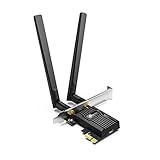
- 𝐍𝐞𝐱𝐭 𝐆𝐞𝐧 𝐖𝐢𝐅𝐈 𝟔 - Reach incredible speeds up to 2.4 Gbps (2402 Mbps in 5 GHz or 574 Mbps on 2.4 GHz) with ultra-low latency and uninterrupted connectivity using Wi-Fi 6 technologies¹
- 𝐌𝐢𝐧𝐢𝐦𝐢𝐳𝐞𝐝 𝐋𝐚𝐠 𝐟𝐨𝐫 𝐘𝐨𝐮𝐫 𝐏𝐂 - The networking card is equipped with OFDMA and MU-MIMO technology to reduce lag so you can enjoy ultra-responsive real-time gaming, or an immersive VR experience on even the busiest networks
- 𝐁𝐫𝐨𝐚𝐝𝐞𝐫 𝐑𝐚𝐧𝐠𝐞 - 2 powerful signal-boost, high-gain antennas greatly inrease range for a smoother online gaming experience in further away distances
- 𝐁𝐥𝐮𝐞𝐭𝐨𝐨𝐭𝐡 𝟓.𝟐 𝐟𝐨𝐫 𝐆𝐫𝐞𝐚𝐭𝐞𝐫 𝐒𝐩𝐞𝐞𝐝 𝐚𝐧𝐝 𝐑𝐚𝐧𝐠𝐞 - Equipped with the latest Bluetooth technology, Archer TX55E achieves 2x faster speeds and 4x broader coverage compared to Bluetooth 4.2 so you can connect your favorite devices such as game controllers, headphones, and keyboards for the ultimate setup.²
- 𝐂𝐮𝐭𝐭𝐢𝐧𝐠 𝐄𝐝𝐠𝐞 𝐖𝐏𝐀𝟑 - Protector your network with the latest WPA3 security protocol so your information transmitted via the wireless adapter is secure from hackers³
Record the adapter and driver details
In Device Manager, open the wireless adapter’s Properties and select the Driver tab. Record the adapter name, driver provider, version, and date. If Windows reports a problem code, write that down too. You may also find adapter details under Settings > Network & internet > Wi-Fi > Hardware properties, depending on the Windows version and device.
Compare the driver information with the computer manufacturer’s recommendations. For an Intel adapter, Intel documents how to identify the adapter and driver version in its adapter and driver identification guide. For an OEM computer or another adapter brand, use that computer or adapter maker’s support instructions rather than assuming an Intel driver applies.
Rank #2

- Fast 1300Mbps USB WiFi Adapter - Nineplus wifi adapter provides long-range and stable wifi connections,Upgrade your desktop or laptop wifi Technology with our AC1300Mbps usb wireless Adapter. Whether your desktop pc's wifi usb is malfunctioning or you’re looking to upgrade to faster dual-band 5GHz and 2.4GHz speeds, this pc wifi adapter is the ideal choice. It’s a budget-friendly way to extend your device’s life and experience the benefits of modern WiFi technology
- Dual-band 5.8GHz and 2.4GHz Bands - 5.8Ghz wifi Connection speed up to 867Mbps,2.4GHz 400Mbps,With these upgraded speeds, web surfing, gaming, and streaming online meeting is much more enjoyable without buffering or interruptions,Experience the High Wi-Fi speed of our AC1300Mbps wifi dongle delivers faster internet speeds and stronger, more reliable signal penetration over long distances. It's a high-speed dual-band wifi usb adapter for pc and easy for the modern user.
- Two 5dBi High Gain Wifi Antenna – The high gain antenna of the desktop wifi adapter greatly enhances the reception and transmission of WiFi signal strengths.Equipped with dual high-gain pc wifi antenna, our wifi dongle for desktop pc ensures accurate capture of WiFi signals, providing a stable and strong connection even at greater distances, ideal for overcoming poor signal issues in bedrooms. This computer wifi adapter, wifi card, and usb wifi antenna extend your coverage.
- Super Speed USB 3.0 - wifi adapter for desktop pc Connect speeds Up to 10x faster than USB 2.0 USB, Super USB3.0 delivers faster data transfer, a more reliable network connection, and improved compatibility for wifi adapter for pc. It fully supports the high-speed demands of AC1300 wireless adapter, ensuring peak performance. Plus, it's backward compatible with standard USB 2.0 ports for added flexibility.usb wifi adapter for desktop pc 3.0
- Compatibility Systems: This Wi-Fi usb adapter is compatible with Windows11/10/8.1/8/7/XP,not supports Mac OS or Chromebook or Linux. Most Windows 11/10 systems will automatically detect and install the drivers. If the system does not detect the driver, you will need to download it from our website. For Windows 7, you will need to manually install the driver for this wifi card.or you go to the website online-setup support,we do online-setup for you.
Inspect Windows’ Wi-Fi state from Command Prompt
Open Command Prompt as administrator and run these commands one at a time:
netsh wlan show drivers
netsh wlan show interfaces
netsh wlan show networks mode=bssid
netsh wlan show profiles
netsh wlan show driversreports driver details and capabilities, including supported radio types.netsh wlan show interfacesreports the wireless interface’s current state, such as whether it is connected.netsh wlan show networks mode=bssidscans visible networks and can show their BSSIDs, signal strength, channels, and radio types.netsh wlan show profileslists saved wireless profiles. It can help establish whether a profile exists, but does not by itself prove that the password or authentication is valid.
If the network you expect is missing from the scan, check that the radio is on and compare the network’s band with the adapter’s supported bands. Confirm WLAN AutoConfig is running, and check whether another device can see the same network. A network that other devices also cannot see points toward the access point or its configuration rather than establishing an adapter fault.
Rank #3

- 𝐖𝐢-𝐅𝐢 𝟔 𝐓𝐞𝐜𝐡𝐧𝐨𝐥𝐨𝐠𝐲 Powered by Intel: The latest Wi-Fi 6 standard gives you incredible speed ultra-low latency and uninterrupted connectivity with OFDMA and MU-MIMO technology Utilizing next-generation Wi-Fi 6 technology Archer TX3000E is designed to excel in even the busiest of networks for next-level entertainment
- 𝐍𝐞𝐱𝐭-𝐠𝐞𝐧 𝐬𝐩𝐞𝐞𝐝𝐬 up to 2.4Gbps: Reach incredible speeds up to 2.4 Gbps (2402 Mbps on 5 GHz or 574 Mbps on 2 4 GHz) - Supports Windows 11, 10 (64bit) - Driver installation required via Website or included CD
- 𝐌𝐢𝐧𝐢𝐦𝐢𝐳𝐞𝐝 𝐥𝐚𝐠 for your PC: Revolutionary OFDMA reduces lag so you can enjoy ultra-responsive real-time gaming or an immersive VR experience
- 𝐁𝐫𝐨𝐚𝐝𝐞𝐫 𝐂𝐨𝐯𝐞𝐫𝐚𝐠𝐞: Two multi-directional and high-performance antennas with a magnetized base extends your existing Wi-Fi reception capabilities. Place the magnetized antenna base anywhere on your desktop to find the optimal location for signal reception. Easily install with low profile bracket.
- 𝐁𝐥𝐮𝐞𝐭𝐨𝐨𝐭𝐡 𝟓.𝟑 𝐟𝐨𝐫 𝐆𝐫𝐞𝐚𝐭𝐞𝐫 𝐒𝐩𝐞𝐞𝐝𝐬 𝐚𝐧𝐝 𝐂𝐨𝐯𝐞𝐫𝐚𝐠𝐞: Archer TX3000E is equipped with the latest Bluetooth 5.3 Technology achieving 2x faster speeds and 4x broader coverage than Bluetooth 4.2. Connect as many devices as you want including game controllers headphones and keyboards for the ultimate setup
Use the WLAN report to investigate failures and drops
Run this additional command from the elevated Command Prompt:
netsh wlan show wlanreportWindows creates an HTML wireless network report. Open the report at the file location shown in the command output. It includes adapter and driver information, capabilities, session successes and failures, disconnect reasons, event times, and diagnostic command output. Microsoft says the report covers the last three days; see Analyze the wireless network report.
Rank #4
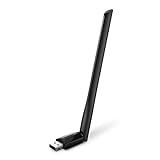
- 𝐋𝐨𝐧𝐠 𝐑𝐚𝐧𝐠𝐞 𝐀𝐝𝐚𝐩𝐭𝐞𝐫 – This compact USB Wi-Fi adapter provides long-range and lag-free connections wherever you are. Upgrade your PCs or laptops to 802.11ac standards which are three times faster than wireless N speeds.
- 𝐒𝐦𝐨𝐨𝐭𝐡 𝐋𝐚𝐠 𝐅𝐫𝐞𝐞 𝐂𝐨𝐧𝐧𝐞𝐜𝐭𝐢𝐨𝐧𝐬 – Get Wi-Fi speeds up to 200 Mbps on the 2.4 GHz band and up to 433 Mbps on the 5 GHz band for upgraded web surfing, gaming, and streaming. Performance varies by conditions, distance to devices, and obstacles such as walls.
- 𝐃𝐮𝐚𝐥-𝐛𝐚𝐧𝐝 𝟐.𝟒 𝐆𝐇𝐳 𝐚𝐧𝐝 𝟓 𝐆𝐇𝐳 𝐁𝐚𝐧𝐝𝐬 – Dual-bands provide flexible connectivity, giving your devices access to the latest routers for faster speeds and extended range. Wireless Security - WEP, WPA/WPA2, WPA-PSK/WPA2-PSK
- 𝟓𝐝𝐁𝐢 𝐇𝐢𝐠𝐡 𝐆𝐚𝐢𝐧 𝐀𝐧𝐭𝐞𝐧𝐧𝐚 – The high gain antenna of the Archer T2U Plus greatly enhances the reception and transmission of WiFi signal strengths.
- 𝐀𝐝𝐣𝐮𝐬𝐭𝐚𝐛𝐥𝐞, 𝐌𝐮𝐥𝐭𝐢-𝐃𝐢𝐫𝐞𝐜𝐭𝐢𝐨𝐧𝐚𝐥 𝐀𝐧𝐭𝐞𝐧𝐧𝐚: Rotate the multi-directional antenna to face your router to improve your experience and performance
Use the event times to match a failure to what you observed. If connection or authentication fails, inspect the failure details and the WLAN AutoConfig operational log; enterprise Wi-Fi may also require an administrator to check network policy or 802.1X authentication. If the connection drops, correlate the report’s disconnect reasons with signal conditions, roaming, driver details, and access-point logs. A reported disconnect does not identify the failing component by itself: the client driver, radio conditions, access point, or network configuration may be responsible.
Independent reader supportYour contribution helps us test, update, and keep practical guides available for everyone.Test the connection to the router separately from the internet
- Run
ipconfigin Command Prompt and find the wireless interface’s Default Gateway address. - Run
ping <default-gateway-address>, replacing the text in angle brackets with that address. For example, useping 192.168.1.1only if that is the gateway shown on your PC.
Replies indicate that the PC can reach its Wi-Fi router at that moment. They do not prove that the router has internet access. If the gateway responds but websites or apps do not work, check another device and investigate the modem, ISP, DNS, proxy, firewall, or affected app. If the gateway does not respond, first confirm that the PC is associated with Wi-Fi; then compare another client and inspect the router or access point. A failed ping alone is not proof of a bad adapter, since network settings or router behavior can also affect replies. Microsoft describes the gateway check in its Wi-Fi troubleshooting guidance.
Best Value

- Wireless Standards: IEEE 802.11n/g/b. RTL8192EU Chipset, 2.4GHz Enhanced 300Mbps Wireless data transmission rate,wide range and ultra speed.
- Wide Compatibility: Perfect for PC Laptop Desktop, Support Windows 11/10/8.1/8/7/XP/Vista, Mac OS 10.4-10.8 (not work for Mac OS 10.9-10.15), Linux. (Note: It does NOT work for anyTelevision)
- Plug-and-Play for Windows 10/11: No need to install drivers for Windows 10 and Windows 11! You can simply insert this wifi adapter to get connected, the indicator light is flashing means works well.
- Internal Antenna & Save Space: The internal omni-directional antenna for increased coverage and stability, easy to carry and no space occupation with mini size.
- Driver CD included, if you need the driver download link, please ContactUs by click "LOTEKOO Direct" on the product page. (Note: NOT work forTV devices)
Interpret the results by symptom
| Result | What it establishes | Next checks |
|---|---|---|
| Adapter is missing from Device Manager | Windows is not detecting the adapter; this does not establish physical failure. | Check radio controls, BIOS or firmware settings, recent changes, and the computer maker’s driver and hardware guidance. |
| Adapter appears with a problem code or driver issue | Windows detects the device but reports a status or driver problem. | Record the code and driver version and date; compare with the computer or adapter maker’s supported driver. Review the WLAN report for adapter and driver details. |
| Adapter appears, but the expected network is not visible | The adapter is detected, but the scan has not found that network. | Check radio state, supported bands, WLAN AutoConfig, and whether another device sees the network. |
| Network appears, but connection or authentication fails | The network is visible; the failure occurs during connection or authentication. | Check the WLAN report, WLAN AutoConfig operational log, saved profile, network policy, and authentication method. For enterprise Wi-Fi, ask the network administrator to investigate authentication. |
| Wi-Fi connects and then drops | The adapter can connect, but the session is not staying up. | Correlate report timestamps and disconnect reasons with signal conditions, roaming, driver details, and access-point logs. |
| Gateway responds, but internet access fails | The PC can reach the router at that moment; internet service is not established by this test. | Check another device and investigate the modem, ISP, IP or DHCP configuration, DNS, proxy, firewall, or app. |
Make changes only after capturing the baseline
Start with low-impact checks: confirm Wi-Fi is on and Airplane mode is off, try another available band or network, and review the adapter’s driver details. If you plan to uninstall a driver, first make sure you have a suitable replacement driver available. Resetting network settings, removing saved profiles, uninstalling a driver, or restarting can alter the state you were trying to diagnose, so treat those as troubleshooting actions—not as the first test.
What a software test can—and cannot—prove
Windows checks can establish whether the device is detected, what status and driver it reports, whether networks are visible, what connection events occurred, and whether the PC can reach its local gateway. They cannot, on their own, conclusively establish physical card failure or certify maximum Wi-Fi throughput. There is no universal pass/fail signal or speed threshold that applies across adapters, access points, bands, distances, and environments.
If you compare adapters, keep the PC, router, location, band, test time, and workload as consistent as possible. Compare whether Windows detects each device, supported bands, network visibility, connection stability, gateway latency or packet loss, and throughput if measured. These are comparison measures, not a manufacturer-independent pass standard. Trying another computer or a USB Wi-Fi adapter can help isolate the problem, but a working comparison device does not identify the exact failed component or prove the original card is defective.
Quick Recap
Product prices and availability are accurate as of the date/time indicated and are subject to change. Any price and availability information displayed on Amazon at the time of purchase will apply.
The Tool Desk
Outbyte Driver Updater FREEScan for outdated or missing drivers - takes under a minuteDriver Scan →Outbyte PC Repair FREERepair Windows errors before they cause bigger problemsFix Now →
