
For an in-place upgrade that keeps your existing Windows installation, Rufus’s USB-media bypass is not the right route. Rufus says its bypass applies when you boot from Rufus-created media; for an in-place upgrade launched from Windows, its FAQ points to the registry value AllowUpgradesWithUnsupportedTPMOrCPU. This is a third-party-documented workaround, not a Microsoft-supported fix. Microsoft warns that installing Windows 11 on hardware that misses minimum requirements can leave the PC unsupported and without guaranteed updates.
This article updates the title’s 2025 framing: Windows 10 support ended on October 14, 2025. The guidance below reflects Microsoft and Rufus documentation available as of October 8, 2026.
Registry or Rufus: which route fits your goal?
| Your goal or situation | Better-matched route | Important distinction |
|---|---|---|
| Upgrade from within Windows and try to keep the existing installation, apps, and settings | Registry route documented by Rufus | Rufus says its media bypass does not apply when you run setup.exe from within Windows. The registry value it identifies is AllowUpgradesWithUnsupportedTPMOrCPU. This does not make the PC supported by Microsoft. |
| Boot from USB and perform a clean installation | Rufus-created bootable media | Rufus’s bypass applies to setup checks when booting from the media. A clean install is not an in-place upgrade and may not preserve your apps or existing setup. |
| You have not confirmed why Windows 11 setup says the PC is incompatible | Check eligibility and firmware settings first | Use PC Health Check or Windows Update and identify the specific failed requirement before considering a bypass. |
| The processor may lack a feature required by the Windows 11 release you want | Check the CPU and target release; consider supported hardware or OS options | Rufus documentation says its bypasses do not overcome the PopCnt and SSE4.2 processor-feature limits it describes for Windows 11 24H2. |
Rufus describes itself as a tool for creating bootable media. Its FAQ distinguishes booting from that media from mounting an ISO and running setup.exe inside Windows. For the latter, the FAQ names AllowUpgradesWithUnsupportedTPMOrCPU as the registry route: Rufus FAQ on Windows 11 requirements.
Check the exact incompatibility before bypassing anything
A warning can reflect a requirement that is disabled in firmware, a missing hardware capability, or a processor that is not on Microsoft’s supported list. Those cases are not interchangeable. Microsoft recommends using PC Health Check or Windows Update to check eligibility. Its minimum requirements include:
What’s actually slowing this PC down?
Pick the symptom - the matching free tool is one click away.
#1 Best Overall

- What You Get - 2 pack 64GB genuine USB 2.0 flash drives, 12-month warranty and lifetime friendly customer service
- Great for All Ages and Purposes – the thumb drives are suitable for storing digital data for school, business or daily usage. Apply to data storage of music, photos, movies and other files
- Easy to Use - Plug and play USB memory stick, no need to install any software. Support Windows 7 / 8 / 10 / Vista / XP / Unix / 2000 / ME / NT Linux and Mac OS, compatible with USB 2.0 and 1.1 ports
- Convenient Design - 360°metal swivel cap with matt surface and ring designed zip drive can protect USB connector, avoid to leave your fingerprint and easily attach to your key chain to avoid from losing and for easy carrying
- Brand Yourself - Brand the flash drive with your company's name and provide company's overview, policies, etc. to the newly joined employees or your customers
- A compatible processor; the approved CPU list and the specific PC configuration matter.
- At least 4 GB of RAM and 64 GB of storage. These are minimum specifications, not recommendations for good performance.
- UEFI firmware that is Secure Boot capable, and TPM 2.0.
- DirectX 12-compatible graphics with a WDDM 2.0 driver.
See Microsoft’s current Windows 11 specifications and requirements. If the PC appears to have TPM 2.0 or Secure Boot capability but setup reports a problem, check the manufacturer’s documentation and firmware settings before deciding the machine needs a bypass.
What the registry route does—and what it does not
For an in-place upgrade, Rufus’s FAQ points readers to the registry value AllowUpgradesWithUnsupportedTPMOrCPU. This is a workaround documented by the Rufus project, not a remedy that Microsoft endorses as a way to satisfy Windows 11 requirements. The FAQ identifies the value but does not mean it overrides every hardware or processor limitation.
Rank #2

- High-speed USB 3.0 performance of up to 150MB/s(1) [(1) Write to drive up to 15x faster than standard USB 2.0 drives (4MB/s); varies by drive capacity. Up to 150MB/s read speed. USB 3.0 port required. Based on internal testing; performance may be lower depending on host device, usage conditions, and other factors; 1MB=1,000,000 bytes]
- Transfer a full-length movie in less than 30 seconds(2) [(2) Based on 1.2GB MPEG-4 video transfer with USB 3.0 host device. Results may vary based on host device, file attributes and other factors]
- Transfer to drive up to 15 times faster than standard USB 2.0 drives(1)
- Sleek, durable metal casing
- Easy-to-use password protection for your private files(3) [(3)Password protection uses 128-bit AES encryption and is supported by Windows 7, Windows 8, Windows 10, and Mac OS X v10.9+; Software download required for Mac, visit the SanDisk SecureAccess support page]
Because registry instructions and Windows setup behavior can change, consult the current Rufus FAQ before making a registry change. If you proceed, back up important files first and take care to follow the current instructions exactly; an incorrect registry edit can cause problems. A bypass can get past some setup checks, but it cannot add missing hardware capabilities or guarantee that the resulting installation will work reliably.
When Rufus media is appropriate
Use Rufus-created media when your goal is to boot from a USB drive and run an installation that way. Rufus says its bypass is applied during checks when a PC boots from media it created. It specifically says the bypass does not apply when you mount an ISO and launch setup.exe from inside Windows.
The Tool Desk
Outbyte Driver Updater FREEScan for outdated or missing drivers - takes under a minuteDriver Scan →Outbyte PC Repair FREERepair Windows errors before they cause bigger problemsFix Now →Rank #3
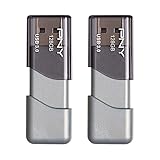
- The durable, light-weight design of the Turbo Attaché 3 USB 3.0 Flash Drive is the essential mobile storage solution
- Perfect for transferring large files such as movies, videos, photos, music & documents
- Transfer speeds up to 10 times faster than standard USB 2.0 flash drives
- Convenient sliding collar, and cap-less design protects your content when not in use
- Compatible with most PC and Mac laptop and desktop computers with USB 3.0 ports
That makes Rufus media a different installation path, not a USB-based shortcut for an in-place upgrade. A clean installation may not retain your existing apps and setup, so do not choose it on the assumption that it will preserve everything. Rufus’s scope and the distinction between these paths are described in its project FAQ.
Some processor limits cannot be bypassed
Not every compatibility failure is merely a setup check. Rufus documentation says Windows 11 24H2 has processor-feature requirements involving PopCnt and SSE4.2, and a processor lacking those features cannot install that release. Rufus’s bypasses do not overcome that limit. This is version-sensitive project guidance; verify the exact processor and intended Windows 11 release in the current documentation before acting: Rufus FAQ on Windows 11 24H2.
Rank #4

- Compact plug-and-stay design to instantly add storage to your laptop, game console, in-car audio, and more
- Save time with ultra-fast transfer speeds up to 400MB/s (Based on read speed. 1 MB/s = 1 million bytes per second. Based on internal testing; performance may vary depending upon host device, usage conditions, drive capacity, and other factors. USB 3.0 port required.)
- Transfer a full-length movie to the drive in less than 30 seconds (Based on 1.2GB MPEG-4 video transfer with USB 3.2 Gen 1 or USB 3.0 host device.)
- Get space for your high-resolution photos, videos, and more at a great value with up to 128GB of storage (1GB=1,000,000,000 bytes. Actual user storage less.)
- Password-protect files using a downloadable software (Password protection uses 128-bit AES encryption and is supported by Windows 10+ and macOS v10.9+ (Software download required, see Password Protection page on SanDisk site).)
Understand the unsupported-installation risk
Microsoft says installing Windows 11 on a PC that does not meet the minimum requirements is not recommended. Such a device may have compatibility problems, is not supported by Microsoft, and is not guaranteed to receive updates. A registry value or Rufus media does not change that status. Microsoft also cautions that proceeding without checking eligibility could leave a system unsupported: Ways to install Windows 11.
Before choosing a bypass, weigh the value of keeping the current PC against the possibility of software, driver, or update problems. If you depend on the computer for important work, a supported Windows 11 device—or another supported operating-system option—may be a more dependable choice than relying on unsupported hardware.
Best Value

- Lightweight and convenient: Lexar JumpDrive A30E (USB Type-A) boasts a slim, portable design for easy device compatibility; lightweight at 7.41 g
- Transfer speeds up to 100 MB/s: 10x faster than standard USB 2.0 drives; Based on internal testing, performance may vary depending upon the host device, interface, and usage conditions
- Wide compatibility: Compatible with tablets, laptops, Macs, and traditional Type-A devices, no software installation required; Reliably stores photos, videos & files
- Compact: Features a push-button retractor and a lanyard loop for on-the-go use
- Enhanced security: Lexar DataShield protects files, easily creates a password-protected safe with auto-encryption; Files deleted from the safe are securely erased and can't be recovered
What Windows 10 users should do now
Windows 10 support ended on October 14, 2025. Microsoft says PCs continue to function, but standard technical support, feature updates, and security updates have ended. Depending on eligibility and location, consumers may have applicable Extended Security Updates options; terms and availability should be checked with Microsoft. Microsoft also identifies upgrading to Windows 11 when eligible or replacing the PC with a supported device as options. See Microsoft’s Windows 10 end-of-support information.
Quick Recap
Product prices and availability are accurate as of the date/time indicated and are subject to change. Any price and availability information displayed on Amazon at the time of purchase will apply.

