
The RTX 6000 Ada Generation has substantially higher published peak compute throughput and memory bandwidth than the RTX A6000, while both cards offer 48 GB of ECC memory and a 300 W maximum power rating. That makes Ada the stronger specification-sheet choice for workloads that can use its newer architecture—but it does not guarantee a fixed speedup in rendering, AI, or any specific application. Your software, system fit, multi-GPU needs, and verified purchase price can change the better buy.
RTX 6000 Ada vs RTX A6000 specs
These are different generations of NVIDIA workstation GPU: the RTX A6000 is based on Ampere, while the RTX 6000 Ada Generation uses Ada Lovelace. Use the full “RTX 6000 Ada Generation” name when comparing models; “RTX 6000” alone can be ambiguous.
| # | Preview | Product | Price | |
|---|---|---|---|---|
| 1 |

|
PNY NVIDIA RTX 6000 ADA | $7,996.96 | Buy on Amazon |
| 2 |

|
PNY RTXA6000 Ada Lovelace 48GB GDDR6 Graphics Card | $8,399.96 | Buy on Amazon |
| 3 |

|
NV Frame RTX 6000 ADA GEN 48GB GDDR6 384BITS PNY VCNRTX6000ADA-PB Video Card | $8,399.96 | Buy on Amazon |
| 4 |
|
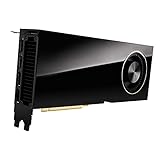
PNY VCNRTXA6000-PB NVIDIA 48GB GDDR6 Graphics Card | $6,169.96 | Buy on Amazon |
| Specification | NVIDIA RTX A6000 | NVIDIA RTX 6000 Ada Generation |
|---|---|---|
| Architecture | Ampere | Ada Lovelace |
| CUDA cores | 10,752 | 18,176 |
| Peak FP32 performance | 38.7 TFLOPS | 91.1 TFLOPS |
| Memory | 48 GB GDDR6 with ECC | 48 GB GDDR6 with ECC |
| Memory bandwidth | 768 GB/s | 960 GB/s |
| Maximum board power | 300 W | 300 W |
| Form factor and cooling | Dual-slot, active; 4.4 × 10.5 in | Dual-slot, active; 4.4 × 10.5 in |
| PCIe interface | PCIe Gen 4 x16 | PCIe Gen 4 x16 |
| NVLink | Listed by NVIDIA | Not shown in the cited NVIDIA quick specifications |
The CUDA-core, FP32, and bandwidth figures are manufacturer specifications from NVIDIA’s Ada GPU Architecture In-Depth white paper, not application benchmark results. The memory, power, physical, and interface specifications come from NVIDIA’s RTX A6000 product page and RTX 6000 Ada Generation product page.
What the specification gap means in practice
Compute throughput
NVIDIA lists 18,176 CUDA cores and 91.1 FP32 TFLOPS for the RTX 6000 Ada Generation, compared with 10,752 CUDA cores and 38.7 FP32 TFLOPS for the RTX A6000. These are peak specification values; they do not translate into a predictable multiplier for every rendering, viewport, simulation, or AI task. Actual results depend on the application, workload, software support, and system configuration.
Recommended Free Tools
#1 Best Overall
- VCNRTX6000ADA-PB
Memory capacity and bandwidth
Both cards provide 48 GB of GDDR6 memory with error-correcting code (ECC). If a project fits in the usable memory of either card, capacity alone does not distinguish them. Ada’s listed 960 GB/s bandwidth is higher than the A6000’s 768 GB/s, which can matter in bandwidth-sensitive work, but it does not establish a universal application speedup.
Power and physical fit
Both product pages list 300 W maximum power and a dual-slot, actively cooled design. The listed dimensions are 4.4 × 10.5 inches, but check the dimensions and power connectors for the exact card you plan to buy. A compatible slot is not enough: the workstation also needs suitable power cabling, clearance, and airflow.
Rank #2
- 48GB, GDDR6 Graphics Card
- Memory Clock: 960GB/s
- PCI Express 4.0 interface
- 3 years manufacturers warranty
- Chipset: NVIDIA
Which is better for rendering or AI?
The RTX 6000 Ada Generation is the more compelling starting point when your rendering or AI software supports it and can benefit from its newer architecture, higher published peak compute figures, or greater memory bandwidth. Both cards’ 48 GB ECC memory may be equally important when the key requirement is fitting a large scene, model, or dataset into GPU memory.
NVIDIA’s Ada product page presents comparisons covering graphics, rendering, generative AI, Omniverse, inference, and training. NVIDIA identifies the RTX 6000 Ada, RTX A6000, and an Intel Core i9-12900K as test hardware and qualifies the results: “Performance testing with RTX 6000 Ada Generation and RTX A6000 GPUs and Intel Core i9-12900K. Performance subject to change.” Those are NVIDIA’s own tests, not independent lab results; the cited page does not establish reproducible methodology details for every chart or current coverage of every application version. Treat the charts as vendor evidence and check benchmarks for your exact workload before assigning a specific performance gain.
PC Slower Than It Used to Be?
A free scan shows the junk files, broken settings and background clutter dragging Windows down - then fixes them in one click.Free scan · Windows 10 & 11Outdated Drivers Are Slowing You Down
One free scan finds every outdated or missing driver and matches the right update for your exact hardware.Free scan · exact hardware matchRank #3
- NV FRAME RTX 6000 ADA GEN 48GB GDDR6 384BITS PNY VCNRTX6000ADA-PB VIDEO CARD
Is RTX 6000 Ada worth it over RTX A6000?
It can be worth choosing Ada when your workload benefits from the newer generation and the verified price difference fits your budget. The specification advantage is clear, but the material available here does not establish current street prices, inventory, used-card condition, or warranty differences. Compare live offers for the exact card, seller, condition, and warranty rather than assuming either model is currently the better value.
- Favor RTX 6000 Ada Generation if you need a 48 GB workstation GPU and your software can use its generation-specific capabilities or higher published throughput.
- Keep RTX A6000 in consideration if it already fits your compatible system or workflow, its listed NVLink support matters to your configuration, or you find a compelling verified price.
- Benchmark before committing when the purchase depends on a particular renderer, AI framework, driver, or project size. Peak TFLOPS alone cannot settle that decision.
Multi-GPU, software, and workstation compatibility
NVIDIA explicitly lists NVLink support for the RTX A6000. The cited RTX 6000 Ada quick specifications do not list NVLink, so do not assume the two cards offer the same GPU interconnect. If your design depends on linked GPUs, verify the official documentation for the exact card and platform before purchasing; multi-GPU software behavior and memory pooling should also be confirmed for the intended application.
Rank #4
- Memory: 48GB, GDDR6
- PCI Express x16 4.0 interface
- Maximum resolution: 7680 x 4320 pixels
- Ports: 4 x DisplayPorts
- Backed by a 3 years manufacturers warranty
NVIDIA’s product pages describe vGPU support, but their listed details differ. For a virtualized deployment, confirm the applicable licensing, driver, and software requirements in current NVIDIA documentation rather than treating support as interchangeable between models.
Quick Recap
Pre-purchase checks
- Confirm the exact model and SKU. Distinguish RTX 6000 Ada Generation from RTX A6000 and verify the dimensions and power connectors of the specific card.
- Check the workstation. Confirm PCIe Gen 4 x16 availability, an open dual-slot position, physical clearance, sufficient power delivery, and adequate airflow. Check the workstation vendor’s qualification list where applicable.
- Validate your software stack. Check application, driver, operating-system, and framework support for the card and the features your workload needs.
- Verify special deployment requirements. For NVLink, virtualization, or a multi-GPU build, confirm current official platform documentation and licensing for the exact configuration.
- Compare real purchase terms. Check current price, stock, seller, card condition, and warranty for both models. NVIDIA directs prospective Ada buyers to design and visualization partners, but availability and terms depend on the seller.
Product prices and availability are accurate as of the date/time indicated and are subject to change. Any price and availability information displayed on Amazon at the time of purchase will apply.

