
Quick wins for a faster PC:
Scan for outdated or missing drivers - takes under a minuteDriver Scan →Repair Windows errors before they cause bigger problemsFix Now →For basic browsing, documents, and online video, Microsoft’s general guidance is at least 4 GB of RAM; it recommends 8 GB for longer-term use and 16 GB or more for photo or video editing and other high-performance projects. Those are broad guidelines, not guarantees: the right amount depends on the apps and tasks you run at the same time. Upgrading can help when memory capacity is the bottleneck, but it will not make every PC or task faster.
How much RAM do you need?
RAM is the fast working memory a computer uses for active apps and files. Storage, such as an SSD or hard drive, keeps data when the PC is off. Microsoft explains that RAM is faster than disks and that more memory can let a device do more at once without slowdowns.
Microsoft’s current general guidance gives these starting points:
| Use case | Microsoft’s general guidance | How to apply it |
|---|---|---|
| Basic web browsing, documents, or online video | At least 4 GB | A baseline for basic use, not a promise that every set of apps will feel smooth. |
| Longer-term everyday use | 8 GB recommended | A more practical target for keeping ordinary work available over time. |
| Photo or video editing, or other high-performance projects | 16 GB or more may suit these tasks | Choose based on the specific apps and projects; demanding work may call for more. |
These figures are Microsoft’s product guidance, not results from a benchmark or a survey of users. They do not account for every program, file size, or combination of apps. If you commonly keep many browser tabs, documents, or demanding applications open together, judge your needs by that simultaneous workload rather than by the lightest task you perform.
The Tool Desk
Outbyte PC Repair FREEClear out junk files and repair common Windows errorsFree Scan →Outbyte Driver Updater FREEScan for outdated or missing drivers - takes under a minuteDriver Scan →#1 Best Overall
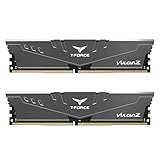
- Simple design to perfectly protect the cooling module with high thermal conductive adhesive
- Supports Intel & AMD motherboards
- Selected high-quality IC
- Supports XMP2.0
- Energy saving with ultra-low working voltage
Does the Windows 11 minimum mean 4 GB is enough?
No. Microsoft lists 4 GB as the minimum RAM requirement for installing Windows 11. A minimum requirement establishes a threshold for the operating system; it does not say that the amount is adequate for all apps or workloads. Microsoft also notes that some features, apps, and hardware may require more than the minimum.
Copilot+ PCs have a separate published minimum hardware requirement of 16 GB DDR5 or LPDDR5 memory. That requirement applies to Copilot+ PCs, not to every Windows computer. Check the requirements for the particular feature or software you want to use instead of treating one Windows figure as a universal recommendation.
Rank #2

- [Color] PCB color may vary (black or green) depending on production batch. Quality and performance remain consistent across all Timetec products.
- DDR3L / DDR3 1600MHz PC3L-12800 / PC3-12800 240-Pin Unbuffered Non-ECC 1.35V / 1.5V CL11 Dual Rank 2Rx8 based 512x8
- Module Size: 16GB KIT(2x8GB Modules) Package: 2x8GB ; JEDEC standard 1.35V, this is a dual voltage piece and can operate at 1.35V or 1.5V
- For DDR3 Desktop Compatible with Intel and AMD CPU, Not for Laptop
- Guaranteed Lifetime warranty from Purchase Date and Free technical support based on United States
Will adding RAM speed up your PC?
It can help when your current memory capacity limits the work you are doing. With more RAM, a PC may be able to keep more active work available without slowdowns. Microsoft Support summarizes the relationship this way: “The more memory a device has, the more it can do at the same time without slowdowns in performance.”
That is a capacity benefit, not a guarantee that every task will run faster. If the slow feeling is not caused by a memory constraint, adding RAM may not address it. Microsoft’s guidance does not provide measured speed gains for a particular PC or task, so no specific improvement can be promised without knowing the machine and workload.
Rank #3

- Requires overclocking/BIOS adjustments. Maximum speed and performance depends on system components, including motherboard and CPU.
- G.SKILL RipjawsV Series DDR4 U-DIMM Memory Kit, Model: F4-3200C16D-16GVKB
- Non-ECC, DDR4 U-DIMM, 288-pin, for Desktop PC & Gaming
- Includes JEDEC default profile, and Intel XMP memory overclock profile
- Do not mix memory kits. Memory kits are sold in matched kits that are designed to run together as a set. Mixing memory kits will result in stability issues or system failure.
Should you upgrade your RAM?
Consider an upgrade if your regular workload feels constrained and your PC supports a compatible memory upgrade. Do not buy a kit based only on the computer’s total RAM or the Windows minimum: the right part and configuration depend on the particular device.
- Identify the workload. Note which apps you use together and whether those sessions are where the PC slows down.
- Confirm upgrade support. Check the PC maker’s documentation or contact the maker or a reliable retailer. Some PCs have upgrade options; others may not.
- Verify the specifications. For your exact model, confirm supported memory type, form factor, maximum capacity, and configuration before choosing a compatible RAM upgrade kit for PC.
- Compare the likely benefit with the limitation. An upgrade is relevant when memory capacity is constraining active work. It is not a general remedy for slowdowns unrelated to RAM.
No particular RAM kit or capacity can be recommended for an unspecified computer. Machine-specific support and compatibility must be established before selecting a product.
Quick Recap
What to remember about RAM requirements
- Microsoft’s general guidance is 4 GB for basic browsing, documents, or online video; 8 GB for longer-term use; and 16 GB or more for editing or other high-performance projects.
- Windows 11’s 4 GB figure is an installation minimum, not a workload recommendation; Copilot+ PCs have a distinct 16 GB DDR5/LPDDR5 minimum.
- More RAM can help when memory capacity limits what you are doing at once, but it is not a guaranteed speed boost.
- Before buying, confirm that the exact PC can be upgraded and check its memory specifications.
Sources
- Microsoft Support: All about computer memory
- Microsoft: Windows 11 specifications and system requirements
Product prices and availability are accurate as of the date/time indicated and are subject to change. Any price and availability information displayed on Amazon at the time of purchase will apply.

