
Outdated Drivers Are Slowing You Down
One free scan finds every outdated or missing driver and matches the right update for your exact hardware.Free scan · exact hardware matchWindows Errors? Fix Them Before They Spread
Repair common Windows errors and clear accumulated junk for a smoother, more stable PC - no reinstall needed.Free scan · no reinstallGen Z is not uniformly gullible, and being comfortable with technology does not guarantee skill at judging whether a claim is true. Misinformation can reach young people through social conversations and feeds, then seem plausible because of what they already know, feel, or believe. Research points to an interaction between those social and psychological factors, individual differences in analytical thinking, and the platforms where information appears—not one explanation that applies to everyone.
What does the evidence say about Gen Z and misinformation?
The strongest direct evidence in this area describes how some young people encounter and interpret information; it does not establish what share of Gen Z believes false claims. Broader studies compare adults by age or examine participants across age groups, so their findings should not be treated as proof of a fixed generational trait.
| Evidence | What it found | What it does—and does not—show |
|---|---|---|
| Hassoun and colleagues’ 2023 qualitative study of 35 Gen Z participants from across the United States | Participants often encountered information rather than setting out to search for it, and interpreted it in social contexts. | It offers insight into information practices, not a representative estimate of how often Gen Z believes misinformation. Study publication record. |
| OECD Truth Quest Survey, administered in January and February 2024 across 21 countries | Adults aged 18–24 were 25 percentage points more likely than adults aged 65 and older to source information from social media. The younger group generally reported greater trust in information than the older group, while social media was the least trusted source overall. | These are age-group comparisons about sources and reported trust, not a measure proving that young adults are more gullible or worse at spotting falsehoods. OECD report. |
| Sultan and colleagues’ 2024 meta-analysis of 31 experiments | Across 256,337 choices made by 11,561 US-based participants, older age and higher analytical thinking were associated with better discrimination between true and false news. | This is an association in experimental judgments, not proof of a single cause or a ranking of entire generations worldwide. Meta-analysis record. |
The studies measure different things: social information practices, reported source use and trust, and judgments in experiments. Combining them does not produce a single score for how susceptible Gen Z is.
Why can a false claim seem believable?
People do not evaluate every post by retrieving facts and checking them against a complete record. A claim’s gist—its broad meaning—can feel plausible when it fits a person’s knowledge, experience, emotions, or ideology. A 2024 review of misinformation across the lifespan explains this through fuzzy-trace theory: people retain both details and a general sense of what information means, and that general sense can shape judgment.
Quick wins for a faster PC:
Clear out junk files and repair common Windows errorsFree Scan →Scan for outdated or missing drivers - takes under a minuteDriver Scan →#1 Best Overall

- TURN MONEY LESSONS INTO AN ADVENTURE – With My First Little Business game, kids become young entrepreneurs, start small businesses, and race to earn the most income and win!
- PRESSURE-FREE MONEY EDUCATION FOR KIDS – This money game for kids ages 8-12 introduces them to earning, spending, saving, investing, and decision-making in a fun, hands-on way that feels like a game, not a lesson.
- BUILD SMART THINKING & PLANNING SKILLS – In this educational game for kids 8-12, players make choices, manage money, strategize, and think ahead as they move around the board.
- GROW YOUR BUSINESS TO WIN – Start small, buy business tools and licenses, seize opportunities, and overcome challenges to succeed — just like in the real world.
- EVERYTHING YOU NEED TO PLAY – This money learning game includes a game board, 12 business license cards, 52 business tool cards, 4 social media page cards, 18 event cards, 4 character pieces, pretend money for kids, and 1 die.
This helps explain why more facts alone may not settle a disagreement. A person may remember the broad implication of a claim, connect it to an experience, or trust the person sharing it, even when the supporting details are weak. The review cautions that “Content knowledge is not sufficient to protect against misinformation”; thinking style and scrutiny also matter. That is a framework for understanding influences on belief, not a rule that any one influence determines what someone accepts. Edelson and colleagues’ 2024 review.
How do social feeds and peers shape what young people see?
Information can arrive incidentally: a friend shares a clip, a post appears in a feed, or a claim becomes part of a group conversation. In the 2023 study of 35 Gen Z participants, information evaluation was socially situated; the researchers put it this way: “For them, information processing is fundamentally a social practice.” That finding helps explain why deciding whether something is credible may involve a group’s shared context and trust, not just an individual checking a source alone.
Rank #2
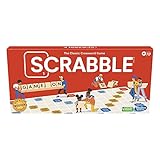
- CLASSIC CROSSWORD GAME: Get family and friends together for a fun game night with the Scrabble board game! Put letters together, build words, and earn the most points to win
- WOODEN TILES AND RACKS: This edition of the Scrabble game features 100 wooden letter tiles and wooden tile racks. The textured gameboard helps tiles stay on the board
- RACK UP THE POINTS: Scrabble letters are worth points, and premium squares on the gameboard multiply the score. Surprise opponents with 2-letter words, challenge their choices, and strategize to win
- GAME FOR 2-4 PLAYERS: Go for classic Scrabble gameplay in a head-to-head face-off, or mix things up and play in teams. The game guide offers expert tips, and other ways to play this classic word game
- FUN FAMILY GAME: Do you remember playing Scrabble when you were a kid? Introduce this fun game to your kids and grandkids! Connect over a classic board game and create memories for generations to come
Recommendation systems and engagement features can influence which material appears and how people encounter it. The developmental review discusses how algorithms designed around social goals may contribute to misinformation exposure. The APA has also reported expert concern that likes, push notifications, autoplay, and recommendations may exploit adolescent vulnerabilities. These are reasons to consider platform design as part of the environment, not evidence that an algorithm by itself causes a person to believe a claim. APA’s 2024 media-literacy discussion.
Broad claims about platform effects need care. A 2024 review in Nature argues that average exposure to false and inflammatory material is often low and that exposure can be concentrated among a narrower group with strong motivation to seek such content. Its analysis concerns online populations broadly and does not settle exposure on every platform or among every group of young people. It does, however, caution against explaining misinformation primarily through the idea that everyone is routinely shown large amounts of it by an algorithm. Budak and colleagues’ review.
Rank #3

- 🎓 Educational & Fun for All Ages: Dive into financial freedom with "Paycheck to Billionaire," a strategic board game that imparts skills in cost management and smart investing from startup to empire. Ideal for family game nights and educational play, this game is engaging for adults and kids ages 8 and up. 🌟
- 🎲 Interactive Family Game Time: Bring excitement to your family gatherings and game nights with this engaging board game that offers a fun way to learn about economics without the complexity of bankruptcy or monopoly rules. Ideal for kids, teens, and adults. 🎉
- 🎉 Perfect Party Game: Light up the party with "Paycheck to Billionaire," where young entrepreneurs aged 8-12 and older can strategize and compete to build their business empire. It's a hit at parties, fostering lively interaction and competitive spirit. 🏆
- 🍎 Teacher’s Educational Pick: A must-have for educational environments, this game allows teachers to introduce financial concepts and critical thinking skills in a fun, interactive manner. It's an excellent tool for classrooms and homeschool settings, encouraging students to engage with real-world economic strategies. 📚
- 🎁 Perfect for Building Business Mind: "Paycheck to Billionaire" is the ideal gift for minds keen on entrepreneurship. This engaging board game offers a fun and educational pathway to understanding business and finance, making it a superb choice for nurturing future business leaders during family game nights or as a thoughtful present. 🌐
Are Gen Z users better at spotting misinformation?
Digital fluency and misinformation discernment are different skills. Knowing how to use apps, navigate a feed, or create online content does not necessarily mean someone will pause to assess a claim’s evidence or origin. In the 2024 meta-analysis, higher analytical thinking was associated with better discrimination in experimental judgments. That does not mean analytical thinking alone prevents belief in misinformation, or that age determines an individual’s ability.
Judgment also depends on the claim and context. An emotionally charged post from someone a reader trusts may prompt a different response than an unfamiliar headline in an experiment. The OECD survey’s findings about social-media use and trust therefore should not be confused with a direct test of detection ability: relying on a source, trusting it, and correctly judging a specific claim are distinct outcomes.
Rank #4

- STEP UP FOR YOUR 1ST MILLION — Learn a proven wealth-building strategy: grow your money through smart REAL ESTATE, STOCK & BUSINESS DEALS with CASH FLOW skills — without risky businesses.
- REAL ESTATE & SMART INVESTING — Grow your wealth with realistic PROPERTY DEALS: earn steady PASSIVE INCOME from rentals, flip HOUSES for big profits, and diversify with STOCKS & CRYPTO.
- LOANS & FINANCING POWER — Master the key to wealth: use LOANS with real INTEREST RATES, learn smart REPAYMENT, and see how FINANCING accelerates growth — must-know money skills for building wealth.
- REAL-LIFE TIME MANAGEMENT — A money game where TIME MATTERS: every year you earn PASSIVE INCOME, save money for new investments, and pay LOAN INTEREST, while every two years you can SELL ASSETS and must REPAY LOANS — true wealth takes timing.
- FUN & FINANCIAL WISDOM GIFT — Enjoy real fun together while learning a MUST-HAVE MONEY STRATEGY: how to invest smart, protect wealth and build financial confidence. The perfect meaningful gift for teens, adults & families.
How can you check a claim before sharing it?
No quick check guarantees that a claim is true. The OECD found that adding more context did not consistently improve accuracy; effects differed by country and content type. It describes lateral reading—leaving a page to see what other sources say about its credibility—as an important media-literacy strategy while noting the need for further research. Use checks as ways to improve judgment, not as a mechanical pass/fail test.
- Pause before amplifying it. If a post provokes anger, fear, or urgency, give yourself time to assess it before sharing. Emotional force is not evidence.
- Trace the claim to its original source. Look for the underlying report, data, full video, or statement rather than relying only on a cropped image, summary, or repost. Check whether the material supports the claim being made.
- Read laterally. Leave the post or site and consult independent sources with relevant expertise or a record of reporting on the issue. See whether they corroborate the central claim and explain any uncertainty.
- Separate what is known from what is inferred. A real event or statistic can be presented with a misleading interpretation. Check whether the evidence supports the conclusion, not merely whether one detail is genuine.
- Discuss the reasoning, not just the person who shared it. Because information evaluation often happens socially, asking where a claim came from or what evidence would change someone’s mind may be more useful than treating correction as a contest.
These steps can reveal missing context or weak support, but they cannot settle every fast-moving or disputed claim. If credible sources do not yet agree, say so rather than treating a confident post—or a quick search—as a definitive answer.
The Tool Desk
Outbyte Driver Updater FREEScan for outdated or missing drivers - takes under a minuteDriver Scan →Outbyte PC Repair FREERepair Windows errors before they cause bigger problemsFix Now →Best Value
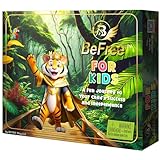
- FINANCIAL LITERACY BOARD GAME FOR KIDS 7+ – A fun and educational money game that teaches children how to earn, save, spend, and invest while making smart financial decisions. Perfect for families looking for a kids board game that builds real money skills through play.
- IDEAL FOR HOMESCHOOL, CLASSROOMS & EDUCATIONAL USE – Designed for parents, teachers, and schools, this educational board game helps kids build money management skills, practice counting, and understand basic financial literacy through fun, hands-on learning.
- TEACHES FINANCIAL STRATEGY FOR LIFE, BIG GOALS & SMART INVESTING – Kids learn how to choose meaningful goals and move toward them through work, saving, and powerful financial tools like real estate, businesses, and market-based investing. A unique board game that helps children think about success, long-term planning, and building a stronger future.
- MODERN DESIGN, BEAUTIFUL COMPONENTS & ENGAGING GAMEPLAY – Features a colorful game board, high-quality cards, realistic play money, and eye-catching details that make learning feel exciting, hands-on, and fun. Designed to keep kids engaged while delivering a premium family game experience.
- A MEANINGFUL GIFT FROM PARENTS, GRANDPARENTS & FAMILY – A beautiful educational board game for birthdays, holidays, and family celebrations that gives kids more than fun. It helps children build confidence, money skills, and smart habits through a gift they will enjoy, remember, and truly learn from.
Why this is not simply a Gen Z problem
Age, individual judgment, social context, and platform design all shape encounters with information, but none explains every case. The available evidence supports a more precise conclusion than the title’s premise: some young people may encounter and interpret misinformation through socially connected feeds, while plausibility, emotion, ideology, experience, and analytical scrutiny influence whether claims seem credible. Similar mechanisms can affect people of different ages; the studies cited here do not establish that an entire generation is uniquely susceptible.
Quick Recap
Product prices and availability are accurate as of the date/time indicated and are subject to change. Any price and availability information displayed on Amazon at the time of purchase will apply.

