
Player choice is about the decisions and approaches a game lets you take; emergent gameplay is what can happen when your actions interact with the game’s systems in ways that are not fixed as one authored sequence. Open worlds can support both, but a large map or a long list of options does not guarantee meaningful agency or surprising play.
What is player choice?
Player choice means selecting among possible goals, actions, routes, tactics, or other ways to approach a situation. The number of options matters less than whether they let you pursue distinct intentions or lead to meaningfully different consequences. In a GDC session on meaningful choice, Matthias Worch and Aaron Canary connect choice with motivation, agency, and level design: Meaningful Choice in Game Design.
| # | Preview | Product | Price | |
|---|---|---|---|---|
| 1 |

|
Open World: Video Games and Contemporary Art | $60.25 | Buy on Amazon |
| 2 |
|
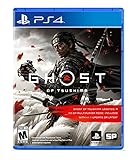
Ghost of Tsushima - PlayStation 4 | $22.99 | Buy on Amazon |
| 3 |

|
Mad Max - PlayStation Hits (PS4) | $18.79 | Buy on Amazon |
| 4 |
|
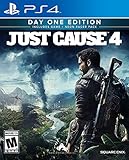
Just Cause 4 - PlayStation 4 | $11.80 | Buy on Amazon |
| 5 |

|
Elden Ring - PlayStation 4 | $33.62 | Buy on Amazon |
A choice does not have to change the main plot to matter. Choosing a route, using a resource, handling a social encounter, or setting your own goal can all shape how you play. Conversely, a menu full of options may offer little meaningful choice if the alternatives do not support different intentions.
What does player agency mean in open-world games?
Player agency is the felt ability to direct an experience through intentional decisions. It is not the same as having unlimited freedom: Scott Rigby’s GDC session listing cautions that treating autonomy as simply giving players freedom can lead to frustration and disappointment. The listing summarizes the talk rather than providing a transcript, so this is a description of its argument, not a verified quotation from Rigby. See Autonomy: Why Players Do What They Do.
What’s actually slowing this PC down?
Pick the symptom - the matching free tool is one click away.
#1 Best Overall
Agency depends in part on understanding enough of the game to form a goal and choose a plausible way to pursue it. Clint Hocking’s GDC session listing describes intentionality as the ability to form meaningful goals and means of achieving them through an understanding of game dynamics. It also identifies transparency as a challenge in highly intentional possibility spaces. In practice, players need enough information to make plans and enough influence for their decisions to matter; sheer freedom can instead leave them unsure what to do or why an outcome occurred. See Systems and Intentionality in Game Design.
What is emergent gameplay?
Emergent gameplay arises when player actions interact with game systems to produce situations or stories that are not simply a fixed, authored sequence. The systems might include characters, rules, spaces, tools, or other world behaviors. The player’s decisions are one important input, but autonomous non-player characters and other systems can also help create an unexpected situation.
Rank #2
- Available Now - Ghost of Tsushima: Legends, a new cooperative multiplayer experience inspired by Japanese folk tales and mythology.
- Beyond war, ancient beauty endures: Uncover the hidden wonders of Tsushima in this open-world action adventure.
- The rise of the Ghost: Forge a new path and wage an unconventional war for the freedom of Tsushima.
GDC’s 2014 session Free-Range AI: Designing and Evolving Living, presented by Aaron Canary and Jeet Shroff, discusses ambient AI and systemic gameplay as ways to support non-linear choices and emergent experiences in open worlds. A separate GDC session about The Sims describes player-told stories that can surprise players, alongside approaches for balancing structured narrative, player empowerment, and AI-driven stories. That is an adjacent example of emergent storytelling, not evidence that every open-world game works the same way: Unexpected Stories: Designing Systems to.
Unexpected does not automatically mean enjoyable or well-designed. Players need to be able to make sense of what happened and, ideally, use what they learned to make a plan next time. If system rules or consequences are too opaque, surprise can feel arbitrary rather than empowering.
Rank #3
- Be Mad Max - Become the iconic post-apocalyptic warrior, crafting and upgrading Max's equipment and weapons to survive by combining melee combat, gunplay and tactical techniques. Gamers must form alliances as they work towards the goal of building their "Magnum opus."
- Immersive savage Wasteland - Explore the gritty, dynamic world while braving the treacherous landscapes, hostile weather patterns and deadly marauders.
- survive the open-world landscape - Staying alive isn't easy. Players clash with deadly factions and gangs through scores of dangerous side-missions and quests in the dynamic open-world full of exploration.
- intense vehicular combat - Engage in dynamic inter-vehicular combat, taking down enemy vehicles with a range of powerful weapons. Car combat is entirely physics-based, so no two battles are ever the Same.
- build the ultimate survival machine - Players design, customize and upgrade their ultimate vehicle-the Magnum Opus-choosing from different car chassis and a slew of upgrades including mounted weapons, armour and engines to survive another day
How choice, agency, emergence, and open worlds differ
| Concept | The question it answers |
|---|---|
| Choice | What alternatives can the player select, and do they support distinct intentions? |
| Agency | Can the player understand the situation well enough to pursue a goal and feel their decisions direct play? |
| Emergence | What situations result when player actions and game systems interact, including unexpected ones? |
| Open world | How freely can the player approach spaces and sequences nonlinearly? |
An open world is a structural feature: it can make non-linear routes and self-directed play possible. It does not, by itself, establish that a player has meaningful choices, understands the rules, or will encounter emergent situations. Those depend on how the game’s possibility space and systems are designed.
How open-world games balance systems and authored stories
Open-world designers often balance ambient, systemic behavior with structured objectives. Characters and world systems can create player-directed moments, while authored missions and narrative beats provide pacing and shape. The GDC session Free-Range AI addresses this tension: its description considers how open-world characters can seem to live in a dynamic world and support emergent, non-linear play while preserving structured narrative.
Rank #4
- Day One Edition includes Neon Racer Pack with these DLC items Neon Racer Supercar, Neon Racer Wingsuit, Neon Racer Parachute; see description for full details
- Bring The Thunder Soar through the skies with your wingsuit Skydive, Base Jump and Free Dive, as you fight your enemies harnessing extreme weather to your advantage
- Rico’s Ultimate Mission Spearhead the rebellion and defeat a hi tech private military organization; Face off against the most capable adversary yet; Uncover the mystery behind Rico’s Father’s past
- Huge South American World 100 square kilometers to explore from rainforest to desert, and across snowy mountain peaks as you explore the world of Solis from bustling cities to rural grasslands
- Creative destruction at its best Customize your new grapple hook with evolved and new capabilities; Experiment with military jets, helicopters, turbo fueled sports cars, and construction vehicles
That balance is not a choice between a completely scripted game and one where anything can happen. Designers define the rules, actors, spaces, and tools that bound what is possible. They can guide players toward authored content while allowing different routes, tactics, or system interactions along the way. No single balance is objectively best; useful questions include how legible the rules are, whether players can set goals beyond authored objectives, what kinds of decisions affect routes or relationships, and how world systems contribute to unscripted situations.
Independent reader supportYour contribution helps us test, update, and keep practical guides available for everyone.How to tell whether an open world offers meaningful agency
- Look beyond the map. A large explorable area says little on its own about how many approaches a situation supports.
- Ask what differs between options. Routes, tactics, resource choices, relationships, and self-directed goals can all provide agency when they support different intentions or consequences.
- Check whether the rules are understandable. Players need to grasp enough of the game’s dynamics to make plans and interpret outcomes.
- Notice the source of surprising events. An unscripted-feeling moment may come from the interaction of player action with character behavior or other world systems, rather than a dedicated story sequence.
- Consider narrative structure. Non-linear play can coexist with authored missions; emergence does not mean the game has no planned content.
For aspiring designers looking for a broader introduction, Routledge lists Tracy Fullerton’s Game Design Workshop: A Playcentric Approach to Creating Innovative Games, Fifth Edition (copyright 2024). The publisher describes it as an exercise-driven, non-technical guide covering formal, dramatic, and dynamic game systems; it is not specifically a book about open-world emergence.
Quick Recap
Best Value
- ELDEN RING is a fantasy action-RPG adventure set within a world created by Hidetaka Miyazaki—creator of the influential DARK SOULS video game series; and George R.R. Martin—author of The New York Times best-selling fantasy series, A Song of Ice and Fire
- Danger and discovery lurk around every corner in FromSoftware’s largest game to-date
- HIDETAKA MIYAZAKI: President and Game Director of FromSoftware Inc. Known for directing critically-acclaimed games in beloved franchises including Armored Core and Dark Souls
- GEORGE R. R. MARTIN: the #1 The New York Times bestselling author of many novels, including the acclaimed series A Song of Ice and Fire—A Game of Thrones, A Clash of Kings, A Storm of Swords, A Feast For Crows, and A Dance with Dragons
Product prices and availability are accurate as of the date/time indicated and are subject to change. Any price and availability information displayed on Amazon at the time of purchase will apply.

