
Sexual dimorphism is a difference in appearance or anatomy associated with sex among members of the same species. In fossils, scientists can sometimes detect patterns consistent with such differences, but a larger skeleton or a pair of distinct shapes does not, by itself, identify males and females. They must test whether age, growth, location, preservation, or other factors could explain the variation.
What sexual dimorphism means
Sexual dimorphism describes sex-associated differences in traits such as body size, bone shape, ornamentation, or soft-tissue appearance. It does not mean every individual can be sexed by sight, nor that every species has obvious differences between sexes. The eLife review “Sexual dimorphism in dinosaurs” notes that the most conspicuous examples in living animals often involve external or soft-tissue traits, such as reproductive organs or brightly colored feathers—features that are rarely preserved in fossils.
Why fossil sex is difficult to establish
For most fossil animals, researchers cannot independently determine the sex of each specimen. Fossil samples may also be small, incomplete, deformed, or drawn from different places and geological ages. A size or shape difference could reflect sex, but it could also result from:
- Growth and age: bones can change in size and proportions as an animal matures.
- Individual variation: members of one sex, or the species as a whole, may vary naturally.
- Geography and time: specimens from different populations or intervals may not represent one comparable group.
- Preservation: distortion, breakage, or reconstruction can alter measured anatomy.
- Taxonomy or health: specimens assigned to one species may belong to different taxa, or an unusual feature may reflect pathology.
These alternatives are why “two forms” and “two sexes” are not interchangeable conclusions.
Windows Errors? Fix Them Before They Spread
Repair common Windows errors and clear accumulated junk for a smoother, more stable PC - no reinstall needed.Free scan · no reinstallOutdated Drivers Are Slowing You Down
One free scan finds every outdated or missing driver and matches the right update for your exact hardware.Free scan · exact hardware match#1 Best Overall
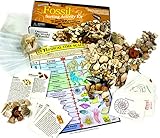
- NEW! FOSSIL COLLECTION SORTING ACTIVITY KIT with over 100 authentic fossils (20 different types), full-color educational identification sheet, geological time card and ID cards!
- FIND, SORT & IDENTIFY--spread fossil mixture out on a table or floor and identify specimens with the Identification sheet. Match fossils to the ID cards and store in the zip-lock bags -- discover and identify like a real fossil hound!
- BONUS: Ammonite fossil, Otodus shark tooth in matrix, Coprolite (dinosaur poo ), and dinosaur bones!
How scientists test for a possible sex difference
Establish a comparable sample
Researchers first define the population they want to compare and check that the fossils are plausibly the same taxon, from a sufficiently comparable place and time. They identify a candidate trait—such as a bone dimension, curvature, or ornament—and assess whether the sample includes enough individuals and maturity stages to characterize ordinary variation.
Measure size and shape
Measurements can include bone lengths, proportions, and three-dimensional landmarks. Geometric morphometrics analyzes shape and can test whether a pattern remains after accounting for size. That distinction matters: a bigger bone is not necessarily a different shape, and a size-linked shape pattern may simply reflect growth.
Compare with living relatives cautiously
Birds and crocodilians provide comparative examples of living archosaurs whose sexes can be known independently. Such comparisons can make a proposed fossil trait biologically plausible, but they cannot prove that the same trait served the same function or tracked sex in an extinct species. Sex estimation from morphology can be difficult even in living animals, and its reliability depends on the method and sample.
Rank #2

- AMAZON EXCLUSIVE - Blue Marble has developed this product exclusively for Amazon.
Test competing explanations and report uncertainty
Statistical approaches include comparing means or medians, measuring variation, testing for clusters, and analyzing shape patterns. Each depends on assumptions about sample size, distributions, missing data, and the balance of sexes. A statistically significant difference is not automatically sexual dimorphism; a result that fails to reach significance does not prove dimorphism was absent. Effect size, uncertainty, statistical power, and alternative explanations all matter.
In a 1999 study using known body-mass dimorphism data for 42 primate species, Rehg and Leigh found that none of three methods for estimating dimorphism in fossil samples was especially accurate overall, although a simple means-based approach performed relatively well (study). The result illustrates why a method’s apparent simplicity or precision should not be mistaken for certainty.
What past statistical studies show—and do not show
Different analyses of dinosaur fossils have produced different conclusions, in part because they use different data, methods, and standards of evidence.
Rank #3

- UNEARTH AUTHENTIC TREASURES: Dive into a hands-on adventure with the Dan&Darci Fossil Dig Kit! Extract 12 genuine fossils, each holding a unique tale from our Earth.
- COMPREHENSIVE LEARNING GUIDE: Comes with a beautifully illustrated guidebook. Discover fascinating facts about each fossil and let your child's imagination transport them to a world of wonder.
- PALEONTOLOGIST-APPROVED TOOLS: Dig like a true expert! Inspired by the methods used by professionals, our kit includes specialized tools such as a wooden mallet, chisel, brush, and magnifying glass to ensure a thorough and enjoyable excavation experience.
- A JOURNEY OF DISCOVERY: Understand the meticulous process behind fossil formation and gain insight into the wonders they represent. From the sharp-toothed Corax shark to the intriguing remnants of massive dinosaurs, it's a deep dive into history.
- IDEAL GIFT FOR YOUNG SCIENTISTS: Spark curiosity and cultivate a love for science. This kit makes a perfect gift for birthdays, holidays, or any special occasion.
- Jordan C. Mallon’s 2017 analysis re-examined claims involving nine dinosaur taxa and found no statistical evidence for dimorphism in the available data using tests of normality, unimodality, and mixture models. Mallon cautioned that limited or unsuitable data could prevent researchers from detecting a real difference (article).
- Ryosuke Motani’s 2021 reanalysis tested methods against published data for 139 living species known to be sexually dimorphic. In that dataset, the earlier method correctly recognized 5%; a modified method reached 50%, while about 32% of the species could be re-sexed from shape with a misclassification rate below 0.05. These are results for that study’s living-species dataset and methods—not a general accuracy rate for identifying fossil sexes (article).
- Saitta and Stockdale’s 2020 framework recommends assessing likely secondary sexual traits, competing explanations, effect sizes, and the strength of multiple lines of evidence rather than treating a single significance test as decisive (article).
Together, these studies do not establish either that dinosaurs generally lacked dimorphism or that a particular pair of fossil forms represents two sexes. Conclusions need to be made case by case.
Do eggs, nests, or medullary bone identify a fossil as female?
No single clue is a universal sex test. A skeleton found with eggs or a nest may provide useful reproductive context, but association alone does not prove the animal was female: males may have participated in parental care in some dinosaur species, as the eLife review discusses.
Recommended Free Tools
Medullary bone is temporary tissue associated with calcium provision during egg production in birds and has been reported in dinosaur fossils. Its presence can support a reproductive interpretation, but it reflects a limited reproductive state rather than identifying every female. Its absence does not establish that a specimen was male.
Rank #4

- 🪠 Zero Mess & Built-In Digging Mat – The ultimate cleanup-free excavation experience is finally here. This fossil dig kit features 12 digging blocks, each sealed in its own smartly designed paper wrap that effortlessly unfolds into a dedicated digging mat. Your child can pry and dig the plaster right on this mat, containing every speck of dust. When the fossil is revealed, simply fold the paper up and toss it away. No messy plaster dust on your tables, floors, or carpets—just pure digging toys for kids joy without the parental headache.
- 🐚12 Genuine Fossils & Educational Cards – Uncover a genuine, diverse collection of prehistoric treasures with every single block. Unlike standard fossil kits, our premium fossil kit offers 12 distinct, real fossil rocks for kids, including a Sand Tiger Shark tooth, a Sea Urchin, Coral, Crinoid, and multiple types of gastropods. Each discovery is paired with a beautifully designed, educational collector card. These cards dive into the history and interesting facts behind the fossil, seamlessly turning an exciting play session into a fascinating science fossil kits for kids age 6-8 8-12 lesson.
- 🔎Perfect for Parties & Group Activities – Massive value designed for both individual learning and group fun. With 12 individually wrapped blocks, 12 sturdy chisels, and 12 matching cards, this fossils bulk set is ready to entertain a small group of friends, a birthday party crowd, or an entire classroom. It is the perfect hands-on fossil excavation kit kids activity to keep a group of young explorers engaged for hours, encouraging teamwork, patience, and shared excitement as they make their individual discoveries together.
- 🗺️ STEM Learning & Fine Motor Skills – Inspire a real passion for geology and paleontology through interactive play. The process of carefully chiseling, brushing, and revealing ancient specimens helps develop fine motor skills, concentration, and a scientific mindset. It transforms a simple game into a genuine junior archaeologist fossil dig experience. Whether for an individual child’s quiet afternoon or a classroom STEM project, this fossil dig kit for kids provides a rewarding challenge that sparks natural curiosity about Earth's ancient history.
- 🛡️ Safe, Non-Toxic & 100% Satisfaction Guarantee – Built with safety and quality at the forefront for worry-free playtime. Our fossils for kids kit is crafted from non-toxic, high-quality, and eco-conscious materials, ensuring a completely safe experience for children aged 6 and up. We stand firmly behind the quality and fun of our product. If your young explorer faces any issues or has questions during their adventure, our dedicated customer support team is ready to assist you promptly to ensure a 100% delightful experience.
Example: ornithomosaurs from Angeac-Charente
A fossil bed at Angeac-Charente in southwestern France contains at least 61 ornithomosaurs thought to have died in a mass-mortality event, according to the 2023 eLife review. Because the animals came from one site and time, the assemblage offers a more coherent comparison than fossils pooled across distant localities or ages.
Three-dimensional geometric morphometric work on the best-preserved hindlimb bones found subtle differences in femur shape, especially curvature, that were independent of bone size. The researchers interpreted the pattern in light of sex-associated variation among living archosaurs. However, they did not establish which femur shape corresponded to which sex, and growth variation remained a question for further study (eLife review). The example shows the distinction between detecting structured variation and assigning sex: a strong sample context improves an inference without making it conclusive.
How to evaluate a claim that two fossil forms are different sexes
When a study proposes sexual dimorphism, look for answers to these questions:
What’s actually slowing this PC down?
Pick the symptom - the matching free tool is one click away.
- Sample: Are there enough specimens, and do they represent normal variation rather than a few unusual individuals?
- Maturity: Are the specimens at comparable growth stages?
- Size and shape: Does the shape difference persist after size is taken into account?
- Place and time: Do specimens come from the same assemblage or a genuinely comparable population?
- Preservation: Could distortion, breakage, or reconstruction explain the measured difference?
- Independent support: Is there reproductive evidence or another way to identify the sex of at least some specimens?
- Statistics: Are effect sizes and uncertainty reported, and does the chosen method fit the sample?
The strongest conclusions combine a well-defined sample, plausible sex-associated traits, careful tests of alternatives, and independent evidence where available. In many fossil cases, the evidence can support “possible dimorphism” without justifying a confident male/female assignment.
Quick Recap
Product prices and availability are accurate as of the date/time indicated and are subject to change. Any price and availability information displayed on Amazon at the time of purchase will apply.

