
Enterprise AI agents should have only the tools and permissions needed for their assigned task, with authorization enforced by connected systems—not left to the model. Match oversight to each action’s impact and reversibility: routine, reversible work may proceed under narrow permissions and monitoring, while consequential, externally visible, or hard-to-undo actions should require human approval before execution.
Assess the action, not just the agent
An agent can perform many different operations, and the risks are not equal. Reading an internal document is different from deleting it, sending it outside the company, or committing funds. Set controls for the individual action in its context rather than assigning one blanket autonomy level to an entire agent.
For each proposed action, assess:
- Potential impact: What business, customer, financial, legal, or operational harm could result if the action is wrong or misused?
- Reversibility: Can the action be reliably undone, and would undoing it restore the original state? A message already sent or data permanently deleted may not be recoverable.
- Data sensitivity: What information can the action read, change, disclose, or transfer?
- Permission scope: Which accounts, records, services, or environments can the agent affect?
- Context and oversight: Can a reviewer understand the proposal, and can an operator intervene or stop execution safely?
The tiers below are a practical policy synthesis of risk-based guidance, not an official NIST or EU scoring rubric. Neither source prescribes a universal autonomy threshold or numeric formula.
| Action profile | Recommended controls | Typical policy |
|---|---|---|
| Low impact and readily reversible | Narrow tool permissions, downstream authorization, useful logging, and monitoring | May proceed without per-action approval when the deployment’s risk tolerance supports it |
| Meaningful business impact or sensitive data | Stricter identity scoping, explicit policy checks, rate limits, reviewable logs, and tests for normal use and misuse | Allow only within a defined scope; add review where context or consequences warrant it |
| High impact, externally visible, or difficult to reverse | Human approval before execution, a clear presentation of the proposed operation and relevant context, and a safe means to cancel or stop | Do not execute until an authorized person approves the specific action |
Constrain what the agent can do
Put the first guardrail at the tool boundary. Give the agent only the extensions and operations needed for its task, and make those functions as specific as practicable. For example, if the task is to retrieve a document, expose a read operation rather than a general-purpose tool that can also edit or delete documents.
Quick wins for a faster PC:
Scan for outdated or missing drivers - takes under a minuteDriver Scan →Clear out junk files and repair common Windows errorsFree Scan →#1 Best Overall

- AI-Powered Raspberry Pi Robot Dog — PiDog: Powered by Raspberry Pi (5/4B/3B+/3B/Zero 2W), OpenClaw, and multi-LLMs like ChatGPT, Gemini, Grok, DeepSeek, Qwen & Ollama. With 12 servos, camera, gyroscope, hearing & touch sensors, PiDog can see, listen, talk, move, and interact intelligently. Supports OpenCV, MediaPipe, TTS & STT, app control, FPV & Python. A great STEM robotics gift for students, makers & tech enthusiasts—perfect for birthdays and holidays. (Raspberry Pi not included)
- Realistic Dog-like Movements: PiDog's 12 powerful servos enable 32 dog-like actions, including walking, sitting, standing, shaking its head, wagging its tail, and performing playful tricks, closely mimicking a real dog and providing an engaging experience. This is an AI development robot product designed for engineers, suitable for ages 15 and above
- Rich Sensor Suite for Interactive Experiences: PiDog features ultrasonic, touch, gyroscope, sound, camera, speaker and microphone. These provide it with advanced hearing, vision, and touch, enabling it to see, detect obstacles, respond to touch, and recognize sounds, making interactions highly engaging
- AI-Powered Interactions with OpenClaw & Multi-LLMs. PiDog combines voice, vision, and gesture recognition for immersive AI experiences. Powered by OpenClaw and multi-LLMs like ChatGPT, Gemini, Grok, DeepSeek, Qwen, Doubao, and Ollama (local LLMs), it can understand questions, respond naturally through TTS & STT, recognize math problems, interpret hand gestures, and hold smart conversations. OpenClaw also enables customizable AI behaviors and personalized robotics development, helping users create their own intelligent robotic companion
- Comprehensive Learning Resources and Support: PiDog offers detailed online documentation, video tutorials, prompt technical support, and an active forum community, ensuring beginners can easily complete all projects and enjoy a great experience
OWASP identifies unnecessary functionality, excessive permissions, and excessive autonomy as forms of “excessive agency.” Its examples include giving a document-reading agent edit and delete access, or allowing an extension to perform a high-impact action without independent approval. OWASP recommends minimizing extensions and their functionality and avoiding open-ended extensions where possible (OWASP LLM06:2025, Excessive Agency).
- Expose narrow operations with defined inputs and effects instead of broad tools such as arbitrary shell commands when a limited operation can do the job.
- Limit each integration to the records, services, and environments required for its purpose.
- Separate read, update, delete, and external-send capabilities so permission to perform one does not imply permission to perform the others.
- Keep high-impact capabilities unavailable to the agent unless the task genuinely requires them and a suitable approval control is in place.
Enforce authorization outside the model
A model’s decision that an action seems appropriate is not authorization. Enforce access rules in the connected application or service, where each downstream request can be checked against policy. The agent should not be able to grant itself access by deciding that a user or task ought to be allowed to act.
Where possible, execute actions in the requesting user’s context and carry that user’s identity and security scope through to downstream systems. Apply least privilege there as well as at the agent’s tool boundary, and check authorization for each operation—not just when the agent starts a session. OWASP recommends limiting downstream permissions, using the user’s context, and validating authorization at downstream systems (OWASP LLM06:2025 mitigation guidance).
Rank #2

- Optimized AI Arm Kit for LeRobot & Hugging Face Projects – The SO-ARM101 is an upgraded low-cost robotic arm servo motor kit designed for AI robotics enthusiasts and developers. Fully compatible with LeRobot and Hugging Face frameworks, it supports imitation learning and reinforcement learning, making it ideal for real-world robotics applications. (3D-printed parts not included.)
- Enhanced Wiring & Performance – Compared to the SO-ARM100, the SO-ARM101 features improved wiring to prevent disconnection at joint 3 and eliminates range-of-motion limitations. The leader arm uses optimized gear ratio motors for smoother performance—no external gearboxes required.
- Real-Time Leader-Follower Functionality – New real-time tracking allows the leader arm to follow the follower arm, enabling human intervention and correction during reinforcement learning (RL) training. Perfect for hands-on AI robotics development and research.
- Open-Source, DIY-Friendly & Nvidia-Compatible – Developed by TheRobotStudio, this open-source AI Arm kit integrates seamlessly with the LeRobot platform, offering PyTorch-based datasets, simulation, training, and deployment tools. Fully compatible with Nvidia Jetson edge devices, including reComputer Mini J4012 Orin NX 16 GB.
- Comprehensive Learning Resources – Includes detailed open-source assembly and calibration guides, testing tutorials, and deployment instructions. From wiring to AI training, get everything you need to start building, teaching, and optimizing your robotic arm for grasping and placing tasks.
This separation matters when permissions change, a task crosses system boundaries, or an agent has access to multiple users’ data. A tool-level restriction reduces what the agent can request; downstream authorization independently determines whether the particular request is allowed.
Require approval for consequential actions
Use human approval before actions that could cause serious harm, create an external commitment, disclose information, or be difficult to reverse. Common examples include deletion, sending external communications, financial commitments, and consequential changes to business systems. This is an applied policy recommendation based on OWASP’s guidance to require human approval for high-impact actions; the cited sources do not define one universal list of actions that always require approval.
Make the approval meaningful and tied to the operation that will execute. Present the reviewer with the intended action, its target, the relevant context, and the material consequence. Require approval for that specific operation rather than treating a broad earlier consent as authorization for later actions. The system should re-check permissions when it executes, so a stale approval or changed access scope does not silently authorize a different operation.
Rank #3
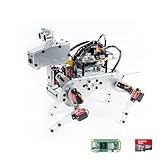
- Raspberry Pi AI Robot: powered by Raspberry Pi (5/4B/3B+/3B/Zero 2W), features 12 servos and sensors for vision, hearing, and touch. Integrated with ChatGPT-4o, it responds to complex queries. With app control and FPV, users can manage and see its view in real-time. It supports Python programming
- Realistic Movements: 12 powerful servos enable 32 actions, including walking, sitting, standing, shaking its head, wagging its tail, and performing playful tricks, closely mimicking a real and providing an engaging experience
- Rich Sensor Suite for Interactive Experiences: features ultrasonic, touch, gyroscope, sound, camera, speaker and microphone. These provide it with advanced hearing, vision, and touch, enabling it to see, detect obstacles, respond to touch, and recognize sounds, making interactions highly engaging
- Engaging Interactions with ChatGPT-4o: with ChatGPT-4o enables voice interactions and visual recognition, making it smarter and more responsive. Users can have natural conversations, solve math problems via the camera, and interpret gestures, creating diverse and fun interactions
- Comprehensive Learning Resources and Support: offers detailed online documentation, video tutorials, prompt technical support, and an active forum community, ensuring beginners can easily complete all projects and enjoy a great experience
OWASP’s mitigation guidance calls for human-in-the-loop control to approve high-impact actions before they are taken (OWASP LLM06:2025). For an approval step to function as a guardrail, the reviewer must have a practical way to reject or cancel the pending operation—not merely see that it happened afterward.
Make oversight fit the deployment and legal scope
There is no one oversight configuration for every generative AI system. NIST’s Generative AI Profile says different oversight levels or human-AI configurations may be appropriate, and identifies additional human review, tracking, documentation, and management oversight as possible needs. It also describes governance mechanisms such as auditing and assessment, change management, data protection and retention, impact assessment, incident response, monitoring, and risk mapping and measurement (NIST AI 600-1, Generative AI Profile).
NIST’s AI Risk Management Framework is voluntary guidance, not a blanket legal requirement. NIST’s current program page says the framework is being revised and lists the Generative AI Profile’s release date as July 26, 2024; organizations should check that page for updates (NIST AI Risk Management Framework).
Rank #4
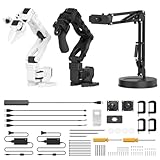
- 【End-to-End Imitation Learning】Hiwonder SO-ARM101 robot arm is an embodied intelligent hardware platform compatible with the Lerobot open-source framework. It provides developers with streamlined access to shared code, templates, and pre-trained models to explore the latest advancements in AI research.
- 【Dual-Camera Vision System】Equipped with both a gripper-mounted camera and an external camera, the system supports both precise manipulation and environmental awareness for accurate imitation learning.
- 【Hiwonder High-Performance Bus Servos】Featuring 12 high-torque bus servo motors with magnetic feedback, the Hiwonder SO-Arm101 robotic arm delivers smooth, stable motion, eliminating issues like power deficiency and jitter.
- 【Professional Control & Debugging】Integrated with the Hiwonder BusLinker V3.0 debugging board, the system supports servo scanning, real-time status monitoring, and trajectory control. The professional PC software simplifies device calibration and debugging, making it accessible for both researchers and hobbyists.
- 【Open-Source Compatibility】The SO-ARM101 robotic arm is designed to be fully compatible with the LeRobot open-source project. We acknowledge the contributions of the open-source community; all trademarks and copyrights belong to their respective owners.
The EU AI Act has a narrower legal scope than “all enterprise agents.” Article 14 requires effective human oversight for high-risk AI systems within the regulation’s scope, with measures proportionate to risk, autonomy, and context. It addresses enabling oversight personnel to understand system capabilities and limitations, detect anomalies, guard against automation bias, interpret and override outputs, intervene, and stop the system safely. Articles 12 and 15 address logging capabilities and accuracy, robustness, and cybersecurity, respectively. These provisions apply according to the regulation’s scope and roles; they should not be read as requirements automatically applying to every enterprise agent (Regulation (EU) 2024/1689, consolidated text dated July 27, 2026).
Independent reader supportYour contribution helps us test, update, and keep practical guides available for everyone.Test, monitor, and limit the damage
Before deployment, test the agent’s allowed actions under expected use and foreseeable misuse. Check that it respects tool boundaries, that downstream systems reject unauthorized requests, and that approval is required for the operations your policy classifies as high impact. Repeat relevant checks after changes to tools, permissions, workflows, or connected systems.
During operation, monitor both the agent and downstream activity. Keep logs useful for review and incident response, including enough information to establish what operation was requested and executed, under which identity and permissions, and whether approval occurred. Limit repeated actions with rate limits. OWASP identifies logging, monitoring, and rate limiting as ways to limit damage, while distinguishing them from controls that prevent excessive agency in the first place (OWASP LLM06:2025).
Recommended Free Tools
Define in advance how operators can pause or stop the agent safely and how the organization will respond to an incident. A stop control is not a substitute for least privilege or authorization checks: it helps contain activity, while those other controls limit what can be done in the first place. NIST’s profile includes monitoring and incident response among governance mechanisms, and the EU AI Act describes safe stopping as part of oversight for high-risk systems within its scope.
Quick Recap
Turn the policy into an implementation checklist
- Inventory actions: List the operations each agent can request, the connected systems and data they affect, and the identity under which they run.
- Assign action-level risk: Record likely impact, reversibility, data sensitivity, permission scope, and whether a reviewer can evaluate the proposed operation.
- Set the boundary: Remove unnecessary tools and permissions; replace broad capabilities with specific operations where practical.
- Enforce access downstream: Check each request against policy in the connected system, using the user’s identity and scope where feasible.
- Define approval cases: Identify high-impact or hard-to-reverse operations that must wait for a person to approve the specific action.
- Validate and operate: Test normal and misuse cases, retain reviewable logs, monitor activity, apply rate limits where useful, and establish safe-stop and incident-response procedures.
Product prices and availability are accurate as of the date/time indicated and are subject to change. Any price and availability information displayed on Amazon at the time of purchase will apply.

