
Choose a trap and bait for the beetle group you want to detect: dung-baited pitfall traps sample dung-attracted beetles, while wood-boring beetle surveillance uses different lures and trap designs. Neither is a complete inventory of forest insects. Define your survey question first, then keep the method consistent across sites and record where and when each trap was deployed.
Choose a method for a defined survey question
“Beetle-bait trap” can refer to substantially different methods. A dung-baited pitfall trap catches beetles attracted to dung as they move near the ground. Lure-based multi-funnel and intercept systems are used for particular bark- and wood-boring beetles; flight-intercept traps can also collect beetles that are not responding to a specific bait.
Those catches represent different slices of a community. Decide whether you are comparing sites, building a broader community inventory, or looking for early evidence of a target pest. Then choose the target guild, trap mechanism, lure, placement, and collection schedule to match. For broader inventories, plan complementary methods and sampling across relevant habitats, seasons, or years.
- Rapid comparison: Use the same trap design, bait, amount, placement rules, deployment period, and collection interval at each site.
- Community inventory: Combine methods where practical; a single bait is unlikely to detect beetles with different food preferences or microhabitat use.
- Early detection: Use a lure and trap suited to the target pest, and consider multiple horizontal and vertical positions where the surveillance question warrants it.
Standardize the survey before comparing catches
Differences in catch can arise from the trap setup as well as from differences between sites. Keep the following consistent wherever possible:
What’s actually slowing this PC down?
Pick the symptom - the matching free tool is one click away.
#1 Best Overall

- DUAL LURE SYSTEM: The Catchmaster Japanese Beetle Trap attractant consists of a dual sex lure and floral/food lure fly bait, which attracts two to five times more Japanese beetles than outdoor fly traps with just one lure. The lures combine to draw male and female beetles into the trap and away from valuable ornamentals, fruit trees, vegetables, flowers, or any other outdoor plant.
- READY-TO-USE: In a few easy steps you can start catching those pesky beetles and protect your plants. To use the bug catcher slide the vanes together to form a cross shape. Loop the twist tie through the vane hole and attach a disposable collection bag by sliding the holes in the bag over the cutout hooks. Lastly, stick the bait pack onto the trap vane using the adhesive strip and hang the trap in your desired location. The lid prevents the bag from filling with rain water.
- MAXIMUM COVERAGE: This Japanese Beetle bug trap can cover over 5,000 square feet! Long-lasting, our Japanese Beetle fly bags can last an entire season of pesky beetles. The hourglass-shaped disposable collection bags ensure that the beetles have been securely trapped. Once the bug is in the trap, it's not escaping. More effective than fly tape and requiring less effort than fly swatters, the Japanese Beetle Trap will keep your yard protected from beetles.
- PLACEMENT TIPS: As beetles emerge, hang the beetle fly catchers outdoor 10 to 30 feet away from protected plants to ensure maximum coverage and plant health. Hang traps from any suitable post or stand in sunny areas 3 to 5 feet off the ground. They typically perform best when on the upwind side of your garden. Replace the bags when full of bugs.
- INTELLIGENT PEST MANAGEMENT: At our core, we are dedicated pest detectives. We believe in utilizing a science-based approach to integrated pest management. We call this approach Intelligent Pest Management. We leave no stones unturned when it comes to pests and we have unwavering conviction in our products.
- Trap design and collection container
- Bait or lure type and quantity
- Trap location rules, height, and habitat position
- Deployment duration and collection interval
- Specimen handling, preservation, and identification approach
Trap position can change what is detected. A 2020 study of three wood-associated beetle families found that edge-to-interior and understory-to-canopy effects varied by family and experiment; it recommended multiple horizontal and vertical positions for early detection. A 2017 review and meta-analysis also found that trap type, surface treatment, collection cup, and color can affect performance. These findings argue against treating any one design or position as universally best. Read the 2017 review and meta-analysis and the 2020 gradient study.
A dung-baited pitfall protocol example
The Central Forest Spine monitoring protocol offers one specific example for dung beetles in its Peninsular Malaysia context. Its materials and instructions are not universal; use the protocol appropriate to your study, target species, and local rules. Consult the Central Forest Spine monitoring protocol.
Rank #2

- REPLACEMENT LURE: For use with Spectracide Bag-A-Bug Japanese Beetle Trap2
- DUAL LURE SYSTEM: Natural sex attractant, together with a proven floral lure, attract two to five times as many beetles as the commonly available floral lure alone
- REPLACE AS NEEDED: Lure is effective for about 12 weeks; replace it after this period or when its floral aroma is no longer noticeable
- ASSEMBLY: Just attach the disposable bag to the trap’s yellow vane assembly with the lure inserted
- Set out stations along a habitat transect. The Conservation International handbook suggests five to ten evenly spaced stations, with traps flagged and numbered and GPS coordinates recorded where possible.
- Position traps with the target system in mind. For dung-beetle traps, the handbook recommends at least 50 m between stations and says 100 m is preferable where feasible. Larsen and Forsyth’s 2005 study also found that at least 50 m should minimize interference in the dung-beetle system they tested. These distances should not be transferred to other baits or trap types. Wind can affect detectability. See Larsen and Forsyth’s study.
- Prepare the pitfall according to the chosen protocol. In the Central Forest Spine example, a plastic cup about 10 cm tall and 5 cm wide is buried with its opening flush with the soil. The cup contains approximately 20 ml of water with fragrance-free detergent diluted 1:100; a ball of elephant dung is suspended above it in a mesh pocket, with a leaf providing shade and rain protection.
- Retrieve and process the catch on schedule. That protocol says to check after 24 hours, sieve the catch, and transfer beetles to 70% ethanol. Follow your study’s approved collection interval and preservation method rather than assuming these details suit every survey.
- Remove bait and label samples consistently. The example protocol says to remove and dispose of bait after trapping. It specifies vial labels with location, date, collector names, and a reference number.
The Central Forest Spine protocol advises gloves and requires a local permit for handling elephant dung in its Peninsular Malaysia context. Check applicable permissions and safety requirements in your own location; that regional requirement is not a universal permit rule.
Record enough information to interpret the sample
Give each trap a unique number and maintain a field record that lets you connect each sample to its deployment conditions. Record:
Rank #3

- DUAL LURE SYSTEM: The Catchmaster Japanese Beetle Trap attractant consists of a dual sex lure and floral/food lure fly bait, which attracts two to five times more Japanese beetles than outdoor fly traps with just one lure. The lures combine to draw male and female beetles into the trap and away from valuable ornamentals, fruit trees, vegetables, flowers, or any other outdoor plant.
- READY-TO-USE: In a few easy steps you can start catching those pesky beetles and protect your plants. To use the bug catcher slide the vanes together to form a cross shape. Loop the twist tie through the vane hole and attach a disposable collection bag by sliding the holes in the bag over the cutout hooks. Lastly, stick the bait pack onto the trap vane using the adhesive strip and hang the trap in your desired location. The lid prevents the bag from filling with rain water.
- MAXIMUM COVERAGE: This Japanese Beetle bug trap can cover over 5,000 square feet! Long-lasting, our Japanese Beetle fly bags can last an entire season of pesky beetles. The hourglass-shaped disposable collection bags ensure that the beetles have been securely trapped. Once the bug is in the trap, it's not escaping. More effective than fly tape and requiring less effort than fly swatters, the Japanese Beetle Trap will keep your yard protected from beetles.
- PLACEMENT TIPS: As beetles emerge, hang the beetle fly catchers outdoor 10 to 30 feet away from protected plants to ensure maximum coverage and plant health. Hang traps from any suitable post or stand in sunny areas 3 to 5 feet off the ground. They typically perform best when on the upwind side of your garden. Replace the bags when full of bugs.
- INTELLIGENT PEST MANAGEMENT: At our core, we are dedicated pest detectives. We believe in utilizing a science-based approach to integrated pest management. We call this approach Intelligent Pest Management. We leave no stones unturned when it comes to pests and we have unwavering conviction in our products.
- Location or GPS coordinates, trap number, and habitat
- Deployment and retrieval dates and times, plus collection interval
- Bait or lure type and amount
- Trap design, height, and position (for example, edge or interior; understory or canopy)
- Collector, relevant weather or field conditions, and any deviations from the protocol
- Sample reference number and preservation or processing details
Consistent labels and records are essential when samples are sorted or identified later. If a trap was disturbed, flooded, emptied, or deployed differently, document that rather than treating its catch as directly comparable with an undisturbed, standardized sample.
Independent reader supportYour contribution helps us test, update, and keep practical guides available for everyone.Interpret catches as method-conditioned samples
A baited trap does not count every beetle in a forest. It preferentially detects organisms that respond to its bait or lure and encounter that particular trap at its chosen position and time. A review of dung beetle sampling notes that flight-intercept traps can add species with other food preferences, while other methods can detect microhabitat specialists. See the dung beetle sampling review.
Rank #4
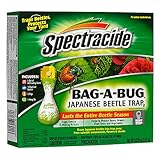
- Coverage: Traps over a 5,000 sq ft area
One published Southern African kairomone-baited monitoring survey reported 50 families and 436 beetle morphospecies. That is a result for that survey’s methods and locations, not an expected richness benchmark for another forest. Read Olivier-Espejel, Hurley, and Garnas (2017).
For defensible comparisons, interpret catch differences in light of the sampling design, identification limits, and any missed or inconsistent deployments. For broader diversity questions, combine complementary methods and sample the spatial or seasonal variation relevant to the forest and research objective.
Quick Recap
Best Value

- Replacement bait for the Safer Brand Japanese Beetle Trap
- Comes with 1 replacement bait
- Easy to use and easy to replace
- Helps to protect your lawn and garden from beetle damage
Product prices and availability are accurate as of the date/time indicated and are subject to change. Any price and availability information displayed on Amazon at the time of purchase will apply.

