
Outdated Drivers Are Slowing You Down
One free scan finds every outdated or missing driver and matches the right update for your exact hardware.Free scan · exact hardware matchWindows Errors? Fix Them Before They Spread
Repair common Windows errors and clear accumulated junk for a smoother, more stable PC - no reinstall needed.Free scan · no reinstallData centers can strain local power grids because they add large amounts of electricity demand at a small number of connection points, and the wires, substations and generation needed to serve that demand may take longer to plan and build than the data centers themselves. Utilities respond with a mix of construction, measures to get more from existing equipment, flexible service agreements, storage and demand response. Which options work—and who pays for upgrades—depends on the particular grid location and its reliability needs.
Why data centers can create grid bottlenecks
A data center draws substantial power through a limited number of connections. That concentration matters: a region may have enough electricity overall while a particular substation, transformer or transmission path lacks capacity to serve a new facility at its requested location and operating profile. A project therefore needs detailed grid studies; a broad estimate of available capacity cannot establish whether a specific connection is feasible. The International Energy Agency (IEA) says local constraints can include voltage, short-circuit and substation limits.
The issue is growing at a global scale, but the figures describe different things. The IEA estimates that data centers consumed 485 terawatt-hours (TWh) of electricity worldwide in 2025 and projects about 950 TWh in 2030—roughly 3% of global electricity demand that year. It reports global data-center electricity demand grew 17% in 2025; the increase for AI-focused data centers was 50%. Those are electricity-consumption and demand-growth figures, not a measure of the capacity available at any one local grid connection. IEA, Key Questions on Energy and AI.
Demand can also vary over time. AI training and model use can produce large, rapid power swings, so planners need to understand not only a facility’s expected energy use but also its peak demand and operating profile. A terawatt-hour measures energy consumed over time; megawatts and gigawatts describe power or capacity. They are related, but not interchangeable.
#1 Best Overall

- 1500VA/1000W PFC Sinewave Uninterruptible Power Supply (UPS): Uses sine wave output to provide battery backup power for Active PFC & conventional power supplies; Safeguards computers, workstations, network devices, and telecom equipment
- 12 NEMA 5-15R OUTLETS: 6 battery backup & surge protected outlets, 6 surge protected outlets; INPUT: NEMA 5-15P right angle, 45 degree offset plug with 5 foot power cord; 2 USB charge ports (1 Type-A, 1 Type-C) quickly charge phones and tablets
- MULTIFUNCTION, COLOR LCD PANEL: Displays immediate, detailed information on battery and power conditions; Color display alerts users to potential issues before they can affect critical equipment and cause downtime; Screen tilts up to 22 degrees
- AUTOMATIC VOLTAGE REGULATION (AVR): Corrects minor power fluctuations without switching to battery power; UL SAFETY CERTIFIED: Product has been tested in a UL certified lab and listed with UL as meeting or exceeding safety standards
- 3-YEAR WARRANTY – INCLUDING THE BATTERY; $500,000 Connected Equipment Guarantee; FREE PowerPanel Management Software (Download)
Why infrastructure timing makes the problem harder
In its 2026 grids analysis, the IEA estimates that planning, permitting and completing new grid infrastructure can take 5 to 15 years, compared with 1 to 3 years to build a data center. The same analysis says grid-equipment prices had nearly doubled over the preceding five years. These are IEA global comparisons, not a schedule or cost estimate for every project or country. IEA, Electricity 2026.
The mismatch can leave a project waiting for network upgrades even if its building is ready, or lead a utility to study how to serve it in stages. It does not mean every data center causes an outage or that every area has the same shortage. Local conditions, the size and timing of the proposed load, and other planned connections all matter.
Queues illustrate the scale of the planning challenge, but they are not a count of data centers that will be built. The IEA says more than 2,500 gigawatts (GW) of renewable, storage and large-load projects—including data centers—are stalled in grid-connection queues worldwide. Its estimate that 1,200–1,600 GW of advanced-stage queued projects could be enabled through non-firm connections and grid-enhancing technologies is a high-level analysis, not observed capacity delivered; local studies may produce different results. IEA, Electricity 2026.
Rank #2

- One Powers All. The unit of DELTA Pro Ultra whole house generator includes an inverter and a battery. One inverter supports 120V & 240V and has an exceptional 7200W output, allowing you to run almost any heavy household appliance, even a 3-ton central air conditioner. Triple the inverters for an incredible 21.6kW AC output, allowing you to live life to the fullest even during an outage. The electric generator achieves a total 7200W output even during charging.
- Strong Power Security. Scalable from one battery of 6144Wh, two days of essential power, all the way to 15, it multiplies the energy to a gigantic 90kWh. For a standard North American household, that's over 30 days of essential power secured.
- Customize Your Home Power. Use the EcoFlow app to priolritize specific circuits in your home, extending your backup even longer. For more than just blackouts, it intelligently analyses your home power usage to offset peak rates while utilizing solar to lower energy bills.
- Multi Ways to Charge. One battery of 6144Wh can be fully recharged in 2 hours. Faster than any other 6kWh solar generator. Users can choose among electric vehicle piles, solar, wall outlets or outdoor generators for charging.
- Uninterrupted Life. Online UPS with 0-ms transfer time, offering 24/7 protection for sensitive electrical devices against power disturbances or grid failure. All fans are off for the first half hour of outputting 2000W, giving you absolute silence for tranquility in everyday life.
How utilities and grid operators respond
There is no single fix. Durable upgrades can address lasting limits but take time; operational changes and flexible arrangements may help sooner, subject to local engineering and reliability rules. The approaches are often complementary.
Recommended Free Tools
| Approach | What it changes | Timing and key constraint |
|---|---|---|
| Build or upgrade transmission, substations and related equipment | Adds network capacity to serve load and relieve durable bottlenecks. | Long lead time: the IEA estimates 5–15 years for planning, permitting and completing grid infrastructure globally. Siting, permitting, equipment and project-specific system needs shape delivery. IEA. |
| Use existing assets more effectively | Grid-enhancing technologies and operational changes can increase usable capacity on parts of the existing network. | May be available sooner than new construction, but the effect depends on local equipment, operating conditions and study assumptions. It does not remove every constraint. IEA. |
| Offer a flexible or non-firm connection | Allows service subject to defined limits, such as reducing or shifting load during constrained hours. | Can provide access before all reinforcements are complete, but the customer bears curtailment risk under the agreement and must be able to operate within its limits. IEA; FERC, June 18, 2026. |
| Use storage and demand response | Batteries can shift some demand over time; demand response reduces or moves consumption when the system is tight. | Can help with short-term flexibility, but duration, response capability and incentives matter. Neither option substitutes for assessing the connection and network capacity. IEA. |
| Co-locate generation or use onsite supply | Pairs generation with a large load, potentially changing how much power the facility draws from the grid. | Requires careful study of the electrical arrangement, reliability, regulation, financing and supply chains. Onsite generation does not automatically eliminate grid impacts or guarantee a faster connection. IEA; FERC. |
Construction for lasting capacity
Utilities can expand or reinforce transmission lines, substations and other grid components where studies identify a need. These projects can deliver durable network capacity, but they require planning, permits, equipment procurement and construction. The IEA estimates that global annual grid investment would need to rise by about 50% by 2030 from USD 400 billion to meet forecast demand through 2030. This is a global investment estimate, not a spending commitment by a particular utility or government. IEA, Electricity 2026.
Getting more from the existing network
Grid-enhancing technologies and operating changes can improve the use of assets already in place while longer projects advance. The IEA’s examples include dynamic line and transformer ratings, advanced power-flow control, topology optimization, storage used as a transmission asset, reconductoring and voltage uprating. Their suitability and capacity benefit depend on the network and the assumptions used in local studies; they are not a universal substitute for new infrastructure. IEA, Electricity 2026.
Rank #3

- UL9540 | UL1973 | CEC LISTED - Completed comprehensive testing by Intertek and has officially earned two key North American safety certifications.And has met the standards set by the California Energy Commission.The outstanding performance in design, electrical safety, and thermal runaway management,providing users with greater quality assurance
- Whole-Home Off-Grid Power: The 6-pack 51.2V 100Ah system delivers up to 30.72kWh of capacity, enough to cover an entire household’s daily electricity needs. It helps reduce reliance on rising electricity costs and serves as a reliable solution for achieving true off-grid living and energy independence.
- Closed-Loop Communication Battery: ECO-WORTHY 48V (51.2V) server rack battery features integrated CAN/RS485 interfaces and multiple communication protocols, enabling communication with leading integrated solar inverters for more intelligent system operation. Built-in Bluetooth and WiFi functionality allow you to easily monitor battery status via ECO-WORTHY APP.
- Powerful Expansion Capability: Designed for server rack compatibility with vertical mounting support, this 48V 100Ah battery maximizes space efficiency. It allows paralleling of up to 32 units (up to 163.8kWh), enabling flexible capacity expansion to meet a wide range of needs. Built with Grade A LiFePO₄ cells, it delivers reliable power output, exceptional cycle life, and stable safety performance.
- Complete Plug-and-Play Kit: We include every accessory you need: parallel cables, communication cables, grounding wires, protective terminal covers, screws, and a user manual. Unbox, install, and start enjoying clean power—it's that easy.
Flexible connections and load management
A non-firm or flexible connection can make earlier service possible when a customer agrees to operate within specified limits. For example, a data center might reduce or shift some demand during hours when a particular network element is constrained. The agreement needs to define when curtailment can occur, how much load must change, how the limits are communicated and what happens if the customer cannot comply. This offers conditional access, not the same service as an unrestricted connection.
Storage and demand response can support that flexibility. Batteries can respond over a limited duration, while controllable workloads may be shifted or reduced if operational requirements allow. The IEA notes that data-center storage could help support the grid when incentives align, while also highlighting the rapid power swings that can accompany AI activity. These tools manage some operating conditions; they do not make a constrained substation or connection study irrelevant. IEA, Key Questions on Energy and AI.
Co-location and onsite power
Generation located near or behind the meter of a data center may change its pattern of grid use, but the arrangement still raises questions about reliability, the treatment of power flows and how the generation and load are studied. In the United States, FERC’s June 2026 actions address co-located data centers and behind-the-meter generation, including study processes for generation serving electrically proximate loads. The IEA reports that constrained connections have encouraged some US developers to advance onsite natural-gas projects, while noting unresolved design, supply-chain, regulatory and financing questions. Neither source establishes that onsite supply is always faster or removes the need to evaluate grid impacts. FERC; IEA.
Rank #4

- 1500VA/900W Intelligent LCD Uninterruptible Power Supply (UPS): Uses simulated sine wave technology to provide battery backup power to safeguard workstations, networking devices, and home entertainment equipment
- 12 NEMA 5-15R OUTLETS: Six battery backup & surge protected outlets; six surge protected outlets; INPUT: NEMA 5-15P plug with 6-foot power cord; USB charge ports (1 Type-A, 1 Type-C) quickly charge mobile phones and tablets
- MULTIFUNCTION, COLOR LCD PANEL: Displays immediate, detailed information on battery and power conditions; Color display alerts users to potential issues before they can affect critical equipment and cause downtime
- AUTOMATIC VOLTAGE REGULATION (AVR): Corrects minor power fluctuations without switching to battery power; UL SAFETY CERTIFIED: Product has been tested in a UL certified lab and listed with UL as meeting or exceeding safety standards
- 3-YEAR WARRANTY – INCLUDING THE BATTERY; 500,000 Connected Equipment Guarantee; FREE PowerPanel Personal Software (Download)
What US regulators are doing
The regulatory actions described here are US-specific; the IEA demand and grid analyses above are global. On June 18, 2026, the Federal Energy Regulatory Commission (FERC) issued tailored show-cause orders to the six regional grid operators under its jurisdiction: PJM, MISO, SPP, CAISO, ISO New England and NYISO. FERC directed them to justify their existing tariffs or propose changes addressing large-load study processes, cost transparency and prevention of cost shifting, co-location and behind-the-meter generation, services for flexible large loads, and the study of generation serving electrically proximate loads. The release set a 60-day period for tariff responses and a 30-day reporting requirement on generation adequacy. These are orders initiating a tariff-response process, not a finalized, universal tariff. FERC, June 18, 2026.
The related FERC proceeding, docket RM26-4-000, followed an October 23, 2025 direction from the US Department of Energy to consider an advance notice of proposed rulemaking on large-load interconnection to the interstate transmission system. The docket generally describes a large load as demand above 20 MW and poses questions about faster studies for flexible loads, payment for upgrade costs and reliability review of generation co-located with new load. Those docket questions are issues under consideration, distinct from the later June 2026 FERC orders. FERC docket RM26-4-000.
DOE’s draft National Transmission Needs Study, released for public comment in July 2026, assesses existing and near-term future transmission needs using public information and more than 120 recent reports. DOE says regional entities including MISO, SPP, PJM and ERCOT have approved some of their largest transmission portfolios; it reports that MISO approved the largest transmission portfolio undertaken in the United States in 2024. The study identifies needs but does not select particular transmission solutions or replace existing planning processes. US Department of Energy, National Transmission Needs Study.
Best Value
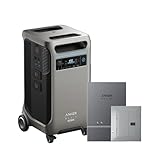
- The F3800 Plus Power Station and Home Power Panel will be dispatched separately. If you receive one item before the others, please await the arrival of the remaining items.
- Power Your Home for Weeks: F3800 Plus starts at 3.84kWh, enough to power your home for a full day. Need more? Expand to 26.9kWh with 6 batteries, or double up to 53.8kWh with 12 for weeks of power.
- Power More Appliances Simultaneously: F3800 Plus offers a massive 6,000W output, 58% more than other portable power stations at the same capacity. For more power, pair two for up to 12,000W max AC output.
- Dual-Voltage for Any Appliance: With 120V / 240V dual-voltage support, you can run everything at home without limitations, including your dryer.
- 63 Minutes UltraFast Recharging: Get outage-ready in just 63 minutes via solar and generator, and recharge flexibly in 4 ways—solar, generator, home power panel, or AC outlet.
Other US grid statistics offer context, not a data-center-only measure. FERC reported 2.8% electricity-demand growth across regional organized markets in 2024. It also reported 2,289 GW of active interconnection-queue capacity at the end of 2024, down from 2,368 GW in 2023. Those queue totals cover different project types and should not be read as data-center demand or as projects certain to be built. FERC State of the Markets Report for 2024, released March 20, 2025.
Who pays—and what a grid queue does not prove
Upgrade costs can involve questions about which customer or customers cause a need, who benefits from the work, and whether costs are assigned in a way that shifts them to other users. FERC’s 2026 orders specifically seek cost transparency and safeguards against cost shifting, while the related docket raises who should pay for upgrades. The cited actions do not establish a single final cost-allocation rule for all regions, nor do they show that data centers universally raise customer bills. Outcomes depend on the applicable tariff, local investment and regulatory decisions. FERC, June 18, 2026; FERC docket RM26-4-000.
A queue is a list of projects seeking connection, not proof that a given local grid is out of power. Queue totals span resource types, evolve over time and do not establish which projects will be completed. A claim about a particular community requires evidence for the relevant utility or grid operator, connection point and system study—not a global queue number. FERC Chairman Mark Christie, in the agency’s March 20, 2025 release of its 2024 State of the Markets report, described rapidly rising demand driven by hyperscale customers such as data centers, generation retirements and a lack of new dispatchable generation as an unsustainable combination. That is Christie’s attributed characterization, not a local finding about every grid. FERC, March 20, 2025.
Quick Recap
Product prices and availability are accurate as of the date/time indicated and are subject to change. Any price and availability information displayed on Amazon at the time of purchase will apply.
Free tools Windows power users keep installed
One-click scans. No signup required.

