
Good climate risk communication helps people understand a relevant hazard, what is and is not known about it, and what they can realistically do. It is not simply a way to raise awareness: the aim is to support informed decisions and protective action. The strongest messages pair accurate evidence with candor about uncertainty, advice tailored to a real audience, and a clear next step.
What is climate risk communication?
Climate risk communication is the exchange of information and advice about climate-related hazards so people facing those risks can make informed decisions. A useful explanation connects the hazard to who or what may be exposed, how vulnerability affects consequences, what likelihood or severity estimates are available, and which practical choices may reduce harm. The World Health Organization (WHO) defines risk communication more broadly as an exchange of information, advice, and opinions between experts or officials and people facing a threat; its purpose is informed decisions and protective action. The United Nations’ climate communication guidance likewise emphasizes educating and mobilizing audiences.
Communication should distinguish a risk explanation from a forecast or an individualized hazard assessment. The right protective advice depends on the hazard, location, timing, and current guidance from relevant local authorities. A communicator can explain how to interpret available information without implying that a general message predicts what will happen to a particular person or place.
How can communicators build trust?
Trust comes from what communicators do, not from a reassuring tone alone. WHO identifies trust between experts, authorities, and affected people as central to effective risk communication. In practice, that means being accurate, timely, transparent about how conclusions were reached, and attentive to the concerns of people who may be affected.
Do these 3 things before closing this tab:
1Fix the driver behind crashes, sound loss and screen glitches2Repair Windows errors before they cause bigger problems3Scan for outdated or missing drivers - takes under a minute#1 Best Overall

- NOAA Weather Scan & Alert - This emergency weather alert radio features S.A.M.E localized programming and alert you to over 60 kinds of weather hazards and emergencies. NOAA Weather Scan will automatically alert you of events.
- S.A.M.E Localized Programming - The Specific Area Message Encoding (S.A.M.E.) allows the user to enter a code that is specific to your country, state, county and in some cases partial county.
- Notification Settings - Program your radio to receive weather alerts from up to 25 different counties and be alerted only when those specific counties are threatened. Color-coded alert indicators show the alert type and its severity.
- Additional Features - SAME localized programming, continuous backlighting option which keeps the LCD on, 25 programmable counties, color-coded alert indicators, alert override automatically switches to warn of impending danger.
- Experience a comprehensive range of radios from Midland, designed to keep you connected and informed. Our radios offer an array of features, including reliable real-time weather alerts, and robust two-way communication capabilities.
- Show your reasoning. Explain the evidence behind a conclusion or recommendation, and distinguish evidence from interpretation.
- Be candid about limits. State where knowledge is incomplete instead of implying certainty that the evidence does not support.
- Listen and respond. Treat community members as participants with local knowledge and concerns, not as passive recipients of a message.
- Use credible, relatable messengers. The United Nations climate communication guidance recommends trusted messengers; the best fit depends on the audience and context.
WHO’s Emergencies: Risk communication Q&A puts the principle plainly: “Explaining honestly what is known and admitting what is uncertain is essential.”
How do you communicate climate uncertainty without losing trust?
Do not hide uncertainty or bury it in technical language. Explain it in relation to the decision at hand: what is known, what remains uncertain, why that uncertainty matters, what is being done to learn more, and when advice may be revisited. This gives readers a useful account of the limits without suggesting that nothing is known.
Rank #2

- NOAA Weather Scan + Alert: NOAA Weather Scan will automatically scan through 10 available weather (WX) band channels and locks onto the strongest weather channel to alert you of severe weather updates. NOAA Weather Alert will sound an alarm indicating that there is a risk of severe weather in your area. NOAA Weather Radio will also be used to broadcast AMBER alerts for missing children.
- S.A.M.E Programming: Improve your emergency preparedness with equipped with digital S.A.M.E. technology, weather radio seamlessly connects to your county's warning system, providing you with instant weather updates from the National Weather Service. Features a convenient USB output, allowing you to charge your devices directly from the radio itself. Program up to 25 counties and choose from 80 different emergency alerts, this advanced weather radio from Midland ensures that you stay informed.
- Warning System: Experience customizable alert options with the WR400 Warning System. You have the flexibility to choose how you want to be alerted, whether it's through an 85 dB siren alarm, a voice alert, or a visual LED flasher. 80 different emergency alerts to keep you informed about various critical situations. Emergency power backup functionality. By using four "AA" batteries (not included), ensure that the radio continues to operate during power outages or when you're using it outdoors.
- Features: Experience the convenience of an Alarm Clock Radio with the Midland WR400. Features a built-in clock with an alarm and a snooze button, along with an AM/FM radio. Wake up to your choice of local weather updates, AM/FM radio stations, or a traditional buzzing alarm. Automatically switches from AM/FM mode to relevant all-hazard alerts, and you'll receive important emergency alerts without having to manually switch modes. Stay informed and start your day off right.
- Alarm Clock: The built-in clock features an alarm with a snooze button and a AM/FM Radio. Wake up to local weather, AM/FM, or buzz. It automatically switches from AM/FM to pertinent all-hazard alerts.
- State what is known. Give the current evidence or assessment relevant to the audience’s question.
- Name what is not known. Specify the uncertainty rather than using a vague disclaimer.
- Explain why it matters. Connect the uncertainty to possible consequences for the decision, timing, or level of precaution.
- Describe how understanding may improve. Say what information is being monitored or what would prompt an update, if that is established.
- Label provisional advice. If a recommendation may change as evidence develops, say so clearly.
WHO advises that interim recommendations be presented as subject to change when new information becomes available. WHO/Europe’s emergency communication guidance similarly recommends explaining what is known, what is not known, and what is being done to learn more. That is general emergency risk communication guidance applied here as a communication principle, not climate-specific forecast guidance.
What makes climate advice actionable?
Actionable advice starts with a concrete decision or behavior, gives a reason the audience can understand, and makes the first step clear. WHO’s risk communication planning framework asks communicators to identify the behavior to encourage or discourage and assess whether the audience understands both the risk and the recommended response. It also highlights confidence, community endorsement, and whether people see the benefits of acting as outweighing the costs.
Rank #3
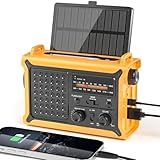
- 【Reliable 𝗡𝗢𝗔𝗔/𝗔𝗠/𝗙𝗠 Reception with Clear Sound】With a high-sensitivity signal chip, noise-reduction circuitry, and an extended antenna, the radio ensures 𝗳𝗮𝘀𝘁, 𝘀𝘁𝗮𝗯𝗹𝗲 𝗿𝗲𝗰𝗲𝗽𝘁𝗶𝗼𝗻 across NOAA FM AM bands. Whether you're sheltering during a storm or camping off the grid, you'll hear every update loud and clear.
- 【𝗛𝗶𝗴𝗵-𝗘𝗳𝗳𝗶𝗰𝗶𝗲𝗻𝗰𝘆 𝗦𝗼𝗹𝗮𝗿 𝗖𝗵𝗮𝗿𝗴𝗶𝗻𝗴 with Extra-Large Panel】The solar radio features a massive 8500mm² high-efficiency monocrystalline solar panel—over 4× larger than typical 2000mm² decorative polysilicon panels on the market. The expansive panel captures significantly more sunlight, delivering faster charging even in low-light conditions. Perfect for camping, power outages, and off-grid emergencies.
- 【𝗛𝗶𝗴𝗵-𝗧𝗼𝗿𝗾𝘂𝗲 𝗖𝗿𝗮𝗻𝗸 𝗣𝗼𝘄𝗲𝗿 for Fast Effortless Charging】With an upgraded internal generator—featuring a larger copper coil and reinforced magnet, the hand crank emergency radio delivers nearly 2× the charging efficiency of standard models. The extended crank arm offers smooth, low-effort rotation, letting you power up the radio or your phone in just 3 minutes when other sources fail. A must-have for your bug-out bag, survival kit, or emergency backpack.
- 【𝗧𝗿𝘂𝗲 𝟭𝟮𝟬𝟬𝟬𝗺𝗔𝗵 Power Capacity That Lasts】 Unlike inflated claims, the emergency crank radio is powered by a real 12000mAh lithium battery that keeps your gear running when you need it most. Whether you’re keeping the radio and lights on for days, you’ll have dependable energy throughout storms, blackouts, or outdoor adventures.
- 【Versatile Emergency Flashlight & Soft Reading Light】The noaa am fm radio includes a powerful flashlight that casts a focused beam up to 260 feet, perfect for dark trails, tents, or emergency navigation. Flip up the frosted reading lamp to enjoy a soft, warm glow that’s easy on the eyes. Both LED lights offer two brightness levels to match your needs—whether for safety or comfort.
- Name the action. Avoid leaving the reader to infer what to do from a description of the hazard.
- Make the reason relevant. Connect the recommended step to the reader’s situation and the risk being discussed.
- Check whether action is feasible. Consider barriers such as cost, access, time, language, or availability of support.
- Point to appropriate help. Direct readers to current, relevant local information or support when available.
- Use plain language. Lead with the important point rather than making readers search through technical detail.
WHO says, “People are more likely to trust and act on information they understand.” The United Nations’ climate guidance recommends connecting climate issues to local or personal experience, using relatable stories, and presenting solutions so audiences are not left overwhelmed.
Should everyone receive the same climate message?
No. People differ in their knowledge, beliefs, values, risk perceptions, information sources, and trusted messengers. Yale’s Program on Climate Change Communication describes distinct climate opinion audiences in the United States and reports that audiences can respond differently to messengers, framing, and communication formats. Its “Six Americas” segments are U.S.-specific; they are not a universal classification for people around the world.
Rank #4

- PRETTY PORTABLE - The noaa radio is as portable as an iPhone, its compact size makes it easy to store in your emergency kit and backpack without taking up much space, and you can easily hold it with just one hand. Comes with a handy lanyard, it's convenient for you to listen.Dimensions: 4.7 x 2.8 x 1.2in, Weight: 0.24lb (exclude battery).
- A ESSENTIAL TO EMERGENCY KIT - This battery radio emergency is about weather news. Weather Band: 162.40-162.55kHz (include 7 NOAA),FM: 87-108 MHz, AM:520-1710 kHz Covering 7 NOAA weather bands, it delivers timely updates on upcoming severe weather conditions like storms, hurricanes and tornadoes, even when power fails or there is no internet available. So you'll get valuable time to stay prepared for emergencies. Note: Not support automatic notification for NOAA alerts.
- BATTERY POWERED RADIO - Runs on just 2 AA batteries, this noaa emergency weather radio ensures continuous operation during power outages, as long as you keep some spare AA batteries at home. When you’re out and about, toss some AA batteries in your bag, and save the hassle of searching for a power outlet. It’s your reliable companion for staying informed and safe.
- SIMPLE OPERATION - It’s a storm radio. Only 3 controls - one for power and volume, one for tuning and one for band selection - tuning in to your favorite station is a breeze. No headaches from the confusing digital screen and buttons; just get relaxed with this weather radio battery powered.
- 2 PLAYBACK MODES - This portable weather radio is equipped with an internal magnetic speaker with 2 sound holes in the front and back, providing a crisp, balanced and stereo sound experience. Plus, if you're in the mood for a little 'me time', simply plug in your headphones for undisturbed enjoyment of music, news, or talk shows.
Use audience research as a starting hypothesis, then listen to the community you are trying to reach. Adapt the message to the decision, local context, language, communication channel, and access to resources. Do not assume an individual’s beliefs or needs from group membership alone.
Yale’s reported figures illustrate change within its U.S. audience segmentation, not a global trend or proof that a particular message caused an outcome:
Free tools Windows power users keep installed
One-click scans. No signup required.
Best Value

- [7400mWh (2000mAh) POWER BANK WILL KEEP DEVICES POWERED] The FosPower FOSPWB-2376 emergency radio incorporates a 7400mWh (2000mAh) power bank capable of providing emergency power to any small tablet or phone.
- [3 POWER SOURCES POWER WHEN YOU NEED IT] Use the emergency weather radio's 3 power sources when you need a boost of power or need to recharge the radio. The radio's crank lever and solar panel are both capable of regenerating enough power to keep the radio, lights, and SOS alarm ready to go when you need it most. AAA Batteries ensure you have power when not able to regenerate power.
- [2 LIGHT SOURCES ALWAYS POWERED] The emergency crank radio can also provide light. The 4 LED reading light and 1W flashlight provides enough output to keep you and your loved ones out of the dark in an emergency situation.
- [NOAA EMERGENCY WEATHER BROADCAST ACCESS] The radio will dependably receive up to the second emergency weather forecasts and emergency news broadcasts from NOAA and AM/FM stations.
- [LIMITED LIFETIME WARRANTY] Includes a Limited Lifetime Warranty. Please visit FosPower's website for more information.
| Yale audience category | 2015 | 2025 | Reported change |
|---|---|---|---|
| Alarmed | 11% | 25% | Rose by 14 percentage points |
| Cautious | 24% | 17% | Fell by 7 percentage points |
| Alarmed or Concerned combined | 42% | 52% | Rose by 10 percentage points |
These are Yale Program on Climate Change Communication figures for its U.S. audience segmentation. They do not establish that any specific communication intervention produced the changes.
Independent reader supportYour contribution helps us test, update, and keep practical guides available for everyone.How should you compare climate communication approaches?
Compare approaches against the audience and decision they are meant to serve. A message that is memorable but misleading, or clear but impossible to act on, is not effective risk communication.
- Accuracy and uncertainty: Does it represent evidence faithfully and disclose relevant limits?
- Trust and messenger fit: Does the audience regard the messenger as credible and attentive?
- Comprehension: Can the intended audience explain the risk and advice in their own words?
- Actionability: Is there a clear next step, and can people realistically take it?
- Local relevance and equity: Does the message account for location, exposure, vulnerability, language, and access to support?
- Channel and format: Does the information work in the channels the audience uses?
Yale’s messaging research describes testing combinations of message, messenger, and format, with outcomes such as beliefs, attitudes, policy support, and behavior. Testing can show how an approach performs with a particular audience and outcome; it does not guarantee behavior change. For practical conversation prompts and training materials, the U.S. Climate Resilience Toolkit lists NOAA-linked resources, which are oriented to U.S. resilience practice.
Where can communicators find further guidance?
The United Nations’ climate communication guidance is useful for approaches centered on trusted messengers, relatable stories, and solutions. WHO’s risk communication materials offer transferable guidance on trust, uncertainty, plain language, and audience action; they are general risk and health communication resources, not climate-specific scientific assessments. The American Psychological Association’s risk communication guide lists The Uncertainty Handbook: A Practical Guide for Climate Change Communicators as further reading. The U.S. Climate Resilience Toolkit also points to NOAA-linked training and community-engagement resources.
Recommended Free Tools
Quick Recap
Product prices and availability are accurate as of the date/time indicated and are subject to change. Any price and availability information displayed on Amazon at the time of purchase will apply.

