
Do these 3 things before closing this tab:
1Scan for outdated or missing drivers - takes under a minute2Repair Windows errors before they cause bigger problems3Fix the driver behind crashes, sound loss and screen glitchesWhen cell service disappears, technicians can still work and communicate—but no single tool replaces a cellular connection for every task. Prepare job information for offline use, choose separate paths for voice and short messages where needed, and agree on what to do if every link fails. Test the whole workflow at real job sites before relying on it.
Start by separating communication needs
“Connected” can mean several different things: talking to dispatch, sending a brief check-in, sharing a work-order update, seeing a location, or reaching the internet. Each requires different capabilities. A satellite messenger may handle short messages; a radio may provide team voice; saved work data can keep a job moving offline. A location fix alone does not transmit anything to dispatch.
| # | Preview | Product | Price | |
|---|---|---|---|---|
| 1 |
|
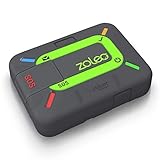
ZOLEO Satellite Communicator (Slate Grey) | $126.00 | Buy on Amazon |
| 2 |

|
Garmin inReach® Messenger Satellite Communicator, Global Two-Way Messaging | $272.00 | Buy on Amazon |
| 3 |

|
Spot X with Bluetooth 2-Way Satellite Messenger | $199.95 | Buy on Amazon |
| 4 |

|
Garmin inReach® Mini 3 Plus, SOS Satellite Communicator | $445.75 | Buy on Amazon |
| 5 |
|
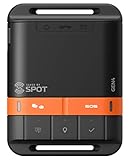
Spot Gen 4 Satellite GPS Messenger | $99.95 | Buy on Amazon |
| Option | Best suited to | Key limits and checks |
|---|---|---|
| Satellite messenger or satellite-to-device messaging | Short messages and supported check-ins outside terrestrial coverage | Features depend on device, service, geography, compatible handset or carrier, and access to the sky. Check message types, plan, battery life, and check-in workflow. Do not assume broadband or emergency-call parity. |
| Two-way radio | Voice coordination among a crew using a radio system | Requires compatible radios, channel planning, training, and any applicable operating permissions. Range depends on terrain and system; confirm repeaters, coverage, and dispatch integration. |
| Offline-capable phone or tablet app | Using saved job details, maps, forms, and instructions | It does not create a live connection. Changes generally wait to synchronize until a network returns. Test the specific app’s offline scope, data protection, and conflict handling. |
| Local Wi-Fi or Bluetooth | Connecting nearby devices or equipment | Local links do not automatically reach dispatch or the internet. Check range, topology, security, compatibility, and whether a gateway or backhaul exists. |
| Portable cellular/LTE system | Creating a temporary local network for a site or crew | Outside connectivity still depends on infrastructure and backhaul. Coverage footprint, deployment time, licensing, security, and support matter. NIST’s discussion is historical technical context, not a current equipment comparison (NIST SP 1191). |
NIST distinguishes local Wi-Fi, which can operate device-to-device, from Bluetooth’s short-range communication; it also describes GNSS positioning as independent of cellular networks. That means a technician may be able to determine a position without being able to send it. NIST’s communication mechanisms overview explains these distinctions.
What satellite messaging can—and cannot—do
Satellite messaging is a useful option to investigate when a crew works beyond terrestrial coverage. The FCC says consumer mobile devices increasingly support text messaging over mobile satellite spectrum when cellular and Wi-Fi are unavailable. Capabilities differ by device and service, however, and the FCC document says questions about 911 connectivity via satellite remain pending. Ordinary messaging capability is not proof that emergency calls will work or that responders will be reached (FCC satellite messaging discussion).
#1 Best Overall
- Global satellite messaging: Stay connected beyond cell coverage, use ZOLEO with your smartphone to transmit text messages and e-mails over the Iridium satellite network, cellular or Wi-Fi using the lowest-cost network available (service plan required)
- Emergency SOS: Send an SOS alert with your GPS location to 24/7 emergency monitoring center if something goes wrong, or access Medical Assist for non-emergency help
- Optional Travel Risk Management Coverage: Feel more secure wherever you go with a Field Rescue Membership from Global Rescue. Affordably priced, this travel risk management add-on offers immediate medical coverage for safe extraction and transportation to the nearest capable medical facility.
- Dedicated SMS number: An assigned ZOLEO SMS number and email enables contacts to reach out directly when you're off the grid
- Check-in: Send unlimited check-ins via the ZOLEO device or app, included in your plan
Satellite-to-device service is also an evolving category, not a blanket coverage promise. In March 2024, the FCC adopted a Supplemental Coverage from Space framework allowing terrestrial wireless providers and satellite operators to collaborate to serve subscribers outside terrestrial coverage, subject to licensing prerequisites such as a spectrum lease in the relevant area. The order establishes a regulatory framework; it does not establish that a particular route, carrier, device, or plan has service today (FCC 24-28).
NTIA’s 2024 request for comment describes direct-to-device services using mobile-satellite services with traditional phones, IoT devices, or equipment designed primarily for satellite operation. It frames an early use case as outdoor areas without terrestrial wireless service, rather than guaranteeing a particular product’s availability (NTIA’s Direct-to-Device Services notice).
Rank #2
- Small, rugged, lightweight satellite communicator enables two-way text messaging even in areas with no cell coverage (Active satellite subscription required. Some jurisdictions regulate or prohibit the use of satellite communication devices)
- Send two-way messages globally; easily text back and forth directly with friends via the Garmin Messenger app, even when you’re out of cellular coverage. (Active satellite subscription required. Some jurisdictions regulate or prohibit the use of satellite communication devices.)
- Group messaging via the Garmin Messenger smartphone app lets you share your adventures with multiple contacts simultaneously — and have group text chats with friends and family
- Check in with contacts directly by using preset messages that do not count toward your allotted text messages (Active satellite subscription required. Some jurisdictions regulate or prohibit the use of satellite communication devices)
- Share your GPS location (Active satellite subscription required. Some jurisdictions regulate or prohibit the use of satellite communication devices)
Keep essential work available offline
Offline preparation is part of the communications plan, not a substitute for one. Before a technician leaves coverage, make the minimum viable job packet available on the device: the address and access notes, maps, procedures, safety documents, contacts, and forms. Define how updates are recorded while offline and reconciled when the connection returns. App behavior varies; verify that the chosen field-service software actually makes each required item available offline and handles delayed synchronization as expected.
Local Wi-Fi or Bluetooth can help devices exchange information when they are near one another, but neither automatically provides a path to dispatch. If nearby sharing is part of the plan, identify the devices that act as peers and whether any gateway has a working backhaul.
Rank #3
- SYNC WITH BLUETOOTH: Connect to SpotX to cellphone so you can communicate with family or even search and rescue; Use as a standalone communication device with it's own dedicated US mobile number to receive messages
- PEACE OF MIND: Send S.O.S. to 24/7 Search & Rescue service, message back and forth about the nature of your emergency, receive confirmation when help is on the way; Message any cell number or email address virtually anywhere
- GLOBALSTAR SATELLITE & SPOT products use GPS to determine location and transmit GPS coordinates to others; SPOT users can notify friends, family or emergency rescue their exact GPS coordinates
- WHAT'S IN THE BOX: SpotX Device, strap and carabiner, micro usb data/power cable, quick start guide, SOS mirrored sticker, warranty card and kickstand
- PURCHASE, ACTIVATE, EXPLORE: Grab a Spot X 2-way Satellite Messenger; Activate by selecting your service plan; Get out there and explore the world with peace of mind
Build the plan around the route and job
- Map coverage gaps. Identify routes and work sites with intermittent service versus complete dead zones. Note where a technician can expect to regain a connection.
- Classify each task. Decide which work needs live voice, short messages, work-order updates, location sharing, or broadband. A scheduled check-in may not require the same solution as transferring large files.
- Assign a communication path. Match the task to the capability: for example, radio for crew voice, a satellite service for supported off-grid messages, and an offline app for saved work data. Confirm exact features with the device and service provider.
- Set check-in and escalation rules. Specify check-in intervals, who acknowledges them, how dispatch responds to a missed check-in, and what the technician does when no connection is available.
- Define offline recordkeeping. Tell technicians where to record work completed, hazards, or changes while disconnected, and who resolves conflicting updates after synchronization.
- Test in the field. Rehearse the complete workflow in the actual terrain with the actual devices, service plans, and dispatch process. Include a missed check-in, depleted battery, delayed synchronization, and the emergency procedure.
Why a phone-only plan can fail
A phone is convenient, but it should not be the only contingency for work in known dead zones. NIST’s 2021 Voices of First Responders, Phase 2, Volume 2 documents public-safety participants’ reports of dead zones, service disruptions, battery issues, and weather-related device problems. In the report’s described response set, 73.26% of responses elaborated on coverage or dead-zone problems. That figure is from a first-responder survey—not a measurement of commercial field technicians or a controlled test of phones and services (NISTIR 8314).
One anonymous participant in that survey said, “Smart phones should never be considered a reliable alternative to the 2-way radio system.” This is participant testimony in a public-safety survey, not a universal NIST recommendation. Its practical relevance is the need to avoid assuming that one device or network will be dependable everywhere.
Rank #4
- Lightweight SOS satellite communicator uses the global Iridium satellite network so you can stay connected without cell coverage (active satellite subscription required; some jurisdictions regulate or prohibit the use of satellite communication devices)
- Explore with peace of mind knowing you can trigger an interactive SOS message with location coordinates to Garmin Response℠, a 24/7-staffed international coordination center, for help in an emergency (active satellite subscription required; some jurisdictions regulate or prohibit the use of satellite communication devices)
- Exchange photos, texts and voice messages without cell service; taking and sending photos requires pairing your inReach device with your compatible smartphone by using the Garmin Messenger app (active satellite subscription required; some jurisdictions regulate or prohibit the use of satellite communication devices)
- Rugged design features a high-resolution and scratch-resistant color touchscreen; can withstand impact, extreme weather and harsh temperatures (IP67 water rating)
- Internal, rechargeable lithium battery supports up to 350 hours with 10-minute inReach tracking and up to 95 hours in performance messaging mode
Protect devices and define emergency behavior
Work devices may contain customer details, access instructions, and operational records. Set rules for remote access and personally owned devices, protect information stored locally, and account for the security risks of mobile devices and wearables. NIST’s SP 800-114 Rev. 1 guide addresses telework and BYOD security. Its first-responder guidance, NISTIR 8235, covers selecting and securing mobile and wearable devices in a public-safety context; apply it as relevant rather than treating it as a field-service product certification.
Write down what technicians should do in an emergency if cellular service is absent, and verify that procedure with the actual device, service, and local emergency arrangements. Do not infer 911 availability from ordinary satellite messaging: the FCC says satellite emergency-connectivity questions remain pending.
Free tools Windows power users keep installed
One-click scans. No signup required.
Quick Recap
Best Value
- MEANT FOR ADVENTURE: Spot Gen4 provides critical, life-saving line of communication when you travel beyond cell towers; Let family know you're ok or push the SOS button to send your GPS to emergency responders if you need help
- NO CELL PHONE OR SERVICE-NO PROBLEM: With the Tracking feature Gen4 can transmit location updates when you are moving and when you stop; Keep one in your child's backpack for the walk home
- GLOBALSTAR SATELLITE & SPOT products use GPS to determine location and transmit GPS coordinates to others; SPOT users can notify friends, family or emergency rescue their exact GPS coordinates
- WHAT'S IN THE BOX: SPOT Gen4 device, Strap and Carabiner, USB Cable, Batteries and quick start guide; Subscription required; Two service plans available
- PURCHASE, ACTIVATE, EXPLORE: Grab a Spot Gen4; Activate by selecting your service plan; Get out there and explore the world with peace of mind
Product prices and availability are accurate as of the date/time indicated and are subject to change. Any price and availability information displayed on Amazon at the time of purchase will apply.

