
Short answer: The official sources cited here do not identify uranium compounds as a normal ingredient in consumer electronics. They document uranium in some decorative glass and historic ceramic glazes, and describe a separate silicon-treatment process that may leave residual byproduct material without identifying it as uranium. Those examples do not show that uranium is routinely built into finished electronic devices.
Where uranium is documented in consumer products
The U.S. Environmental Protection Agency describes uranium-bearing “Vaseline” glass and historic ceramic glazes as consumer-product uses. Uranium gives some glass its color and can make it fluoresce under black light. These are decorative materials, not electronic components. The Australian Radiation Protection and Nuclear Safety Agency also discusses uranium in decorative glass and some porcelain mixes.


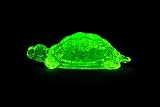


Sources: U.S. EPA, TENORM: Consumer Products; ARPANSA, Ionising radiation in consumer products frequently asked questions.
Does radiation treatment of silicon mean uranium is in a chip?
No such conclusion follows from the cited NRC guidance. The U.S. Nuclear Regulatory Commission says radiation may be used to change the electrical properties of silicon chips or wafers and that this process may result in residual byproduct material in the final product. The passage does not identify uranium as the material used or as the residue. It describes a possible manufacturing residue, not evidence that uranium is a normal chip ingredient.
#1 Best Overall
The NRC says licensed releases must meet applicable exempt concentration limits. That is a regulatory condition on the material and product; it is not a device-by-device inventory of consumer electronics.
Source: U.S. NRC, License-Exempt Consumer Product Uses of Radioactive Material.
Rank #2
Why some CFLs are a separate case
Some compact fluorescent lamps used sealed starter or glow-switch materials such as promethium-147, krypton-85, or tritium. These are not uranium. Utah’s Department of Environmental Quality distinguishes those lamps from CFLs with electronic ballasts, whose starters do not use radioactive material, according to the agency.
This example concerns particular lamp starter designs. It is not evidence that uranium is present in CFLs or that radioactive material is a general feature of consumer electronics.
Recommended Free Tools
Source: Utah DEQ, Consumer Products and Radiation.
Independent reader supportYour contribution helps us test, update, and keep practical guides available for everyone.What the safety guidance does—and does not—say
The NRC describes license-exempt consumer-product uses as conditional: the Commission must determine that the product and its use do not pose an unreasonable risk, and the framework includes product safeguards and licensed initial distribution. A regulatory exemption is therefore not a blanket statement about every radioactive material or every object.
For uranium glassware, the EPA says radiation received during use is unlikely to exceed background radiation levels. The agency gives a different caution for some older radioactive glazed dishware, including pre-1972 Fiesta ware, and advises against using those pieces for eating or drinking. These statements concern the specified types of glassware and dishware; they are not item-specific measurements or a universal assessment of all uranium-bearing objects.
Sources: U.S. NRC, License-Exempt Consumer Product Uses of Radioactive Material; U.S. EPA, Frequent Questions: Radiation Sources.
Quick Recap
Best Value
How to interpret claims about uranium in electronics
- Uranium in antique glass or glaze: a documented decorative-material use, not an electronics use.
- Residual material after silicon irradiation: a possible process outcome described by the NRC; the cited page does not name uranium.
- Radioactive CFL starter materials: specific examples of other radioactive substances in some lamp designs, not uranium.
- Ordinary consumer electronics: the official sources cited here do not identify uranium as a normal constituent, but they are not an exhaustive census of every product, manufacturing process, or supply chain.
Product prices and availability are accurate as of the date/time indicated and are subject to change. Any price and availability information displayed on Amazon at the time of purchase will apply.
Do these 3 things before closing this tab:
1Repair Windows errors before they cause bigger problems2Fix the driver behind crashes, sound loss and screen glitches3Clear out junk files and repair common Windows errors
