
Quick wins for a faster PC:
Clear out junk files and repair common Windows errorsFree Scan →Fix the driver behind crashes, sound loss and screen glitchesFind Drivers →Repair Windows errors before they cause bigger problemsFix Now →Intel Galileo is historically associated with Windows 10 IoT Core, not Windows IoT Enterprise. A historical Microsoft presentation search result lists Galileo Gen 1 and Gen 2 in an IoT Core context, but that is not proof of a currently available image, working installation procedure, or supported setup. Intel has discontinued the Galileo development boards, so treat this as a legacy project rather than a supported way to run Windows IoT today.
Which Windows IoT edition is associated with Galileo?
The historical Galileo reference is to Windows 10 IoT Core. The indexed result for a Microsoft presentation lists “Intel Galileo Gen.1/2(x86)” in that context. The underlying PDF was not available for verification, so this establishes a historical association only—not current compatibility or a tested install path.


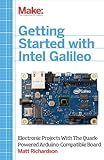
Windows IoT Core and Windows IoT Enterprise are different products. Microsoft’s Windows IoT FAQ describes Core as a minimal experience, distinct from the classic Windows interface, restricted to running one Universal Windows Application at a time. Enterprise provides a fuller Windows desktop experience and device lockdown features. The reviewed sources do not establish that Galileo can run IoT Enterprise.
| Edition | Experience described by Microsoft | What the Galileo evidence establishes |
|---|---|---|
| Windows IoT Core | Minimal experience; one Universal Windows Application at a time. | A historical Microsoft presentation search result lists Galileo Gen 1 and Gen 2 in an IoT Core context; it does not verify a current image or procedure. |
| Windows IoT Enterprise | Fuller desktop experience and device lockdown features. | No reviewed source establishes Galileo compatibility. |
Microsoft also says IoT Core Services support requires a per-device subscription. The reviewed information does not establish current pricing or availability for a Galileo-specific service arrangement.
#1 Best Overall
Is Intel Galileo still supported?
No. Intel’s maker-product notice says it discontinued Intel Galileo development boards. Intel said online resources would be maintained through June 15, 2020; it also noted that open-source licensed files generally remain available in source and binary form on GitHub. Availability of files does not mean that Intel still supports the board or that an old OS image can be installed successfully.
Intel documentation remains useful as archival hardware and setup reference. Its Galileo getting-started article was last reviewed August 9, 2017, and points to the Intel IoT Developer Kit. The Gen 2 support page lists the user guide and getting-started guide, but these references do not confirm that downloads, package signatures, or setup steps are live or maintained today.
Rank #2
What hardware constraints matter?
Intel’s June 2014 board guide specifies hardware that can help identify the limits of an existing board. These figures describe the board; they do not demonstrate that a particular Windows image will work.
| Specification | Intel’s stated value or detail |
|---|---|
| Processor | 400 MHz, 32-bit Intel Quark SoC X1000 (Intel, 2014) |
| Memory | 256 MB DDR3 RAM (Intel, 2014) |
| Power | 2.1 mm center-positive power jack; Intel recommends an AC-to-DC adapter rated 5 V at up to 3 A (Intel, 2014). Check the connector and polarity before using a replacement supply. |
| Expansion and storage | Arduino Uno Revision 3 shield pinout; microSD support up to 32 GB (Intel, 2014) |
| Connectivity | Ethernet, USB host and client ports, UART, and mini PCI Express. Intel notes the mini PCIe connector can support Wi-Fi, Bluetooth, or cellular modules; compatibility depends on the specific module. |
Can you install Windows IoT on a Galileo now?
The available evidence is not enough to give a reliable present-day installation recipe. It does not verify a downloadable Galileo image, a working toolchain, a board-generation-specific procedure, or a successful boot. In particular, the old Intel getting-started documentation points to a historical developer kit rather than demonstrating a maintained Windows IoT workflow.
Free tools Windows power users keep installed
One-click scans. No signup required.
Rank #3

- FTDI FT232RL Chipset: Built-in industrial grade FTDI FT232RL chip, high stability, enough to handle a variety of complex situations.
- 6FT USB to RS232 3.5mm programming cable is designed for intel galileo Gen1 development board .ect.
- OS Compatibility: IQlionco USB serial rs232 to 3.5mm AJ cable support the operating systems of windows, linux and Mac OS. Windows8 / 10, Mac OS does not need to install the driver manually When your laptop/PC is connected to the Internet , plug and play
- 6FT extra-long braided cable with gold-plated connectors
- Customer Support:Offering permanent technical support and a 1-year product replacement service.All questions will be answered for you within 24 hours
If you are investigating an existing board, use the old Intel guides as archival documentation, not as assurance that their links or instructions still work. Before attempting an installation, independently verify the exact image and its integrity, and confirm that the instructions match your Galileo generation. Do not assume that a microSD card, the board’s published specifications, or a historical compatibility listing is sufficient to make an OS image boot.
Quick Recap
Rank #4
Product prices and availability are accurate as of the date/time indicated and are subject to change. Any price and availability information displayed on Amazon at the time of purchase will apply.

