
Outdated Drivers Are Slowing You Down
One free scan finds every outdated or missing driver and matches the right update for your exact hardware.Free scan · exact hardware matchPC Slower Than It Used to Be?
A free scan shows the junk files, broken settings and background clutter dragging Windows down - then fixes them in one click.Free scan · Windows 10 & 11Yes, an unreliable mushroom-foraging book can put a reader at risk if it gives a confident but wrong identification. The warning grew out of a 2023 report about apparently AI-generated guides listed on Amazon. Experts’ central advice is broader than the controversy: never eat a wild mushroom unless a qualified expert has identified it.
Why did experts warn about AI-generated mushroom books?
The 2023 Amazon-book controversy
In an August 31, 2023, report, Futurism’s Maggie Harrison Dupré described mushroom-foraging guides on Amazon that appeared to be AI-generated. The report noted formulaic writing, questionable or apparently fabricated author identities, and a general lack of disclosure about AI use. The New York Mycological Society urged readers to buy books by known authors and foragers, warning that the stakes can be life or death.


Sigrid Jakob, then president of the New York Mycological Society, told 404 Media that North America has hundreds of poisonous fungi, including several deadly species. She warned that a poor description in a book could mislead a reader into eating a poisonous mushroom.
What the reporting does—and does not—establish
The 2023 reporting documents apparent AI-generated books and expert concern. It does not establish that any particular book caused a poisoning, and it does not show that every mushroom guide on Amazon—or every AI-assisted book—is inaccurate. The underlying hazard is that an untrustworthy description can be mistaken for a dependable identification.
#1 Best Overall
Why can a wrong mushroom description be so dangerous?
Some poisonous mushrooms resemble edible species. If a guide gives incorrect or incomplete distinguishing features, a reader may mistake one for the other. A confident tone, polished prose, or an attractive cover cannot establish that a species description is correct.
The danger is not hypothetical. A Centers for Disease Control and Prevention analysis published in 2021, using U.S. poison-control and health-care data, reported approximately 7,500 poisonous-mushroom ingestions annually. The CDC said wild mushrooms should not be consumed unless an expert has identified them.
A separate CDC report in 2026 described a Northern California amatoxin-poisoning outbreak from November 2025 through March 2026: 39 cases, three liver transplants, and four deaths. The CDC noted that toxic mushrooms can resemble edible species and called for public education and expert identification. These figures show the danger of poisonous-mushroom ingestion; they do not link those cases to AI-generated books.
How can you assess a mushroom field guide?
A guide can help you learn terminology and understand what features experts examine, but it is not a safety clearance. Before relying on one as a reference, check for:
Quick wins for a faster PC:
Fix the driver behind crashes, sound loss and screen glitchesFind Drivers →Clear out junk files and repair common Windows errorsFree Scan →Scan for outdated or missing drivers - takes under a minuteDriver Scan →- Verifiable expertise: The author’s relevant experience, qualifications, or affiliation with a recognized mycological organization should be identifiable and independently checkable. An author biography that cannot be verified is a reason for caution.
- Regional fit: The book should cover the area where you found the mushroom. Species and look-alikes vary by region, so a general guide may not explain the distinctions needed for a local identification.
- Clear diagnostic detail: Look for careful descriptions of identifying features, not just a name and a brief resemblance. Photographs should be high quality and show useful features; one image alone may not convey the range of variation.
- Look-alike warnings: A responsible guide should discuss dangerous species that resemble edible ones and explain the limits of identification from photographs or brief descriptions.
- Safety warnings and sourcing: Prefer books that explicitly require expert confirmation before consumption, identify their sources, and do not encourage tasting as an identification test.
- Current, transparent publication details: Check the edition date and whether the author and publisher are clearly identified. A recently listed title is not necessarily a recently reviewed or reliably updated guide.
Formulaic language or an unverifiable author may warrant extra skepticism, as the 2023 reporting illustrates, but neither is a reliable test for whether AI was used. Conversely, a disclosure about AI does not by itself prove a book is wrong. Judge whether the author, sources, regional coverage, and safety guidance can be checked—and do not use the book to decide whether to eat a specimen.
Can a field guide or app tell you whether a wild mushroom is edible?
No. A book or app is supplementary; it cannot replace positive identification by a qualified local expert before you eat a wild mushroom. Photographs and written descriptions may omit a distinguishing feature, and a mistaken identification can have serious consequences. If you cannot get an expert identification, do not eat it.
Rank #4
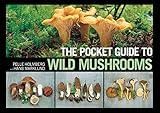
- A Must Buy Item.
- Built To Last.
- Great Item To Give as A Gift.
What should you do if someone has eaten a wild mushroom?
Contact poison control or seek medical advice urgently after a wild mushroom is eaten, even if the person feels well. Poison Control warns that symptoms can be delayed for many hours, so waiting for symptoms is not a safe way to judge the risk. Cooking does not make a poisonous mushroom safe.
Quick Recap
Best Value
Product prices and availability are accurate as of the date/time indicated and are subject to change. Any price and availability information displayed on Amazon at the time of purchase will apply.
Recommended Free Tools

