
Free tools Windows power users keep installed
One-click scans. No signup required.
ADLINK’s SBC35 Series is a family of 146 × 102 mm industrial single-board computers designed for embedded systems where space is limited. The range began with SBC35-RPL and SBC35-ALN in 2024 and has since expanded to include SBC35-MTL, SBC35-ASL, and SBC35-ARL. Models differ in processor class, memory and display limits, I/O, and intended workloads, so confirm the exact SKU and current documentation before designing around one.
What is the ADLINK SBC35 Series?
The SBC35 Series is ADLINK’s line of compact 3.5-inch single-board computers for embedded applications. ADLINK announced the first two models, SBC35-RPL and SBC35-ALN, on August 2, 2024. Both use a 146 × 102 mm board footprint and support the company’s SBC-FM expansion concept. ADLINK cites automation, transportation, medical applications, smart-city projects, autonomous mobile robots (AMRs), EV charging stations, and self-service kiosks as potential settings; these are vendor-stated use cases, not independent validation of a board’s suitability for a particular system. ADLINK’s 2024 launch announcement
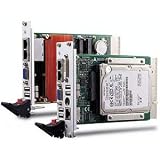


The range has grown since launch. ADLINK announced SBC35-MTL and SBC35-ASL in June 2025, and its current portfolio overview also lists SBC35-ARL. A product listing establishes that ADLINK documents a model, not that it is in stock or shipping in a particular region.
How do SBC35-RPL and SBC35-ALN differ?
The original pair addresses different processor and resource requirements. ADLINK positioned the RPL for higher performance and the ALN for efficiency. The figures below are manufacturer specifications; check the current datasheet and ordering configuration for the exact board you are considering.
Recommended Free Tools
| Model | Processor | Maximum memory | Independent displays | Documented I/O and features |
|---|---|---|---|---|
| SBC35-RPL | 13th-generation Intel Core, Core i3, i5, i7, and Celeron options | Up to 64 GB DDR5-4800 | Up to four | ADLINK’s datasheet lists two Gigabit Ethernet ports, one supporting 2.5GbE; multiple M.2 slots; serial interfaces; and 12–24 V input. |
| SBC35-ALN | Intel N97 | Up to 16 GB DDR5-4800 | Up to three | ADLINK’s datasheet lists dual Gigabit Ethernet, SATA, M.2, and optional TPM 2.0. |
Sources: ADLINK’s 2024 launch announcement, SBC35-RPL product page and datasheet, and SBC35-ALN product page and datasheet.
Which SBC35 board is suited to edge AI or rugged deployments?
SBC35-MTL for vision and edge AI
ADLINK describes the SBC35-MTL as based on Intel Core Ultra Series 1 processors with an integrated NPU. The company positions it for vision-centric and edge-AI applications, including AMRs, inspection, smart retail, and robotics. Those use cases describe ADLINK’s intended positioning; they do not establish measured AI performance for a specific workload.
SBC35-ASL for demanding environments
The SBC35-ASL uses Intel Atom x7000RE processors. ADLINK describes it as fanless and intended for rugged embedded deployments, including outdoor and thermally challenging settings. Its June 2025 announcement gives a wide-temperature range of -40°C to 85°C; confirm the applicable operating limits and conditions for the specific configuration in current documentation.
SBC35-ARL for a newer Core Ultra generation
ADLINK’s current portfolio overview lists the SBC35-ARL, based on Intel Core Ultra Series 2. A separate product page describes an integrated NPU and a reserved MIPI-CSI signal pathway. The presence of that pathway does not by itself establish compatibility with a particular camera; check the board’s current documentation and camera requirements.
Rank #3

- Industrial board ROBO-8712EVLA BIOS R1.00.W1 B9302344AB18712E820
ADLINK’s announcement of the MTL and ASL models associates them with vision and AI workloads, EV chargers, outdoor kiosks, transportation, and industrial automation. These are manufacturer-stated application examples. Read ADLINK’s June 2025 announcement. For the current listed range, see ADLINK’s SBC35 portfolio overview and the SBC35-ARL product page.
Independent reader supportYour contribution helps us test, update, and keep practical guides available for everyone.What I/O and expansion does the SBC35 provide?
The design combines onboard interfaces with a modular expansion route. ADLINK describes SBC-FM modules as supporting PCIe, USB, and LPC/eSPI signal options. That does not mean every SBC35 model exposes every signal or connector: available I/O varies by model and ordering configuration. Consult the specific board’s datasheet for connector locations, signal routing, and supported combinations.
When checking fit for a system, compare the exact board against its requirements for:
- Ethernet speed and port count, USB, serial or COM ports, and digital I/O.
- Storage and M.2 interfaces, including any needed expansion signals.
- Display count and output requirements.
- Power input, thermal design, enclosure, and operating-temperature limits.
- Operating-system support, lifecycle terms, availability, and the exact ordering SKU.
The first four areas are described in varying combinations across ADLINK’s launch materials and model datasheets. Confirm OS support, availability, and lifecycle conditions in current SKU-specific documentation or with ADLINK.
What’s actually slowing this PC down?
Pick the symptom - the matching free tool is one click away.
Quick Recap
How to choose an SBC35 model
- Match the workload to the processor. Compare the RPL’s listed processor options, the ALN’s Intel N97, the MTL’s Core Ultra Series 1 with integrated NPU, the ASL’s Atom x7000RE, and the ARL’s Core Ultra Series 2. For AI or vision tasks, verify the required software and performance against the specific application; the product positioning alone is not a benchmark.
- Check memory and display needs. The 2024 launch materials state up to 64 GB and four independent displays for RPL, and up to 16 GB and three displays for ALN. Confirm that the exact configuration supports the capacity and outputs your system needs.
- Map every required connection. Use the model-specific datasheet to verify Ethernet, serial, USB, storage, M.2, camera, and SBC-FM expansion requirements rather than assuming that a family-level feature appears on every board.
- Validate installation conditions. Check power, cooling, temperature range, enclosure, and any fanless requirement against the selected configuration’s documentation.
- Confirm software and procurement details. Ask ADLINK or an authorized supplier to verify OS support, ordering code, availability, and lifecycle or support terms before committing to a design.
Product prices and availability are accurate as of the date/time indicated and are subject to change. Any price and availability information displayed on Amazon at the time of purchase will apply.

