
The AMD EPYC 7262 is a capable 8-core server processor whose unusual strength is the platform and cache around those cores: it combines 128MB of L3 cache with eight-channel DDR4-3200 memory and PCIe Gen4 connectivity. It makes the most sense for cache-sensitive, lightly to moderately threaded services or I/O-heavy systems—not workloads that need maximum parallel throughput from every dollar.
What is the AMD EPYC 7262?
The EPYC 7262 is an AMD EPYC 7002-series (“Rome”) server CPU. It has 8 cores, 16 threads, a 3.2GHz base clock, a maximum boost clock of 3.4GHz, 128MB of L3 cache, and a 155W thermal design power (TDP). AMD’s EPYC 7002 datasheet lists the same core, clock, cache, and TDP specifications, as well as support for one- or two-socket systems. ServeTheHome’s review and the AMD EPYC 7002 datasheet provide the specifications.
![AMD EPYC 9004 [4th Gen] 9124 Hexadeca-core [16 Core] 3 GHz Processor](https://m.media-amazon.com/images/I/316ISTIk-UL._SL160_.jpg)
The defining trade-off is straightforward: this is a relatively small core count paired with unusually large cache and a high-end server platform. That combination can suit workloads that benefit from fast cores, cache, memory bandwidth, or expansion I/O, but it does not turn eight cores into a high-throughput many-core processor.
Why does an 8-core EPYC have 128MB of cache?
ServeTheHome reports 16MB of L3 cache per core, adding up to 128MB across the 7262’s eight cores. The processor also has 512KB of L2 cache per core. The large L3 cache is notable relative to the core count, but cache size alone does not determine performance: results depend on whether the workload can use the cache effectively and whether it can use more than eight cores.
Quick wins for a faster PC:
Fix the driver behind crashes, sound loss and screen glitchesFind Drivers →Repair Windows errors before they cause bigger problemsFix Now →#1 Best Overall

- Original premium quality.
That distinction helps explain the 7262’s mixed benchmark profile. In ServeTheHome’s controlled Linux-Bench and Linux-Bench2 testing, the processor excelled in c-ray 1.1, which the review describes as a best-case workload, surpassing the 12-core Intel Xeon Silver 4214 in that test. In chess, it performed closer to the Xeon Silver 4208 and 4210. The review also ran kernel compilation, 7-Zip, NAMD, OpenSSL, and UnixBench. Those results are workload-specific, not a promise that the 7262 will beat a 12-core Xeon in general.
What does the platform offer?
Despite its eight cores, the 7262 fits into a substantial server platform. ServeTheHome reports support for eight-channel DDR4-3200 RDIMMs, up to 4TB of memory, and up to 128 PCIe Gen4 lanes in a single-socket system. These capabilities can matter more than core count for servers built around high memory capacity, storage, or expansion devices.
Rank #2
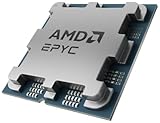
- The processor features Socket AM5 socket for installation on the PCB
- EPYC product line processor for better usability and increased efficiency
- Dodeca-core (12 Core) processor core allows multitasking with great reliability and fast processing speed
- 64 MB of L3 cache memory provides excellent hit rate in short access time enabling improved system performance
- Processor with 3.40 GHz clock speed for reliable and fast execution of instructions to ensure maximum convenience and feasibility
The CPU also supports two-socket configurations. That can provide a staged-upgrade path for a system designed for dual sockets, whereas AMD’s P-series EPYC alternatives are limited to single-socket use. A dual-socket deployment requires a compatible platform and its own power, cooling, and licensing considerations; it is not simply a matter of adding a second processor to any server.
How does it compare with other server CPUs?
The relevant comparison is not just clock speed versus core count. Consider how the application uses cache and memory, how many threads it can keep busy, how much I/O the system needs, and whether one- or two-socket operation matters.
Windows Errors? Fix Them Before They Spread
Repair common Windows errors and clear accumulated junk for a smoother, more stable PC - no reinstall needed.Free scan · no reinstallCrashes, No Sound, or Screen Glitches?
Random freezes, missing sound and display glitches usually trace back to one bad driver. Find and replace yours safely.Free scan · under a minuteRank #3
- New Leader
- New Rules
- 80 world records
- Raise expectations for your data center
- Cloud Computing Discover AMD EPYC processor-based instances from the world's largest cloud service providers Software Defined Infrastructure Discover how AMD EPYC Processors help customers
| Comparison | What the available review evidence shows | Practical implication |
|---|---|---|
| EPYC 7262 vs. Xeon Silver 4214 | In c-ray 1.1, a best-case workload identified by ServeTheHome, the 7262 surpassed the 12-core 4214. In chess it was closer to the Xeon Silver 4208/4210. ServeTheHome, 2019: review. | Do not infer broad superiority from one benchmark; results vary with the workload. |
| EPYC 7262 vs. EPYC 7282 and 7272 | ServeTheHome says the 7282 and 7272 offer lower cost per core. ServeTheHome, 2019: review. | Compare the actual application and system configuration, not just the 7262’s cache advantage. |
| EPYC 7262 vs. EPYC 7302P | ServeTheHome says the 7302P can deliver substantially more total performance for roughly $250 more in a single-socket design. That is the review’s historical comparison, not a current price quote. ServeTheHome, 2019: review. | For a single-socket system prioritizing throughput, the higher-core alternative may justify its historical price premium. |
| EPYC 7262 vs. lower-end Xeon Silver | In ServeTheHome’s comparison, the Xeon Silver parts have lower CPU TDP, but fewer memory channels, lower supported memory speed and capacity, and PCIe Gen3 rather than the EPYC platform’s PCIe Gen4. ServeTheHome, 2019: review. | Compare whole-platform requirements as well as processor power and performance. |
How much power does the EPYC 7262 use?
The processor’s rated TDP is 155W, but that is not the same as a server’s measured wall power. In a Supermicro AS-1014S-WTRT 1U system configured with two 1.2TB Intel DC S3710 SSDs, eight 32GB DDR4-3200 modules, and onboard 10GbE, ServeTheHome recorded the following whole-system measurements in performance mode at a 155W cTDP:
| Test condition | Measured system power |
|---|---|
| Idle | 93W |
| ServeTheHome 70% load | 149W |
| ServeTheHome 100% load | 187W |
| Maximum observed | 211W |
These figures describe that specific complete server configuration, not power draw from the CPU alone. Storage, memory, networking, fans, and the rest of the system all contribute, so another server may measure differently. The review’s historical 155W cTDP setting also does not make 155W a wall-power figure.
Rank #4
What server hardware works with the EPYC 7262?
The 7262 is a Socket SP3 processor, so a compatible server platform and firmware are essential. ServeTheHome identifies the HPE ProLiant DL325 Gen10 as a practical single-socket deployment and used the Supermicro AS-1014S-WTRT for its power measurements. These are documented examples, not assurances of current stock or support for every configuration.
- Confirm the motherboard or server supports the EPYC 7262 and has appropriate firmware.
- Check the platform’s supported ECC RDIMM type, capacity, and population rules before choosing memory.
- Plan cooling and airflow for a processor with a 155W TDP, especially in a dense 1U chassis.
- For dual-socket operation, verify that the exact system supports two processors and the intended configuration.
Is the AMD EPYC 7262 still worth buying?
It can be a sensible choice when the system needs the EPYC 7002 platform’s memory and I/O capabilities and the workload benefits from large cache or strong per-core clocks without requiring many cores. It is a less compelling fit when the main goal is consolidating heavily threaded services or maximizing throughput: eight cores place a real ceiling on parallel work, and ServeTheHome identifies higher-core EPYC options as stronger choices for that purpose.
What’s actually slowing this PC down?
Pick the symptom - the matching free tool is one click away.
Best Value
- New Leader
- New Rules
- 80 world records
- Raise expectations for your data center
- Cloud Computing Discover AMD EPYC processor-based instances from the world's largest cloud service providers Software Defined Infrastructure Discover how AMD EPYC Processors help customers
Because the review and its price comparisons date to 2019, they do not establish the 7262’s current market price, availability, or value against today’s alternatives. Evaluate the total cost of a compatible server platform and compare measured performance on your workload before buying.
Quick Recap
Product prices and availability are accurate as of the date/time indicated and are subject to change. Any price and availability information displayed on Amazon at the time of purchase will apply.

