
What’s actually slowing this PC down?
Pick the symptom - the matching free tool is one click away.
Yes. Cybersecurity weaknesses can expose water and wastewater utilities to attacks that disrupt treatment or distribution, but a vulnerability finding is not proof that a system was breached or that drinking water was contaminated. The EPA’s May 2024 enforcement alert focused on community water systems; a later EPA Inspector General assessment found high- or critical-risk vulnerabilities in 97 of 1,062 larger drinking-water systems it passively assessed. EPA reported additional mitigation work in 2025, but those findings and actions do not amount to a census of every U.S. utility.
What did federal officials warn about?
On May 20, 2024, the U.S. Environmental Protection Agency (EPA) issued an enforcement alert warning that cyberattacks against community water systems (CWSs) were increasing in frequency and severity, and that small systems were not immune. The alert identified attacks attributed in federal advisories to Iranian Government Islamic Revolutionary Guard Corps-affiliated actors, pro-Russia hacktivists, and PRC state-sponsored actors; it was not a complete list of possible threats. Read the EPA alert.
Water utilities rely on both information technology (IT) and operational technology (OT). IT handles functions such as business systems and communications; OT monitors or controls physical processes and equipment. If an attacker gains the ability to manipulate OT, the consequences could include disrupting treatment, distribution, or storage; damaging pumps or valves; or changing chemical levels to hazardous amounts. These are potential consequences described by EPA, not evidence that any particular incident caused them.
A related concern is an internet-exposed human-machine interface (HMI), the screen or interface operators use to monitor or adjust equipment. EPA and the Cybersecurity and Infrastructure Security Agency (CISA) warn that exposed HMIs can create a path to systems used in water and wastewater operations. Their December 2024 fact sheet addresses the broader Water and Wastewater Systems Sector, rather than only the community water systems covered by the EPA enforcement alert. See the EPA-CISA HMI guidance.
The Tool Desk
Outbyte Driver Updater FREEFix the driver behind crashes, sound loss and screen glitchesFind Drivers →Outbyte PC Repair FREERepair Windows errors before they cause bigger problemsFix Now →What the vulnerability numbers do—and do not—show
EPA’s Office of Inspector General (OIG) published a management implication report on November 13, 2024, describing a passive vulnerability assessment dated October 8, 2024. It covered 1,062 drinking-water systems serving more than 193 million people, specifically systems serving at least 50,000 people. The results are significant, but they should be read within that defined assessment rather than treated as a scan of every U.S. water provider.
#1 Best Overall
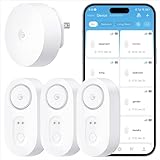
- Breakthrough 1804 ft Connectivity: Engineered with advanced Sub-1G long-range wireless tech, our leak detector maintains robust signals over unprecedented distances—reaching up to 1804 feet even through 5 dense walls. Secure every critical space in expansive properties, from deep basements to detached garages and distant outbuildings.
- Multiple Reminder Methods: Our water leak sensor supports multiple remote alarm. It can instantly send SMS, APP, and Email notifications to your phone (no matter how many times the SMS is used, it's free). Also, the water leak sensor flashes red and sounds a 105 dB alarm. Perfect for the basement, kitchen, or vacation home!
- Feature-Rich App: Receive instant push notifications. Use the “Find Device” feature to quickly trigger audible beeps to retrieve misplaced sensors. Add multiple email addresses through the APP, and your family and friends can also receive reminders when there is a water leak at home.
- Industry Leading IP67 Waterproof: Its IP67 waterproof rating ensures durability against spills, humidity, and accidental submersion.It can be used multiple times after wiping dry.
- Four-level volume adjustment: Customize your own alarm to fit your life! Use the app to adjust the volume in 4 levels, with a maximum alarm volume of 105 decibels. Whether it's day or night, whether it's in the bedroom or the basement, you can find the right volume.
| OIG assessment finding | What was reported | How to interpret it |
|---|---|---|
| Critical- or high-risk cybersecurity vulnerabilities | 97 systems serving approximately 26.6 million people | Assessment findings, not confirmed breaches or proof of water contamination. |
| Medium- or low-risk ratings associated with externally visible open portals | An additional 211 systems serving more than 82.7 million people | A separate risk category in the same assessment; not a count of confirmed attacks. |
| Systems assessed | 1,062 drinking-water systems serving more than 193 million people | Systems serving at least 50,000 people, not all U.S. systems. |
The EPA OIG report describes the assessment and its scope. A vulnerability rating identifies a weakness or exposure to address; it does not, on its own, establish that an attacker exploited it.
EPA’s reported 2025 work
In a February 6, 2026 news release, EPA said it proactively identified cybersecurity vulnerabilities at 277 water systems and worked to address them during 2025. The agency also said it directly eliminated 350 vulnerabilities during that year. Those figures measure different things: systems in which EPA identified vulnerabilities versus vulnerabilities EPA said it eliminated. They are agency-reported activities, not an independent estimate of the share of U.S. water systems at risk. EPA also cited free assessments and technical assistance. Read EPA’s 2026 update.
Rank #2

- Breakthrough 1804 ft Connectivity: Engineered with advanced Sub-1G long-range wireless tech, our leak detector maintains robust signals over unprecedented distances—reaching up to 1804 feet even through 5 dense walls. Secure every critical space in expansive properties, from deep basements to detached garages and distant outbuildings.
- Multiple Reminder Methods: Our water leak sensor supports multiple remote alarm. It can instantly send SMS, APP, and Email notifications to your phone (no matter how many times the SMS is used, it's free). Also, the water leak sensor flashes red and sounds a 105 dB alarm. Perfect for the basement, kitchen, or vacation home!
- Feature-Rich App: Receive instant push notifications. Use the “Find Device” feature to quickly trigger audible beeps to retrieve misplaced sensors. Add multiple email addresses through the APP, and your family and friends can also receive reminders when there is a water leak at home.
- Industry Leading IP67 Waterproof: Its IP67 waterproof rating ensures durability against spills, humidity, and accidental submersion.It can be used multiple times after wiping dry.
- Four-level volume adjustment: Customize your own alarm to fit your life! Use the app to adjust the volume in 4 levels, with a maximum alarm volume of 105 decibels. Whether it's day or night, whether it's in the bedroom or the basement, you can find the right volume.
What utilities should do to reduce cyber risk
EPA’s 2024 alert and the joint EPA, CISA, and FBI fact sheet organize practical defenses around limiting access, understanding systems, and preparing to recover. The agencies recommend that water utilities:
Do these 3 things before closing this tab:
1Fix the driver behind crashes, sound loss and screen glitches2Repair Windows errors before they cause bigger problems3Scan for outdated or missing drivers - takes under a minute- Reduce exposure of systems to the public-facing internet.
- Conduct regular cybersecurity assessments.
- Change default passwords.
- Inventory IT and OT assets so the utility knows what it operates and needs to protect.
- Develop and exercise incident-response and recovery plans.
- Back up IT and OT systems.
- Reduce exposure to known vulnerabilities.
- Provide cybersecurity awareness training.
These are operational safeguards, not consumer-product fixes. A household router, antivirus subscription, or water filter cannot secure a utility’s control network or substitute for utility incident planning. The EPA, CISA, and FBI Top Cyber Actions fact sheet provides the agencies’ recommendations.
Rank #3

- Leaking & Dripping: 2 water sensitive probes on the front for monitoring pipe/drain drip and 4 rear probes for detection water leak & floor moisture/flood. Both are work simultaneously, whatever leak sensors contact water, it will warning you in time.
- Loud & Mute: Our water leak alarm have loud and Mute Mode. It can emit 100 dB audio and loud enough to be heard even if leaks happened in basement. Press the button to mute the Water Detector Alarm when you arrived the flooded place.
- Tiny & Wireless: No Wire, Installation Required. Mini size allows you to put water leak alarms on any places, where the water leak may be happened. Such as house, underground, Pool, under Washing Machine, or unexpected disasters that may burst pipes, etc..
- Ultra Lifespan: Due to built-in 2*AAA Battery and energy-efficient circuit, our Floor Water Sensor Moisture Alarm has over 2 years standby time with Low Battery Alert, which reminds you to replace battery in time via flashing red light.
- Real IP66 Waterproof: The Water Alarm Detector is made of ABS & Stainless Steel, helps water sensor keep sensibility during the long time used without rust. Mounting Battery from the front to protect battery from getting wet and safer.
Protect internet-exposed HMIs
For HMIs that are reachable from the internet, EPA and CISA recommend additional access and monitoring controls. Utilities should consider:
- Strong passwords and multifactor authentication.
- Network segmentation, using a demilitarized zone or bastion host where appropriate.
- Geofencing and allowlisting authorized IP addresses.
- Prompt patching, logging and monitoring of remote logins, and following vendor security recommendations.
- CISA’s free vulnerability scanning service.
Because HMIs can connect remote access to operational equipment, utilities should implement controls in a way that preserves safe, reliable operation and is compatible with their equipment. The joint EPA-CISA fact sheet gives the specific recommendations.
Rank #4

- High Sensitivity Leak & Drip Water Detections: Equipped with 4 bottom and 2 top high-sensitivity sensor probes. The adjacent bottom probes trigger the alarm once touching water, while the top probes may be activated by heavy humid mist. It precisely detects dripping water, minor water pooling and flooding on tile, wood, concrete and all flat surfaces, helping you prevent costly household water damage in advance.
- Long Lasting Power Supply: Comes with 10 durable AAA batteries for ultra-long standby use, no frequent battery replacement needed. It will sound an alarm and flash red LED once water leakage is detected. Built-in low battery reminder with red flashing light reminds you to replace batteries in time for uninterrupted leak monitoring.
- 0-120dB Adjustable Volume & Silent Mode: Support 4 adjustable volume levels from 0dB mute mode up to 120dB super loud alarm. Long press the TEST button freely switch volume as needed. You can easily mute the alarm after finding water leakage, when you at bedroom, kitchen and quiet living scenes.
- IP67 Full Waterproof & Dustproof: Built to withstand harsh conditions, this water sensor alarm leak detector is fully waterproof (IP67-rated allow short term immersion in water) and resistant to dust, Its durable structure and rust-resistant coating allow for long-term use, ideal for basements, laundry room, under kitchen sink,water pipe, beside the bathtub and washing machine.
- Easy Place Installation: No complicated wiring or extra tools required. Simply place the water sensor alarm in leak-prone areas, it will start 24-hour all-round automatic monitoring right away.
Assess risk and choose workable controls
EPA’s August 2024 guidance describes its cybersecurity checklist as voluntary. It recommends that systems complete an assessment, identify gaps, and develop a risk-mitigation plan. EPA points utilities to assessment methods from CISA, the National Institute of Standards and Technology (NIST), and the American Water Works Association (AWWA), as well as ISO and ISA/IEC standards; the checklist is not presented as the only valid method.
Quick wins for a faster PC:
Clear out junk files and repair common Windows errorsFree Scan →Fix the driver behind crashes, sound loss and screen glitchesFind Drivers →Repair Windows errors before they cause bigger problemsFix Now →Controls must fit a utility’s equipment, staffing, and infrastructure. If a system cannot implement a particular measure because of logistical or infrastructure constraints, EPA advises it to seek alternative or compensating measures. The agency’s cybersecurity guidance provides further assessment and planning information.
Best Value

- Note: The sensor cannot be directly added to the app and a GoveeLife H5044 gateway is required(not compatible with H5040/H5043 gateway). With the kit "BB0DQLDBXWF", you can remotely monitor water leaks via your phone. "B0DQLDBXWF" is not included in the package.
- Ultra-Sensitive Detection: Equipped with 2 sets of sensor probes, ensuring early detection for basements, kitchens, bathrooms, and near appliances like dishwashers, water heaters, or washing machines. Protect your property from costly damage.
- Loud Alarm Sound With Customizable Volume: Maximize safety with a 105dB audible alarm that alerts you instantly to water threats. Customize alerts to 4 adjustable volume settings—ideal for quiet homes or noisy environments.
- 5 Years of Hassle-Free Operation: The water leak detector enjoys long-term protection with a built-in battery that lasts 5 years—no frequent replacements needed.
- IP67 Waterproof & Durable Design: Built to withstand harsh conditions, the water sensor with an IP67 waterproof rating ensures reliable performance in damp areas like under sinks, laundry rooms, or near sump pumps.
Which community water systems have federal planning duties?
Under section 1433 of the Safe Drinking Water Act, community water systems serving more than 3,300 people must conduct Risk and Resilience Assessments (RRAs), develop Emergency Response Plans (ERPs), and certify completion to EPA. They must review both documents every five years, revise them as needed, and certify that review. EPA says the plans address physical and cyber threats.
EPA’s 2024 alert reported that more than 70% of systems it inspected since September 2023 violated basic section 1433 requirements, such as having missing RRA or ERP sections. That percentage applies to the systems EPA inspected during that period, not to all U.S. water systems. The alert offers plain-language information on selected legal provisions and expressly does not replace the statute or regulations. Consult the EPA alert for its explanation.
Where utilities can get help
EPA and CISA provide guidance and assistance for utilities assessing or improving cybersecurity, including the EPA resources linked above, free assessments and technical assistance described by EPA, and CISA’s vulnerability scanning service. Utilities should work with the agencies and qualified operational-technology security support to select measures that fit their systems and protect safe service. Assistance availability can change, so utilities should check the current EPA and CISA program information directly.
Free tools Windows power users keep installed
One-click scans. No signup required.
Quick Recap
Product prices and availability are accurate as of the date/time indicated and are subject to change. Any price and availability information displayed on Amazon at the time of purchase will apply.

