
PC Slower Than It Used to Be?
A free scan shows the junk files, broken settings and background clutter dragging Windows down - then fixes them in one click.Free scan · Windows 10 & 11Outdated Drivers Are Slowing You Down
One free scan finds every outdated or missing driver and matches the right update for your exact hardware.Free scan · exact hardware matchFor most first-time stargazers, 7×50 or 10×50 binoculars are the easiest place to start: they gather useful light while remaining practical to hold. Choose 15×70 binoculars if you can mount them on a tripod, and consider 20×80 or 25×100 only if you are prepared for a stable mount and more setup. The right choice depends as much on steadiness, weight and field of view as on magnification.
What makes binoculars suitable for astronomy?
Binocular labels use two numbers: the first is magnification and the second is the diameter of each objective lens in millimeters. A 10×50 pair magnifies 10 times and has 50 mm objectives. Larger objectives collect more light: Astronomy.com says a 50 mm objective gathers twice as much light as a 35 mm objective, and recommends objectives of at least 40 mm for astronomy. Astronomy.com’s binocular guide
More magnification is not automatically better. It enlarges the view but also makes hand movement more visible and usually narrows the field of view. Astronomy.com puts the practical handheld ceiling for most people at about 10x; above that, a tripod is generally needed. A steadier, wider view can make it easier to find and follow large targets such as star fields and bright clusters.
Optical design and coatings
Porro-prism binoculars are generally a more suitable astronomy choice than roof-prism models: roof designs tend to cost more and can be dimmer. Look for BaK-4 prism glass and coated optics, which are desirable features for viewing the night sky. These features do not replace the practical considerations of aperture, field of view and stability.
#1 Best Overall

- EASY-TO-USE ASTRONOMY BINOCULARS FOR BEGINNERS: Cometron 7x50 binoculars are an easy, affordable way to learn the night sky and get started with astronomy.
- 7X MAGNIFICATION: With a wide field of view that reveals a larger portion of the night sky, Cometron is ideal for panning across the Milky Way, exploring constellations, and viewing large objects like comets.
- 50MM OBJECTIVES WITH MULTI-COATED OPTICS: Large objective lenses gather more light while multiple layers of anti-reflective coatings boost light transmission. Views are bright and detailed with increased contrast and resolution.
- GREAT FOR DAY AND NIGHT USE: Not just for astronomy—these binoculars are also great for birdwatching, hiking, and scenic viewing with a close focus of 26.2 feet.
- TRIPOD-ADAPTABLE FOR STABLE VIEWING: Designed with a built-in tripod adapter socket so you can mount the binoculars on a standard tripod (adapter not included) for shake-free, extended viewing sessions.
Best binocular formats for different observers
| Format or model | Best fit | Mounting and trade-off |
|---|---|---|
| 7×50, including Celestron Cometron 7×50 | First-time observers who want a wide, steady handheld view of the Moon, Jupiter’s moons and brighter clusters. | Handheld-friendly; lower magnification than larger formats. |
| 10×50 | General-purpose astronomy and a useful balance of magnification and light gathering. | Near the practical handheld limit for most users; some observers may still prefer support for longer sessions. |
| Celestron SkyMaster 15×70 | Observers wanting more reach for lunar detail, star fields and galaxies. | Use a tripod; its larger aperture and magnification make hand shake more apparent. |
| Celestron SkyMaster 20×80 | Deep-sky observing with a stable tripod or mount. | Mount-dependent, heavier and less convenient to set up than handheld formats. |
| Celestron SkyMaster 25×100 | Specialized observing where maximum aperture in this selection matters. | Requires a stable mount; least suited to spontaneous handheld viewing. |
| Vortex Crossfire HD 10×50 | Observers seeking binoculars for both daytime use and night-sky viewing. | Handheld format; Digital Camera World reports good low-light sharpness and contrast during star watching. |
Are 10×50 binoculars good for stargazing?
Yes. 10×50 is a strong general-purpose format: the 50 mm objectives meet the recommended aperture threshold, while 10x magnification is near the practical handheld ceiling for most users. It suits broad star fields and brighter targets without requiring the tripod setup that typically comes with higher magnification.
Choose 7×50 instead if you value a steadier, wider handheld view more than extra magnification. Choose a larger, tripod-mounted pair if your priority is a more enlarged view and you accept the added weight and setup.
Rank #2

- POWERFUL 15X MAGNIFICATION: Giant astronomy binoculars with massive 70mm objective lenses and 20x power. Pair them with any tripod for long-distance land-based viewing or astronomical observation.
- WORKS WITH YOUR TRIPOD: Due to their size & weight, most users mount SkyMaster binoculars on a traditional photo tripod (not included). The built-in ¼”-20 adapter attaches to most tripods in seconds.
- BRIGHT, SHARP VIEWS WITH BaK-4 PRISMS: The SkyMaster is a favorite among those who view in dim conditions near dawn and dusk or at night for astronomy. BaK-4 prisms maximize light throughput to your eye so you see brighter, more detailed images.
- DURABLE AND WATER-RESISTANT: A rubber-armored housing protects your binoculars from damage and provides a secure gripping surface. The water-resistant exterior stands up to tough conditions and unexpected rainy weather.
- UNBEATABLE WARRANTY & CUSTOMER SUPPORT: Buy with confidence from Celestron, a leading optics brand in California since 1960. Your purchase includes a Celestron Limited Lifetime US Warranty & US-based expert tech support.
10×50 or 15×70: which is better for astronomy?
Neither is universally better. A 10×50 is the more convenient choice for handheld observing and quick sessions; a 15×70 offers greater magnification and larger objectives, but is best used on a tripod. The SkyMaster 15×70 is listed by Digital Camera World as “Best for astronomy.” Its 2026 buying guide gives it 15x magnification, 70 mm objectives, a 4.66 mm exit pupil, 18 mm eye relief and a weight of 1.36 kg. Digital Camera World’s astronomy binocular guide
For a mixed-use pair you expect to hold, 10×50 is the sensible choice. If you already have a stable tripod or are willing to add one, 15×70 is the practical step up. Aperture and magnification alone do not establish which model has the best true field of view, weather resistance or price; compare those specifications on the exact model listing before buying.
Free tools Windows power users keep installed
One-click scans. No signup required.
Rank #3

- POWERFUL 25X MAGNIFICATION: Giant astronomy binoculars with massive 70mm objective lenses and 25x power. Pair them with any tripod for long-distance land-based viewing or astronomical observation.
- WORKS WITH YOUR TRIPOD: Due to their size/weight and high magnification, most users mount SkyMaster binoculars on a traditional photo tripod (not included). The built-in ¼”-20 adapter attaches to most tripods in seconds.
- BRIGHT, SHARP VIEWS WITH BaK-4 PRISMS: The SkyMaster is a favorite among those who view in dim conditions near dawn and dusk or at night for astronomy. BaK-4 prisms maximize light throughput to your eye so you see brighter, more detailed images.
- DURABLE AND WATER-RESISTANT: A rubber-armored housing protects your binoculars from damage and provides a secure gripping surface. The water-resistant exterior stands up to tough conditions and unexpected rainy weather.
- UNBEATABLE WARRANTY & CUSTOMER SUPPORT: Buy with confidence from Celestron, a leading optics brand in California since 1960. Your purchase includes a Celestron Limited Lifetime US Warranty & US-based expert tech support.
Do you need a tripod for 15×70 binoculars?
For most observers, yes. At 15x, ordinary hand movement is magnified enough to make sustained viewing uncomfortable and obscure fine detail. A tripod adapter and a stable photographic tripod provide a steadier view; confirm that the binoculars accept the adapter and that the tripod can safely support their weight. This matters especially for longer sessions or when trying to examine a small area of the sky.
At 20×80 and 25×100, stable support is even more important. These formats are mount-dependent choices, not simple handheld upgrades. If you do not want to carry or set up a mount, stay with 7×50 or 10×50.
Rank #4
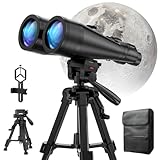
- POWERFUL ASTRONOMY BINOCULARS:20x80 Binocular for Adults High Powered With 20x magnification & 80mm objective lenses,deliver bright, detailed views of celestial objects like the Moon, star clusters, and deep-sky targets.
- WORKS WITH YOUR TRIPOD: Our astronomical binoculars weighs 4.66lb(2113g), and long-term hand-held will cause a burden on the arms and neck, so we equipped it with a 1/4 thread tripod, which can eliminate vibration and provide clear and stable observation.
- CRYSTAL-CLEAR VIEWS WITH BAK-4 PRISMS:The Stargazing Binoculars delivers exceptional brightness and clarity, making it ideal for low-light viewing at dusk, dawn, or under starry skies. The premium BaK-4 prisms enhance light transmission, revealing brighter images with sharper details—perfect for astronomical observation or twilight adventures.
- COMFORTABLE & NON-SLIP DESIGN:These binoculars for adults feature a rugged rubber-armored housing that absorbs shocks while providing a secure, non-slip grip. The waterproof construction ensures reliable performance in sudden rain, fog, or humid conditions.The O-ring sealing lens prevents dust and other debris from entering the inside of your binoculars, protecting your binoculars from damage
- UNMATCHED WARRANTY AND QUALITY SUPPORT:The high power binoculars inner leather bag for easy carrying and protection of the binoculars, perfect for bird watching, stargazing. Professional support team - always ready to provide you with expert help, feel free to contact us if you have any questions.
What should you check before buying?
- Magnification and aperture: Read both numbers together. For astronomy, a 40 mm or larger objective is a useful baseline; larger objectives collect more light but add bulk.
- Exit pupil: It is the diameter of the beam leaving the eyepiece. The SkyMaster 15×70’s listed exit pupil is 4.66 mm; use the figure as a specification for that model, not a guarantee of what every observer’s eye will receive.
- True field of view: A wider field makes it easier to locate broad star fields and keep them in view. Check the model’s stated value; a larger magnification alone does not tell you how wide the sky view will be.
- Eye relief: This affects how comfortably you can see the full field, particularly if you observe while wearing glasses. The SkyMaster 15×70 is listed with 18 mm of eye relief.
- Weight and support: Consider how long you can comfortably hold the binoculars and whether your tripod and adapter can support them. The SkyMaster 15×70 is listed at 1.36 kg.
- Prisms and coatings: Porro-prism designs, BaK-4 glass and coated optics are useful features to look for in astronomy binoculars.
- Weather resistance and price: These are model-specific and are not established by the cited comparison details. Check the manufacturer’s specifications and current retailer listing for the exact version and region.
Recommended picks by observing style
For a first pair you can carry outside quickly
The Celestron Cometron 7×50 is a beginner handheld pick from Skies & Scopes, suited to a wide, steady view of lunar detail, Jupiter’s moons and brighter clusters. Skies & Scopes’ astronomy binocular comparison
For an all-around handheld format
Choose 10×50 if you want more magnification than 7×50 while staying near the practical handheld limit. The Vortex Crossfire HD 10×50 is a mixed day-and-night option; Digital Camera World reports good low-light sharpness and contrast while star watching. Digital Camera World’s binocular guide
For more reach with tripod support
The Celestron SkyMaster 15×70 is the practical step up if you are prepared to mount your binoculars. It combines 15x magnification with 70 mm objectives, but its listed 1.36 kg weight and higher magnification make tripod use important for a stable view.
For deep-sky observing with a stable mount
Skies & Scopes names the Celestron SkyMaster 20×80 as its deep-sky step-up and the SkyMaster 25×100 as its largest-aperture category pick. Treat either as a mount-dependent choice rather than an easy handheld option.
Quick Recap
Product prices and availability are accurate as of the date/time indicated and are subject to change. Any price and availability information displayed on Amazon at the time of purchase will apply.

