
The Tool Desk
Outbyte PC Repair FREERepair Windows errors before they cause bigger problemsFix Now →Outbyte Driver Updater FREEFix the driver behind crashes, sound loss and screen glitchesFind Drivers →The Office of the Comptroller of the Currency (OCC) has asked a federal court in Oregon to dismiss a ten-state challenge to its mortgage escrow actions—or, alternatively, move the case to Washington, D.C. The October 5, 2026 motion has not been reported as decided. It asks for dismissal or transfer, not a pause in the case.
What the states are challenging
Oregon, New York, California, Connecticut, Maine, Maryland, Massachusetts, Minnesota, Rhode Island, and Vermont sued over two separate OCC actions finalized in May 2026. The states seek to invalidate both.


- The escrow-powers rule: It describes national banks’ and federal savings associations’ authority to establish or maintain real estate lending escrow accounts and make business judgments about their terms, including whether—and to what extent—to pay interest or charge related fees.
- The preemption determination: The OCC concluded that the National Bank Act preempts New York’s interest-on-escrow law and 13 other state or territorial laws it considers substantively equivalent. The OCC says the determination also applies to federal savings associations under the Home Owners’ Loan Act.
These actions are related but distinct. The OCC says the powers rule codifies banking authority, while the separate determination addresses whether particular state laws are displaced. The agency argues that the formal preemption procedures in 12 U.S.C. § 25b should not be imported into the powers rule. The states’ challenge to that distinction, and the OCC’s defense, remain unresolved.
Why escrow interest is at issue
The OCC describes New York General Obligations Law § 5-601 as requiring at least 2 percent annual interest—or a rate set by the state superintendent—on certain covered escrow balances. The interest is credited quarterly, and the law generally bars service charges for maintaining the account. That is the OCC’s description of the statute; its conclusion that federal law preempts the state requirement is an agency determination, not a ruling by the Oregon court.
Recommended Free Tools
#1 Best Overall
The governing federal standard comes from the National Bank Act and the conflict-preemption framework associated with Barnett Bank. In Cantero v. Bank of America, N.A. (2024), the Supreme Court said courts must practically assess the nature and degree of a state law’s interference with national-bank powers, taking account of statutory text and structure, precedent, and common sense. Cantero did not decide whether state interest-on-escrow laws are preempted.
The OCC’s May 2026 determination describes disagreement among federal appeals courts: the Second Circuit concluded New York’s law is preempted, while the First and Ninth Circuits reached contrary outcomes concerning Rhode Island and California laws. That split is part of the legal context, not a resolution of the ten states’ challenge to the OCC actions.
Rank #2

- Quick reference USA Civil Procedure law guide perfect for law students, paralegals and attorney's
- Guide provides anyone who requires a better understanding of United States civil procedure with numerous tips and insights.
- Glossary of terms, definitions and precedent.
- Easy-to-read layout to promote faster learning and memory retention.
- Guidelines and legal overview. Great study aid and reference guide
Why the OCC says the case should be dismissed
The motion’s arguments, as reported by Consumer Finance Monitor, are the OCC’s litigation positions—not findings by the court. The filing itself was not available for independent review in the reporting; the detailed points below should therefore be read as reported arguments.
Standing and ripeness
The OCC argues that the states have not identified a bank that stopped paying escrow interest, or is imminently likely to do so, because of the agency’s actions. In its view, the rule recognizes banks’ discretion but does not direct them to stop paying, so the states’ asserted injury depends on future choices that may not happen. The OCC also contends that the states cannot use parens patriae standing against the federal government based only on potential harm to residents.
Quick wins for a faster PC:
Fix the driver behind crashes, sound loss and screen glitchesFind Drivers →Repair Windows errors before they cause bigger problemsFix Now →The OCC’s Cantero II argument
The OCC says the Second Circuit’s May 5, 2026 decision in Cantero II had already held New York’s law preempted before the OCC finalized its actions. It argues that this creates traceability and redressability problems for New York, Connecticut, and Vermont. That is the agency’s theory about those states’ claims; the Oregon district court has not ruled on it.
Venue and transfer
The OCC says Oregon is an unsuitable venue for most plaintiffs because the agency, its challenged decision-making, and the administrative record are centered in Washington, D.C. It asks the court to transfer the case to the U.S. District Court for the District of Columbia if it does not dismiss it. Consumer Finance Monitor reports that the motion’s venue discussion cites median civil-case disposition times of 7.1 months in D.C. and 9.4 months in Oregon for the 12 months ending June 30, 2026. Those are figures reported from the motion, not independently verified here.
Rank #4
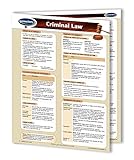
- Quick reference legal law learning guide. 4-page 8.5" x 11" laminated study guide for law students, lawyers and paralegals.
- This well structured Guide provides a summary of the fundamental concepts that are the foundation of criminal law, including the elements of a criminal act, crimes against the person, and crimes against property.
- The Guide outlines a useful review of court jurisdiction and American sentencing principles.
- Easy-to-read layout to promote faster learning and memory retention.
A transfer would change which district handles the pending case. It would not itself uphold or invalidate either OCC action.
Do banks still have to pay interest on mortgage escrow accounts?
The OCC’s determination says federal law preempts New York’s requirement and 13 other laws the agency regards as equivalent. But the scope and legal effect of that position remain contested: the states are challenging the OCC actions, and appellate decisions have diverged. The OCC’s rule describes bank discretion; it does not, by its terms as described in the agency’s materials, require banks to stop paying interest. The motion does not resolve what a particular bank must do under applicable law.
What could happen next
The motion asks for dismissal or transfer. Other procedural outcomes—including continued litigation in Oregon or a stay—are possible, but the motion is not reported to request a stay. The Supreme Court requested the Solicitor General’s views on October 5 regarding pending interest-on-escrow petitions; contemporary legal analysis identifies that development as a possible reason the district court might consider pausing this case.
| Possible path | Does the case continue? | Does the court decide the merits? | Forum or timing effect |
|---|---|---|---|
| Dismissal | The district-court case may end. | It could end without a ruling on the legality of the OCC actions. | No transfer is needed if the case is dismissed. |
| Transfer | Yes; the challenge remains pending. | Transfer itself does not decide the merits. | The case moves from Oregon to the District of Columbia. |
| Continued litigation in Oregon | Yes. | The court could review the OCC’s authority and preemption analysis. | Proceedings remain in the Oregon district court. |
| Stay | The case remains pending but is paused. | Merits review is delayed while the stay is in effect. | Proceedings would wait; the OCC motion is not reported to seek this relief. |
What is at stake in the policy debate
The OCC’s final determination summarizes competing policy claims. Supporters said preemption could promote uniformity, reduce operational complexity, and support lending. Opponents raised concerns about mortgage affordability, consumer protection, fairness, competition between lender types, and litigation risk. These are arguments about possible effects, not established outcomes. The OCC said it did not rely on technical studies or data for its legal analysis.
As of October 7, 2026, the sources reviewed report no ruling on the OCC’s motion. Until a court acts, its standing, ripeness, venue, and merits arguments remain unresolved.
Quick Recap
Product prices and availability are accurate as of the date/time indicated and are subject to change. Any price and availability information displayed on Amazon at the time of purchase will apply.

