
To choose a compatible teleconverter, match its exact model to your exact lens—and check any camera-body restrictions in the manufacturer’s compatibility chart and manuals before attaching it. A matching mount or brand is not enough: some combinations will not physically fit, while others may fit but limit autofocus or other functions.
How do I know if my lens is compatible with a teleconverter?
- Write down the exact models. Record the camera body, full lens model and mount, and teleconverter model. A broad description such as “70–200mm” is not specific enough; different versions can have different compatibility.
- Check the converter maker’s compatibility chart. Look for your exact lens model, then read every footnote and limitation. Nikon warns that unlisted NIKKOR lenses cannot be used with its AF-S converters because a lens’s rear element may contact and damage the converter element. Sigma likewise restricts its dedicated converters to lenses listed in its chart. Nikon AF-S teleconverter compatibility guidance; Sigma teleconverter compatibility charts.
- Check the camera-body manual separately. A listed lens pairing may still have body-dependent operating restrictions, including autofocus limitations. Nikon’s chart, for example, identifies autofocus limits for some pairs and body-dependent support for autofocus at f/8. Confirm the specific body as well as the lens and converter.
- Verify the functions you need. Confirm autofocus, metering and exposure control, stabilization, and autofocus-area coverage for the exact combination. Sony’s supported operation, including Optical SteadyShot (OSS) retention, depends on compatible lenses and cameras; consult its compatibility tool rather than assuming those functions carry over. Sony FE 2x teleconverter information and compatibility tool.
- Work out the effective reach and aperture. Multiply the lens’s focal length by the converter factor, and account for the light loss before deciding whether the combination suits your subject and lighting.
If the manufacturer’s chart or manual does not confirm the combination, ask the manufacturer before buying or attaching it. Do not infer compatibility from a mount match, use an unlisted converter, or stack converters based on fit alone.
What changes when you use a 1.4x or 2x teleconverter?
A 1.4x converter multiplies focal length by 1.4; a 2x converter doubles it. Manufacturers also specify a corresponding loss of light: Nikon says its 1.4x converters cost one stop and its 2x converters cost two stops. Sony describes approximately two stops of loss with its 2x converter—for example, an f/2.8 lens has an effective maximum aperture of f/5.6. These are manufacturer specifications, not independent performance tests. Nikon teleconverter guidance; Nikon AF-S TC-14E III product information; Sony SEL20TC product information.
For example, a 200mm lens used with a 1.4x converter gives a nominal 280mm reach; with a 2x converter, it gives 400mm. If the lens is f/2.8, the effective maximum aperture is typically one stop smaller with 1.4x (about f/4) or two stops smaller with 2x (about f/5.6). The smaller maximum aperture means less light reaches the camera, which can require a slower shutter speed, higher ISO, or both. Actual exposure and autofocus behavior depend on the supported camera-and-lens combination.
Free tools Windows power users keep installed
One-click scans. No signup required.
#1 Best Overall
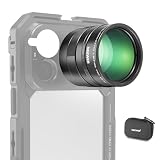
- 5X telephoto use only: Only for phones with a 5x optical telephoto lens; compatible with iPhone 18 Pro Max 18Pro 17 Samsung Galaxy S26 Ultra S25 Xiaomi 15 Ultra Vivo X200 Ultra, and more; not for main or ultra wide cameras; telephoto zoom varies by model
- Real 15x lossless optical zoom: Extends phone telephoto lens from 5x (120mm equivalent) to 15x (360mm equivalent) without digital cropping—retaining clarity and fine details for shooting distant subjects like wildlife, sports, concerts, and portraits
- Multicoated optical system: 12 elements in 6 groups HD optical glass and multilayer coatings minimize glare and distortion while enhancing image sharpness and detail—even at high zoom levels
- 17mm mount + 37mm filter thread: Equipped with a 17mm lens mount for NEEWER phone cages and phone cases; the 37mm front thread supports ND, CPL, and other content creator essential and influencer must have photography filter accessories
- Use with tripod & phone cage: Use a tripod to reduce shake and blur; secure lens with NEEWER 17mm thread cage or case; set max zoom to activate telephoto lens; compatible with iPhone, disable Macro Control and cover extra lenses to stop auto switching
More reach does not guarantee the result of a longer dedicated lens. Nikon notes that using a teleconverter can reduce sharpness, and performance depends on the lens and converter pairing. Weigh the reach against light loss, autofocus support, and the image quality you need rather than treating the converter factor as a complete measure of the result. Nikon teleconverter guidance.
Which compatibility details differ by camera system?
Nikon F-mount and Z-mount
Nikon’s AF-S F-mount chart lists specific compatible lenses and restrictions; an unlisted NIKKOR lens should not be treated as compatible because its rear element may contact the converter. For Z-mount lenses, Nikon says to consult the lens manual because not every Z NIKKOR is compatible. Nikon describes one stop of light loss with a 1.4x converter and two stops with a 2x converter. Nikon AF-S compatibility guidance; Nikon Z teleconverter guidance.
Rank #2

- The 2X Teleconverter can make the focal length of all the Canon EF lenses increased to 2 times, Built-in 4 groups, 7 pcs optics, and the exposure factor enlarge approx 4. (equals to 2 aperture).
- Compatible for Canon EF Mount Lens.[Notice:It only compatible with fixed focal length L-series lenses 100mm and over, as well as the EF 70-200mm f/2.8L, EF 70-200mm f/2.8L IS, EF 70-200mm f/4L, and EF 100-400mm f/4.5-5.6L.]
- Support lens Auto Focus function.Outstanding image quality thanks to new optical design and improved AF performance. The focus speed is really fast and can track the subject, and lock the subject flexibly and accurately.
- Lens coatings are optimized to minimize ghosting and flare. With the aperture adjustment lever on the adapter, you can adjust the aperture fast.
- With an upgraded USB firmware interface, it supports USB firmware upgrading, and through subsequent upgrades, the adapter can improve its function, and fix bugs.
Canon RF and EF
Canon’s RF1.4x page identifies supported RF lenses and directs users to the lens and/or camera manual for full compatibility information. Its list includes a particular version of the RF 70–200mm F2.8 L IS USM Z; that listing does not establish compatibility with every RF 70–200mm lens. For EF 1.4x III and EF 2x III extenders, use Canon Support’s compatibility chart and confirm the lens and camera manuals. Canon RF1.4x supported lenses; Canon EF extender compatibility support.
Sony FE
Sony’s SEL14TC provides 1.4x conversion, while the SEL20TC provides 2x conversion. Supported autofocus, operation, and OSS retention depend on the specified lens and camera. Check Sony’s compatibility tool for the exact models and consult the product information before purchasing. Sony SEL14TC information; Sony SEL20TC information and compatibility tool.
What’s actually slowing this PC down?
Pick the symptom - the matching free tool is one click away.
Rank #3

- Compatible with select Nikon NIKKOR Z long telephoto lenses.
- Increases the native reach of compatible lenses by 40%—without any loss of resolution and with outstanding image quality.
- Retains all AF functionality and speed, VR capabilities and minimum focusing distance, with only 1 stop of light loss.
- Can use every focus point of your Z series camera's sensor all the way down to f/11, unprecedented for teleconverters.
- Maintains the close focusing capability of NIKKOR Z lenses while enlarging the reproduction ratio by 1.4x. Durable and dust and drip resistant.
Sigma converters
Sigma maintains separate compatibility documentation for its teleconverter generations. Treat a Sigma converter as a dedicated accessory for the lenses shown in the relevant chart—not as a generic converter for any lens that appears to share a mount. Sigma teleconverter compatibility charts.
How should you compare compatible options?
If the manufacturer confirms more than one combination for your gear, compare the supported options on the factors that affect your photographs:
Rank #4

- 2x telephoto lens converter: For smartphones with a built in 5x telephoto camera, this converter doubles optical zoom from 5x (120 mm equivalent) to 10x (240 mm equivalent) for distant shooting without digital cropping or image loss
- For 5X telephoto cameras only: Not for main camera; cell phone accessories compatible with Vivo X200 Ultra Xiaomi 15 Ultra Samsung Galaxy S26 S25 Ultra Android iPhone 18 Pro Max 18 Pro 17 16 Pro/Pro Max; select 5X before use if optical zoom is below 5X
- Compact and lightweight: Compared to standard external zoom lenses, this 2x converter is shorter and lighter; it features a 17mm thread for 17mm threaded phone cages, cases, and lens clips; content creator essential photography and filming accessories
- Multicoated optical glass: 7 elements in 5 groups of HD optical glass and multiple nanocoatings reduce glare and distortion, resist water, fingerprints, and scratches, and ensure excellent light transmission; a cleaning cloth is included
- Important note: Different phone brands may require different zoom levels to activate the telephoto lens; compatible with iPhone, apply the included stickers to cover the wide angle lens to prevent lens switching caused by light sensor interference
- Reach: 1.4x extends focal length less than 2x, while 2x doubles it.
- Light loss: Nikon specifies one stop for 1.4x and two stops for 2x; Sony specifies approximately two stops for its SEL20TC. Check the figure and operating notes for the specific converter.
- Autofocus and body support: Look for restrictions tied to the lens, converter, and camera body, including any aperture-related AF limits.
- Metering and stabilization: Confirm these functions for the exact combination instead of assuming they remain available.
- Image quality: A converter may reduce sharpness, so consider whether the added reach is worth the trade-off for your subject.
- Practical value: Compare size and cost, and whether the verified converter pairing is useful with more than one lens you own.
There is no universally best teleconverter established across brands or systems. Compatibility and performance are pairing-specific, so a product listing alone is not proof that a converter will work with your lens.
Independent reader supportYour contribution helps us test, update, and keep practical guides available for everyone.What lenses are compatible with the EF 1.4x III and EF 2x III extenders?
Use Canon Support’s compatibility chart for EF 1.4x III and EF 2x III, then verify the exact lens and camera combination in the relevant manuals. The chart—not a shared EF mount or the lens’s focal length range—is the basis for confirming a particular pairing. Canon EF extender compatibility support.
Recommended Free Tools
Quick Recap
Best Value
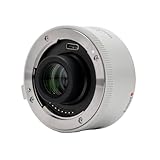
- ✓【PRODUCT SUPPORT, 3-Year Waranty】— We are committed to providing our customers with an exceptional experience, if you encounter any issues during use, please feel free to let us help you.
- ✓【 Compatible List】 — Only Compatible With Sony FE SEL70-200G2/ FE SEL70-200GM2/ FE SEL70-200GM/ FE SEL100-400GM/ FE SEL200-600G/ FE SEL400-800G/ FE SEL300F28GM/ FE SEL400F28GM/ FE SEL600F40GM/Viltrox 135mm F1.8 LAB FE
- ✓【Extends focal length by 2x】 — The 2.0X teleconverter is a lens accessory that can be mounted between the camera and lens to increase the focal length by up to 2x, making it particularly suitable for users who want to use telephoto lenses for wildlife, sports, etc.
- ✓【Double the focal length】 — The 2.0X teleconverter extends the telephoto focal length without increasing the number of lenses, achieving a balance between increased focal length and high-quality images.
- ✓【Wide compatibility, comparable to original teleconverters】 — The Viltrox 2.0X teleconverter complements the original lens, providing 2.0 times the focal length. It maintains overall image quality and lens autofocus functionality and features a dust- and splash-proof design for reliability in outdoor photography.
Product prices and availability are accurate as of the date/time indicated and are subject to change. Any price and availability information displayed on Amazon at the time of purchase will apply.

