
Measure an AI R&D team’s impact as a chain: resources enable research; research produces reusable work; others adopt it; and that adoption changes outcomes for users, the organization, or the wider field. Benchmarks can show how a system performed on a defined test, but they cannot by themselves show whether the work was adopted or made a meaningful difference.
What should an AI R&D impact measure capture?
A useful measurement system follows the work beyond its technical result. It asks not only whether a model scored well, but whether the team created something others could use, whether it was used in a relevant setting, and what changed as a result.
This is a mission-specific framework, not a validated universal scorecard. NIST emphasizes that evaluation depends on the context in which an AI system operates and may need to cover explainability, privacy, reliability, robustness, safety, security, and harmful-bias mitigation alongside accuracy. Its industrial AI project makes the point plainly: “Performance and evaluations of an IAI have no meaning outside the context of its impact on a system and users.” (NIST AI measurement and evaluation; NIST IAIMM project)
A practical measurement chain
| Layer | Example evidence | What it tells you | What it does not establish |
|---|---|---|---|
| Inputs and capacity | R&D spending, team time and skills, data, software, and compute or equipment access | What resources and enabling conditions were committed? | That those resources produced useful work or impact. OECD’s 2025 investment framework includes AI-related R&D, labor, data, software, and equipment as investment categories, not proof of return. (OECD, 2025) |
| Research activity | Experiments completed, evaluation coverage, time to reproduce results, and reliability or safety investigations | What work was performed and documented? | That a high volume of activity was useful; activity counts can reward busyness. |
| Technical outputs | Models, datasets, methods, papers, evaluation suites, reproducible artifacts, and internal tools | What knowledge or capability did the team create? | That anyone used it or benefited. NIST’s study of laboratory outputs found that prior metrics understated some impacts on invention and did not show whether other inventors used scientific outputs. (NIST, Impact of NIST Laboratory Outputs on Innovation) |
| Adoption and transfer | Downstream teams using an artifact, integration into a workflow, continued use, or observable external reuse | Did the work travel beyond the originating team? | That adoption was beneficial or that the R&D team alone caused it. |
| Downstream outcomes | Task success and error rates in use, time or resource costs, reliability, safety incidents, and user or operator outcomes | Did the intended workflow or system change in its actual setting? | That the change was caused by the research without appropriate comparison and attribution. |
| Mission impact | Relevant goals such as productivity, resilience, sustainability, scientific progress, or user benefit | Did the outcome matter to the people or system the work serves? | A simple causal account where effects unfold over time or involve trade-offs. (NIST IAIMM; OECD, Artificial Intelligence in Science) |
How do you build a measurement plan?
- Define the mission and beneficiaries. Specify who should benefit and what change would count. Set the boundary of the assessment: the research team, the product or service using its work, the wider organization, or the scientific community.
- Map the contribution chain. Write down how the team’s resources are expected to produce artifacts, how other people or teams might adopt them, and which outcomes should follow. Make the assumptions explicit so they can be checked.
- Choose measures for decisions. Select a small number of measures that could change whether to continue, revise, deploy, or scale the work. Pair benchmark results with relevant evidence about reliability, risk, cost, usability, or workflow outcomes. The NIST AI Metrology Center organizes measures by trustworthy characteristics and lifecycle stage; inclusion there is not an endorsement or validation of a method.
- Evaluate in stages. Test technical properties before deployment, use red-team or other adversarial testing where relevant, then gather field evidence after deployment. NIST’s ARIA pilot report describes model testing, red teaming, and field testing, as well as dialogue annotation, tester questionnaires, and measurement trees. These methods answer different questions; the pilot concerns submitted AI applications and scenarios, not the impact of AI research teams. (NIST ARIA pilot report, November 13, 2025)
- Set a baseline and comparison conditions. Record the prior workflow or system, task mix, measurement window, exclusions, and any comparison group or alternative. Without these details, an observed difference is difficult to interpret as an effect of the work.
- Involve the people affected. Ask end users, subject-matter experts, and affected communities which outcomes matter and how failures should be reported. NIST’s December 2025 measurement-science discussion identifies stakeholder involvement and downstream outcome measurement as areas where practice and research are still developing. (NIST CAISSI, “Accelerating AI Innovation Through Measurement Science”)
- Report uncertainty and attribution. Separate observed outcomes from estimates of the team’s contribution. Describe missing data, selection effects, confounders, and whether evidence is self-reported or objectively observed.
- Review measures over time. Remove measures that no longer help decisions and check whether adoption and outcomes persist. Generalizing from test settings and measuring post-deployment outcomes remain important evaluation challenges, as NIST notes in its measurement-science discussion linked above.
How should you choose between possible measures?
When several measures could answer a question, assess each against the decision it is meant to support. A metric that is easy to collect may still be a poor choice if it does not represent the deployment context or an outcome that matters.
Quick wins for a faster PC:
Fix the driver behind crashes, sound loss and screen glitchesFind Drivers →Clear out junk files and repair common Windows errorsFree Scan →#1 Best Overall

- Valued Carpenter Pencil Set: You will get 2 pcs solid carpenter pencils with 26 piece 2.8 mm refills, 1 replaceable sharpener, 1 plastic storage box.The complete carpenter pencils combination allows you to finish your work faster and more easily
- Deep Hole Marker Pencil: The deep-hole construction pencils adopts 45mm elongated tip design, which is more convenient to mark in the small hole or in other tight areas that other carpenter markers cannot reach
- Carpenter Pencils with Sharpener: The sharpener is screwed into the top of the work pencil, which won't get lost either. Built-in pencil sharpener that keep the lead with pointed and smooth to Improves line of sight in fine work
- Stronger Solid Lead: This work pencil is matched with a 2.8 mm thick lead , which is much thicker and stronger during the drawing process of construction work, it will not break or damage easily
- Marks on Various Surfaces: 3 colors solid construction pencil can marks on various surfaces,such as metal, plastic, wood, paper etc. Ideals for woodworkers, contractors, craftsmen, builders, merchants and masons
- Mission relevance: Does the measure reflect a result that matters to intended users or the organization?
- Context validity: Does the test resemble the real environment, task, and population?
- Reliability and risk coverage: Does evaluation include context-relevant properties such as robustness, safety, security, and privacy, rather than task success alone? (See NIST’s measurement and evaluation guidance.)
- Reproducibility: Can another team repeat the method and understand its data and assumptions?
- Decision usefulness: Would the result affect whether to continue, revise, deploy, or scale?
- Cost and cadence: Can the evidence be collected often enough to inform the decision?
- Attribution strength: Does the design support a causal claim, or only describe an association?
- Stakeholder legitimacy: Were relevant users and domain experts involved in selecting outcomes and interpreting failures?
How do you interpret productivity and economic claims?
Research productivity can have economic and social value, but a general-purpose estimate of an AI R&D team’s return cannot be inferred from a productivity measure alone. The OECD describes potential value from AI in science while noting that the consequences of LLM deployment remain uncertain. METR’s research listing summarizes a survey of technical workers and flags reasons to be skeptical about the magnitude of self-reported productivity effects. Neither source establishes a causal productivity multiplier for an arbitrary research team. (OECD, Artificial Intelligence in Science; METR research, accessed October 7, 2026)
When reporting a productivity result, say who or what was measured, over what period, for which tasks, and by what method. Distinguish self-reported estimates from observed workflow data, and avoid treating either as proof that the team caused a broader organizational change.
Rank #2

- Ergonomically Designed: Work in tight areas with a compact design that gets into tough spots
- Compact and Lightweight: Both tools are designed to fit into difficult to reach spaces. The 1/4" impact driver has a length of 5.55 in. and weighs just 2.8 lbs, while the 1/2" drill/driver measures only 7.5 in. and weighs 3.6 lbs
- Both the DEWALT impact driver and electric drill driver feature integrated LED work lights with a convenient 20-second delay, ensuring enhanced visibility in dimly lit or challenging work areas
- One-Handed Loading - Keep one hand free with a 1/4 in. hex chuck that accepts 1 in. bit tips
- Power drill cordless with 1/2" single sleeve ratcheting chuck provides tight bit gripping strength, making bit changes faster and more secure
What should a concise team scorecard look like?
Use a small set of measures tied to a specific mission, with a clear owner and review cadence. For example, a team developing an internal research tool might track reproducibility of the tool’s evaluation, downstream teams adopting it, and a workflow outcome relevant to those teams. The particular measures and targets should come from the mission and baseline; there is no universally supported target or scorecard for AI R&D teams.
For each measure, record its definition, data source, population or task, baseline, collection period, exclusions, and known limitations. Keep technical test results, adoption evidence, and outcome evidence distinguishable in reports so a strong result at one stage is not mistaken for success at every later stage.
The Tool Desk
Outbyte Driver Updater FREEFix the driver behind crashes, sound loss and screen glitchesFind Drivers →Outbyte PC Repair FREERepair Windows errors before they cause bigger problemsFix Now →Quick Recap
Best Value
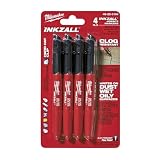
- Milwaukee Ink all Fine Point Marker, Black, 4 Per Pack
- 4 per pack Features Clog Resistant Marker Tip Writes through Dusty, Wet and Oily Surfaces Durable Marker Tip for Writing on Concrete, OSB and Rough Surfaces
- Clog resistant tip writes on dusty, wet and oily surfaces and is optimized for rough surfaces such as OSB, cinderblock and concrete
- Hard hat clip- attaches for easy access
- Quick dry time with reduced smearing and marking
Rank #4

- Long Nib and Deep Hole Marker: Our mechanical carpenter pencil with 45mm nib is designed for easy marking of deep holes or narrow areas. These construction pencils are the great choice for woodworking tools, construction tools, carpenter tools, contractor tools, wood carpentry tools and architect tools
- Extra Refills in 2 Colors for Versatile Marking: The construction mechanical pencil comes with 12 extra 2.8mm refills, including 6 red and 6 black refills. The black refill is suitable for light surfaces, while the red wax is perfect for dark surfaces. Our carpenter mechanical pencil makes sure that you'll have an ample supply for extended use
- Built-in Sharpener: Our construction pencil comes with a built-in sharpener to ensure the mechanical pencil tip is always sharp and ready for use. Never buy an extra pencil sharpener again. A great tool for any woodworker pencil, contractor pencils. The refill can easily be extended or retracted with a simple click of the pencils mechanical, allowing you to work more efficiently and accurately
- Portable Clip Design: Our deep hole construction pencil features a portable clip design, easy to carry and attach to your pocket or tool box, so that you can keep the carpenter pencils mechanical close at hand, making it a convenient tool to have on the go. Great gifts choice for carpenters
- Stronger Pencil Lead: The black refills are made of lead, sturdy and smooth. The red refills are made of wax, clear and light. These marking pencils are much thicker and stronger than normal pencils during the marking process of construction work, suitable for various surfaces, such as glasses, metal, boards, floors, walls, furniture, etc. The written marks can be easily wiped with a wet paper towel when needed
Rank #3

- 【Great Compatibility】This Katerk 1/4 inch hex shank bit holder is specifically designed for 1/4 inch hex shank drill bits. It's compatible with most 1/4 fast hex handles, hex sockets, various electric screwdrivers, and handheld screwdrivers. The bit holder makes it a valuable addition for any handyman.
- 【Secure and Safe】Built with a secure backup nut design, each drill bit holder securely locks onto your bits, ensuring they stay firmly in place. Additionally, our bit holder incorporates a high-quality steel ball rolling design that holds up to several kilograms of weight, ensuring your various drill bits don't fall off.
- 【Easy One-Handed Operation】The bit holder for impact driver allows you to change bits single-handedly, simplifying your workflow. Its multi-color design further allows for quick identification of the drill bit you need.
- 【Compact and Convenient】Thanks to its compact size, this 1/4 inch bit holder is easy to carry around. The bit holder allows for easy attachment to various tools, making this a convenient addition to your construction accessories. The Katerk bit holder is cast from high-quality alloy material, promising a long product lifespan. Despite its rugged strength, the bit holder remains lightweight, making it portable.
- 【Cool Christmas Gift For Men Stocking Stuffers】 This screwdriver bit holder, driver bit holder, impact bit holder, can be given as a gift to your loved one, especially for anyone involved in construction or electrical work. It's a must-have for stocking stuffers for men and women, tools gifts for dad, tech gadgets for men, gifts for dad, gifts for him, gifts for husband, gifts for boyfriend, cool gadgets for men, and cool gifts for dad.
Product prices and availability are accurate as of the date/time indicated and are subject to change. Any price and availability information displayed on Amazon at the time of purchase will apply.

