
There is no single environmental approval that every data-centre project in Japan must obtain. The requirements depend on the site, project scale, associated infrastructure, equipment, water and wastewater plans, and local rules. Start by checking whether any part of the project triggers national environmental impact assessment (EIA); then confirm prefectural and municipal assessment, development, and environmental requirements, along with any controls tied to emissions, wastewater, noise, groundwater, soil, waste, or protected areas.
Does a data centre in Japan need a national environmental impact assessment?
Not automatically. Japan’s Environmental Impact Assessment Act applies to specified project categories at prescribed scales. Some second-category projects are screened to decide whether EIA procedures are required, with the prefectural governor’s opinion included in that determination. EIA is an advance process for assessing environmental effects and informing project decisions; it is not, by itself, a construction permit. The Ministry of the Environment’s EIA System in Japan pamphlet provides an overview. The Environmental Impact Assessment Act on Japan’s e-Gov legal database is Japanese legal text; confirm the provisions and implementing order in force for the project.
The sources do not establish that an ordinary data-centre building, on its own, is a listed national EIA project. That is not a basis to assume the overall project is outside the Act: assess the complete plan and its separately classifiable components against the current categories and scale criteria. Depending on the proposal, associated power generation or transmission, roads, large-scale land development, or other infrastructure may affect the classification. The Ministry’s Environmental Impact Assessment Act information page is a starting point, not a substitute for checking the applicable legal text and project details.
Which local rules and development controls should you check?
Check the rules for both the prefecture and municipality where each part of the project will be built. Japan’s national EIA framework leaves room for local ordinances to require assessment of projects outside the national target categories and to set local procedures for national projects. Other local controls may cover development, environmental preservation, zoning, land use, and designated or protected areas.
#1 Best Overall

- An ultra quiet fan system designed for cooling cabinets that requires minimal noise.
- Features a multi speed controller to set the fans speed to optimal noise and airflow levels.
- Contains a CNC machined aluminum frame with a modern brushed black finish.
- Powered by wall outlet or USB port, included Turbo Adapter increases performance by 25 percent.
- Dimensions: 4.6 x 4.6 x 1.3 in. | Airflow: 26 CFM | Noise: 17 dBA | Bearings: Dual Ball
Requirements vary by location. For example, Fukuoka Prefecture says certain development activities require notice at least 30 days before work begins, while specified factory installations or development activities require advance permission. Those are Fukuoka-specific rules, not a nationwide data-centre filing requirement. Check the applicable ordinance, thresholds, exclusions, competent office, and timing for the actual site using the prefecture’s development regulation guidance.
When do water and wastewater rules apply?
Under the Water Pollution Control Law, an operator planning to install a statutory “Specified Facility” that discharges to public waters must report to the prefectural governor. The report covers the facility’s type and structure, how it will be used, wastewater treatment, and effluent characteristics and volume. This is a conditional requirement: first establish whether the proposed equipment meets a statutory facility definition and where its wastewater will go. The Ministry of the Environment explains the provisions in Chapter II-1 of the Water Pollution Control Law.
Rank #2

- 【better after-use experience】 Temperature reduction provides an expected longevity extension and higher performance of a critical network component,These fans are overall very helpful for devices that get a bit hot and start to throttle down.
- 【choice of most users】It works great ,for DIY cooling fan or as an additional cooling ,fan for your gaming needs. like as router, cabinet, Modem, DVR, Receiver, Streaming ,boxes, x-box, SSD, Security Camera NVR, andriod box, stereo, T-Mobile gateway. Good balance of quiet and airflow. keeping electronics cool .Three specifications of fans, suitable for more usage scenarios .
- 【Custom shock absorbing feet】 four feet using environmentally friendly rubber, after testing, the softness of the feet that can smoothly grab the desktop, not too hard and desktop resonance .
- 【Fan parameters】Connecter: USB; Cable Length: 55cm Or 21 inches; Bearing type: Sleeve ; Life: 35000 hours / Dimension: 360mm(L) x 120mm(W) x 25mm(H) / 4.7x4.7x1 in. per fan; Rated Voltage:5V 0.2A; Speed: 1500RPM; Air flow: 56.7CFM; Noise:23dBA .
- 【Warranty & Packing List】Warranty: One-year quality assurance. Please contact us, If the product has any quality problems, it will be refunded within 90 days or replaced within one year | Packing list: A finished product .
For the project’s water review, document the discharge route and assess cooling-tower blowdown, treatment chemicals, stormwater, and any groundwater-related discharge or infiltration. A public-sewer connection does not, by itself, resolve every water-related requirement; confirm the applicable rules with the relevant authority. In specified regions, pollutant-load standards may apply to relevant factories, and special standards may be set for certain new facilities or factories. The law also allows orders concerning facility structure, use, or wastewater-treatment plans when reported effluent would not meet applicable standards.
What noise and vibration requirements might apply?
The Noise Regulation Law covers specified construction work and specified factories in designated areas. Depending on the applicable classification and location, notification may be required; the law also provides for recommendations or orders to change noise-control methods or working hours in stated circumstances. Check the planned construction equipment and schedule as well as operational sources such as cooling plant and backup-generator testing. The Ministry’s Noise Regulation Law provisions describe the national framework, but designated-area boundaries and local rules matter.
What’s actually slowing this PC down?
Pick the symptom - the matching free tool is one click away.
Rank #3
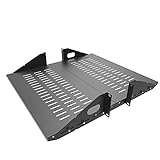
- Compatible with all 19” racks and cabinets to hold various IT, network and other equipment.
- Dimensions: W 19" x D 10" x H 2U per shelf ; 2 Shelves as set
- This Vented Center Weighted Mounting Rack Shelf fits the mounting posts in different deepth from 75 mm to 125mm.
- Max Weight Capacity: 110 Pounds; Center weighted.
- Slotted Venting to Improve Air flow and Help Prevent Overheating of Your Equipment
Screen the Vibration Regulation Law separately for applicable specified work and equipment. Neither noise nor vibration requirements should be assumed to apply—or not apply—without checking the project’s classifications, location, and local requirements.
What other environmental issues should the project screen?
The Ministry of the Environment’s environmental laws index identifies laws and controls concerning air emissions, offensive odor, vibration, water pollution, groundwater pumping for building use, soil contamination, waste, natural parks, nature conservation, and protected wildlife. The Basic Environment Law’s Chapter 2 also identifies regulatory subjects that include air, water, soil, odor, noise, vibration, groundwater extraction, land use, construction, and nature conservation. These are screening areas, not a list of rules that automatically apply to every data centre.
Rank #4

- Space-Saving Design: Measures 19.0"H x 21.7"W x 17.7"D with a 14.2" max mounting depth, our 9U rack fits tight spaces while holding full 19" gear—ideal as a server cabinet or wall mount network cabinet for home offices and small server rooms
- Full Security: Both the lockable glass door and side panels protect your hardware from theft or tampering. This 9U wall mount rack gives you peace of mind in public or shared environments, ensuring your equipment rack stays safe and secure
- Active Cooling: The built-in cooling fan prevents overheating, keeping your wall mount server rack running reliably. Perfect for active networks, this 9U network rack extends the life of switches, routers, and PDUs by maintaining consistent airflow
- Heavy-Duty Build: Cold-rolled steel construction supports up to 110 lbs of 19" IT and A/V devices. Whether you need a wall mount server cabinet for shallow servers or a wall mount network rack for patch panels, this delivers years of reliable use
- Easy Installation: Pre-marked mounting holes and top/bottom cable ports make setup fast. Adjustable rails and numbered U positions allow precise rack mounting of your gear. This turns any wall into a tidy, professional server room in minutes
- Generators, boilers, and fuel: Identify equipment, fuels, expected operation, and fuel storage, then check whether air-pollution control filings or other requirements apply.
- Groundwater: Establish the proposed water source and whether groundwater will be pumped for building use; check regional restrictions and applicable local rules.
- Soil and land history: Review prior site uses and planned land alteration to identify any statutory investigation or reporting trigger.
- Waste and excavated material: Identify construction waste, excavated soil, and any regulated hazardous materials, and confirm the applicable handling requirements.
- Nature and conservation: Check whether the site overlaps a natural park, protected landscape, wildlife area, forest, or other conservation designation.
- Site preparation: Assess the scale of land preparation and associated works against local development controls and any applicable EIA categories.
The applicable filing, permission, or operating control depends on the equipment, land history, emissions and discharge routes, site designation, and prefectural and municipal rules. The available national sources do not establish universal data-centre thresholds for these screens.
Independent reader supportYour contribution helps us test, update, and keep practical guides available for everyone.How should you determine the approval path for a specific project?
Before seeking a definitive approvals list, assemble the project facts that determine whether a rule applies:
Recommended Free Tools
Best Value

- Color LCD control panel. Simplifies operation, clearing of codes and easier to read.
- Matte black cabinet brings stylish utility to the workplace.
- Added bumpers enable safer handling and movement around your facility.
- Larger casters makes rolling and navigation easier.
- Cools to mid-60s °F — for effective heat control around electronics, servers, and computers.
- Site location, including prefecture and municipality, land-use designation, and any protected-area status.
- Project boundaries, scale, construction methods, land preparation, and associated infrastructure such as power works and access roads.
- Equipment inventory, including generators, boilers, cooling systems, and fuel storage.
- Water sources, expected wastewater streams, treatment plans, and discharge or sewer routes.
- Land history, planned groundwater use, and anticipated construction waste or excavated soil.
Use those details to check the national EIA categories and scale criteria, then consult the relevant prefectural and municipal offices about local assessment, development controls, and the conditional requirements discussed above. Confirm the competent authority, filing sequence, and lead times directly: the sources do not supply one universal environmental-approval checklist or timetable for data centres in Japan.
Quick Recap
Product prices and availability are accurate as of the date/time indicated and are subject to change. Any price and availability information displayed on Amazon at the time of purchase will apply.

