
Generally, yes: an arbitration award is binding, and a court is not a place to appeal it simply because you disagree with the outcome. Under the U.S. Federal Arbitration Act (FAA), a court may confirm an award, while a party can seek limited relief to vacate it or correct specified errors. The FAA also sets a short deadline for serving notice of a challenge. These rules do not govern every arbitration; the applicable law and the arbitration agreement matter.
What does “binding” mean after arbitration?
When the FAA confirmation procedure applies, a court must confirm an award unless it is vacated, modified, or corrected under the statute. The procedure in 9 U.S.C. § 9 addresses agreements that provide for entry of judgment on the award and specify a court. If the agreement names no court, § 9 identifies the U.S. court in the district where the award was made. The statute also requires notice of an application for confirmation.


Confirmation turns the award into an enforceable court judgment. Under 9 U.S.C. § 13, the entered judgment has the same force and effect as a judgment in an action and may be enforced as one.
Can you appeal an arbitration award?
Not as a general appeal on the merits under the FAA provisions discussed here. A request to set aside an award must fit one of the grounds listed in § 10; a request to modify or correct it must fit § 11. Dissatisfaction with the arbitrator’s decision, by itself, is not among § 10’s listed grounds. Whether particular facts meet a statutory ground depends on the circumstances and the controlling law.
When can a court vacate an award?
9 U.S.C. § 10 lists grounds on which a court may vacate an award on a party’s application:
- The award was procured by corruption, fraud, or undue means.
- There was evident partiality or corruption in an arbitrator.
- An arbitrator engaged in specified misconduct, such as refusing a postponement despite sufficient cause or refusing to hear pertinent and material evidence, or other prejudicial misbehavior.
- The arbitrators exceeded their powers, or so imperfectly executed them that they failed to make a mutual, final, and definite award on the submitted subject matter.
These are statutory categories, not a guarantee that an allegation will justify vacatur. The facts and governing law determine whether a court can grant relief.
When can an award be modified or corrected?
Correction is narrower and different from vacatur: it seeks to fix specified errors rather than set aside the award altogether. Under 9 U.S.C. § 11, a court may modify or correct an award for:
- An evident material miscalculation of figures or an evident material mistake in the description of a person, thing, or property.
- An award on a matter not submitted to arbitration, unless that does not affect the merits of the matter that was submitted.
- An imperfection in form that does not affect the merits.
How long do you have to challenge an award under the FAA?
9 U.S.C. § 12 requires that notice of a motion to vacate, modify, or correct “must be served upon the adverse party or his attorney within three months after the award is filed or delivered.” This is a statutory service requirement, not merely an informal target date. Filing and service mechanics and the computation of time can depend on the applicable rules and circumstances. Check the rules governing your arbitration promptly with qualified counsel; do not assume the FAA deadline applies if another regime controls.
Rank #3
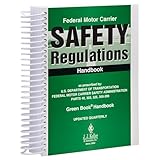
- FMCSR handbook gives drivers easy access to word-for-word Federal Motor Carrier Safety Regulations.
- Includes Parts 303, 325, 350-399, and 40 of the FMCSRs, with interpretations inserted immediately following the regulation
- Includes intermodal equipment requirements minimum periodic inspection standards, medical regulatory criteria, regulatory histories
- 8.5 x 11" English spiral bound handbook with 608 pages.
Which law governs your arbitration?
The rules above describe the general federal FAA framework, not every arbitration. State arbitration statutes, international arbitration, labor arbitration, and specialized statutory schemes may have different procedures, review standards, or deadlines. The agreement and the circumstances determine which regime applies to a particular award; the FAA provisions alone cannot establish that for an individual case.
Quick Recap
Best Value

- 1. Large Format A4 Hardcover: 8.5" x 11" black lychee leather hardcover book features a landscape A4 layout with 12mm Ergonomic Row Height designed specifically for firearms acquisition and disposition. Each page offers comfortable handwriting space to record every firearm transaction clearly.
- 2. Premium Quality: The lychee PU leather cover with serif gold foil stamping delivers Executive Aesthetics and legal authority. Inside, 100 sheets of 80GSG acid-free paper with double-sided printing and a ribbon bookmark. The sewn binding allows 180° flat lay, ensuring FFL log book never loses pages even after 20 years of daily use.
- 3. 100% ATF Compliant : Hardcover gun record book prints 27 CFR §§ 478.121 & 478.129 permanent retention notice on both the title page and every footer. 100% compliant with the latest ATF federal audit standards – your reliable partner during ATF inspections.
- 4. Complete Acquisition & Disposition Tracking: The Description section includes dedicated PRIVATELY MADE FIREARM (PMF) compliance fields. The side-by-side acquisition and disposition layout creates a perfect audit trail. Whether you run a brick-and-mortar gun shop or operate as a home-based FFL, gun registration book meets all audit requirements.
- 5. Versatile Use Cases: ATF track gun inventory journal is ideal for: brick-and-mortar gun shops, home-based FFLs / kitchen table FFLs, firearms manufacturers & gunsmiths, C&R licensees (curios & relics collectors), and any seller needing to prepare for ATF surprise audits.
Product prices and availability are accurate as of the date/time indicated and are subject to change. Any price and availability information displayed on Amazon at the time of purchase will apply.

