
To use a 240Hz display, you need a monitor that supports 240Hz at your chosen resolution on the input you plan to use, a compatible graphics output, and a cable that can carry that mode. To get close to 240 frames per second in a game, your PC must also render that many frames in that game, at that resolution and graphics quality. A 240Hz monitor alone does not guarantee 240 FPS.
Refresh rate and game frame rate are different
Refresh rate is how often the monitor can update its image. A 240Hz monitor can refresh up to 240 times per second when running a supported mode. Frame rate is how many frames the PC renders in a game. A high-refresh display can show the benefit of higher frame rates, but it cannot make the PC render them.
There is no single PC specification or graphics card that guarantees 240 FPS across all games. Performance depends on the specific game, resolution, graphics settings, CPU, GPU, and the rest of the system. For a meaningful hardware recommendation, first choose the game, target resolution, and settings, then compare benchmarks for that exact combination.
What to check in a 240Hz monitor
Read the monitor’s exact specification or manual for the resolution and refresh-rate combinations it supports, and check which input supports the mode you want. The maximum refresh rate may differ by input or resolution; seeing “240Hz” in a product name is not enough to confirm that every connection supports 240Hz at your chosen resolution.
What’s actually slowing this PC down?
Pick the symptom - the matching free tool is one click away.
#1 Best Overall

- Smooth motion: 240Hz refresh rate and fast 0.5ms response time provide crisp visuals and fluid movement with less input lag.
- Seamless gaming: FreeSync Premium and HDMI VRR eliminate tearing for smooth, responsive PC and console gameplay.
- Fast IPS: Faster 0.5ms response with excellent color accuracy across wide IPS viewing angles.
- Rich color: 99% sRGB color coverage delivers vivid, detailed imagery with strong accuracy.
- Eye comfort: TÜV Rheinland 3‑star certified display lowers blue light while preserving color quality.
- HP lists its OMEN 27qs as a 2560×1440 display with a maximum refresh rate of 240Hz, one DisplayPort 1.4 input, and two HDMI 2.0 inputs. Check the monitor’s documentation for the mode supported over the input you intend to use. HP OMEN 27qs specifications.
- MSI documents the MAG 272QP QD-OLED X24 as a 2560×1440, 240Hz monitor supporting up to 240Hz at that resolution over HDMI and DisplayPort. Its listed ports include DisplayPort 1.4a. MSI MAG 272QP QD-OLED X24 specifications.
These are model-specific examples, not a rule for every monitor. Verify the exact monitor, resolution, input, and supported mode before buying a cable or troubleshooting a missing refresh-rate option.
Which cable do you need for 240Hz?
There is no universal cable answer: the cable must support the selected resolution and refresh rate, and the monitor’s input and GPU output must support the same mode. Check the monitor manual and port specifications rather than choosing a cable based only on a “240Hz” label.
Rank #2

- Smooth motion: 240Hz refresh rate and fast 0.5ms response time provide crisp visuals and fluid movement with less input lag.
- Seamless gaming: FreeSync Premium and HDMI VRR eliminate tearing for smooth, responsive PC and console gameplay.
- Fast IPS: Faster 0.5ms response with excellent color accuracy across wide IPS viewing angles.
- Rich color: 99% sRGB color coverage delivers vivid, detailed imagery with strong accuracy.
- Eye comfort: TÜV Rheinland 3‑star certified display lowers blue light while preserving color quality.
For its 240Hz/360Hz setup guidance, BenQ ZOWIE recommends an HDMI 2.0 or DP 1.2a cable and advises selecting the refresh rate in Windows or NVIDIA Control Panel, depending on the GPU. This is BenQ’s guidance for its monitors; another manufacturer’s instructions may specify different requirements. BenQ ZOWIE 240Hz setup guidance.
Some monitors include a suitable cable. MSI lists a DisplayPort cable among the accessories for the MAG 272QP QD-OLED X24, so check the box contents before purchasing another one. MSI accessory and port specifications.
The Tool Desk
Outbyte PC Repair FREEClear out junk files and repair common Windows errorsFree Scan →Outbyte Driver Updater FREEFix the driver behind crashes, sound loss and screen glitchesFind Drivers →Rank #3
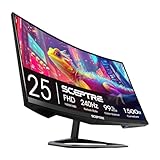
- 240Hz Refresh Rate: Stay above the pack with 240Hz, giving you an edge in performance as frames transition instantly.Specific uses for product - Gaming
- 1ms Response Time: Colors fade and illuminate instantly with a 1ms response time, eliminating ghosting and piecing together precise imagery during action-packed scenes and gaming.
- 1500R Curvature: The 1500R degree curved design immerses you into all of the action no matter where you choose to sit in the room.
- AMD FreeSync Premium: By accelerating the frame rate to at least 120Hz at 1080P FHD resolution and delivering low latency to prevent visible delay in data processing, AMD FreeSync Premium allows gameplay to reach the highest echelons of performance.
- Built-In Speakers: Perfectly suited to work & gaming settings, built-in speakers deliver robust & smooth audio while saving space on your desk.
Can HDMI run 240Hz?
Yes, on monitor models and at resolutions where the manufacturer specifies 240Hz over HDMI, with a suitable HDMI cable and compatible GPU output. MSI, for example, documents up to 240Hz at 2560×1440 over HDMI for the MAG 272QP QD-OLED X24. That does not mean every HDMI-equipped monitor supports 240Hz, or that every HDMI input supports it at every resolution.
Check the monitor’s stated mode for the exact input, and make sure the PC is connected to a GPU output that supports it. If you have a desktop with a separate graphics card, connect the monitor to the graphics card’s output rather than assuming a motherboard video port will provide the required mode.
Rank #4

- 27” 240Hz 1500R Curved FHD 1080P Gaming Monitor for Game Play.
- Prioritizes Gaming Performance: Up to 240Hz high refresh rate, more immersive 1500R Curvature, FreeSync, MPRT 1ms Response Time, Black Level adjustment(shadow booster), Game Modes Preset, Crosshair.
- Cinematic Color Accuracy: 130% sRGB & DCI-P3 95% color gamut, 4000:1 contrast ratio, 300nits brightness, HDR, Anti-flicker; Anti-Glare.
- Plug & Play Design: HDMI & DP1.4 & Audio Jack(No built-in speakers), durable metal stand, tilt -5°~15, VESA 100*100mm compatible.
- Warranty: Money-back and free replacement within 30 days, 1-year quality warranty and lifetime technical support. Pls contact SANSUI service support first if any product problem.
How to set up and verify 240Hz
- Confirm the monitor mode: Find the supported resolution-and-refresh-rate combination for the input you will use in the monitor’s specifications or manual.
- Connect the right ports: Use a GPU output and monitor input that both support that mode, with a cable suitable for the connection.
- Select 240Hz in the operating system: In Windows, open Settings > System > Display > Advanced display, select the intended display, and choose 240Hz if it is available. Depending on the GPU and setup, you may also be able to select the refresh rate in the GPU control panel.
- Check the active mode: Confirm the selected refresh rate and resolution in Windows or the monitor’s on-screen display. Then check the game’s settings if it offers a refresh-rate or display-mode option.
If 240Hz is missing, check the selected resolution, monitor input, cable, GPU connection, graphics driver, and monitor settings. A mismatch in any part of the connection chain can prevent the desired mode from appearing.
Independent reader supportYour contribution helps us test, update, and keep practical guides available for everyone.Is adaptive sync required?
No. Adaptive sync is separate from the monitor’s ability to run at 240Hz. It is a compatibility feature that can coordinate the display’s refresh with the GPU’s frame output; it does not make a game render at 240 FPS.
Do these 3 things before closing this tab:
1Scan for outdated or missing drivers - takes under a minute2Clear out junk files and repair common Windows errors3Fix the driver behind crashes, sound loss and screen glitchesBest Value
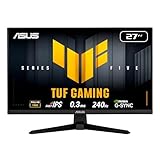
- 27-inch Full HD Fast IPS Display: Features a 1920 x 1080 resolution Fast IPS panel with 240Hz refresh rate for fast paced gameplay
- Ultra-Fast Response Time: ASUS Fast IPS technology enables a 0.3ms (min) response time for sharp gaming visuals with high frame rates
- Adaptive Sync Technology: FreeSync Premium and G-Sync compatible delivers a seamless, tear-free gaming experience
- Advanced Motion Blur Reduction: ASUS Extreme Low Motion Blur Sync (ELMB SYNC) technology enables ELMB together with variable refresh rate, eliminating ghosting and tearing for sharp gaming visuals with high frame rates
- Convenient Monitor Control: DisplayWidget Center enables easy OSD access and monitor settings adjustments with a mouse
For AMD FreeSync, AMD says you need a compatible monitor, graphics device, and current graphics driver, and that FreeSync works over HDMI and DisplayPort. AMD FreeSync requirements.
NVIDIA’s support guidance says GeForce GTX 10-series and later support VESA Adaptive-Sync over DisplayPort 1.2a, and describes setup using the monitor’s on-screen display and NVIDIA Control Panel. The article was updated September 29, 2021, so consult NVIDIA and the monitor maker for compatibility details relevant to your current hardware. NVIDIA Adaptive-Sync setup guidance.
Quick Recap
Product prices and availability are accurate as of the date/time indicated and are subject to change. Any price and availability information displayed on Amazon at the time of purchase will apply.

