
PC Slower Than It Used to Be?
A free scan shows the junk files, broken settings and background clutter dragging Windows down - then fixes them in one click.Free scan · Windows 10 & 11Outdated Drivers Are Slowing You Down
One free scan finds every outdated or missing driver and matches the right update for your exact hardware.Free scan · exact hardware matchThe best setup for photographing distant galaxies is a matched system: a telescope whose focal length frames your target on your camera’s sensor, plus a tracking equatorial mount capable of carrying the complete rig. For a first traditional setup, a short-focal-length refractor is the more forgiving starting point; a wide-field reflector such as the Sky-Watcher Quattro 150P suits larger targets better than tiny galaxies. Choose a dedicated color astronomy camera for a simpler workflow, or a smart telescope if ease and speed matter more than control and maximum image quality.
What matters most when choosing a galaxy-imaging setup?
A galaxy’s apparent size in the sky, your telescope’s focal length, and your camera sensor’s dimensions determine how much sky appears in the image and how large the target looks in the frame. A long focal length with a small sensor can frame a small galaxy more tightly; a shorter focal length or larger sensor captures a wider field. Neither combination is automatically better: the right framing depends on the particular galaxy and whether you want its surroundings in the image.
The Royal Astronomical Society of Canada (RASC) summarizes the challenge this way: “Imaging deep sky objects (galaxies, nebulas, star clusters) involves taking minutes-long exposures using a telescope with good tracking.” That makes the mount a central part of the purchase, not an optional accessory to add later. Sky & Telescope likewise identifies a tracking equatorial mount as the most important equipment for deep-sky imaging because it follows the apparent motion of the sky during long exposures.
- Target and framing: Check the galaxy’s apparent size and decide whether you want a close view or a wider composition.
- Focal length and focal ratio: Focal length affects framing; the optical design and focal ratio also affect the imaging setup. Longer focal lengths place greater demands on tracking and guiding.
- Sensor and pixels: Sensor dimensions affect field of view. Pixel size should also be considered alongside focal length; ZWO’s 2019 manufacturer guide notes that larger pixels typically work better at longer focal lengths.
- Image coverage: Check whether the telescope’s corrected image circle covers the sensor you plan to use, and whether its optical design needs a field corrector or flattener.
- Mount and total load: Include the telescope, camera, adapters, guide equipment and other accessories when assessing payload. RASC advises sizing mass-market mount capacity conservatively.
- Workflow: Decide how much setup, calibration, guiding and post-processing you are willing to manage.
Which telescope is a sensible starting point?
Short-focal-length refractor: the easier traditional route
RASC calls a short-focal-length refractor “the best way to start and achieve satisfying results.” The reason it is a practical beginner path is that a shorter focal length gives a wider field and is generally less demanding to track accurately than a long-focal-length setup. That wider framing can work well for larger galaxies and galaxy groups, but it may leave a small galaxy occupying only a small part of the image.
#1 Best Overall
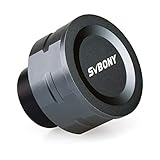
- SV105 telescope camera is the basic method for starting astronomical imaging; you can use the SV105 electronic telescope eyepiece to image it; which is more suitable for beginners who like to do astrophotography
- SV105 astrophotography camera is suitable for lunar and planetary photography; share the view of bright planets; moon and terrestrial targets; just point the telescope at the moon or planet and record a quick video; you can transfer the real-time view of the telescope to your laptop or PC
- Plug and play; no driver required; real-time dynamic observation; clear images; SV105 astronomy camera compatible with Windows system needs to download Sharpcap Capture; Linux system needs to download AstroDMx Capture; Android system needs to download USB Camera
- The image processor adopts dark light compensation technology; SV105 svbony camera can greatly improve the image clarity of the astronomy camera under low light conditions
- Interesting and useful USB planetary camera; standard 1.25 inches; threaded M28.5x0.6; can be used with telescope filters; directly connected to the telescope
Choose a refractor based on the targets you want to frame, the camera sensor, and the image circle it can cover. A telescope alone is not a complete deep-sky imaging system: it still needs a suitable tracking mount and camera, and may need additional optical correction depending on its design and sensor.
Sky-Watcher Quattro 150P: a specific wide-field example
Space.com’s 2025 telescope guide describes the Sky-Watcher Quattro 150P as a budget-oriented astrophotography telescope. The guide lists a 150 mm aperture, 600 mm focal length and native f/4 focal ratio; it says the included coma corrector brings the ratio to f/3.45. Its wide field makes it a concrete option to consider for larger deep-sky targets, but not a universal galaxy choice: small galaxies may not fill the frame tightly.
Rank #2

- 【Ultra-Light Design for All Adventures】Only 3lb/1.35kg - World's Most Portable Smart Telescope! Fits perfectly in standard backpack for travel. Ideal for spontaneous stargazing trips and outdoor adventures. Take it anywhere, anytime!
- 【Dual Imaging System for Day & Night】Advanced Dual Lens Design: Telephoto lens masters wildlife & landscape & deep space objects, while wide-angle lens captures Milky Way & star trails. In daytime, telephoto for subjects, wide-angle for target location. Perfect dual-camera imaging solution!
- 【Smart Auto-Tracking & 4K Clarity】Professional 4K Auto-Tracking ensures crystal-clear shots of stars, planets, and wildlife. Advanced system automatically follows celestial objects and moving subjects for stunning results every time.
- 【Cloud-Powered Image Processing】One-touch processing through dedicated DWARFLAB App with cloud computing power. Instantly enhance your photos - no PC or complex software needed. From capture to stunning final image in minutes!
- 【Easy-to-Master for All Ages】Perfect for beginners to experts (6-98 years)! Start amazing astrophotography in just 2 minutes. Intuitive app interface and automatic features make professional imaging accessible to everyone.
The Quattro 150P is an optical tube, not a complete imaging rig. You need a separate suitable equatorial tracking mount, selected for the whole imaging load. Space.com also cautions against choosing it for planetary imaging that calls for longer focal length.
Longer focal length: tighter framing, tougher tracking
A longer focal length can make a small target appear larger on the sensor, but it also makes tracking errors more consequential. Accurate tracking and, often, autoguiding become more important as focal length increases. RASC cautions that a large-aperture Schmidt-Cassegrain can frustrate beginners; aperture or magnification alone does not make a telescope the better first imaging choice.
Recommended Free Tools
Rank #3
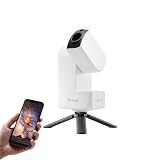
- 【Effortless Smart Telescope for Beginners】 Simply power on, connect the app, and start exploring the universe. With automatic GOTO targeting and tracking, Seestar S30 Pro finds and follows celestial objects for you. View the night sky live on your smartphone and capture stunning astrophotography images with just a few taps—even on your first night under the stars
- 【Urban-Friendly Telescope for Clear Night Skies】 Seestar S30 Pro reduces color distortion with apochromatic optics for sharper stars and higher contrast. Built-in light pollution filters help you capture clearer astrophotography even in bright urban environments
- 【Dual-Camera 4K Imaging for Stunning Detail】 Capture sharper, higher-resolution astrophotography with dual-camera imaging. From deep-sky objects to wide night landscapes, Seestar S30 Pro delivers clear 4K-quality images with impressive detail and clarity in every shot
- 【One-Tap Astrophotography: Deep Sky, Moon & Sun】 Capture stunning images of the Milky Way, star trails, nebulae, galaxies, the Moon, and the Sun—all with a single tap. Intelligent imaging modes and automatic mosaic stitching make wide-field astrophotography effortless, no complex setup required. Designed for deep-sky objects; not intended for planetary observation
- 【AI Smart Imaging for Clearer Photos】 With a single tap, AI automatically reduces noise and improves image quality, making your astrophotography clearer and more detailed. It also separates the sky and foreground for more natural and balanced night sky photos
Which camera should you pair with the telescope?
Dedicated one-shot color astronomy camera
A dedicated color astronomy camera is the straightforward telescope-camera route when you want to capture color without building a filter-based monochrome workflow. ZWO’s 2019 manufacturer guide describes color cameras as simpler and quicker to process. Match the sensor dimensions to the telescope’s field of view and corrected image circle, and check that the camera is suitable for long exposures and works with the telescope’s connection and adapter requirements.
Monochrome camera with filters
A monochrome camera can offer more flexibility and, according to ZWO’s guide, can be more sensitive, but it requires additional equipment and processing steps. A filter wheel and filters are part of that path, along with the work of capturing and combining filtered data. It is a better fit for someone who wants that control and accepts the added complexity than for someone seeking the simplest first setup.
Rank #4

- IMX662 Telescope Camera; with ultra-high sensitivity and low noise; it captures clear planetary details even in low light; High frame rate ensures sharp images of fast-moving planets like Jupiter and Saturn
- Low readout noise: achieve unparalleled clarity with the svbony camera featuring ultra-low readout noise of just 0.7e-; This means cleaner; sharper images with less interference; even in low-light conditions
- 1920*1080@107FPS: capture the cosmos with the astrophotography camera offering 1920x1080 resolution at 107FPS; ensuring every detail of fast-moving planets; like Jupiter’s clouds and Saturn’s rings; is sharp and clear
- Lightning-fast transfers: SVBONY Astronomy camera features USB 3.0 high-speed transfer technology; offering a staggering 5Gbps speed—over 10 times faster than USB 2.0; This enhances your astrophotography workflow significantly.
- ST4 guiding interface; SV305C Pro guide camera features an ST4 guiding interface; ensuring seamless compatibility with popular software like PHD2 and ASCOM; This simplifies setup; allowing your telescope camera to track celestial objects quickly and accurately
DSLR or mirrorless camera
A DSLR or mirrorless body is a reasonable option if you already own one, as RASC’s guide recognizes. It can reduce the need to buy a separate astronomy camera immediately, but the camera still needs an appropriate telescope connection and exposure workflow. A camera suited to wide-field night-sky photography is not automatically the best fit for small galaxies photographed through a telescope: sensor size, pixel scale relative to focal length, long-exposure suitability and adapters all matter.
There is no evidence-based single camera brand or model to name as best for every galaxy rig. Space.com’s camera guide, updated June 19, 2026, covers broad night-sky astrophotography categories rather than a universally optimized camera-and-telescope pairing for galaxies. Use category advice as a starting point, then check the specific sensor, pixel size, exposure suitability, connections and current availability against the telescope you choose.
What’s actually slowing this PC down?
Pick the symptom - the matching free tool is one click away.
Best Value

- 【Dual-Screen Display for Real-Time Viewing】This smart telescope is equipped with a foldable external screen (3 inch) allows for direct, vivid observation. It can be enjoyed with family and friends. The built-in sunshade ensures clear visibility even under strong daylight, offering an intuitive viewing experience.
- 【Superior Optics】300mm(f/8.89) focal length and 78mm aperture, fully coated optics glass lens with high transmission coatings creates stunning images and protect your eyes. Perfect full positive telescope for astronomers to explore stars and moon.
- 【Magnification】The starlight-grade sensor supports up to 350X magnification for long-distance viewing and captures stunning 4K high-resolution images. even in low-light or moon-viewing conditions. Come with an eyepiece with adjustable vision compensation (diopter adjustment range +/-6).
- 【One-Touch Switch Photo & Video Modes】Capture breathtaking photos or videos at the touch of a button—no external devices needed. Supports up to 512GB external storage, so you can save and share your favorite celestial moments anytime. (Equipped with a 64GB memory card)
- 【Great Gift Ideas】The telescope is a perfect gift or birthday gift for kids or beginner astronomers. Smart telescope helps them build interest in astronomy ,exploring the world , enjoy life and away from the screen! The kids' astronomical journey starts from here.
What else do you need besides the telescope and camera?
A conventional deep-sky setup includes more than its two headline components. ZWO’s equipment guide lists the telescope or lens and tracking equatorial mount as separate items to obtain, and identifies the following additional components as part of an imaging system:
- Acquisition computer or controller and software: Used to operate the camera and capture images.
- Guiding equipment: A guide camera paired with either a separate guide scope or an off-axis guider can send tracking corrections to the mount.
- Optical correction: A field corrector or flattener may be needed depending on the telescope’s optical design and the sensor.
- Camera connection and adapters: Confirm that the chosen camera can be physically connected to the telescope or lens.
- Optional filters and filter wheel: Relevant to a monochrome-camera workflow.
- Optional electronic focus: Another component ZWO lists for an imaging setup.
Mount capacity and tracking precision matter together. Assess payload for the assembled system rather than just the optical tube, and consider the focal length when deciding how much tracking accuracy and guiding the setup needs. No one mount model is right for every configuration.
Traditional rig or smart telescope?
| Path | What it includes | Best suited to | Main trade-off |
|---|---|---|---|
| Traditional component rig | Separate telescope, tracking equatorial mount, camera and acquisition system; guiding and optical correction may also be needed. | Readers who want to choose and tune components for their target framing and workflow. | More setup and equipment choices; offers more control than a smart telescope. |
| Smart telescope | An integrated system that calibrates, finds targets and captures images using its own app-based workflow. | Readers who value a quicker, simpler route to viewing and recording deep-sky objects. | RASC says smart telescopes can show deep-sky images in minutes and improve them with live stacking, but cannot match the image quality of component imaging rigs. |
RASC presents smart telescopes as easier and quicker to operate than multi-component setups, not as an equal substitute for every ambitious galaxy-imaging goal. Pick this route when reducing assembly and setup work matters more than selecting each component independently.
How to choose a matched system
- Choose a galaxy or target class first. Decide whether you want to image small galaxies closely or frame larger galaxies and their surroundings.
- Check framing with the telescope and sensor together. Compare focal length and sensor dimensions; do not choose either in isolation. Use pixel size as another matching consideration, particularly at longer focal lengths.
- Confirm optical coverage and connections. Check the corrected image circle, whether the optical design needs a corrector or flattener, and the adapters needed to attach the camera.
- Choose the camera workflow. Pick one-shot color for a simpler capture and processing path, monochrome plus filters for added flexibility and complexity, or a DSLR/mirrorless body you already own if it fits the optical setup.
- Choose a mount for the assembled rig. Account for the full load and the tracking demands of the focal length. Add a guide scope or off-axis guider and guide camera if the setup calls for autoguiding.
- Decide how much setup you want. If component selection and a longer workflow are a poor fit, compare the smart-telescope route with the traditional rig’s greater control.
Listings, prices and availability change, so verify current specifications and stock before buying. The telescope and camera buying guides cited here are broad astrophotography references rather than controlled comparisons of galaxy-imaging results.
Quick Recap
Product prices and availability are accurate as of the date/time indicated and are subject to change. Any price and availability information displayed on Amazon at the time of purchase will apply.

