
To teach a board game quickly, explain the goal first, show the flow of a normal turn, and demonstrate one legal move with the pieces on the table. Then cover scoring, the end of the game, and only the exceptions players are likely to need soon. Keep the rulebook nearby so you can check details instead of guessing.
Before you explain the rules
Check the game and its setup
Confirm the player count, edition, and any expansions in use. Set up the game correctly and arrange its components so everyone can see what you are referring to. The game’s current rulebook is the authority for setup and disputed rules; publisher guidance also recommends checking for a matching official quick-start guide or how-to-play video when available (Asmodee Canada; LearnLive).
Explain the game in the order players need it
1. Start with the goal
Tell players what they are trying to achieve and how the winner is determined. This gives each action a purpose, rather than leaving new players with a list of disconnected rules.
2. Describe a normal turn
Explain who goes next, what a player can do on a turn, and how a turn or round ends. Introduce terms when they matter to a choice; avoid opening with a vocabulary list that players cannot yet apply.
Recommended Free Tools
#1 Best Overall
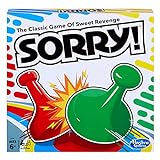
- GAME OF SWEET REVENGE: Enjoy classic Sorry! gameplay with this Sorry! board game for kids. It's an edge-of-your-seat race to home, so hurry up and get there first
- FIRST ONE HOME WINS: Who will be the first player to get all 3 of their pawns to the home space? But watch out! Players can get "sweet revenge" by sending each other's pawns back to the starting point
- SO MANY POSSIBILITIES: Slide, collide, and score to win the Sorry! game. This family game for kids and adults features so many possibilities depending on the card picked up and strategy chosen
- CLASSIC SORRY! GAMEPLAY: Remember playing the original Sorry! game as a kid? Bring back memories of playing the Sorry! game with family members and introduce it to a new generation
- FAMILY GAME NIGHT FAVORITE: A go-to game for family time or anytime indoor fun, the Sorry! game for kids is one of the best family games for game night
3. Demonstrate an ordinary legal turn
Use the actual board, cards, tokens, or other components. Talk through a typical choice and show what happens as a result. A concrete example makes it easier to connect an abstract rule to the game in front of the group. This component-based approach is also recommended in Board Game Serial’s teaching guide and Asmodee Canada’s guidance.
4. Explain scoring and when play ends
Once players understand what they can do, tell them which actions contribute to winning and what triggers the end of the game. Include any tie-breaker that could affect the result.
Rank #2

- UNO card game provides classic play, where players match colors or numbers in a race to get rid of all their cards!
- Action Cards and Wild Cards add unexpected excitement and game-changing fun, like the Reverse Card that switches the direction of play!
- The deck includes 3 blank Wild Cards for house rules anyone can make up -- erase and create new rules each game!
- When down to one card, players don't want to forget to yell 'UNO!' Keep score and the first player or team to 500 wins!
- The color blind accessible deck has special graphic symbols on each card to help identify its color, allowing players with any form of color blindness to play!
5. Add exceptions in order of likelihood
Cover unusual rules that could affect the first decisions or turns. Save rare edge cases until they arise, rather than crowding out the normal turn. Keep the rulebook at hand for exact wording and details.
6. Label strategy as advice, not a rule
Explain what players are allowed to do before offering tactical suggestions. If a beginner tip would help, introduce it explicitly as advice so nobody mistakes your preference for a game rule.
Free tools Windows power users keep installed
One-click scans. No signup required.
Rank #3

- Hot or cold. Soft or hard. Wizard or…not a wizard? Work together to decide where your clue falls on the spectrum in this telepathic party game.
- POLYGON: “One of the best party games we’ve ever played.”
- NYT WIRECUTTER: Featured in “The best board games”
- Works in groups from 2-12+ people. Great for large parties, offsites, family gatherings, and anywhere you need instant fun.
- 5 seconds to set up, 1 minute to learn, 30 minutes to play
Start playing and help during the first turns
Begin once players know enough to make a legal choice. Expect questions while the group learns: use the rulebook to resolve uncertain details, and point to a player aid if the game includes one. Check that any aid or tutorial matches the game and edition being played. For example, Wizards of the Coast provides an official How to Play Magic: The Gathering resource; availability of comparable material depends on the particular game.
Independent reader supportYour contribution helps us test, update, and keep practical guides available for everyone.Adjust the explanation to the game and group
- Interdependent or unfamiliar rules: Spend more time showing how the pieces and actions connect, using a representative example.
- A highly thematic game: A brief premise can help players understand why they are taking actions.
- Players with relevant experience: Build on mechanisms they already know, while clearly pointing out what works differently here.
- A rule unlikely to affect play soon: Defer it, but explain it before a player needs to make a decision involving it.
- A game with a player aid or tutorial: Use it as a reference only if it is official or otherwise reliable and matches the edition in play.
This is a practical teaching sequence, not a universally tested script. The available guidance does not establish a guaranteed teaching time, a measured reduction in questions, or a learning improvement that applies to every group and game.
Quick Recap
Best Value

- EXPLORE THE ISLAND OF CATAN: Settle the uninhabited island of Catan by gathering resources, building infrastructure, and nurturing trade relationships.
- STRATEGY AND COMPETITION: Compete with 2-3 opponents to expand your settlements and cities while managing resources and avoiding the robber.
- TRADE, BUILD, AND SETTLE: Use brick, wood, wheat, ore, and sheep to construct roads, settlements, and cities in your race to 10 victory points.
- REPLAYABLE AND ENGAGING: With a modular hexagonal board, no two games are the same, offering endless strategic opportunities and replayability.
- FOR FAMILIES AND STRATEGY ENTHUSIASTS: Designed for 3-4 players, ages 10 and up, CATAN 6th Edition is perfect for family game nights and friendly competition. Add the CATAN 5-6 Player Extension (sold separately) to expand your game to 5-6 players.
Rank #4

- INTRODUCING A DIGITAL DIE: More suspense, more surprises, more laughs! In this Jenga game, enjoy the classic Jenga gameplay fans love—or dare to play it with the digital die for added challenges
- 6 MORE WAYS TO PLAY: Roll the digital die for unpredictable challenges: play using thumbs only, race against the clock, and more! (To download the die onto a phone, scan the in-pack QR code or access the web app. No additional purchase needed)
- HILARIOUS CHALLENGES: Actions like “Team-Up” amp up the fun! A player who rolls it selects another player to act as their eyes. The other player can guide their arm, but can’t touch the tower—or topple it
- EXCITING GAME FOR PARTIES OR SOLO PLAY: The Jenga game for kids and adults is the wooden block balancing game livening up parties for generations. No friends around? No problem. Play solo to beat a personal best
- GENUINE WOOD BLOCKS: The Jenga party game includes 54 precision crafted wooden blocks. Pull out a block, place it on top, but don't let the tower fall in this original wood block game
Product prices and availability are accurate as of the date/time indicated and are subject to change. Any price and availability information displayed on Amazon at the time of purchase will apply.

