
Estimate a large GPU cluster over a stated planning period, then divide its all-in cost by the useful work it delivers. For an owned cluster, include the complete servers, networking, storage, deployment, power, cooling, facility charges, support, and operations—not just the accelerators. For cloud, price the full machine configuration and expected paid hours, then include storage and networking fees. There is no dependable universal all-in cluster price: the result depends on the workload, location, utilization, facility terms, and current quotes.
Define what the estimate needs to answer
Before collecting prices, make the comparison specific enough that each option is doing equivalent work. Write down the GPU model and count, the workload (such as training or inference), the target throughput, latency, or completion time, and the operating schedule. Also define the location, planning horizon, and whether you are comparing owned, colocated, or cloud infrastructure.
Choose a useful-work measure that matches the decision: a completed training run, delivered tokens, inference requests served at a target latency, or productive GPU-hours. Comparing only the number of GPUs can be misleading when configurations differ in memory, networking, storage, availability, or achieved throughput.
Record constraints as well as targets
- Check whether the models and workload fit the GPU memory and system configuration.
- Specify any multi-GPU communication, storage throughput, or network requirements.
- Record required availability and service constraints, including whether interruptions or queueing are acceptable.
- For each location, confirm GPU availability, power capacity, cooling capacity, and applicable facility terms.
Cloud prices and GPU availability vary by region and zone, so a price for one location is not automatically valid for another.
What’s actually slowing this PC down?
Pick the symptom - the matching free tool is one click away.
#1 Best Overall
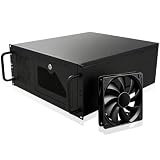
- Server Cabinet Case:The 4u server cabinet case adopts a combined internal architecture.With 7 x PCI slot, providing additional storage space for hardware, networks, servers, or audio/video accessories.
- Lockable design: The 4u rack case comes with a key lock for better security and helps prevent damage, tampering, or theft. The front door foam filter is designed to minimize the dust inflow and prolong the service life.
- High Compatibility: Our 4U computer cabinet is universally mountable in any standard front mount server rack or cabinet, Motherboard Compatibility: 12 x 9.6 ATX/M-ATX/Mini-ITX (smaller than 305mm*245mm/12*9.6inch)
Build the total-cost model
Use the same time horizon and workload output for every option. A practical model separates one-time costs, recurring costs, and workload delivered:
Owned total cost over the period = acquisition and deployment costs + power and facility costs + operations and support + other recurring costs − assumed residual or reuse value.
Cloud total cost over the period = configured compute charges for paid hours + storage + networking + applicable software and other recurring charges.
Cost per useful output = total cost over the period ÷ useful workload output delivered during that period.
Free tools Windows power users keep installed
One-click scans. No signup required.
These are bookkeeping relationships, not price estimates. Populate them with configuration-specific quotes, actual operating assumptions, and site or provider terms. Keep the assumptions visible so a change in utilization or electricity rate does not disappear inside one headline total.
Rank #2
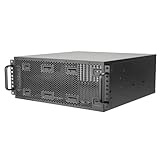
- Supports up to SSI-EEB motherboards
- Supports 360mm radiators and 2x 80mm fans.
- Supports hard drive mounting on expansion card retainer
- 8 PCI expansion slots
- Includes one USB Type-C interface
What to include in an owned-cluster estimate
| Cost area | Include | How to estimate it |
|---|---|---|
| Servers and deployment | Complete GPU servers: accelerators, host CPUs and memory, chassis, and any included storage; plus deployment and required facility or rack buildout. | Use a configuration-specific supplier quote. A GPU-only price does not represent the system needed to run the workload. |
| Network and storage | Network equipment, cables, storage hardware or service, and any recurring connectivity or storage fees. | Price the topology and capacity needed by the workload; the title alone does not establish a suitable model or topology. |
| Electricity and facility | Whole-server energy use, local electricity charges, cooling or facility overhead, contracted rack and power capacity, and separately billed delivery or colocation charges. | Use measured or specified whole-server draw and actual operating hours, then apply the local tariff and the facility’s billing method. |
| Operations and support | Maintenance, support, replacement parts and spares, systems and network operations labor, and applicable software licensing. | Use organization-specific support and staffing assumptions; do not assume those costs are included in the hardware quote. |
| End of period | Financing or depreciation treatment, refresh risk, and expected resale or reuse value. | State the planning period and residual-value assumption. The reviewed sources do not establish a universal hardware lifespan or resale value. |
Calculate energy and facility cost
For an initial planning calculation where PUE is the facility overhead method, use:
Energy cost = IT load in kW × operating hours × electricity price per kWh × PUE.
Use whole-server or measured IT draw rather than GPU TDP alone. Count the hours the equipment will actually be powered, and confirm whether the facility bills energy, power capacity, cooling, or other charges separately. If the bill uses a different overhead or demand-charge method, model that method instead of multiplying by PUE.
Quick wins for a faster PC:
Scan for outdated or missing drivers - takes under a minuteDriver Scan →Repair Windows errors before they cause bigger problemsFix Now →Fix the driver behind crashes, sound loss and screen glitchesFind Drivers →Power density can constrain a deployment independently of the accelerator budget. An older NVIDIA GPU-ready data-center overview discussed 15–32 kW of power and cooling per rack in its own system and design context; it is not a universal current rack requirement. The same overview used approximately 318 kW total power, PUE 1.5, and $0.085/kWh in an example comparison. Those are historical example assumptions, not general-purpose values for a current estimate.
Handle capital cost and residual value consistently
Choose a planning horizon and a finance treatment. You can model cash paid during the period, or allocate capital cost across the period using your organization’s financing or depreciation method. Do not count the full purchase price and also add depreciation as if both were separate costs in the same total. If you expect equipment to retain value or be reused at the end, show that as an explicit assumption rather than treating it as guaranteed savings.
Rank #3

- Includes 3×120mm fans (pre-installed) or supports 360mm liquid cooling radiators (pre-installed fans must be removed)."
- M/B size: ATX/MicroATX/Mini-ITX
- Drive Bays: 2*3.5 (internal)+1*2.5 (internal) Storage: suggest use of M.2/NVMe and PCIe based storage on M/B
- 8 slots PCI/PCIE expansion: Support max length=320mm with fans only / max length=305mm with AIO only
- PSU: SFX or SFX-L
Price cloud as a complete configuration
Start with the actual accelerator-optimized machine, region, and usage pattern—not a standalone GPU figure if the GPU is attached to a larger virtual machine. Google Cloud states that its machine-type prices include the attached GPU cost and directs customers to its calculator. Add expected paid compute hours, storage, network charges, applicable licensing, and any other recurring items that apply to the chosen setup.
AWS EC2 G7e illustrates why instance configurations are not interchangeable: AWS lists maxima of up to eight GPUs, 192 vCPUs, 1,600 Gbps of network bandwidth, and 15.2 TB of local NVMe storage for that family. These are configuration maxima for that particular family, not a price estimate, a promise that every size includes every maximum, or proof of equivalence with another provider’s machine.
The Tool Desk
Outbyte PC Repair FREERepair Windows errors before they cause bigger problemsFix Now →Outbyte Driver Updater FREEScan for outdated or missing drivers - takes under a minuteDriver Scan →A GPU Cost calculator page reported benchmark rows last refreshed September 10, 2026, while describing its benchmark rates as planning inputs rather than provider quotes. Use such figures only as dated orientation; replace them with current quotes for the region, machine, and commercial terms under consideration.
Check the software line item
NVIDIA’s 2026 licensing guide lists production consumption pricing of $1 per hour per GPU, plus CSP instance costs, for the relevant NVIDIA AI Enterprise offer. This is not a universal software charge for every GPU cluster. Verify that the offer applies to the intended deployment and confirm current terms before including it.
Account for utilization and useful output
Paid or powered-on hours are not necessarily productive hours. Idle time, queueing, failures, setup work, and workload inefficiency can all reduce useful output while compute, power, or capacity costs continue. Forecast productive output for the planned workload rather than treating all installed GPUs or calendar hours as fully useful.
Rank #4

- max 8+4 x3.5 or 6+4 x3.5+2x2.5 drive bay
- ATX 12x9.6 / Micro-ATX 9.6x9.6 / Mini-ITX 6.7x6.7 (When using an ATX motherboard, part of it will be positioned under the PSU, limiting access to some components. The PSU will occupy two PCI slot spaces.)
- 2 x120mm + 1 x 80mm fan infront+2 x 60mm fan at rear pre-installed
- Material: Front Bezel+ handel Aluminum; Main Chassis- Zinc-Coated Steel
- 2 x front access USB 3.0 (compatible with USB2.0)
Calculate the cost per chosen output measure for each option. If two systems deliver different throughput, completion time, or availability, compare the cost of equivalent work under the required service constraints—not their nominal GPU-hour rates alone. For an owned cluster, divide the period’s all-in cost by forecast useful workload output; for cloud, use the same output denominator and account for the paid hours needed to produce it.
Compare options on equivalent work
When you have actual candidate configurations, put them on a common horizon and compare the factors that affect whether they can deliver the target workload.
| Comparison | Owned or colocated | Cloud |
|---|---|---|
| Cost basis | Complete system and deployment quote, plus power, facility, operations, support, and end-of-period assumptions. | Full configured machine price for the selected region and paid hours, plus storage, networking, software, and other applicable charges. |
| Capacity and performance fit | GPU memory, multi-GPU and network performance, storage, and the site’s power and cooling limits. | Instance configuration, GPU memory and count, network and storage specifications, plus regional and zonal availability. |
| Cost denominator | Useful workload output delivered over the planning period. | The same useful workload output, including effects of paid idle time or other nonproductive hours. |
| Flexibility and operational burden | Procurement, deployment, support, staffing, refresh, financing, and residual-value assumptions. | Usage pattern and commitment terms, availability, recurring fees, and the operational constraints of the selected service. |
Do not infer provider equivalence from a maximum specification or compare a cloud instance price with only the accelerator portion of an owned server quote.
Stress-test the estimate before using it
Build at least a low, expected, and high case, or vary each uncertain input separately. Keep the inputs in the model rather than hiding them in a single buy-versus-rent label.
- Utilization and productive workload output.
- Electricity rate, whole-system power draw, and PUE or the facility’s actual overhead method.
- Server and network quotes, deployment needs, support, and replacement costs.
- Cloud price, region, usage pattern, commitment, and storage or networking charges.
- Planning horizon, financing or depreciation treatment, procurement timing, and assumed residual value.
The GPU Cost calculator notes that its planning model does not capture financing, taxes, depreciation schedules, procurement delays, GPU failures, shortages, or changing cloud prices. Add the factors relevant to your organization rather than treating a calculator output as a complete budget.
Recommended Free Tools
Turn the model into a decision-ready estimate
- Set the workload and scope. Record configuration, location, operating schedule, target performance, useful-output measure, and planning horizon.
- Get comparable quotes. Obtain a complete owned-system quote and a full cloud configuration price for the relevant region and usage pattern. Include network, storage, licensing, and service terms that apply.
- Use site-specific operating costs. Apply measured or specified whole-server draw, actual electricity terms, facility billing, rack capacity, cooling, and staffing assumptions.
- Forecast output, not just hours. Estimate productive utilization and the work each option can deliver under the required performance and availability constraints.
- Calculate total cost and cost per output. Use the same horizon and equivalent workload for all options, and make financing and residual-value treatment explicit.
- Run sensitivities and refresh volatile inputs. Vary the uncertain assumptions, then confirm current prices, capacity, licensing, and facility terms before approving spend.
A precise total cannot be established until the GPU model and count, workload, useful utilization, region, deployment choice, quotes, power and facility terms, support model, and planning horizon are known. Treat an estimate as an auditable set of assumptions, not as a universal price for a large cluster.
Quick Recap
Product prices and availability are accurate as of the date/time indicated and are subject to change. Any price and availability information displayed on Amazon at the time of purchase will apply.

