
Free tools Windows power users keep installed
One-click scans. No signup required.
Fortnite Creative maps recreate haunted houses and theme parks by turning a theme into a route players can explore: rooms and landmarks establish the setting, while doors, objectives, encounters, and interactive spaces give visitors a reason to move through it. Epic’s official co-op haunted-house example shows how locks, treasure rooms, sound, lights, and monsters can make a castle playable rather than merely decorative.
What makes an attraction feel playable?
A convincing recreation is more than a collection of themed props. It gives players a journey: a recognizable starting point, places to discover, and something to do as they move between them. A haunted house might guide visitors through a sequence of rooms toward locked rewards; a theme park might let them roam between distinct rides, games, or midway spaces.
These are design choices, not fixed rules. A guided route can control suspense and pacing, while a more open layout gives players room to choose where to go. In either case, recognizable scenery establishes the fiction; routes, goals, and interactions make it an attraction.
How Epic’s co-op haunted house is built
Epic’s “Build A Co-op Haunted House!” example is a first-person cooperative experience for up to two players. Its design connects exploration to treasure rooms and doors that players must unlock, making the castle’s structure part of the objective.
#1 Best Overall

- GILDED TROOPER: Board the Battle Bus and drop in with Fortnite Legendary Skull Trooper (Gilded)!
- FORTNITE: 6-inch action figure is inspired by the video game Fortnite
- ARTICULATED: Feature 28 points of articulation to win any Battle Royale
- ACCESSORIES: Comes equipped with Back Bling and Harvesting Tools
- BONUS CODE: Code for virtual item included: Mecha-jolly
Build a recognizable setting
The example uses the Haunted Overlook Castle prefab and haunted galleries, including Haunted Wall Gallery, Haunted Castle Interior Wall, and Haunted Castle Broken Floor. Creators can select rooms as objectives, replace door frames with closeable doors, and use broken-floor pieces to make an attic route. These pieces do more than decorate: they suggest where players can go and what they might find.
Make rooms part of progression
Locks and conditional buttons turn treasure-room doors into progression gates. Chests give the rooms a payoff, while a tracker and end-game device support the larger objective flow. A locked door is useful when it helps players understand that something remains to be solved or earned—not just because the set needs another obstacle.
Use devices to stage the experience
The tutorial’s listed devices include a First Person Camera, player spawners, triggers, locks, conditional buttons, a class designer, tracker, end-game device, audio players, creature placers, chests, and customizable lights. Its setup equips explorers with a flashlight and weapon through the class designer, uses spawners and audio events, and switches players to a first-person view when equipped.
That is one official implementation, not a requirement for every horror map. Another creator could use a different camera, omit combat, or build an experience around puzzles and exploration. The useful principle is to choose devices according to the player journey.
How atmosphere and wayfinding work together
Visual and audio choices establish mood, but players still need enough information to navigate. The haunted-house example combines lights, audio players, and creature placers with its themed structures. Epic’s separate Featured Islands and Hub Guidelines discuss time of day, camera filter, brightness and color, and fog as atmosphere controls. That guidance is written for Creative hubs, so it is best treated as a design lens—not a haunted-house specification.
- Use light to direct attention. A brighter doorway, landmark, or objective can help players read a route even when surrounding spaces are dark.
- Use sound as a cue, not only decoration. An audio event can signal an encounter, reward, or change in the space. Pair it with a visible or navigable path so players can respond.
- Keep landmarks and paths legible. Epic’s hub guidance recommends readable pathways, distinctive landmarks, and a deliberately composed spawn view. Those principles can help players orient in an island, although the page’s rules target hubs.
- Balance effects with restraint. The hub guidelines caution against excessive effects, clusters of lights, and too many unique objects. These hub-specific constraints are not universal island limits, but they illustrate a useful trade-off: scenic detail should not overwhelm readability or performance.
The hub page states a 40,000 Memory maximum for a hub. That figure applies to hubs, not to all Fortnite Creative islands, so it should not be used as a general budget for a haunted house or theme park.
Planning a Fortnite theme park
Epic Education’s “Theme Park of the Future!” lesson plan treats a park as a designed project: plan what it should demonstrate, sketch the layout, build, playtest, and document the result. It suggests construction across one to five 60-minute periods as a lesson schedule, not as a universal estimate for completing a park.
Start with the park’s idea
Choose a clear theme and decide what visitors should experience. Epic’s hub guidance also recommends selecting a strong, singular theme and researching the subject being represented. For a park, that might mean deciding whether the experience is a collection of rides, a walk-through story, or a series of games before placing buildings.
What’s actually slowing this PC down?
Pick the symptom - the matching free tool is one click away.
Rank #2
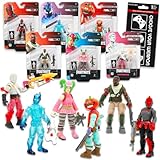
- Fortnite Action Figures Legendary Series Set for Kids - Bundle of 6 Figurines of Red Knight, Zero, and More, Plus Stickers | Fortnite Figures for Boys, Girls, Styles May Vary.
- This Fortnite set includes 6 figurines from the popular video game, Fortnite. Charactes can include Red Knight, Zero, Tomatohead, Love Ranger, and more.
- These Fortnite Legendary Series figures will be great for boys and girls! Perfect for fans and collectors, watch as you assemble your squad with these memorable characters.
- Great for play & display, imaginative storytelling, showcasing, and more. This action figure set is great as party favors, party supplies, goodie bag fillers, loot bag stuffers, and more. Each action figure is 2.5 inches tall.
- Officially licensed Fortnite action figure pack for boys and girls, ages 8 and up. Set also includes a Choose Your Weapon decal sticker.
Plan circulation and vertical space
Sketch where visitors arrive, how they reach each attraction, and what landmarks help them tell areas apart. The lesson plan recommends considering prefabricated structures and vertical space. Multi-level paths, towers, or elevated rides can create variety, but they should connect clearly to the park’s main routes.
Make attractions interactive
A ride, game booth, or midway area becomes more compelling when it has a playable loop: a goal, choice, movement challenge, or reward. Epic’s lesson plan uses rides and games as demonstrations and encourages designing the park around the intended concepts. A scenic roller-coaster facade may look like an attraction; an interactive sequence gives visitors something to experience.
Playtest and refine
Epic’s lesson plan recommends peer playtesting. Ask testers to navigate without directions and notice where they hesitate, miss an objective, or fail to recognize an attraction. Revise routes, signage, lighting, or interaction cues based on those observations, then document the finished build.
Independent reader supportYour contribution helps us test, update, and keep practical guides available for everyone.Choosing Creative or UEFN
There is a spectrum of authoring approaches. Fortnite Creative lets creators create, edit, and save projects directly within Fortnite on PC, mobile, or console. UEFN adds Unreal Engine workflows for lighting, visual effects, animation, and worldbuilding while using Fortnite gameplay and multiplayer systems. Epic also describes Live Edit as a way to make immediate changes to a UEFN project while playtesting.
Direct in-game assembly may suit builders who want to work within Fortnite’s tools. UEFN offers broader Unreal Engine authoring workflows for creators who need them. Neither approach is required for every attraction map, and the choice does not determine whether the design is guided or open, atmospheric or brightly readable.
Keep rights and publishing in scope
Using a real park’s layout, logo, characters, or music raises questions that the available Epic guidance on Epic-owned assets does not resolve. Epic Support says, “You may only use Epic-owned assets made available to you in UEFN in your island or thumbnail.” Its guidance also says creators may not use recreated or otherwise obtained Epic-owned assets, maps, characters, or music without permission. This is specifically about Epic-owned property; it is not a complete statement of rights for real-world attractions or third-party brands. Review the relevant permissions before incorporating someone else’s protected material.
Creators need to enroll in the Fortnite Developer Program before publishing an island, according to Epic’s Creator Portal. Program eligibility and publishing details can change, so check the current portal requirements when preparing to publish.
Quick Recap
Product prices and availability are accurate as of the date/time indicated and are subject to change. Any price and availability information displayed on Amazon at the time of purchase will apply.
Quick wins for a faster PC:
Scan for outdated or missing drivers - takes under a minuteDriver Scan →Clear out junk files and repair common Windows errorsFree Scan →Fix the driver behind crashes, sound loss and screen glitchesFind Drivers →
