
Recommended Free Tools
An AI safety policy should say which AI systems and uses it covers, who is accountable for them, how risks are assessed and tested, when people must oversee decisions, and how the organization monitors, documents, and responds to problems. Use the checklist below to turn those principles into repeatable steps. Frameworks such as NIST’s voluntary AI Risk Management Framework can help structure the work, but they do not determine which legal duties apply to your organization.
What should an AI safety policy cover?
A useful policy connects an AI system’s purpose and context to the controls required before and after deployment. It should cover AI the organization builds, buys, embeds in other products, or uses through generative AI tools, as relevant to its operations.


- Purpose, scope, and definitions: Identify covered systems, activities, and users. Set a process to find AI systems across the organization and decide whether any embedded system qualifies for an exemption.
- Accountability and approval: Assign owners for the policy, system approval, risk acceptance, human oversight, monitoring, and incident response. Specify how the policy and its risk processes are reviewed.
- Context and impact assessment: Before a new use or material change, document the intended purpose, users, affected people, operating conditions, dependencies, and plausible harms. Match controls to the use case and organizational priorities.
- Risk-based testing and evaluation: Require testing before deployment and after significant changes, with the scope determined by the use and risks. Keep evaluation criteria, results, limitations, and deployment decisions.
- Human oversight and use boundaries: Identify which outputs or decisions require human review, what information and authority reviewers need, and when to stop use or escalate a concern.
- Data, security, and provenance: Set rules for personal or sensitive data, intellectual property, data provenance, access, security review, and recording model and component versions.
- Transparency and communication: Decide what users and affected people should be told about AI use, limitations, and relevant provenance. Choose communication methods to fit the context and risk.
- Monitoring and change control: Define what to monitor after deployment, who reviews it, and which changes in the system or operating context trigger reassessment.
- Incident response and learning: Establish reporting routes, triage, escalation, response ownership, disclosure decision-making, corrective actions, and after-action reviews.
- Documentation and retention: Name record owners and specify which records to retain and for how long, consistent with applicable organizational and legal requirements.
- Training and exceptions: Provide training suited to each person’s role. Require documented exceptions with an owner, rationale, safeguards, risk acceptance, and an expiry or review date.
- Policy review and improvement: Assign a policy owner and review cadence. Use monitoring, incidents, audits, and changes to systems or applicable rules to inform updates.
NIST’s Generative AI Profile recommends practices including inventorying generative AI systems, defining responsibilities, planning monitoring and periodic review, retaining testing records, and reviewing incidents after the fact. The detailed checklist above combines those practices with practical policy-design recommendations; it is not a list of universal legal requirements.
Who is responsible for AI safety?
The policy should assign responsibility by decision, rather than relying on a broad statement that “the organization” owns AI safety. At minimum, name an owner for policy maintenance and identify who can approve a system, accept its risks, require human oversight, monitor performance, and coordinate incident response. Make escalation routes clear so employees know who can pause or restrict use.
#1 Best Overall
For generative AI, NIST recommends that system inventories consider human oversight roles and responsibilities. The same principle helps clarify who reviews outputs in other high-impact or sensitive uses. Roles may be combined in a small organization, but the policy should still make each decision-maker identifiable.
How should we assess AI risks?
Assess each system in the context where it will operate, not just by its model or product name. Record the intended task, users, affected people, operating conditions, dependencies, and plausible harms before deployment or a material change. Then decide which safeguards and evidence are appropriate for that use.
This contextual approach matters because trustworthiness characteristics can involve tradeoffs. NIST’s AI Risk Management Framework FAQ explains that not every characteristic applies equally in every setting; a control set should reflect the system’s purpose and circumstances rather than treat all risks as identical. See NIST’s AI RMF FAQs.
What should we test before deploying AI?
Set evaluation criteria based on the intended use and identified risks, then test before release and after significant changes. The policy should require teams to record the criteria, results, limitations, and decision to deploy, restrict, or reject the system. It should also identify who reviews that evidence and can require more testing or safeguards.
Rank #3
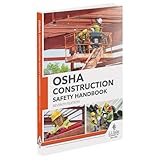
- 2024 OSHA Construction Safety Book is the seventh edition with the new OSHA HazCom final rule on 5/20/24. While the rule takes effect 7/19/24, the compliance dates don’t begin until 1/19/26 per 29 CFR 1910.1200(j).
- Construction Site Book offers quick access to essential OSHA regulations, jobsite hazards, and practical safety tips. It also helps employees identify hazards and prevent injuries and illnesses.
- Features easy-to-read format, full-color images, chapter quizzes with answer key, and comes in a compact size making it a convenient reference for employees.
- Critical topics include Confined Space Entry; Cranes & Derricks; Electrical Safety; Emergency Response; Ergonomics & Back Safety; Excavations; Fall Protection; First Aid & Bloodborne Pathogens; HazCom; Health & Wellness; Jobsite Exposures; Lockout/Tagout; Ladders & Stairways; Materials Handling/Storage; Motor Vehicles; PPE; Scaffolds; Site Safety & Security; Slips, Trips & Falls; Tool Safety; Welding, Cutting & Brazing; and Work Zone Safety.
- Specifications: 5 1/4” x 7 1/4", English, Soft bound. 7th Edition. Copyright 2024.
NIST’s framework spans AI design, development, use, and evaluation. Its generative AI companion profile recommends retaining records of testing, evaluation, validation, and verification. The precise tests depend on the system and its context; a generic checklist cannot establish the right test threshold for every use.
How should we handle AI incidents?
Give staff a clear way to report unexpected or harmful behavior, security concerns, or other policy violations. Define who triages reports, who can escalate or suspend use, how the organization decides whether and how to disclose an incident, and who owns corrective actions.
Rank #4

- Updated Compliance: While the new rule takes effect on 7/19/2024, training and compliance dates don’t start until 1/19/2026, giving your team ample time to prepare with this thorough guide to OSHA regulations (29 CFR 1910.1200(j)).
- Comprehensive Safety Training Handbook: Prepares your employees for 25 of OSHA’s hottest safety topics, from Confined Space Entry to Workplace Violence, ensuring they are equipped with vital safety knowledge for a safer work environment.
- In-Depth, Easy-to-Understand Content: Each chapter tackles key workplace hazards like Electrical Safety, Lockout/Tagout, Respiratory Protection, and more, helping to prevent injuries and illnesses while promoting safe practices.
- Interactive Learning with Quizzes: Engaging chapter review quizzes reinforce safety concepts, making it easier for employees to retain and apply the knowledge, with downloadable answer keys for easy tracking.
- Specifications: English, Softbound, full-color pages (272 pages) offer clear, visually appealing safety information for a diverse workforce, with home safety details included throughout.
After an incident, conduct an after-action review: identify gaps in the response and update controls or processes as needed. NIST’s Generative AI Profile specifically recommends reviewing incident response and disclosures to find gaps and improve procedures.
Independent reader supportYour contribution helps us test, update, and keep practical guides available for everyone.Which AI frameworks and standards can help?
| Reference | What it is | How it can help with a policy |
|---|---|---|
| NIST AI Risk Management Framework | Voluntary guidance organized around Govern, Map, Measure, and Manage. NIST released version 1.0 on January 26, 2023, and says it is being revised. | Provides a structure for incorporating trustworthiness considerations into AI design, development, use, and evaluation. |
| NIST AI RMF Playbook | Suggested actions and references for the four AI RMF functions. | Offers implementation ideas; NIST says it will be updated after revision of AI RMF 1.0. |
| NIST Generative AI Profile | A generative-AI-specific companion to the AI RMF, published July 26, 2024. | Provides relevant actions for generative AI, including inventory, review, incident response, and record retention. |
| ISO/IEC 42001:2023 | A standard for establishing, implementing, maintaining, and continually improving an AI management system in organizations that provide or use AI-based products or services. | Useful as a reference when building an organization-wide AI management system. ISO lists paper among the available formats; buying the standard does not by itself ensure safety or compliance. |
| ISO/IEC 23894:2023 | Guidance for managing AI-specific risk and integrating risk management into AI activities. | Can inform the risk-management portion of a policy. |
| UK AI Risk Management Toolkit | A toolkit published by the UK Department for Science, Innovation and Technology on September 8, 2026. | Helps people involved in AI projects assess and manage risks when designing, procuring, or delivering AI products; publication does not make it a universal legal requirement. |
Choose references according to your needs: whether you want voluntary guidance or a formal management-system standard, organization-wide governance or specific risk actions, generative-AI-specific material, and the assurance and implementation effort your organization can support. NIST describes its AI RMF as voluntary; the ISO standards have different roles and should not be treated as interchangeable.
The NIST AI RMF’s development drew contributions from more than 240 organizations, according to NIST’s AI Resource Center. That figure describes the framework’s development, not a guarantee of effectiveness in any particular implementation.
How should the policy handle legal requirements?
A general policy checklist is not a jurisdiction-specific compliance map. Applicable legal duties depend on where the organization operates, its sector, the people affected, and the system’s use. Have qualified counsel or compliance specialists assess those details; neither the NIST framework nor the ISO references determine which laws apply to a particular organization.
Quick Recap
Product prices and availability are accurate as of the date/time indicated and are subject to change. Any price and availability information displayed on Amazon at the time of purchase will apply.

