
Use AI to guide your next step, not to do the thinking for you: make an attempt first, ask for a hint or a question, then put the chat away and solve or explain the idea from memory. Check important claims against your course materials, and follow your school’s rules for AI use.
Why the way you ask matters
A complete answer can show you what a solution looks like, but reading it is not the same as being able to produce the reasoning yourself. For practice, ask the AI to help you find the next step and respond to your work rather than replace it.
UNESCO’s 2021 guidance describes dialogue-based tutoring in which questions prompt learners to discover a solution and develop explanations. Its 2023 guidance takes a human-centered approach to generative AI in education, including attention to privacy and age-appropriate use. These are educational principles and policy guidance, not controlled evidence that every chatbot improves learning or that one workflow works for every learner. See UNESCO’s 2021 guidance for policymakers and its 2023 guidance for education and research.
A practical routine for using AI as a tutor
- Name the skill and your attempt. Explain what you are trying to learn and show what you have tried so far. For example: “I’m practicing factoring quadratic expressions. I tried grouping the terms, but I’m not sure how to choose the pair.”
- Ask for a prompt, not a solution. Set a clear boundary: “Don’t solve it yet. Ask one question that will help me find the next step.”
- Do the next step yourself. Write your reasoning before asking for more help. If you get stuck, request one hint and ask why it applies. Don’t accept a hint you cannot explain.
- Get feedback on your reasoning. Ask the AI to identify a specific gap or possible misconception in your attempt. If its explanation does not make sense, ask for a different explanation or a smaller step—not just a longer answer.
- Close the chat and retrieve the idea. Without looking at the conversation, explain the concept or reconstruct the solution from memory. Then try a related problem independently. This is a practical way to check whether you can use the idea without the prompt; the cited guidance does not quantify the effect of this routine.
- Verify the result. Compare it with assigned materials, ask your teacher, or use another trusted source. Fluent wording is not proof that an AI answer is correct.
Prompts that preserve the work
Copy and adapt these prompts to make the kind of help you want explicit:
#1 Best Overall
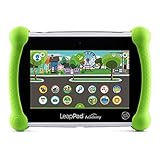
- Develop math, reading, writing, coding, problem-solving and creativity skills with more than 20 educator-approved learning apps that grow with kids
- Find hundreds more games, videos, music and eBooks (sold separately) by going to the LeapFrog App Center and expand the learning experience
- Includes a three-month trial of LeapFrog Academy; subscribe to send kids on learning adventures filled with more than 2,000 engaging games, activities, eBooks, videos, songs and more
- Learning tablet includes a stylus, tough bumper with kickstand and a 7" shatter-safe screen; set time limits, manage apps and explore kid-friendly web content with parent controls
- Intended for ages 3-8 years; rechargeable lithium-ion battery included
- For a first nudge: “I’m learning [skill]. I tried [attempt]. Don’t give the answer. Ask one question that points me toward the next step.”
- When you are stuck: “Give me one small hint, not the solution. Explain why that hint might help, then wait for my attempt.”
- For feedback: “Here is my reasoning: [work]. Identify the first step that may be wrong or incomplete. Don’t rewrite the whole solution.”
- To check independent understanding: “Give me a new problem that tests the same idea, without showing a solution. I’ll try it first.”
These prompts are practical adaptations of question-led tutoring, not a validated formula. UNESCO describes Socratic tutoring as guiding learners with questions toward a solution and co-created explanations; that description does not establish that every current chatbot will follow instructions reliably.
How to tell whether the help is useful
Judge the session by what you can do after the help is out of view, not by how clear the chat sounded. A useful session leaves you with a next step you can explain, a correction you understand, or a fresh problem you can attempt. If you can only follow the answer while it is on screen, ask for a smaller hint, return to the course material, or seek help from your teacher.
Rank #2

- 【Bilingual Design & 2-Level Volume Control】This interactive learning tablet features a bilingual design, helping children easily learn both English and Spanish. Additionally, kids learning tablet comes with a 2-level volume control, allowing parents to adjust the sound to fit different environments and ensure a comfortable, safe listening experience for their little ones.
- 【40 Engaging Learning Themes】With 40 intriguing themes covering letters, numbers, shapes, dinosaurs, animals, and more, this toddler learning pad offers a rich and colorful array of content. Made from eco-friendly materials and subjected to rigorous quality checks, the cards are 100% safe for children. Each card boasts an exquisite, vibrant design that instantly captivates attention and sparks a lifelong interest in learning.
- 【5 Interactive Learning Modes】This educational toy offers 5 versatile modes: Language Switching, Word Learning, Fun Sound Effects, Basic Games, and Advanced Games. By interacting with the pad, children can enhance essential skills such as auditory perception, reading, cognition, and observation. From simple sound identification to advanced cognitive challenges, it grows with your child to promote comprehensive development.
- 【Screen-Free Design & Easy to Use】Powered by 4 AAA batteries (not included),simply turn on the switch button, insert a card into the slot, and select a mode to start the fun! Unlike typical electronic gadgets, this toddler learning tablet features a screen-free design that effectively reduces screen time, safeguards visual health, and encourages real-world focus.
- 【Perfect Gift for Boys & Girls Ages 1-6】While toddler learning tablet fosters independent play, this kids learning tablet is also a fantastic tool for family bonding and parent-child interaction. It is an ideal gift for birthdays, Christmas, Halloween, Easter, and back-to-school days. It also serves as an excellent sensory toy for children with autism, making it a perfect teaching aid for both parents at home and teachers in the classroom.
Do not treat a correct-looking explanation as proof of mastery. Check factual claims and methods against your course materials, especially when the answer affects an assignment or assessment. The U.S. Department of Education’s 2025 announcement identifies AI-enhanced high-impact tutoring as a potential educational use, while also emphasizing privacy and stakeholder engagement; it does not show that a particular consumer AI tutor improves long-term learning. Read the Department’s announcement.
Independent reader supportYour contribution helps us test, update, and keep practical guides available for everyone.Check privacy, age suitability, and course rules
- School or course rules: Check what kinds of AI assistance are allowed for the class or assignment. Rules can differ by instructor and institution.
- Personal information: Before entering work or personal details, review the tool’s privacy settings and terms. Avoid sharing information you would not want handled by the service.
- Age suitability: Check the tool’s age requirements and any applicable school guidance. Requirements vary across products and jurisdictions.
- Amount of assistance: If choosing a tool, look for controls that let you request hints, questions, and feedback before complete solutions, and for clear explanations you can verify. These are selection criteria, not a ranking of specific products.
UNESCO’s 2023 announcement captures the balance: Director-General Audrey Azoulay said, “Generative AI can be a tremendous opportunity for human development, but it can also cause harm and prejudice.” The guidance’s foreword also states, “AI must not usurp human intelligence.” The practical implication for study is to keep the learner—not the chatbot—in charge of the reasoning. See UNESCO’s announcement.
What’s actually slowing this PC down?
Pick the symptom - the matching free tool is one click away.
Quick Recap
Rank #3

- Comprehensive Early Learning: This upgraded toddler music learning tablet includes 90+ fun modules covering animals, shapes, musical instruments, vehicles, letters, numbers, and colors. Available in English, French, Spanish, German, and Italian, it supports early language skills and builds essential preschool concepts for children ages 1-3
- 4 Playful Learning Modes: This toddler activity tablet offers Learning Mode to teach basic concepts, Quiz Mode to build problem-solving skills, Music Mode to spark creativity, and Pretend Play Mode with fun icons like a phone and camera. Supports fine motor development, memory, and communication through interactive, sensory-rich play
- Screen-Free Multilingual Learning: This no-screen toddler tablet supports English, Spanish, and French with just one press. With 39 interactive icons, it reads out words and plays sounds to boost vocabulary, pronunciation, and listening skills for toddlers ages 1-3
- Physical & Motor Skill Development: The tablet's responsive touch controls help toddlers develop fine and gross motor skills while improving hand-eye coordination. Encourages active, hands-on exploration for toddlers ages 1-3
- Durable, Portable and Safe: Crafted from non-toxic, BPA-free ABS plastic, this toddler tablet is designed to withstand bumps, drops, and everyday play. Its compact, lightweight design makes it easy to carry whether at home or on the go
Product prices and availability are accurate as of the date/time indicated and are subject to change. Any price and availability information displayed on Amazon at the time of purchase will apply.

