
What’s actually slowing this PC down?
Pick the symptom - the matching free tool is one click away.
Physical AI is a broad term for AI-enabled machines that perceive and act in the physical world. It includes robots and autonomous machines that use sensors to interpret their surroundings, software to choose what to do, and hardware to carry out an action. Unlike a chatbot that returns information on a screen, a physical AI system can move equipment, navigate a space, or otherwise affect its surroundings.
The phrase is prominent in vendor materials, especially NVIDIA’s; the sources cited here do not establish it as a universally standardized technical category. NVIDIA describes physical AI as enabling robots and autonomous systems to “perceive, reason, learn, and act in the physical world.”
How physical AI works
A physical AI system operates in a feedback loop. It gathers observations, interprets them, selects or plans a response, and uses its hardware to act. New sensor readings then inform what it does next. The AI software is only one part of that system: reliable behavior also depends on sensors, computing hardware, control software, mechanics, integration, and safety constraints.
- Sense: Cameras and other sensors gather information about the machine’s surroundings and state.
- Interpret and plan: Software processes those observations and selects a behavior or sequence of actions.
- Control: A controller translates the chosen behavior into commands the machine can execute.
- Act: Motors, joints, wheels, or other actuators move the robot or operate equipment.
- Observe again: Sensors report the changed conditions, allowing the system to adjust its next action.
This is why physical AI is more than putting a chatbot in a robot. The system must connect its decisions to real movements and respond to a world that may change while it operates. NVIDIA’s description is its platform framing, not a formal industry standard: NVIDIA robotics platform.
Quick wins for a faster PC:
Repair Windows errors before they cause bigger problemsFix Now →Fix the driver behind crashes, sound loss and screen glitchesFind Drivers →#1 Best Overall
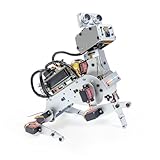
- AI-Powered Raspberry Pi Robot Dog — PiDog: Powered by Raspberry Pi (5/4B/3B+/3B/Zero 2W), OpenClaw, and multi-LLMs like ChatGPT, Gemini, Grok, DeepSeek, Qwen & Ollama. With 12 servos, camera, gyroscope, hearing & touch sensors, PiDog can see, listen, talk, move, and interact intelligently. Supports OpenCV, MediaPipe, TTS & STT, app control, FPV & Python. A great STEM robotics gift for students, makers & tech enthusiasts—perfect for birthdays and holidays. (Raspberry Pi not included)
- Realistic Dog-like Movements: PiDog's 12 powerful servos enable 32 dog-like actions, including walking, sitting, standing, shaking its head, wagging its tail, and performing playful tricks, closely mimicking a real dog and providing an engaging experience. This is an AI development robot product designed for engineers, suitable for ages 15 and above
- Rich Sensor Suite for Interactive Experiences: PiDog features ultrasonic, touch, gyroscope, sound, camera, speaker and microphone. These provide it with advanced hearing, vision, and touch, enabling it to see, detect obstacles, respond to touch, and recognize sounds, making interactions highly engaging
- AI-Powered Interactions with OpenClaw & Multi-LLMs. PiDog combines voice, vision, and gesture recognition for immersive AI experiences. Powered by OpenClaw and multi-LLMs like ChatGPT, Gemini, Grok, DeepSeek, Qwen, Doubao, and Ollama (local LLMs), it can understand questions, respond naturally through TTS & STT, recognize math problems, interpret hand gestures, and hold smart conversations. OpenClaw also enables customizable AI behaviors and personalized robotics development, helping users create their own intelligent robotic companion
- Comprehensive Learning Resources and Support: PiDog offers detailed online documentation, video tutorials, prompt technical support, and an active forum community, ensuring beginners can easily complete all projects and enjoy a great experience
Where physical AI is used
The term covers machines with very different jobs and operating conditions. A fixed robot arm on a factory line faces a more structured task than a mobile machine navigating a shared space. NVIDIA’s materials discuss these areas as applications or workflows; vendor announcements do not, by themselves, show that every capability is mature or routinely deployed.
| Setting or machine | Typical job | What changes the challenge |
|---|---|---|
| Industrial robots | Manipulate or assemble parts, including high-precision electronics assembly. | Tasks may be repetitive and tightly specified, but precision, integration with equipment, and safe operation still matter. |
| Factories and warehouses | Move materials or coordinate work across equipment and spaces. | Machines may need to operate around people, vehicles, and other systems. |
| Autonomous machines | Navigate or perform work in environments such as construction sites. | Conditions can be less predictable than on a fixed production line. |
| Smart spaces | Use robotic or autonomous systems within a connected environment. | The system must account for the space and its changing activity. |
| Healthcare robotics | Support workflows involving robotic systems, including surgical robotics. | These settings can be safety-critical and require careful validation and integration. |
NVIDIA’s 2026 ecosystem announcement names companies working in industrial robotics, surgical robotics, autonomous systems, and humanoid development, with applications ranging from electronics assembly to autonomous construction. These are vendor-reported examples of activity, not proof that general-purpose humanoids are broadly deployed or reliably autonomous in unstructured environments: NVIDIA Newsroom.
Rank #2
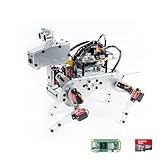
- Raspberry Pi AI Robot: powered by Raspberry Pi (5/4B/3B+/3B/Zero 2W), features 12 servos and sensors for vision, hearing, and touch. Integrated with ChatGPT-4o, it responds to complex queries. With app control and FPV, users can manage and see its view in real-time. It supports Python programming
- Realistic Movements: 12 powerful servos enable 32 actions, including walking, sitting, standing, shaking its head, wagging its tail, and performing playful tricks, closely mimicking a real and providing an engaging experience
- Rich Sensor Suite for Interactive Experiences: features ultrasonic, touch, gyroscope, sound, camera, speaker and microphone. These provide it with advanced hearing, vision, and touch, enabling it to see, detect obstacles, respond to touch, and recognize sounds, making interactions highly engaging
- Engaging Interactions with ChatGPT-4o: with ChatGPT-4o enables voice interactions and visual recognition, making it smarter and more responsive. Users can have natural conversations, solve math problems via the camera, and interpret gestures, creating diverse and fun interactions
- Comprehensive Learning Resources and Support: offers detailed online documentation, video tutorials, prompt technical support, and an active forum community, ensuring beginners can easily complete all projects and enjoy a great experience
How robots are trained and tested
Physical testing can be costly, slow, or risky, especially when a team needs to explore many conditions. Simulation lets developers train or evaluate behavior in a virtual environment before, and alongside, tests on the actual machine. Digital twins can represent equipment or facilities for development and evaluation workflows.
A sim-to-real workflow transfers a model or policy developed in simulation to physical hardware, where the team must check how it behaves in practice. NVIDIA’s SO-101 learning path describes training and deploying a physical AI model to a physical robot, starting in simulation and moving to the real world. Its curriculum also lists simulation, robot policy training, ROS 2 and real robots, industrial digital twins, and healthcare robotics: NVIDIA Documentation and NVIDIA Physical AI Learning curriculum.
Rank #3

- AI-Powered Raspberry Pi Smart Car — PiCar-X: PiCar-X brings AI learning to life — powered by Openclaw and multi-LLMs including ChatGPT, Gemini, Grok, DeepSeek, Qwen, Doubao, Ollama (Local LLMs), and compatible with many more AI platforms. Featuring OpenCV, MediaPipe, TTS & STT, PiCar-X enables true AI vision and voice interaction — it can see, listen, talk, drive and think like an intelligent companion. Ideal for students (10+), educators, and engineers, PiCar-X is the perfect gateway to explore AI, robotics, and machine learning on Raspberry Pi 5/4/3B+/3B/Zero 2W (Raspberry Pi not included)
- Engaging Interactions with Multi-LLMs: PiCar-X, powered by Openclaw and multi-LLMs — including ChatGPT, Gemini, Grok, DeepSeek, Qwen, Doubao, and Ollama (Local LLMs) — and compatible with many other AI platforms, supports voice interaction and visual recognition to make the robot smarter and more responsive. Users can enjoy natural AI conversations, solve math problems through the camera, and interpret gestures, unlocking a world of diverse and fun AI-driven interactions
- Feature-rich and Adaptable: PiCar-X offers engaging applications like line following and obstacle avoidance, supports TTS (Text-to-Speech) and STT (Speech-to-Text) for interactive voice control, and includes a camera for video and vision recognition. It also comes with various sensors, while its customizable design enables a wide range of creative AI and robotics projects
- Versatile Programming Options: Catering to users of all skill levels, PiCar-X supports both Python and Scratch programming languages, allowing for flexible learning and skill development
- Simplified Assembly & Support: PiCar-X is perfect for beginners, yet learning with experienced users is recommended for best results. It comes with easy assembly instructions and forum support for smooth project completion
- Simulation-first training: Makes it possible to iterate across conditions without recreating each one physically, but simulated conditions may not match the real environment.
- Real-world data or demonstrations: Connects learning to actual robot behavior and surroundings, but collecting physical data can take time and involve operational risks.
- Sim-to-real validation: Tests whether behavior developed in simulation transfers to the intended hardware and setting. Simulation alone cannot establish safe performance in every real environment.
The SO-101 is presented in NVIDIA’s learning path as a physical robot for this kind of educational workflow. It is a learning platform, not an autonomous consumer assistant or a stand-in for factory equipment. Kit contents, compatibility, and regional availability depend on the exact product listing.
Independent reader supportYour contribution helps us test, update, and keep practical guides available for everyone.Why safety matters
When software controls a physical machine, a failure can affect people, equipment, or the surrounding environment. A robot working near a patient, worker, vehicle, or other machine needs more than a plausible decision from an AI model: the complete system must be designed and validated for its operating conditions.
Rank #4

- BUILD, CODE & DRIVE YOUR OWN ROBOT CAR: Turn coding, electronics and engineering into a working programmable robot car you can assemble, program and drive; ideal for weekend family projects, STEM classrooms, coding clubs, robotics lessons and maker challenges
- EXPLORE FPV, LINE TRACKING & OBSTACLE AVOIDANCE: Control the robot with the ELEGOO app or IR remote, view live FPV video through the onboard camera, follow black lines, avoid obstacles with the ultrasonic sensor and explore multiple interactive driving modes
- BEGINNER-FRIENDLY BUILD WITH GUIDED WIRING: Keyed XH2.54 connectors help reduce wiring mistakes, while the illustrated tutorial and example programs guide beginners step by step from chassis assembly and module connection to programming and the first successful run
- GO BEYOND ASSEMBLY WITH CREATIVE CODING: Program with Arduino IDE to explore movement, sensors and control logic, then modify example code to create custom routes, reactions and robotics experiments that develop coding, problem-solving and engineering skills
- COMPLETE RECHARGEABLE STEM ROBOTICS KIT: Includes an ELEGOO UNO R3 controller board, ESP32-WROVER-based camera and Wi-Fi module, line-tracking and ultrasonic sensors, motors, IR remote and a 2000 mAh rechargeable lithium-ion battery; recommended for ages 8+ with adult guidance for first-time builders
- Sensing must provide useful information about the environment and the machine’s state.
- Movement limits and control behavior must account for foreseeable risks.
- Emergency responses and integration with other equipment need to be considered.
- Testing, validation, and ongoing monitoring matter as conditions and software change.
NVIDIA’s safety article presents simulation and validation as parts of a layered approach. That is the vendor’s safety framing, not an independent endorsement or a comparison of safety standards and deployment outcomes: NVIDIA Blog on physical AI safety.
The same article relays two forward-looking figures: an ABI Research projection of 49 million Level 3–5 autonomous vehicles in the installed base by 2035, and an Omdia estimate of roughly 60 million industrial robot deployments between 2026 and 2035. These are projections and estimates attributed by NVIDIA, not observed outcomes; the original ABI Research and Omdia publications are not established here.
Windows Errors? Fix Them Before They Spread
Repair common Windows errors and clear accumulated junk for a smoother, more stable PC - no reinstall needed.Free scan · no reinstallOutdated Drivers Are Slowing You Down
One free scan finds every outdated or missing driver and matches the right update for your exact hardware.Free scan · exact hardware matchWhat physical AI does—and does not—mean
Physical AI is a useful umbrella for systems that connect AI-based perception or planning to actions in the physical world. It can describe a fixed industrial robot, an autonomous machine, or a robot used in a healthcare workflow, but those systems do not necessarily share the same hardware, software, risks, or level of autonomy.
The term should not be read as a promise that a machine can handle any task in any setting. Current vendor materials establish platforms, training workflows, and announced application areas; they do not establish broad deployment of general-purpose humanoids or dependable autonomy in unstructured environments. Whether a particular robot is useful or safe depends on its intended job, operating conditions, integration, and validation.
Quick Recap
Product prices and availability are accurate as of the date/time indicated and are subject to change. Any price and availability information displayed on Amazon at the time of purchase will apply.

