
Recommended Free Tools
NASCAR drivers recover positions after an early setback through a mix of pace, passing, pit strategy and race-control procedures—not one guaranteed comeback move. The best response depends on what caused the loss, how the car is handling, the track’s passing opportunities, tire and fuel levels, laps remaining, caution timing and the event’s rules.
Start by identifying what caused the setback
A poor launch, a slow pit stop, an incident, a penalty and falling off the lead lap call for different responses. The team first needs to understand whether the car is still fast enough to pass, whether it has damage or a handling problem, and what the driver can realistically gain before the finish.
- Lost places but still competitive: Look for clean passing opportunities and use drafting where the track and race conditions make it effective.
- Lost time because of tire wear or fuel needs: The crew may adjust pit timing or service, weighing a healthier car against the positions surrendered during the stop.
- Lost a lap or became caught in a scoring dispute: The driver’s apparent position on track may not settle the official running order. The applicable procedure and officials’ scoring determine the result.
NASCAR’s 2013 driver-meeting guidance listed drafting, tire and fuel management, pitting, and alternative or long-fuel strategies among acceptable racing actions. That is historical guidance, not a complete statement of current rules. NASCAR’s 2013 explanation is useful background, but drivers and teams must follow the rules for their current series and event.
Make up ground through pace and passing
If the car has speed, the most direct route back is to pass competitors cleanly. Drafting can help a driver close on another car or work with others, but its usefulness varies with the circuit, conditions and racing package. It is not an equally available shortcut at every track.
#1 Best Overall

- OFFICIALLY LICENSED: Lionel Racing's Denny Hamlin #11 diecast car features his 2026 National Debt Relief paint scheme in authentic detail.
- PRECISION-ENGINEERED: Crafted with a diecast metal body and chassis for a realistic, high-quality replica of Hamlin's race car.
- ROLLING RUBBER TIRES: Equipped with rolling rubber tires that add to the authenticity and playability of this collectible diecast car.
- 1:64 SCALE: Part of the ARC Series, this collectible measures approximately 3.25" x 1.25" x 0.75", making it perfect for display or racing collections.
- GREAT FOR COLLECTORS: A must-have for NASCAR fans and diecast collectors, showcasing Denny Hamlin's iconic #11 Joe Gibbs Racing livery.
Passing also costs time and can expose a driver to traffic or risk. A driver may need to choose where to attack rather than attempt to regain every lost spot immediately. The team’s assessment of the car’s pace matters: a strategy built around passing is less useful if the car has damage, poor grip or a handling issue that has not been addressed.
Use pit timing to trade track position for car condition
A pit call can improve the car’s tires or fuel situation, but it can also cost positions. Staying out may preserve immediate track position while leaving the car on older tires or with less fuel. Pitting may improve the car’s condition but place it behind cars that stay on track.
There is no universally best call. The crew must weigh the restart position, tire condition and expected grip, fuel remaining and the distance to the next planned stop, laps remaining, the track’s passing difficulty, and whether the stop happens under green or caution. The choice must also fit any event-specific rules or eligibility constraints.
Procedural mistakes can turn a recovery attempt into a bigger loss. NASCAR’s 2025 national-series pit-road penalty card lists speeding as a pass-through penalty under green and a restart at the tail under yellow. Those are 2025 provisions, not a guarantee of the rule for a 2026 event; teams should check the current series and event reference. See NASCAR’s 2025 pit-road penalty card.
What’s actually slowing this PC down?
Pick the symptom - the matching free tool is one click away.
Rank #2
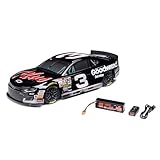
- Fully assembled with no additional items needed
- Officially licensed liveries and Goodyear Eagle tires
- Reaches speeds of 20+ mph
- Recharge in an hour—race nonstop for 20 minutes
- Can be tuned and upgraded like a real Cup car
For historical context only, NASCAR reported in 2014 that a stop involving a four-tire change and 18 gallons of fuel could take 12 seconds or less. That figure describes the period and example in that report; it is not a current pit-stop benchmark or a prediction of how much time a team will lose. NASCAR’s 2014 pit-stop history gives the context.
Use a caution strategically, not as a guaranteed reset
A caution can create a chance to pit, change the restart order or regain a lap through a defined procedure. It does not automatically restore lost positions. Pitting may improve tires or fuel readiness while costing track position; staying out may preserve places while leaving the car less prepared for the restart.
A wave-around is one specific procedure, not a universal entitlement. NASCAR’s 2016 explanation described lapped cars that stayed on track instead of pitting under caution as eligible to be awarded a lap, and said those cars could not pit until the race returned to green. That is historical context, not a statement of universal current procedure. Teams should verify the rules for the specific event. Read NASCAR’s 2016 explanation of a wave-around and restart order.
Let official scoring determine the running order
After an incident, a car’s apparent place on the track may not match its official restart position. NASCAR’s explanation of Kyle Busch’s placement after a 2024 Nashville incident cited scoring-loop data and whether the car maintained a reasonable speed for the conditions. The example illustrates that restart placement is an official determination under the applicable rules—not something a driver can infer from a single moment of on-track action. NASCAR explained Busch’s Nashville restart placement.
Rank #3

- RACE WIN AUTHENTICITY: Replicates Denny Hamlin's #11 Progressive car exactly as it appeared in Victory Lane at the 2025 Dover race, complete with scratches, tire debris, and race damage.
- DIE-CAST CONSTRUCTION: Features a precision-engineered die-cast metal body and chassis for exceptional detail and durability in this 1:64 scale collectible.
- ROLLING RUBBER TIRES: Equipped with rolling rubber tires that add a realistic touch to this faithfully recreated NASCAR Cup Series race car.
- LIMITED EDITION COLLECTIBLE: An officially licensed JGR adult collectible commemorating Denny Hamlin's 2025 Dover race win, making it a must-have for NASCAR fans.
- COMPACT SIZE: Measures approximately 3.25" x 1.25" x 0.75", making it easy to display on a shelf, desk, or in a dedicated diecast collection.
Nor should a driver assume that yielding a position later cures every infraction. In a 2026 case involving a below-the-line violation at EchoPark Speedway, NASCAR vice president of racing communications Mike Forde said: “Unfortunately for Bubba, attempting to give the position back does not matter in this rule.” That comment concerned that specific rule and incident; it should not be generalized to unrelated penalties. Read NASCAR’s explanation of the 2026 Wallace penalty.
Independent reader supportYour contribution helps us test, update, and keep practical guides available for everyone.Why there is no standard comeback formula
The same loss of positions can lead to different choices depending on the car, track and race state. A driver with a fast car and many laps left may have time to pass; a driver nearing a fuel window may need to prioritize the next stop. A caution can change the options, but its timing and the event’s procedures determine what is available.
The official sources cited here do not establish a reliable overall percentage for how often NASCAR drivers recover from an early-race setback. A single comeback or lost-position example cannot provide that rate; the useful question is which options remain for the specific car and race.
Quick Recap
Product prices and availability are accurate as of the date/time indicated and are subject to change. Any price and availability information displayed on Amazon at the time of purchase will apply.
Quick wins for a faster PC:
Scan for outdated or missing drivers - takes under a minuteDriver Scan →Repair Windows errors before they cause bigger problemsFix Now →Fix the driver behind crashes, sound loss and screen glitchesFind Drivers →
