
Before moving an AI workload, verify that a provider can run your actual model and software stack in an approved region, meet your performance and security requirements, and deliver an acceptable cost per useful result. Compare complete configurations—not GPU names—then pilot the workload against predefined acceptance criteria before shifting production.
1. Define the workload and its non-negotiable requirements
Start with an inventory of what you will run and how it behaves. Training, fine-tuning, batch inference, and online inference can stress different parts of a GPU cloud. Record enough detail to request comparable configurations and build a meaningful pilot.
- Workload: training, fine-tuning, batch inference, or online inference; model and dataset characteristics; and expected concurrency or utilization patterns.
- Software: framework, library, driver, runtime, container, and other dependency versions.
- Compute: peak GPU memory, GPU count, CPU and host-memory needs, and whether work spans multiple GPUs or nodes.
- Data and communication: dataset size, storage access pattern, inter-GPU communication, and data movement into the target region.
- Service goals: job-time or throughput targets, latency goals where relevant, and availability and recovery needs.
- Constraints: approved processing and storage locations, required controls, and contract or regulatory obligations. Separate hard requirements from preferences.
This inventory becomes the common specification for provider questions, benchmark runs, cost estimates, and migration acceptance.
2. Verify the full compute configuration and available capacity
A GPU model or accelerator count alone does not establish how a workload will perform. Ask each provider for the configuration available in the region you intend to use, and clarify whether the service delivers bare metal or virtual machines.
Do these 3 things before closing this tab:
1Scan for outdated or missing drivers - takes under a minute2Repair Windows errors before they cause bigger problems3Fix the driver behind crashes, sound loss and screen glitches#1 Best Overall
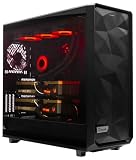
- A M D R9-9950X3D2 4.3GHz 16 core | 256GB DDR5 RAM
- N V I D I A - G e F o r c e 2X5090 64 GB | 1600W Power Supply
- 360mm Liquid Cooler | 8 TB NVMe SSD Boot Drive
- Ready to work, preloaded with Windows 11 Pro and the latest drivers
- Custom built Dual GPU AI Workstation, professional cable management, fully tested
- Exact GPU model, memory per GPU, and GPUs per instance.
- Host CPU and memory, along with the GPU-to-host configuration.
- For multi-GPU and multi-node jobs, the interconnect, topology, and how that topology is exposed to the scheduler or tenant.
- Whether virtualization preserves the PCIe and NVLink topology relevant to your workload.
- Current capacity, reservation options, and the process for obtaining capacity when needed.
- Tenant controls and APIs for provisioning, lifecycle operations, and resource visibility.
NVIDIA’s AI cloud requirements, version 2.4 dated 2026-09-01, and its performance guidance identify native access to GPU, network, and storage resources and topology-aware placement as performance considerations. Use those considerations to frame questions; they do not establish that a particular provider offers a specific configuration.
3. Test networking and storage from the GPU nodes
For distributed training, collectives, or high-throughput inference, measure node-to-node bandwidth and latency using the topology and software stack you plan to deploy. Ask whether hardware-accelerated networking is available, what virtualized network path is used, and what isolation and traffic controls apply.
For data-intensive work, measure storage throughput and latency from the target GPU compute nodes rather than relying only on a standalone storage benchmark. Confirm whether storage is persistent, how it is mounted, and how data will be staged into the region—including the process and cost of moving it.
Rank #2

- Unlock next-generation AI computing with AMD Ryzen AI Max+ 395 processor featuring 16 cores, 32 threads, up to 5.1GHz boost clock, and integrated Ryzen AI engine delivering up to 126 TOPS AI performance. EVO-X3 is designed for local AI models, content creation, development, and professional workloads.
- OCuLink External GPU Expansion – Upgrade Beyond a Mini PC: Take your graphics performance further with a dedicated OCuLink (PCIe 4.0 x4) interface. Connect an external GPU dock to add desktop-class graphics power for AAA gaming, AI acceleration, 3D rendering, video production, and advanced creative applications. EVO-X3 gives you the flexibility of a compact PC with workstation-level expansion capability.
- AI NPU with XDNA 2 ARCHITECTURE - Powered by 16 “Zen 5” CPU cores, 50+ peak AI TOPS XDNA 2 NPU and a truly massive integrated GPU driven by 40 AMD RDNA 3.5 CUs, the Ryzen AI MAX+ 395 is a transformative upgrade and delivers a significant performance boost over the competition. The Ryzen AI Max+ 395 excels in consumer AI workloads like the llama.cpp-powered application: LM Studio. Shaping up to be the must-have app for client LLM workloads, LM Studio allows users to locally run the latest language model without any technical knowledge required and unleash their creativity and productivity.
- AMD RADEON 8090S iGPU GAMING PC - The AMD Radeon RX 8060S offers all 40 CUs with up to 2.9 GHz graphics clock and uses the new RDNA 3.5 architecture. The powerful iGPU is positioned between an RTX 4060 and 4070 laptop GPU and therefore enables gaming in FHD at maximum details in most demanding games. The 8060S can also utilize the full 128GB pool, which is perfect for running LLMs such as Deepseek 70B Q8, which runs comfortably on this machine.
- EIGHT CHANNEL LPDDR5X - LPDDR5X is a new ground breaking memory small form factor installed on-board. With blazing speeds up to to 8000MT/s, it runs 1.5x faster than the DDR5 SODIMMs; 90% better performance over DDR5 SODIMMs in video conferencing and photo editing; 30% better performance in productivity apps; 12% better performance in digital content workloads.
NVIDIA’s performance reference discusses networking, topology, and storage connectivity in virtualized AI clouds; its AI cloud requirements also discuss data-movement capabilities. These are evaluation criteria, not proof of an unnamed provider’s configuration or results.
Recommended Free Tools
4. Check security, privacy, and data sovereignty across the lifecycle
Map the controls that apply from data ingestion through retirement. Include source data, features and embeddings, training and evaluation data, model weights, checkpoints, inference inputs and outputs, and logs. A region choice for compute alone may not answer where related data and artifacts are processed or stored.
- Approved locations for processing and storage, including derived data, logs, model artifacts, and backups where applicable.
- Encryption in transit and at rest, plus customer-controlled or external key management if your requirements call for it.
- Private access, identity controls, least privilege, tenant isolation, and audit-log availability.
- Provider personnel access and operational oversight, including how privileged access is controlled and recorded.
- Incident response, data sanitization, and the handling of data and artifacts when a workload ends.
- Evidence and contract language that match your actual jurisdiction and regulatory obligations.
Microsoft’s AI sovereignty guidance discusses residency, encryption and key control, confidential processing, operational oversight, model provenance, and responsible-use controls across AI lifecycle phases. It is cloud-vendor guidance, not a legal conclusion or evidence that another provider offers the same controls. Confirm requirements with your organization’s security, privacy, and legal owners.
Rank #3

- Supercomputer performance directly to your desk in a compact, energy-efficient design, enabling enterprise-scale AI and high-performance computing right where you need it.
- The power of Grace Blackwell architecture, delivering up to 1 petaFLOP of AI performance for local model fine-tuning, inference, and analytics, accelerating your time-to-solution.
- Designed from the ground up to build and run AI, delivering seamless integration of the full NVIDIA AI software stack —so you can develop locally and deploy anywhere.
- NVIDIA DGX Spark gives you the freedom to experiment, prototype, and innovate faster by augmenting laptop, desktop, cloud, or data center resources. With more power to learn, prototype, test, and innovate, NVIDIA DGX Spark delivers exceptional ROI for increased productivity.
- Use NVIDIA DGX Spark to unlock new ideas and experiment with large models (up to 200 billion parameters at FP4) directly on your desktop with 128GB of unified memory. Empower rapid testing, validation, and iteration—driving innovation in a secure, high-performance setting.
5. Establish who operates each layer and what the service guarantees
Request a shared-responsibility matrix and name the owner for each operational task. Depending on the service, responsibilities may be divided among your team, the cloud provider, and managed-service operators.
- Host hardware, GPU drivers, and patching.
- Kubernetes or other scheduler control plane, upgrades, and workload lifecycle.
- Network and storage configuration, monitoring, and capacity management.
- Backups, incident response, and hardware break-fix.
- Support escalation, access to health and topology information, and quota visibility.
Read service-level terms for the measurement period, exclusions, maintenance, support escalation, recovery objectives, and remedies. NVIDIA’s AI cloud requirements describe operational and API capabilities. Its GB300 NVL72 inference provider requirements give a deployment-specific example of operator and tenant responsibilities and managed Kubernetes expectations. Neither source substitutes for the contract or operating model of the provider you are evaluating.
Free tools Windows power users keep installed
One-click scans. No signup required.
6. Estimate cost per useful result, not just the GPU rate
Build estimates with equivalent regions, configurations, workload durations, and utilization assumptions. Choose a unit that reflects delivered work—such as a completed training run, inference request, or token—and estimate its full cost. Include:
Rank #4

- Professional AI & Creator Workstation: AMD Radeon AI PRO R9700 GPU with 32GB GDDR6 is engineered for AI development, professional content creation, and compute-intensive workloads.
- Massive 32GB Memory Capacity: 32GB of GDDR6 memory on a 256-bit bus provides ample bandwidth for large AI models, 8K video editing, and complex 3D rendering.
- Advanced RDNA 4 with AI Accelerators: 64 Compute Units with 3rd Gen Ray Tracing and dedicated 2nd Gen AI Accelerators for groundbreaking AI performance and visual computing.
- Professional Blower Cooling: Efficient single blower design exhausts heat directly out of the chassis, ideal for multi-GPU workstation and server configurations.
- Enterprise-Grade Thermal Solution: Vapor chamber heatsink with industrial Honeywell PTM7950 thermal interface material ensures reliable cooling under sustained professional loads.
- GPU and host charges.
- Persistent and high-performance storage.
- Networking and data transfer.
- Managed services, software licenses, and support.
- Idle or reserved capacity, commitments, and expected utilization.
- Temporary overlap while the current and target environments both run.
Google Cloud notes that its GPU pricing page excludes disk, networking, sole-tenant nodes, and VM instance pricing; GPU charges are added to machine-type charges. AWS’s Pricing Calculator supports workload scenarios, discounts and commitments, and historical usage baselines. Use current, region-specific inputs and validate estimates against actual billing: prices and discounts change, and a provider’s discount claim is not a universal saving.
Independent reader supportYour contribution helps us test, update, and keep practical guides available for everyone.7. Compare providers using the same workload and assumptions
For each candidate, record evidence against the same workload specification rather than comparing marketing labels. Make the comparison include:
- Accelerator model and memory, GPU count, capacity availability, and reservation terms.
- Interconnect, topology visibility, multi-node performance, and network isolation.
- Storage performance measured from GPU nodes, persistence, data staging, and transfer costs.
- Region availability, data locations, key control, tenant isolation, and audit evidence.
- Managed-service scope, APIs and scheduler behavior, support, incident handling, and service-level terms.
- End-to-end performance and cost per useful output, including idle time and migration overlap.
- Portability of containers and runtimes, data-egress terms, exit process, and effort to move workloads back or elsewhere.
Use benchmark results from your own representative configuration to resolve performance questions; a GPU-family name, provider specification, or validation label is not a substitute for workload-specific evidence. NVIDIA’s AI Cloud Ready validation initiative describes an end-to-end infrastructure validation framework, but its existence does not show that a particular provider passed a particular test or that the result predicts your workload’s behavior.
Outdated Drivers Are Slowing You Down
One free scan finds every outdated or missing driver and matches the right update for your exact hardware.Free scan · exact hardware matchPC Slower Than It Used to Be?
A free scan shows the junk files, broken settings and background clutter dragging Windows down - then fixes them in one click.Free scan · Windows 10 & 11Best Value

- Built for Local AI and Advanced Workflows – The BOSGAME M5 AI Mini PC is powered by AMD Ryzen AI Max+ 395 with 16 cores, 32 threads, up to 5.1GHz, 50 TOPS NPU performance and up to 126 TOPS total AI performance. It is designed for local AI inference, private AI assistants, coding, data analysis, virtualization, content creation and demanding multitasking while keeping sensitive data on the device.
- 128GB Unified Memory for Large Models and Creative Projects – M5 includes 128GB LPDDR5X-8000 unified memory, giving the CPU and Radeon 8060S graphics access to a large shared memory pool. This helps support memory-intensive AI workloads, large project files, multiple virtual machines, 3D work, video editing and complex professional applications without the capacity limits of typical 32GB or 64GB mini computers.
- Radeon 8060S Graphics for Creation, Rendering and Gaming – Integrated Radeon 8060S graphics with 40 RDNA 3.5 compute units delivers high-end visual performance without a separate graphics card. Use the M5 creator workstation for 4K video editing, 3D rendering, CAD, AI image workflows, high-resolution media and modern gaming, while maintaining a compact desktop footprint.
- 2TB PCIe 4.0 SSD and Flexible Expansion – A pre-installed 2TB NVMe PCIe 4.0 SSD provides fast access to models, datasets, media libraries and project files. A second M.2 2280 PCIe 4.0 slot allows additional storage expansion, while the SD 4.0 card reader supports efficient photo and video workflows for creators and production teams.
- Professional Connectivity and Four-Display Support – Dual USB4 ports, HDMI 2.1 and DisplayPort 1.4 support up to four displays and resolutions up to 8K@60Hz. WiFi 7, Bluetooth 5.4 and 2.5GbE deliver fast networking for cloud collaboration, NAS access and business deployment. Windows 11 Pro, performance-mode switching, Wake-on-LAN and auto power-on support flexible workstation use.
8. Pilot first, then migrate in controlled stages
Make the pilot representative enough to expose the dependencies and operating work that production will inherit. Use the same model, code, important data characteristics, dependency versions, and service targets where practical. Define acceptance criteria before the test so the decision is based on agreed outcomes rather than impressions.
- Prepare the target: provision the intended region and configuration, stage representative data, and verify access from the GPU nodes.
- Run the workload: measure quality, throughput or job time, tail latency when relevant, reliability, operational effort, and total cost against the current environment.
- Exercise operations: test interruption and recovery, monitoring, access revocation, support escalation, and the rollback procedure.
- Review results: compare observed outcomes with the pre-agreed acceptance criteria and investigate gaps before increasing production traffic or job volume.
- Shift gradually: move workloads in stages, retaining a workable rollback option until the new environment is operating as intended.
NVIDIA describes representative-workload validation in its AI Cloud Ready initiative. Provider-level validation can inform due diligence, but it cannot replace a pilot of your own workload and configuration.
Quick Recap
Product prices and availability are accurate as of the date/time indicated and are subject to change. Any price and availability information displayed on Amazon at the time of purchase will apply.

