
PC Slower Than It Used to Be?
A free scan shows the junk files, broken settings and background clutter dragging Windows down - then fixes them in one click.Free scan · Windows 10 & 11Crashes, No Sound, or Screen Glitches?
Random freezes, missing sound and display glitches usually trace back to one bad driver. Find and replace yours safely.Free scan · under a minuteIf a TLS 1.3 connection starts failing after you enable post-quantum cryptography (PQC), first confirm ordinary TLS connectivity and configuration, then check whether both peers can negotiate the same hybrid key-exchange group. A generic handshake error does not prove PQC is the cause. Hybrid groups combine an elliptic-curve exchange with ML-KEM; they do not make certificate authentication post-quantum.
Start with the failure, not the PQC setting
Record the exact error or TLS alert, the client and server software and versions, the TLS library and build options, the configured protocol versions and groups, and the network path between the endpoints. Save a handshake trace or packet capture if your security policy permits it. Then compare the failing connection with the same endpoint and path using the pre-PQC configuration.
Do not diagnose the hybrid group from a generic “handshake failure” message alone. The failure could come from ordinary version or endpoint configuration, a peer mismatch, or network handling of a larger handshake message. Identify the stage where the connection stops and whether the same client succeeds against another server or through another path.
Check TLS 1.3 and hybrid-group negotiation
- Confirm TLS 1.3 is available end to end. Check the protocol configuration and the actual negotiated version. A peer that cannot negotiate TLS 1.3 cannot use these TLS 1.3 hybrid groups.
- Verify the installed library and build features on both sides. Supporting TLS 1.3 or a PQC extension in a library does not guarantee that a particular hybrid group is enabled. Review the documentation for the exact library version and the application’s explicit protocol and group settings.
- Inspect the client offer. In a handshake trace, check whether the client includes the intended group in
supported_groupsand sends a compatiblekey_share. Check the server response to see which group, if any, it selects. - Check for pinned settings. An application or server policy may restrict protocol versions, groups, or key shares. Update a restriction only when you understand its purpose and the policy permits the change.
The IETF’s July 2026 Post-Quantum Cryptography Recommendations for TLS-based Applications is an Internet-Draft, not a final standard. It warns that upgrading to a capable library may not enable PQC groups by default and recommends reviewing explicit configuration and testing interoperability.
Recommended Free Tools
#1 Best Overall

- SonicWall TZ270W Appliance Only - No Service Subscription (02-SSC-2823) - Combines enterprise-grade firewalling with integrated 802.11ac Wave 2 Wi-Fi to deliver secure wired and wireless connectivity in one compact device for small offices and clinics.
- Blocks zero-day threats and ransomware with Capture ATP sandboxing enhanced by RTDMI, plus IPS and anti-malware scanning for layered protection.
- Eliminates the need for separate access points in smaller spaces thanks to built-in high-speed wireless that is simple to deploy and manage.
- Supports VPN, SD-WAN, and TLS 1.3 decryption to secure hybrid cloud access and remote workers while maintaining usability and performance.
- Delivers gigabit performance with up to 750,000 concurrent connections to handle growth in users, devices, and SaaS applications.
Confirm both peers use a compatible group definition
“PQC-capable” is not enough: the client and server must agree on a group and compatible implementation behavior. Compare the library versions and verify that both support the same final group definition. In particular, check whether either endpoint relies on an experimental draft-era identifier or encoding that differs from the other’s.
NIST’s December 2023 preliminary migration report documented an interoperability failure between s2n-tls and OQS OpenSSL when the implementations followed different versions of a draft. That example shows how version skew can cause failures; it does not establish that those experimental versions explain a current deployment’s problem.
If the connection passes through a proxy, TLS inspection device, load balancer, VPN, or multiple server backends, test the client against the endpoint directly where possible. Then add intermediaries back into the path one at a time. Include the actual client and server versions in interoperability testing, and account for legacy peers that may not support TLS 1.3 or PQC key-exchange extensions.
Rank #2

- XGS 108 with 1 Year Xstream Protection - Next-generation firewall appliance with Xstream Protection subscription providing zero-day defense, cloud sandboxing, email filtering, intrusion prevention, and advanced reporting, managed through Sophos Central for unified policies and reporting.
- 6 x 2.5 GE copper ports and 1 SFP fiber port, supporting up to 12.5 Gbps firewall performance for growing business networks.
- Zero day protection with cloud sandboxing, email filtering, and advanced reporting for full enterprise coverage.
- TLS inspection and next generation intrusion prevention block hidden threats in encrypted traffic and stop sophisticated attacks.
- Includes Xstream Protection – Advanced security bundle with zero-day protection, cloud sandboxing, email filtering, and automated threat response, providing full coverage against the most sophisticated cyberattacks.
Investigate ClientHello size and network handling
Hybrid public-key shares add data to handshake messages. The IETF’s July 2026 application draft warns that a larger ClientHello can be fragmented, that some middleboxes may mishandle fragmented ClientHello messages, and that packet loss can add delay. RFC 9954 (July 2026) gives broad context that post-quantum public keys and ciphertexts across algorithms range from hundreds of bytes to over one hundred kilobytes; that range is not a size measurement for each group defined in RFC 10024.
The Tool Desk
Outbyte PC Repair FREEClear out junk files and repair common Windows errorsFree Scan →Outbyte Driver Updater FREEScan for outdated or missing drivers - takes under a minuteDriver Scan →- Compare handshake traces on a failing path and a controlled path, such as a direct endpoint connection where available.
- Look for retransmissions, resets, timeouts, or a connection that fails only through a particular proxy, VPN, or network.
- Check whether the client sends multiple key shares, and whether the implementation offers a supported way to adjust its key-share strategy.
- Test a change to the path or key-share strategy only in a controlled environment, and confirm that it does not silently disable the required security mode.
The application draft describes a trade-off: clients can send traditional and hybrid shares together to avoid an extra round trip, but a larger ClientHello can increase fragmentation and compatibility risk. Verify how the specific implementation behaves and follow your deployment policy.
Change one variable at a time
Use a test endpoint and compare a known-good baseline with a single configuration change. Record the negotiated protocol, offered and selected groups, key shares, failure point, and endpoint path for each attempt.
Rank #3
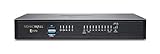
- SonicWall TZ570 Appliance Only - No Service Subscription (02-SSC-2833) - First desktop TZ with multi-gigabit interfaces, delivering up to 4 Gbps firewall throughput for demanding SMB and branch deployments.
- Defends against ransomware, zero-day exploits, and encrypted threats using RTDMI, DPI-SSL, IPS, and Capture ATP multi‑engine sandboxing.
- Advanced networking with VLAN segmentation, secure SD-WAN, and high-performance VPN supports hybrid cloud and remote work at scale.
- Centralized management via NSM provides visibility, analytics, and consistent policy orchestration across distributed locations.
- Handles up to 1.25 million concurrent connections to support sustained growth in bandwidth and devices.
- Keep the endpoint and network path fixed; change only the TLS library version or build.
- Restore the baseline, then change only the enabled group list or client key-share list.
- Restore the baseline again, then change only the server policy or network path.
- Compare traces and results to identify which change affects negotiation or message delivery.
If a traditional group succeeds but a hybrid group fails under otherwise comparable conditions, focus next on group support, encoding compatibility, key-share negotiation, or message handling. That result alone does not show that the cryptographic construction is broken.
Independent reader supportYour contribution helps us test, update, and keep practical guides available for everyone.Choose a hybrid group by policy and compatibility
RFC 10024, a Standards Track document published in August 2026, defines three TLS 1.3 post-quantum/traditional (PQ/T) hybrid key-agreement groups. Each combines ML-KEM with an ephemeral elliptic-curve Diffie–Hellman exchange (ECDHE). RFC 10024 describes use cases, not universal deployment rankings:
| Group | Components | RFC 10024 deployment context |
|---|---|---|
X25519MLKEM768 |
X25519 and ML-KEM-768 | Described as often the most practical choice for one hybrid combiner. |
SecP256r1MLKEM768 |
P-256 and ML-KEM-768 | Described for use cases requiring both shared secrets to use FIPS-approved mechanisms. |
SecP384r1MLKEM1024 |
P-384 and ML-KEM-1024 | Described for high-security environments requiring FIPS-approved mechanisms with an increased security margin. |
Apply your organization’s cryptographic policy, implementation support, and peer interoperability requirements when selecting a group. Do not infer a performance ranking from these descriptions.
Rank #4

- XGS 88 (Hardware Only) - Next-generation firewall appliance only; add a Sophos subscription to enable IPS, web security, VPN, and advanced threat defense.
- Equipped with 4 x 2.5 GE copper ports, supporting up to 9.9 Gbps firewall performance for small offices and branch deployments.
- Purpose built next generation firewall hardware engineered for high performance, visibility, and reliable operation in business networks.
- SD-WAN optimization provides resilient connectivity and intelligent traffic routing across multiple WAN connections.
- VPN ready architecture supports secure site to site networking and encrypted remote employee access.
Keep key exchange separate from certificate authentication
A successful hybrid key exchange addresses the confidentiality of the session’s shared secret under the hybrid construction’s assumptions; RFC 9954 (July 2026) describes the goal as remaining secure as long as at least one component key exchange remains unbroken. It does not make a certificate signature, certificate chain, or other authentication mechanism post-quantum. RFC 9954’s scope is hybrid ephemeral key exchange and excludes post-quantum authentication; RFC 9958 treats hybrid authentication as a separate property with its own engineering risks.
When diagnosing a connection, distinguish the negotiated key-exchange group from the certificate and signature algorithms. Do not claim quantum-resistant authentication unless that separate configuration has been assessed.
Quick Recap
Product prices and availability are accurate as of the date/time indicated and are subject to change. Any price and availability information displayed on Amazon at the time of purchase will apply.
Do these 3 things before closing this tab:
1Repair Windows errors before they cause bigger problems2Scan for outdated or missing drivers - takes under a minute3Clear out junk files and repair common Windows errors
