
Free tools Windows power users keep installed
One-click scans. No signup required.
Oil prices rise when buyers expect demand to outpace available supply, and fall when supply is expected to exceed demand. Because production, transport and fuel use cannot adjust instantly, prices can move sharply in response to disruptions or changing expectations—sometimes before a physical shortage appears. Consumers feel those changes mainly through gasoline, diesel and other refined-fuel prices, but pump prices also depend on refining, delivery, seasonal fuel requirements and local market conditions.
What determines the price of oil?
Oil prices emerge from transactions across a global market, not from a single producer or one headline. The balance between production, consumption and stored oil matters, as do expectations about how that balance may change. The U.S. Energy Information Administration (EIA) describes prices as reflecting thousands of transactions across the chain from producers to consumers. EIA: Oil prices and outlook
Supply and demand move the balance
Economic activity affects demand because people and goods need transport, while petroleum is also used in other sectors. When demand grows faster than available production and inventories, buyers compete for supply and prices can rise. When production exceeds consumption, inventories can build and prices may fall as the market adjusts.
Expectations can move prices before supply changes
Oil markets respond to expectations about future production, demand and disruptions. Futures prices may therefore move before the anticipated change happens physically. A futures price is a market signal about expectations, not a guarantee that the event will occur. EIA: Balance
#1 Best Overall

- Full Synthetic Formula: PS-4 Full Synthetic 5W-50 4-Cycle Engine Oil uses an excellent powersports-grade full synthetic base oil to deliver the highest level of performance and engine protection.
- Custom Additive System: Polaris custom additive system is formulated to reduce engine deposits and critical engine component wear, prevent oxidation in extreme temperatures, and prevent rust and corrosion by controlling moisture within the engine.
- Outstanding Protection and Proven Performance: PS-4 provides a unique wide 5W-50 viscosity range for high and low temperature engine protection and performance in ambient temperatures of -40°F to 100°F, extending the life of your Polaris engine.
- PS-4 Advantage: PS-4 is made specifically for Polaris powersports engines to maintain peak performance. Polaris Lubricants are specially developed with our engines to handle intense conditions and high-performance requirements demanded by riders.
- Includes Everything You Need To Change Your Oil: This Polaris Oil Change Kit includes 2.5 Quarts of PS-4 SAE 5W-50 Full Synthetic Oil, 1 Oil Filter and 1 Drain Plug Washer.
How producers, spare capacity and inventories affect prices
OPEC and producers outside OPEC
OPEC members set production targets, although compliance varies. Target reductions have historically tended to put upward pressure on prices, while spare capacity can provide additional supply if needed. EIA defines spare capacity as production that can be brought online within 30 days and sustained for at least 90 days; most global spare capacity is held by OPEC members. This can influence market expectations, but it does not let OPEC dictate an exact price. EIA: Supply OPEC
Production decisions outside OPEC matter too. Countries outside OPEC accounted for 65% of global crude oil production in 2024, according to EIA. The price effect of a non-OPEC production change depends on its size, demand strength, production costs and how OPEC responds. EIA: Supply Non-OPEC
Rank #2

- Full Synthetic Formula: PS-4 Full Synthetic 5W-50 4-Cycle Engine Oil uses an excellent powersports-grade full synthetic base oil to deliver the highest level of performance and engine protection.
- Custom Additive System: Polaris custom additive system is formulated to reduce engine deposits and critical engine component wear, prevent oxidation in extreme temperatures, and prevent rust and corrosion by controlling moisture within the engine.
- Outstanding Protection and Proven Performance: PS-4 provides a unique wide 5W-50 viscosity range for high and low temperature engine protection and performance in ambient temperatures of -40°F to 100°F, extending the life of your Polaris engine.
- PS-4 Advantage: PS-4 is made specifically for Polaris powersports engines to maintain peak performance. Polaris Lubricants are specially developed with our engines to handle intense conditions and high-performance requirements demanded by riders.
- Includes Everything You Need To Change Your Oil: This Polaris Oil Change Kit includes 2 Quarts of PS-4 SAE 5W-50 Full Synthetic Oil, 1 Oil Filter and 1 Drain Plug Washer.
Inventories cushion shocks and reveal market tightness
Stored crude and refined products help cover demand when current consumption exceeds production, and allow surplus supply to be held for later. Inventory builds and draws can therefore signal whether the market is becoming looser or tighter. Seasonal gasoline and heating-fuel use also affects stocks, and inventory data is not equally complete or timely in every country. EIA’s current explanatory page says IEA members collectively hold about 1.6 billion barrels of publicly owned petroleum stocks for emergency response; this is a page figure, not a permanent total. EIA: Balance
Why disruptions and short-term shocks can cause sharp moves
Geopolitical events, severe weather, refinery outages and pipeline problems can interrupt crude or refined-product flows—or raise uncertainty about future flows. The effect depends on what is disrupted, where it occurs, how long it lasts and whether other suppliers or routes can compensate.
Do these 3 things before closing this tab:
1Clear out junk files and repair common Windows errors2Fix the driver behind crashes, sound loss and screen glitches3Repair Windows errors before they cause bigger problemsRank #3
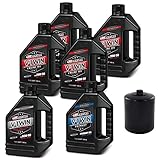
- Formulated specifically for V-Twin engines
- Approved for H-D V-Twin engines, transmissions and primaries
- Superior protection and oxidative stability at any temperature
- Excellent clutch feel and clutch protection
- Shear stable, ester-fortified formula maintains oil viscosity and film thickness
Prices can react strongly because supply and demand are relatively inelastic in the short run: producers need time to change capacity, and consumers generally cannot quickly switch fuels or replace fuel-using equipment. A disruption may send prices higher even before a lasting shortage develops. Prices can move back toward earlier levels when the disruption eases and supply chains adjust, but the timing varies. EIA: Oil prices and outlook EIA: What drives crude oil prices: Spot Prices
How crude prices reach consumers
Consumers usually buy refined products such as gasoline and diesel, not crude oil itself. Crude is a major input to fuel prices, and retail gasoline prices generally follow crude prices. But the pump price is not an instant, one-for-one copy of a crude benchmark.
Rank #4

- Full Synthetic Formula: PS-4 Full Synthetic 5W-50 4-Cycle Engine Oil uses an excellent powersports-grade full synthetic base oil to deliver the highest level of performance and engine protection.
- Custom Additive System: Polaris custom additive system is formulated to reduce engine deposits and critical engine component wear, prevent oxidation in extreme temperatures, and prevent rust and corrosion by controlling moisture within the engine.
- Outstanding Protection and Proven Performance: PS-4 provides a unique wide 5W-50 viscosity range for high and low temperature engine protection and performance in ambient temperatures of -40°F to 100°F, extending the life of your Polaris engine.
- PS-4 Advantage: PS-4 is made specifically for Polaris powersports engines to maintain peak performance. Polaris Lubricants are specially developed with our engines to handle intense conditions and high-performance requirements demanded by riders.
- Includes Everything You Need To Change Your Oil: This Polaris Oil Change Kit includes 2 Quarts of PS-4 SAE 5W-50 Full Synthetic Oil, 1 Oil Filter and 1 Drain Plug Washer.
Retail prices also reflect product supply and demand, refinery operations and margins, pipeline delivery, seasonal fuel specifications and local market conditions. Gasoline can become more expensive even when crude prices are stable if gasoline availability tightens or demand rises. The speed and size of crude-to-pump pass-through can therefore differ by product and location. EIA: What drives petroleum product prices: Overview EIA: Gasoline price fluctuations
What a price change means for a household
The effect on a household depends on how much fuel it buys and how often local retail prices reset. A driver who buys more gasoline will generally face a larger direct cost change than someone who buys little; households can also be affected indirectly through the cost of transporting goods. There is no single household-budget impact that applies across locations or consumers.
The Tool Desk
Outbyte PC Repair FREEClear out junk files and repair common Windows errorsFree Scan →Outbyte Driver Updater FREEFix the driver behind crashes, sound loss and screen glitchesFind Drivers →Best Value

- TIPS: 1. BENT head design for easier use in some tight space; 2. OIL on product for rust protection (not used)
- Permalock fastener eliminates nut and bolt failure
- High carbon steel for strength and reliability
- Fits oil filters from 2-3/8 to 4-1/2 inches (60 to 102 millimeters) in diameter
- Soft, Nonslip Red Grips Offer Extra Reach And Leverage In Tight Places
How to read oil-price figures and forecasts
Oil-price figures are only comparable when the benchmark, price type, unit and time period match. Brent spot prices and Brent futures prices are different measures; crude prices per barrel are not retail gasoline prices per gallon. Forecasts are estimates for a defined period, not observed prices, and outlook values can change with each report vintage.
For example, EIA reported that Brent crude front-month futures ranged from $118 per barrel on April 29, 2026, to $72 per barrel on June 26, 2026, amid second-quarter market disruption. Separately, EIA said Brent spot prices averaged $85 per barrel in June 2026—$22 below May and $32 below the April 2026 peak. These are different price measures and dated observations, not a current-price quote. EIA: Petroleum markets responded to disruptions in the Middle East in the second quarter EIA: July 7, 2026 press release
EIA’s Short-Term Energy Outlook text gives U.S. retail gasoline annual averages of $3.10 per gallon in 2025, with forecasts of $3.70 in 2026 and $3.46 in 2027. These are U.S. forecast figures from the cited outlook text, not observed averages for 2026 or 2027, and the retrieved text does not clearly establish its report vintage. EIA also says crude typically accounts for around half of U.S. retail gasoline prices and slightly less of diesel prices; the exact share varies over time. Do not apply these U.S. figures automatically to other countries, where taxes, currencies and retail-market structures differ. EIA: Short-Term Energy Outlook text
For country-specific consumer prices, local taxes, fuel specifications, distribution costs and currency movements need to be considered alongside global crude prices. EIA’s consumer examples and forecasts above describe the U.S. context, not a universal pump-price formula.
Quick Recap
Product prices and availability are accurate as of the date/time indicated and are subject to change. Any price and availability information displayed on Amazon at the time of purchase will apply.

