
What’s actually slowing this PC down?
Pick the symptom - the matching free tool is one click away.
Before placing a market order for the opening of a U.S. stock-market session, decide whether getting a fill matters more to you than controlling the price. A market order seeks execution at the best available price; it does not guarantee the last-traded price, a premarket indication, or the quote you saw before submitting. Check the bid and ask, spread, order size, overnight news, and the precise order instruction and time-in-force before you send it.
What to check before placing a market order at the open
- Choose between execution and price control. A market order prioritizes execution, not a particular price. If you need a price boundary, consider a limit order instead: it sets a maximum price for a buy or a minimum for a sell, but may not execute.
- Inspect the live bid, ask, and spread. For a buy, look at the ask; for a sell, look at the bid. Compare the two to assess the spread. Quotes can change before an order reaches a market, and the last trade may not match either quote. The SEC explains that a market order’s execution price is not guaranteed in its order-types bulletin.
- Check the order size against available liquidity. A displayed quote may not represent enough shares to fill your whole order at that price. The SEC notes that a large market order can execute in parts at different prices, with later portions filling at a less favorable price.
- Review overnight news and opening uncertainty. Check for company announcements or other material news released outside regular hours. News and other trading risks can cause significant price changes. A premarket price is not a promise of the price at the regular-session open. The SEC warns that extended-hours prices may not reflect prices at the next regular-session opening in its extended-hours trading bulletin.
- Confirm the order type and time-in-force. Make sure you are submitting the instruction you intend: a regular-session market order, an on-open order, or another order type. Check how your broker handles any unfilled balance and when the order expires.
- Check broker handling and monitor the order. Order availability and handling vary by firm. Brokers route orders, and prices may move while an order is in transit. The SEC says brokers have a duty to seek the best execution reasonably available, but that is not a guarantee of a particular price or fill. Review the order status and execution details after submission.
Will my market order execute at the price I see?
Not necessarily. The visible price may be the last trade, a quote, or a premarket indication, and none guarantees the market-order execution price. A buy generally executes at or near the available ask, while a sell generally executes at or near the available bid; the quote can change before execution. The SEC’s order-types bulletin, updated August 18, 2026, emphasizes that the last-traded price is not necessarily the price at which a market order executes.


Should I use a limit order instead?
That depends on which trade-off matters more to you. A limit order controls the price boundary, while a market order prioritizes execution. Neither guarantees the outcome a trader may prefer: a market order can fill at a different price than expected, and a limit order may remain unfilled.
| Order type | Execution and price | Possible outcome |
|---|---|---|
| Market order | Seeks execution at the best available price; does not set a maximum buy price or minimum sell price. | May execute quickly, potentially across multiple prices for a large order; the execution price is not guaranteed. |
| Limit order | Sets a maximum price for a buy or a minimum price for a sell. | Executes only at the limit price or better, but may not execute. |
Check the broker’s time-in-force and opening-session options for either instruction; supported order types and handling can differ by firm.
#1 Best Overall

- My Trading Journal for Stock Market, Forex, and Crypto: Precisely track and analyze every trade. This log book is essential for improving your trading performance and decision-making skills.
- Comprehensive Day Trading Planner: Record and review 80 guided trades with 8 review sections, perfect for traders aiming to refine their strategies and maximize profits.
- Customizable Trading Setup: Tailor your trading approach by documenting your setups, analyzing results, and adjusting strategies based on market conditions.
- For All Types of Traders: Whether you're trading stocks, forex, or crypto, My Trading Journal supports your unique trading style and helps you achieve consistent success.
- Premium Quality and Durability: Made with high-quality materials, this A5-sized journal is perfect for daily use and designed to withstand the rigors of active trading.
What does an on-open order mean?
An on-open order is an instruction intended for the opening transaction or a reopening; it is not simply another name for any order entered before the bell. The SEC describes an on-open order as one that must be executed during the opening trade or reopening, with any remaining balance canceled. Confirm that your broker offers this instruction and how it applies to your specific order before submitting it.
Independent reader supportYour contribution helps us test, update, and keep practical guides available for everyone.What regular-session opening time applies?
For U.S. stock-market hours, the SEC’s June 6, 2022 extended-hours bulletin states the regular session runs from 9:30 a.m. to 4:00 p.m. Eastern Time. For a specific security or market, confirm the exchange calendar and your broker’s session rules. Extended-hours trading is not identical across venues or firms; the SEC notes that liquidity may be lower, spreads may be wider, and some firms accept only limit orders during those sessions.
Quick Recap
Best Value
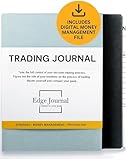
- FOR SERIOUS TRADERS: Track every entry, exit, position size, P&L, and setup with a structured layout designed for forex, stocks, options, futures, and crypto traders who want to identify what actually works in their strategy. NEUROSCIENCE-BASED DESIGN that encourages Growth Mindset and accountability
- TRADER PSYCHOLOGY FOCUS: Built on proven cognitive science principles, each page guides you through emotion tagging, bias recognition, and post-trade reflection to rewire reactive decision-making and build the disciplined mindset top-performing traders rely on
- COMPLETE 2026 TRADING LOG BOOK: Undated 12-month layout with performance summaries and goal tracking for day traders, swing traders, and long-term investors building consistent and serious results
- PERFORMANCE METRICS THAT DRIVE GROWTH: Dedicated sections for win rate, risk-reward ratio and strategy backtesting help you turn raw data into actionable insights, so every losing trade becomes a lesson and every winning trade becomes a repeatable system
- DIGITAL MONEY MANAGEMENT FILE INCLUDED : calculate your risk/reward ratio and win rate to find out whether you have a mathematical edge on the market, or not.
Rank #2
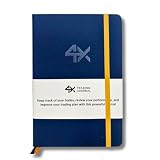
- BUILT FOR YOUR MARKET, FUTURES, STOCKS, FOREX, OPTIONS & CRYPTO: 4X is a mindset and process journal, not a strategy tool tied to one instrument. The plan, the trade log, the deep dive and the weekly review work the same whether you trade ES, EURUSD, SPY or BTC. Traders use it across all five markets every day.
- THE 2026 EDITION, REBUILT FROM TRADER FEEDBACK: Same trusted system, better in every way. An extra daily page for more room to log the session. Weekly reviews now grouped with each week's trades, so no more flipping back and forth. Crisp, darker print that's easy on the eyes after hours on a screen. A Quick-Start QR that scans straight to step-by-step instructions.
- NOT A NOTEBOOK, A COMPLETE 12-WEEK SYSTEM: Start with a one-time 9-part Trading Plan (your market, setups, risk rules and discipline checklist). Then twelve identical weeks: five Daily Logs, five Deep Dive trade pages, and a two-page Weekly Review. 189 guided pages, roughly 80 trades. Guided prompts walk you through every step. You never stare at a blank page.
- RATE YOUR EXECUTION, NOT YOUR RESULT: Your platform tracks the P&L. Nothing tracks the why. Log energy, sleep and mindset before the open; grade every trade A to F on whether you followed your plan, not on whether it won; then face the pattern every weekend with START / STOP / IMPROVE / CONTINUE. That review habit is the edge. You're 42% more likely to hit a goal you've written down.
- BUILT TO LAST, ARRIVES GIFT-READY: Vegan-leather hardcover, 100gsm bleed-resistant paper, two ribbon markers and an elastic closure band. Bound to lay flat so you're not fighting the spine while you write. 189 pages, 5.75" x 8.5", carries in a bag. Ships in a premium gift box: the gift every trader in your life actually wants.
Product prices and availability are accurate as of the date/time indicated and are subject to change. Any price and availability information displayed on Amazon at the time of purchase will apply.

