
The Tool Desk
Outbyte Driver Updater FREEScan for outdated or missing drivers - takes under a minuteDriver Scan →Outbyte PC Repair FREERepair Windows errors before they cause bigger problemsFix Now →A black screen, game crash, or AMD driver timeout does not by itself mean your Radeon GPU has failed. BIOS settings, overclocking, heat, power, memory, other hardware, Windows, and drivers can all contribute. Record when the problem occurs, return the system to stock settings where practical, then test one change at a time so you can identify what actually helps.
Start by recording the symptoms and recent changes
Before changing settings or opening the PC, write down the visible symptom, the exact error message if one appears, when it happens, and what the computer is doing at the time. Note whether the issue affects one game or application, multiple workloads, or even the Windows desktop.
Record any recent game or application update, graphics-driver or Windows update, BIOS change, new hardware, or newly attached peripheral. These details help narrow the possibilities; a “driver timeout,” TDR, BSOD, or WHEA hardware error is a symptom label, not a diagnosis of one universal cause. AMD recommends systematic isolation of stability issues in its Troubleshooting System Stability Issues guidance.
Return the PC to a standard configuration
Remove overclocking and tuning as variables before judging whether a driver or component is responsible. Restore Radeon GPU tuning, CPU and RAM tuning, and BIOS settings to their standard defaults as appropriate for your system. Disable third-party overclocking or monitoring utilities for the test. If practical, disconnect nonessential peripherals and remove aftermarket risers or extensions temporarily.
#1 Best Overall

- Powered by Radeon RX 9070 XT
- WINDFORCE Cooling System
- Hawk Fan
- Server-grade Thermal Conductive Gel
- RGB Lighting
Follow the manuals for your PC, motherboard, and graphics card, especially before changing BIOS settings or handling hardware. Keep Windows, chipset drivers, motherboard firmware, and graphics drivers current where appropriate, but avoid making several updates and configuration changes at once: if the issue changes, you want to know which test mattered.
Check the exact driver notes for your game and GPU
Driver fixes and known issues can apply only to particular games, Radeon families, APIs, or settings. Check the release notes for the installed driver and compare the listed conditions with your own system before updating or rolling back.
For example, AMD’s Adrenalin Edition 26.9.2 Optional Driver Release Notes, last updated September 29, 2026, list fixes for timeouts or freezes in specific circumstances: Final Fantasy VII Rebirth on Radeon RX 7000; War Thunder in DirectX 12 with Instant Replay and Borderless Region Capture on RX 6000; and HITMAN World of Assassination on RX 9000. The same notes identify a known War Thunder timeout on RX 5000 and recommend driver 26.9.1 for that issue. These examples are not general fixes for other games or GPU families.
The 26.9.2 notes list Windows 11 version 21H2 and later, and Windows 10 64-bit version 21H2 and later, with support varying by Radeon product. Check AMD’s current compatibility information for your exact GPU and operating system. If you use a laptop or all-in-one PC, AMD recommends the system manufacturer’s driver because it is customized and validated for system-specific features; for a handheld, use the device maker’s driver.
Rank #2
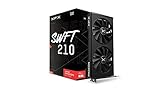
- Chipset: AMD RX 7600
- Memory: 8GB GDDR6
- XFX SWFT Dual Fan Cooling Solution
- Boost Clock: Up to 2655 MHz
Clean-install or roll back a driver when the evidence points there
If the problem began after a driver change, or the installed driver may be corrupted, a clean installation or return to a previously stable release is a reasonable test. AMD’s stability guidance recommends the installer’s Factory Reset option for a clean install. AMD also documents its AMD Cleanup Utility as a troubleshooting option; its 26.9.2 release notes recommend using that utility when downgrading from 26.9.2.
- Check the release notes for your exact Radeon family, game or workload, driver version, and any listed workaround.
- If a clean installation is appropriate, use the installer’s Factory Reset option, or follow AMD’s instructions for AMD Cleanup Utility when cleaning up before a downgrade.
- If there is no documented workaround and the issue started after an update, consider returning to the earlier driver version that did not produce the problem.
- Test the same game or workload after the change and record whether the symptom stopped, changed, or remained.
Download a driver only after confirming it supports your specific product and operating system. Laptop, all-in-one, and handheld owners should observe the device-maker guidance above.
Isolate application and Windows conflicts
Update the affected game or application and review its publisher’s issue notes. If the problem continues, AMD suggests using Windows selective startup to disable non-Microsoft services and startup items temporarily; this can help reveal a software conflict, but it is not a guaranteed Radeon fix. Re-enable items methodically after testing.
For broader Windows instability, AMD’s guidance also mentions System File Checker and System Restore. Treat these as later diagnostic steps rather than routine graphics-driver remedies. Back up important files before a Windows reset or reinstall.
Recommended Free Tools
Rank #3

- System Compatibility Note: This 2‑slot card measures 249 mm (L) x 132 mm (W) x 41 mm (H) and requires a single 8‑pin power connector. Please verify available chassis clearance and ensure your power supply is rated for a recommended 550W before purchase.
- Dedicated Support: Please contact us directly through Amazon for any product questions or assistance you may require.
- Next‑Gen AMD RDNA 4 Architecture: Powered by the AMD Radeon RX 9060 XT GPU with 32 Compute Units featuring 3rd Gen Ray Tracing and 2nd Gen AI Accelerators, delivering exceptional 1440p gaming and AI‑enhanced performance.
- Blazing‑Fast Engine Clock: Delivers a boost clock of up to 3290 MHz and a game clock of 2700 MHz out of the box, providing the raw power for smooth, high‑framerate gameplay.
- 16GB GDDR6 Memory on 128‑Bit Bus: Equipped with 16GB of high‑speed GDDR6 memory running at 20 Gbps, offering ample capacity and bandwidth for modern game textures and creative applications.
Check cooling, memory, seating, and power
If software checks do not resolve the issue, inspect the physical system with the PC or component manufacturers’ instructions. Change one variable at a time and avoid handling internal parts if you are not comfortable doing so.
- Cooling and airflow: Check that the system has adequate airflow and that fans and cooling are working as expected. Keep GPU and CPU tuning at defaults while testing.
- Memory: Verify that RAM configuration is supported by the motherboard guidance. If several DIMMs are installed, AMD suggests testing modules individually. MemTest86 is one third-party memory-scanning option; a scan can help identify memory problems but does not prove the graphics card is healthy or defective.
- GPU seating: For a discrete graphics card, check that it is seated in the primary PCIe slot. If a riser cable is in use, test a direct connection if your setup allows it.
- Power: Confirm GPU power connections are secure and that the PSU meets the system’s requirements. AMD recommends independent PSU cables connected directly to the supply. Modular PSU cables are model-specific; do not substitute a generic or unrelated cable.
Decide what to test next
Use the pattern of failures to choose the next check rather than assuming one symptom identifies the cause.
| What you observe | Useful next comparison |
|---|---|
| The problem began after a driver, game, Windows, or BIOS change | Compare the timing with the exact release notes or application issue notes, then test a relevant update, clean install, or rollback by itself. |
| It occurs in one game or workload | Check that title’s updates and the driver notes for the exact Radeon family, API, and settings involved. |
| It occurs across multiple workloads or on the desktop | Test at stock settings and consider Windows, memory, temperature, power, and hardware checks rather than focusing only on one application. |
| It stops in a selective startup | Re-enable disabled services and startup items methodically to look for a software conflict. |
| It persists at stock settings after relevant software checks | Inspect cooling, RAM, GPU seating, PSU suitability, and power connections using manufacturer instructions, then seek support if instability continues. |
These comparisons can help isolate a variable, but AMD’s guidance does not provide a symptom-only test that proves a single root cause.
When to contact support
Contact the PC maker, the relevant component manufacturer, or AMD support if the system remains unstable at stock settings after appropriate software and hardware checks. Warranty coverage and claim requirements depend on the PC or component maker.
Free tools Windows power users keep installed
One-click scans. No signup required.
To make a support request more useful, AMD asks users to provide CPU and GPU part and serial numbers; motherboard, RAM, cooler, and PSU make and model; clear photos of the PC interior; and system information such as Msinfo32 and DXDiag. Include your symptom log and the checks you have already performed.
Quick Recap
Product prices and availability are accurate as of the date/time indicated and are subject to change. Any price and availability information displayed on Amazon at the time of purchase will apply.

