
The Tool Desk
Outbyte Driver Updater FREEFix the driver behind crashes, sound loss and screen glitchesFind Drivers →Outbyte PC Repair FREEClear out junk files and repair common Windows errorsFree Scan →For decisions that must remain responsive through network delays or outages, run time-critical inference on the device or a nearby edge system, and use cloud infrastructure for training, centralized management, heavier processing, and longer-term analysis. The best placement depends on the complete decision path—not just where the model runs.
What is the difference between edge AI and cloud AI?
Edge AI runs inference on or near the device or data source. That may mean a model running on a sensor-equipped device, a gateway serving several devices, or edge nodes connected to a regional cloud. Cloud AI runs inference in centralized cloud data centers.
These are choices about where computation happens, not competing approaches to every part of an AI system. A common hybrid design trains and versions models centrally, deploys them locally for time-sensitive inference, and sends selected events or summaries to the cloud for monitoring and further analysis. The cloud can support the system without being involved in every immediate decision.
How to choose where real-time inference should run
Start with the full latency budget
Local inference can avoid a round trip to a remote service, but that does not automatically make the whole application fast. Preprocessing, model size, local compute, communication among components, and the steps that follow inference all contribute to response time. A nearby network-edge location may be sufficient for some workloads.
#1 Best Overall
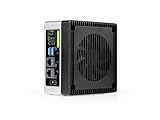
- Supercharged AI Performance: Powered by NVIDIA Jetson Orin NX 16GB, delivers up to 157 TOPS in MAXN Super Mode — ideal for vision AI, robotics, autonomous machines, and generative AI workloads.
- Advanced Thermal Engineering for Full-Power Operation: Equipped with a vacuum copper heat pipe system, ultra-low thermal resistance medium, and high-emissivity black-coated surface combined with high-performance active cooling — ensuring stable full compute power even at 60°C ambient temperature.
- Energy-Efficient & Flexible Power Modes: Adjustable power profile from 10W to 40W, enabling a perfect balance between performance and efficiency for edge AI computing in diverse environments.
- Industrial-Grade Reliability & Design: Ruggedized for operation from -20°C to 60°C at 40W (up to 65°C at 25W), providing dependable performance in industrial automation and outdoor AI deployments.
- Rich Connectivity & AI-Ready Platform: Features 2×RJ45, SIM slot, 4×USB 3.2, HDMI 2.1, CAN, M.2 Key E/M, Mini-PCIe, and 4×CSI camera ports — supporting multi-camera vision, IoT, and robotics projects. Pre-installed with JetPack 6.2 and 128GB NVMe SSD, fully compatible with NVIDIA Isaac, ROS 1/2, and Hugging Face frameworks.
Set a response-time target for the complete decision path, then measure it on representative hardware and under realistic network conditions. Benchmarking only the model’s inference time can miss delays elsewhere in the system. Google Cloud’s real-time inference infrastructure guidance treats infrastructure selection as specific to the workload.
Decide what must happen when connectivity fails
A cloud-only inference path depends on a working connection to the cloud. An application can continue making local decisions during an interruption if the model and decision logic are available at the device or site and the application is designed to operate there.
Plan how the system behaves while offline: what it can decide locally, what data it buffers, how it synchronizes after reconnection, and what happens when it cannot safely make a decision. Those choices are part of the architecture, not details to leave until deployment.
Match model and compute needs to the target hardware
Cloud infrastructure offers pooled compute and centralized services. Edge hardware varies widely, and a model that works on one platform may not meet the latency or throughput target on another. Test the actual workload on representative target hardware before choosing where to run it.
Free tools Windows power users keep installed
One-click scans. No signup required.
Rank #2

- AI-POWERED PRODUCTIVITY & MOBILITY - Experience next-generation computing with the Samsung Galaxy Book4 Edge, featuring a Qualcomm Hexagon NPU with up to 45 TOPS of AI performance to accelerate on-device AI experiences and unlock powerful Copilot+ PC capabilities. Designed to simplify everyday tasks and enhance productivity, it combines intelligent performance with up to 28 hours of battery life in a slim, lightweight design, making it an ideal companion for work, study, travel, and everyday use.
- POWERFUL PERFORMANCE - Powered by the Qualcomm Snapdragon X processor and integrated Qualcomm Adreno graphics, the Samsung Galaxy Book4 Edge handles everyday productivity, streaming, and entertainment with ease. Equipped with 16GB LPDDR5X 8448MHz RAM and 512GB UFS storage, it keeps apps and browser tabs running smoothly while providing ample space for files, apps, and everyday essentials.
- EXCELLENT VISUAL - Enjoy stunning visuals on the 15.6" FHD (1920 x 1080) IPS Anti-glare LED display with 300-nit brightness. USB4 and HDMI support two external 4K monitors @60Hz (without docking station). The enhanced 1080p FHD camera delivers clear, detailed video, while Windows Studio Effects, including background blur and automatic framing, help you look professional during video calls and virtual meetings.
- VERSATILE CONNECTIVITY - Equipped with two USB-C (USB4) ports, USB-A, HDMI, and a 3.5mm audio combo jack for seamless compatibility with monitors, docks, and essential peripherals. Wi-Fi 7 and Bluetooth 5.4 deliver fast, reliable wireless connectivity to keep you productive wherever you work. A full-size keyboard with a dedicated numeric keypad boosts productivity.
- OPERATING SYSTEM - Windows 11 Home provides built-in Copilot AI to help simplify everyday tasks, organize information, and enhance productivity. Built-in security features help protect your device and data, while an intuitive, user-friendly experience makes it easy to work, study, create, and stay connected throughout the day.
NVIDIA publishes Jetson inference benchmarks, but their results apply to the hardware and software configurations described in each benchmark. They should not be generalized to other configurations or compared with cloud results unless the measurements use aligned workloads and conditions. Google Cloud likewise frames infrastructure choice as workload-specific in its real-time inference guidance.
Account for data movement and privacy obligations
Processing data locally can reduce the amount of raw information sent over a network and keep it closer to its source. That can be useful when bandwidth is constrained or data handling requires care, but local processing alone does not ensure security or regulatory compliance. Review the full data flow, access controls, retention, residency, and applicable rules.
Compare operating effort and total cost
A distributed edge fleet needs deployment, updates, monitoring, and device lifecycle management. Cloud inference relies on remote services and network transfer instead. Compare the total operating cost of the actual deployment—including the infrastructure and ongoing operational work—rather than assuming that lower network latency means lower cost. There is no workload-specific cost comparison established here that makes one placement universally cheaper.
Which inference architecture fits your use case?
| Placement | Best fit | Main trade-off |
|---|---|---|
| On-device | Decisions must happen at the data source, connectivity is unreliable, or sending raw inputs is undesirable. | Model capability and performance are limited by the device’s compute and other hardware constraints. |
| Gateway or site | Several local devices can share nearby compute, or an individual device cannot host the desired workload. | Adds a local network hop, though it can avoid a round trip to a distant cloud. |
| Network edge | A service needs to be closer to users or mobile devices but does not need to run on each device. | Latency depends on the specific infrastructure and end-to-end system. AWS describes Local Zones and Wavelength for particular latency-sensitive workloads; its performance statements are service-specific, not guarantees for every application. |
| Central cloud | The workload benefits from centralized compute and services, and its network path meets the application’s timing and availability requirements. | The inference path depends on connectivity to the cloud. Cloud infrastructure can still support training, orchestration, model versioning, and heavier processing in a hybrid design. |
AWS says its Local Zones support “single-digit millisecond latency” for listed use cases. Treat that as AWS’s claim about its described infrastructure and use cases, not as a general result for all cloud systems or a direct comparison with edge inference. See AWS Local Zones for the service description.
Outdated Drivers Are Slowing You Down
One free scan finds every outdated or missing driver and matches the right update for your exact hardware.Free scan · exact hardware matchWindows Errors? Fix Them Before They Spread
Repair common Windows errors and clear accumulated junk for a smoother, more stable PC - no reinstall needed.Free scan · no reinstallRank #3
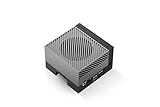
- The NVIDIA Jetson AGX Orin 64GB Developer Kit makes it easy to get started with Jetson Orin. Compact size, lots of connectors, and up to 275 TOPS of AI performance make this developer kit perfect for prototyping advanced AI-powered robots and other autonomous machines.
- The developer kit includes a Jetson AGX Orin 64GB module, and can emulate all the Jetson Orin modules. It supports multiple concurrent AI application pipelines with the NVIDIA Ampere GPU architecture, next-generation deep learning and vision accelerators, high-speed IO and fast memory bandwidth. Now you can develop solutions using your largest and most complex AI models to solve problems such as natural language understanding, 3D perception, and multi-sensor fusion.
- Jetson runs the NVIDIA AI software stack, and use-case specific application frameworks are available, including Isaac for robotics, DeepStream for vision AI, and Riva for conversational AI. You can save significant time with NVIDIA Omniverse Replicator for synthetic data generation (SDG), and by using NVIDIA TAO toolkit to fine-tune pretrained AI models from the NGC catalog.
- Jetson ecosystem partners offer additional AI and system software, developer tools, and custom software development. They can also help with cameras and other sensors, as well as carrier boards and design services for your product.
- With the computing capability of more than 8 Jetson AGX Xavier systems in a developer kit that integrates the latest NVIDIA GPU technology with the world’s most advanced deep learning software stack, you’ll have the flexibility to create tomorrow’s AI solution as well as today’s.
When a hybrid edge-and-cloud design makes sense
Use a hybrid design when an immediate decision must be made locally, but the system also benefits from centralized model development and management. The local component can infer from nearby data; the cloud can train and version models, coordinate deployment, and analyze selected events or summaries. Decide explicitly what information is sent upstream and how local devices behave if they lose contact with cloud services.
AWS describes this pattern in its AWS IoT Greengrass machine-learning inference documentation: “With AWS IoT Greengrass, you can perform machine learning (ML) inference on your edge devices on locally generated data using cloud-trained models.” This is a description of product capability, not independent comparative performance testing.
How to evaluate a prototype
If you need to prototype local inference, an NVIDIA Jetson Orin development kit is one possible hardware path. NVIDIA’s Jetson Orin documentation describes variants and edge AI application workflows. Select hardware against your own model, sensors, throughput, power, thermal limits, and latency target; no single kit is established as suitable for every production workload.
Quick Recap
- Define the decision’s response-time target and availability requirements.
- Map the complete path from input capture through preprocessing, inference, and the resulting action.
- Test the workload on representative device, gateway, network-edge, or cloud infrastructure, including realistic network delays and interruptions.
- Measure data transferred, buffering and recovery behavior, operational requirements, and total deployment cost alongside response time.
- Choose the least complex placement that meets the application’s requirements, and retain a hybrid path where local response and centralized services are both useful.
Product prices and availability are accurate as of the date/time indicated and are subject to change. Any price and availability information displayed on Amazon at the time of purchase will apply.
Quick wins for a faster PC:
Scan for outdated or missing drivers - takes under a minuteDriver Scan →Clear out junk files and repair common Windows errorsFree Scan →Fix the driver behind crashes, sound loss and screen glitchesFind Drivers →
