
What’s actually slowing this PC down?
Pick the symptom - the matching free tool is one click away.
Europe’s semiconductor ambitions depend on far more than adding wafer-fab capacity. A durable ecosystem also needs chip design and intellectual property, access to design software and production infrastructure, specialist suppliers, skilled people, financing and customers. The EU Chips Act sets a 20% global market-share goal for 2030; that is a target, not an achieved result, and neither public funding nor a company count proves that Europe has built a new generation of leading firms.
What does “beyond the fab” mean?
A semiconductor reaches customers through a chain of linked capabilities. Wafer fabrication is a visible and capital-intensive part of it, but it is not the whole industry. Chips must be conceived and designed, tested against applications, manufactured with specialist materials and equipment, then assembled, tested and packaged. Research and pilot production help move ideas toward commercial processes; investment, talent and customer commitments help firms survive that transition.
| Part of the chain | What it does | Why it matters to a growing ecosystem |
|---|---|---|
| Design, IP and EDA | Defines chip architectures and reusable intellectual property; electronic design automation (EDA) software is used to design and verify chips. | Design capability can create valuable products without owning a wafer fab, but firms need tools, expertise and a route to manufacture their designs. |
| Research and pilot lines | Develop and test processes, experiment with technologies and support small-scale production. | They bridge laboratory research and industrial application, where a promising result must become a repeatable process. |
| Materials and manufacturing equipment | Supply the materials and specialised machinery used in semiconductor production. | These suppliers are essential links in the chain; production can be exposed to disruption even when a fab is located nearby. |
| Front-end manufacturing | Builds integrated circuits on silicon wafers in semiconductor fabs. | Fab capacity is critical, but capacity alone does not provide every technology, input, design or customer a company needs. |
| Assembly, test and packaging | Separates and connects chips, tests their performance and packages them for use in electronic products. | This back-end work is a distinct capability, not an automatic extension of wafer production. |
| Talent, finance and demand | Provide skilled teams, capital to develop and scale products, and customers willing to qualify and buy them. | Without these conditions, technical infrastructure may not translate into durable companies or commercial output. |
This wider view also changes what “making chips in Europe” means. It can include European design, equipment, materials, manufacturing or packaging capabilities, rather than a single claim that every part of every chip is locally sourced.
What is the EU trying to achieve?
A market-share target, not a scorecard of results
The European Chips Act entered into force on 21 September 2023. The European Commission states a goal of raising the EU’s global semiconductor market share to 20% by 2030. The Commission’s fact page puts the EU at roughly 10% of the global market; that is the Commission’s figure, not a newly audited 2026 estimate. The European Court of Auditors describes the Digital Decade objective as 20% of world production by value in cutting-edge and sustainable microchips.
Do these 3 things before closing this tab:
1Fix the driver behind crashes, sound loss and screen glitches2Repair Windows errors before they cause bigger problems3Scan for outdated or missing drivers - takes under a minute#1 Best Overall

- COMPATIBILITY: Development board supporting multiple wireless protocols including Bluetooth
- Thread, Matter, Zigbee, ANT, and NFC at 2.4GHz frequency
- PROCESSOR: Features the advanced nRF54L15 transceiver chip from Nordic Semiconductor for reliable wireless communications
- WIRELESS STANDARDS: Implements IEEE 802.15.4 protocol support for Matter, Thread, and Zigbee networking applications
- DEVELOPMENT PLATFORM: Comprehensive evaluation board designed for testing and prototyping wireless connectivity solutions
The Commission also says nearly 80% of semiconductor suppliers are headquartered outside the EU. That high-level figure signals exposure to external suppliers, but it is not a granular, segment-by-segment audited measure. Neither it nor the 20% target establishes whether Europe is gaining capability in particular parts of the chain.
Where the Commission sees strengths and dependencies
The Commission identifies European strengths in semiconductor research, essential manufacturing equipment, silicon wafers, and chips for automotive and industrial applications. It also says the EU remains dependent on third countries for advanced chip manufacturing and semiconductor design. Those strengths and dependencies point to a more nuanced goal than simply building more fabs: expand areas where Europe is strong while addressing gaps that can constrain the wider supply chain.
Rank #2

- Powerful ESP-32 Board: Unlock the world of Internet of Things (IoT) and advanced electronics with the heart of this kit: the ESP-32 board. It features a powerful dual-core processor, integrated Wi-Fi and Bluetooth 4.2, making it perfect for building connected, smart devices that communicate with your phone or the cloud. It's fully compatible with the Arduino IDE for easy programming.
- Super Starter Kit: This kit contains over 35 different modules and electronic components, including sensors, displays, motors, and input devices. From LEDs and buttons to an OLED screen, servo motor, and keypad, you have everything needed to explore a vast range of projects in one box.
- Step by Step Online Tutorial: Jump right in with our detailed, beginner-friendly tutorial. Access 30+ projects with complete code, clear circuit diagrams, and step-by-step instructions. Learn the fundamentals of electronics, coding, and how to utilize the ESP-32's unique capabilities without any prior experience.
- Hands-on Learning for All Skill Levels: Perfect for students, makers, engineers, and hobbyists. Start with basic circuits and coding, then progress to intermediate and advanced IoT applications. Build practical projects like weather stations, smart home controllers, remote-controlled devices, and interactive gadgets. The skills you learn are the foundation for real-world innovation.
- Quality & Great Support: Elegoo is committed to quality. We provide a clear, detailed tutorial guide, refined code, and a well-organized component kit. All modules are carefully selected for reliability and ease of use. Our dedicated technical support team and active online community are ready to help you succeed in your learning journey.
How are EU programmes meant to help firms grow?
The Chips for Europe Initiative combines infrastructure and company support. The mechanisms are intended to improve access to tools, expertise and capital, especially for smaller firms; their existence is not evidence that a particular startup has secured customers or succeeded commercially.
- Cloud design platform: The Commission describes a platform that brings together IP libraries, EDA tools and support services, aiming to lower barriers to chip design.
- Pilot lines: These are intended for process development, testing, experimentation and small-scale production, linking research with industrial application.
- Competence centres: The initiative is designed to connect companies, particularly small and medium-sized enterprises, with technical expertise, experimentation, skills support and pilot lines and design tools.
- Skills measures: Workforce development is part of the initiative because facilities and software are not useful without people able to design, build and operate semiconductor technologies.
- Chips Fund: The Commission says it is intended to facilitate debt and equity access for semiconductor startups, scale-ups, SMEs and small mid-caps through InvestEU and the European Innovation Council.
The Commission’s EU budget page reports up to €3.3 billion for the Chips for Europe Initiative through Horizon Europe and Digital Europe. It separately identifies almost €5 billion for microelectronics activities under the 2021–2027 long-term EU budget. These are distinct programme figures, not interchangeable measures of private investment or commercial results.
Quick wins for a faster PC:
Fix the driver behind crashes, sound loss and screen glitchesFind Drivers →Repair Windows errors before they cause bigger problemsFix Now →Rank #3

- DEVELOPMENT KIT: Nordic Semiconductor NRF5340-AUDIO-DK designed for audio application development with nRF5340 dual-core Bluetooth LE SOC
- VERSATILE CONNECTIVITY: Features multiple interface options including I2S, SPI, UART, and USB for comprehensive development capabilities
- POWER SPECIFICATIONS: Operates with flexible power supply range of 1.7V to 5V, suitable for various development scenarios
- TEMPERATURE RANGE: Capable of operating in environments up to +105°C, ensuring reliable performance across diverse conditions
- AI COMPATIBILITY: Supports Edge Impulse platform integration, enabling advanced machine learning and AI development capabilities
The same Commission page says the European Investment Bank financed semiconductor projects with €1.9 billion during 2018–2022, mobilising €5.8 billion of investment. These figures refer to that stated period and should not be read as annual or current financing totals.
How much investment is committed—and what does it show?
The European Court of Auditors’ Special Report 12/2025 describes at least €43 billion in policy-driven investment and says this was expected to be matched by commensurate private investment. The Commission describes more than €43 billion of policy-driven support through 2030 alongside broad matching by private investment.
Rank #4

- VERSATILE CONNECTIVITY: Supports both Bluetooth
- And IEEE 802.15.4 protocols (Thread, Zigbee) for comprehensive wireless development capabilities
- DEVELOPMENT PLATFORM: Complete development kit for nRF5340 System-on-Chip applications with integrated debugging and programming capabilities
- DUAL-CORE ARCHITECTURE: Features both application and network processing cores for enhanced wireless development flexibility
- WIRELESS PROTOCOLS: Designed for 2.4GHz wireless applications including Bluetooth Low Energy and 802.15.4-based protocols
Those formulations are investment frameworks and expectations, not a single audited pot of realized commercial output. They also are not directly interchangeable with the budget allocations and historical EIB financing above: each figure has a different scope. A useful assessment asks what has actually been built, what firms can access, whether private capital followed, and whether products reached customers—not just how large an announced support number sounds.
Independent reader supportYour contribution helps us test, update, and keep practical guides available for everyone.What do industry respondents and ecosystem maps tell us?
SEMI Europe’s 2025 report drew input from more than 60 companies and organisations; its sample included 44 companies headquartered in Europe and 17 headquartered outside Europe. In that survey, 90% of respondent members considered the EU’s 20% production-share target unachievable, while 96% endorsed next-generation chip production supported by public-private investment in pilot lines. These are the surveyed respondents’ views, not measurements of the entire semiconductor industry or independent forecasts of the target’s outcome.
The Tool Desk
Outbyte PC Repair FREEClear out junk files and repair common Windows errorsFree Scan →Outbyte Driver Updater FREEScan for outdated or missing drivers - takes under a minuteDriver Scan →Best Value
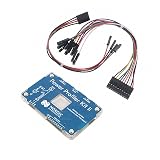
- POWER MONITORING: Professional-grade current monitoring and power management evaluation board for precise power consumption analysis
- COMPATIBILITY: Designed specifically for Nordic Semiconductor development and testing applications
- MEASUREMENT CAPABILITIES: Enables real-time current measurement and power profiling for embedded system development
- DATA ANALYSIS: Features comprehensive power consumption data collection and visualization capabilities
- DEVELOPMENT TOOL: Essential evaluation board for optimizing power efficiency in embedded system projects and prototypes
The Central European Institute of Asian Studies’ EU Chips Ecosystem Tracker describes more than 2,500 mapped companies across the 27 EU Member States. It is a living map based on open-access data, not a ranking, performance assessment or verified count of leading semiconductor firms. A large ecosystem map can show breadth; it cannot, by itself, show which firms have production at scale, durable customer demand or the finances to grow.
How should Europe’s next semiconductor champions be judged?
“Champion” should be a conclusion based on evidence about a company’s role and ability to scale, not a synonym for receiving public support or appearing on an ecosystem map. A fabless design company, a materials supplier and a packaging business operate in different parts of the chain; comparing them only by fab ownership would miss what each contributes.
- Value-chain position: Is the firm building chip designs or IP, EDA tools, materials, equipment, front-end manufacturing, packaging or an integrated business?
- Technology and application: What process capability or market does it serve—such as advanced or mainstream manufacturing, power and analog, automotive, industrial, AI or quantum? Establish the focus from company-specific evidence rather than inferring it from a broad industry label.
- Infrastructure access: Can the company use design tools, prototyping, cleanrooms, pilot lines, foundries, packaging and testing facilities appropriate to its product?
- Company-building evidence: What is known about its financing stage, workforce, customer qualification, orders, production and ability to fund the time and cost of scaling?
- Supply-chain resilience: Which critical inputs or capabilities remain external, and how vulnerable is the company’s product to interruptions in them?
The available evidence supports these as useful tests, but it does not establish a defensible ranking of individual companies. A current list of “champions” would require company-level verification of technology, finances, production, orders and customers; an aggregate tracker or policy announcement cannot substitute for that work.
What could change under the Commission’s proposed next steps?
The Commission’s Chips Act 2.0 policy page describes proposed measures to improve investment conditions, shorten permitting, stimulate demand and innovation procurement, support first-of-a-kind projects across the value chain, designate strategic projects and improve resilience. The page also acknowledges continued EU dependencies in advanced manufacturing and design. These measures should be treated as proposals as described by the Commission, not assumed to be enacted law; their legislative status can change.
Demand matters alongside supply-side support. A design platform or pilot line can help a company develop a technology, but a durable business also needs a credible route through qualification and into paying markets. Procurement and customer commitments can therefore affect whether new capacity and expertise lead to sustained industrial activity.
Quick Recap
Product prices and availability are accurate as of the date/time indicated and are subject to change. Any price and availability information displayed on Amazon at the time of purchase will apply.

