
You can test an iPhone app across a range of screen sizes without buying every iPhone: use Xcode previews for quick view checks, run the app on simulated devices in Simulator, and resize a simulated screen to stress-test layouts. Use a physical iPhone for checks that depend on real hardware, performance, or release-build behavior.
Choose the right test for the question
| Method | Best for | What it does not establish |
|---|---|---|
| Xcode previews | Fast, view-level checks across devices and interface settings | That the complete app flow works on a device |
| Simulator | Running and debugging the app on simulated hardware and supported configurations | Physical-device performance or every hardware feature |
| Physical iPhone | Hardware-dependent behavior, performance-sensitive checks, and release-build validation | That every other device size or supported OS combination works |
Apple recommends running an app on one or more physical devices to verify that it runs as intended. Simulator and previews expand coverage during development, but do not replace that final evidence. Apple: Running your app on simulated or physical devices
Start with Xcode previews for fast layout feedback
Add previews to the interface files you are changing, then use the preview device selector and canvas to inspect the view on different devices or at an arbitrary canvas size. Xcode previews support SwiftUI, UIKit, and AppKit views, along with environment variants.
- Open the view’s source file in Xcode and add or select its preview.
- Choose a preview device for a representative narrow or large layout.
- Change the canvas size to inspect the view at an in-between width without changing device types.
- Vary relevant settings, such as dark appearance, landscape orientation, larger Dynamic Type, or localization.
Previews help reveal clipped text, awkward spacing, and layout assumptions early. Treat them as view-level feedback: they do not prove that navigation, network-dependent flows, or the whole app behaves correctly on physical hardware. Apple: Interacting with previews in the canvas
What’s actually slowing this PC down?
Pick the symptom - the matching free tool is one click away.
#1 Best Overall

- 【Strong Adsorption】The inspiration of the silicone phone suction case comes from the adhesive force of the octopus. Each suction cup phone mount is 3.15 inches long and 2.17 inches wide, with 24 independent suction cups providing a stronger and more stable suction force, so you don't have to worry about your phone falling during use.
- 【Back of Phone Suction Grip】Remove the adhesive film on the phone suction cup and stick it on the phone case. You can then fix the phone on any smooth surface, which is very convenient. (The phone suction cup cannot be removed and reused after being attached to the phone case. It is recommended to attach it to a regular phone case, not a valuable one.)
- 【Widely Used】Our non-slip silicone phone sticky grip mount attaches to almost any flat phone case and make it compatible with common mobile phones such as iPhone and Android.You can shoot, watch videos or video calls in the kitchen, gym, dance studio, bathroom and other places.
- 【Capture the Wonderful Picture】Whether you are a TikTok creator or just like to share videos and photos, this phone suction cup can help you hands-free capture wonderful videos and photos for sharing with friends.
- 【Note】You can fix the phone suction cup on a smooth surface such as a mirror or glass. If necessary, wipe the suction cup with a damp cloth to obtain stronger suction. Before releasing your hand, make sure the phone is firmly fixed. (Not applicable to rough walls, wooden surfaces, and other uneven surfaces)
Run the app on simulated iPhones
To check the running app rather than an isolated view, select an iOS Simulator destination in Xcode and run the app. Add simulated device configurations that reflect the range of devices and OS versions your app supports. Device Hub manages simulator run destinations and provides a canvas for interacting with the running app.
- Select an iOS Simulator destination in Xcode’s run destination controls.
- Run the app and exercise the screens and flows that matter to your changes.
- Repeat on other relevant simulated configurations, including supported OS versions where applicable.
Simulated devices let you debug on hardware configurations you may not physically own. They are useful for broadening coverage, not for reproducing every physical-device characteristic. Apple: Running your app on simulated or physical devices
Rank #2

- SUPERIOR COMFORT — Unlike traditional circular ear buds, the design of EarPods is defined by the geometry of the ear. Which makes them more comfortable for more people than any other ear bud–style headphones.
- HIGH-QUALITY AUDIO — The speakers inside EarPods have been engineered to maximize sound output and minimize sound loss, which means you get high-quality audio.
- BUILT-IN REMOTE — EarPods with USB-C plug also include a built-in remote that lets you adjust the volume, control the playback of music and video, and answer or end calls with a pinch of the cord.
- COMPATIBILITY — Works with all devices that have a USB-C port.
- INTEGRATED MICROPHONE — A built-in microphone precisely captures your voice while you’re on the phone, taking a FaceTime call, or summoning Siri — so you’re always heard loud and clear.
Resize a simulated screen to stress-test layout
For a quick check at an unusual width, use Simulator’s screen resizing controls while the app is running. Enter resize mode, then drag the simulated screen edges or enter dimensions. Apple notes that the screen snaps to the nearest valid size, so this is a fast visual diagnostic rather than a guarantee that the app has been tested at every exact dimension.
Look for brittle constraints, truncated labels, overlapping controls, unexpectedly large gaps, and content that no longer scrolls. Apple documents this technique specifically as a way to check whether an interface adjusts to different device sizes without running the app on multiple devices. Apple: Configuring the environment of a simulated device
Free tools Windows power users keep installed
One-click scans. No signup required.
Rank #3

- Secure Hold: Our PopSockets adhesive phone grip gives your cell phone a secure, comfortable hold in hand to help prevent drops while texting, taking photos, or scrolling on the go. Designed to stick firmly to most phone cases and devices.
- Hands-Free Made Easy: Easily turn your PopSocket into a phone stand to prop up your phone anywhere, perfect for watching videos, video calls, or following recipes. A must-have phone holder that keeps your device secure and ready for anything.
- Compatibility: Works with all phones, tablets, and Kindles. Sticks best to smooth, hard plastic cases and may not adhere to silicone or textured cases. Easily swap your PopTop to change up your style.
- Black PopSockets: Simple, refined, and endlessly versatile. A timeless essential for any phone.
- Travel Must-Have for People On the Go: A must-have travel accessory for flights, flying, airports, air travel, airplanes, planes, international trips, cruises, and long travel days. Key gadget for your airport haul, travel accessories and must-haves.
Test environment settings as well as screen dimensions
A layout can fit a screen and still fail for users with different settings. Include the relevant combinations in previews and Simulator when your interface or behavior depends on them:
- Orientation: check portrait and landscape if the app supports both.
- Text size and accessibility: inspect larger Dynamic Type and any interface areas that need to remain usable at larger sizes.
- Appearance: check light and dark modes if the app supports them.
- Localization: test languages whose translated strings may be longer or use different scripts.
- Other simulated conditions: vary location, audio, or other environment settings when they affect the feature under test.
Apple documents environment configuration for simulated devices and environment variants in previews; choose settings that match your app’s actual support and use cases. Simulator environment settings and preview canvas settings
Rank #4

- [360 ° Flexible Rotation Design] Comes with a rotatable lanyard ring that supports 360 ° free rotation, effectively solving the problem of twisted and tangled lanyards
- [Wide compatibility] The ultra-thin 0.02-inch design does not block the charging port at all, and both wired and wireless charging can be used directly without removing the pad. Compatible with most smartphones such as iPhone, compatible with various wristbands, lanyards, crossbody straps, and keychains
- [Durable and Portable Material] Premium rust-resistant stainless steel material with good flexibility, which not only avoids scratching the phone case, but also has excellent anti rust and anti fading performance
- [Multi scenario Practical] Paired with a lanyard or wristband, hands-free use can be achieved. The phone is within reach and not easily dropped, ideal for daily commuting and outdoor activities. Suitable for full coverage phone cases, does not support half coverage phone cases
- [Quality Service] If you find any damage or other issues with the product upon receipt, please contact us immediately. We will handle it quickly
Use a physical iPhone for checks simulation cannot answer
Reserve a real-device pass for questions where actual hardware matters: hardware-dependent features, performance-sensitive behavior, and release-build validation. The simulator does not reproduce physical-device performance, and some hardware-specific features may be unavailable. A single physical iPhone is useful evidence for that device, but it does not validate every screen size or every supported OS version.
Apple recommends testing release builds on an actual device and testing across the device models and OS versions your app supports. It does not prescribe a universal minimum number of phones or one representative model for every app; choose physical checks according to your supported range and hardware dependencies. Apple: Testing a release build
Quick wins for a faster PC:
Fix the driver behind crashes, sound loss and screen glitchesFind Drivers →Clear out junk files and repair common Windows errorsFree Scan →Scan for outdated or missing drivers - takes under a minuteDriver Scan →Best Value
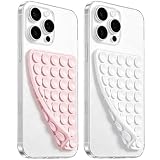
- 【PKYAA Double Sided Silicone Suction Phone Case Mount】PKYAA With Double Sided 40 Strong and Reliable individual suction cups, PKYAA provides a thicken and upgraded universal silicon suction mount for your phone.
- 【Friendly to Content Creators】If you are a content creator or an online influencer, you can create videos anywhere with this suction mount completely hands free with this silicone cell phone mount for cases.
- 【HANDS-FREE & Adhere to Mirrors】This Double Sided silicone suction phone case mount allows you to stick your phone to the mirror easily. No longer holding your phone in one hand to watch video tutorials while making up.
- 【Strong Grip on the Smooth Surface】You can easily hang your phone anywhere with a smooth surface. All you do is you clean off your phone and smooth surface. It is STURDY and it not only sticks to mirrors, it also sticks to windows, it sticks to refrigerators, tiles and other clean, flat surfaces.
- 【Press Down Firmly Every 30 Minutes】Use your palm or fingers to press the phone down firmly and check it's secure before letting go. Apply even pressure for a few seconds to allow the suction cup to adhere properly. To maintain the grip and prevent accidental falls, it's a good practice to periodically reapply pressure to the suction cup.
Or skip the browser setup
ScreenshotNeo is a website screenshot API and MCP server, not an iPhone app simulator. It can help when you need screenshots of web pages, but it cannot validate an iOS app’s native layout or behavior in Xcode. For web-page capture, one GET request returns an image or PDF; see the ScreenshotNeo website and API documentation.
Quick Recap
curl -G "https://api.screenshotneo.com/v1/shot" -d access_key=YOUR_API_KEY --data-urlencode url=https://stripe.com -o shot.webpFor web screenshots, ScreenshotNeo removes cookie banners, newsletter popups, and chat widgets before capture. Bot checks, blank pages, and failed loads are not billed; an MCP server lets AI agents take screenshots; and the free plan includes 1,000 screenshots per month with no card required, with paid plans starting at $5 for 3,000. Sign up for ScreenshotNeo’s free plan.
Troubleshoot common testing gaps
- A preview looks correct but the app breaks: previews inspect views, not the entire running app flow. Run the app in Simulator and exercise the affected flow.
- A resized screen appears to use a slightly different size: Simulator snaps to the nearest valid size. Use resizing to identify layout weaknesses, then check supported simulated device configurations.
- A feature works in Simulator but fails on a phone: investigate whether it depends on hardware or physical-device performance, then test it on an actual device.
- A release build behaves differently from a development run: validate the release build on an actual device, as Apple recommends.
- Text or controls fail only in certain contexts: vary orientation, appearance, larger text, and localization settings where relevant, rather than checking dimensions alone.
Product prices and availability are accurate as of the date/time indicated and are subject to change. Any price and availability information displayed on Amazon at the time of purchase will apply.

