
When chemicals come into contact with food, they may remain unchanged, move into the food, or react and form different substances. Some chemical changes are part of normal cooking and improve flavor; others create process contaminants that are monitored for possible health effects. Contact or reaction alone does not mean food is unsafe: the substance, amount, and exposure all matter.
What does “food-safety chemical” mean?
It is not one technical category. Chemicals in food may be ingredients added intentionally, substances that migrate from packaging or equipment, environmental contaminants or residues, or compounds formed during processing. These pathways are different, so finding a chemical in food does not by itself show that it reacted with the food or that the food is unsafe. The U.S. Food and Drug Administration (FDA) describes these categories in its food chemical safety overview.
What can happen when chemicals meet food?
Processing can form new substances
Heating, drying, and fermentation can create process contaminants. FDA examples include acrylamide, furan, ethyl carbamate, nitrosamines, heterocyclic amines, 4-MEI, and polycyclic aromatic hydrocarbons (PAHs). Some low levels may be unavoidable; FDA notes that not all process contaminants are harmful, while some have been linked to potential health effects. Their presence and significance depend on the specific substance and exposure.
Cooking can create acrylamide and desirable browning
Acrylamide can form in some plant foods, including potatoes and cereal grains, when natural sugars react with the amino acid asparagine during high-temperature cooking such as frying, roasting, or baking. The same broad browning chemistry contributes to the color and flavor of cooked food. EFSA identifies the Maillard reaction as the main chemical process associated with acrylamide formation in starchy foods, especially under high-temperature, low-moisture conditions. Its acrylamide page, reviewed in 2026, describes formation above 120°C; that is a condition reported by EFSA, not a universal cutoff for every food or chemical reaction.
The Tool Desk
Outbyte Driver Updater FREEScan for outdated or missing drivers - takes under a minuteDriver Scan →Outbyte PC Repair FREERepair Windows errors before they cause bigger problemsFix Now →#1 Best Overall

- IDENTIFY WHICH FOODS MAY BE CAUSING YOUR SYMPTOMS. Food intolerances happen when your gut microbiome and digestive enzymes can’t break down a food ingredient. Although gluten and lactose are the most common issues, intolerances can happen with any food item. When these intolerances go unchecked, symptoms like headaches, gas, diarrhea, acne, and bloating may develop.
- TESTS 800 COMMON FOOD ITEMS. Our food intolerance test for adults and children covers 14 major food categories: dairy, vegetables, fruits, grains, meats, seafood, nuts, sweeteners, spices, fats, oils, mushrooms, superfoods, and preservatives.
- HOW IT WORKS. (1) Register your test kit on the 5Strands website or mobile app (2) Collect 10-15 strands of hair. (3) Send your sample to our certified lab using the included prepaid shipping materials. (4) Once your sample is received, we’ll email you the results within 4 days. After 60 days, your hair sample will be permanently disposed of.
- EASY TO READ RESULTS. Each food item is labeled as Insignificant, Mild, Moderate, or Severe to help guide your elimination plan. This gives you clear directions to begin removing severe intolerance foods, moderate your intake of mid-level triggers, and keep safe foods in rotation to support gut health, digestion, and symptom relief.
- 3RD PARTY STUDIED & DOCTOR RECOMMENDED. 5Strands is the only intolerance and sensitivity test independently validated through third-party research. Every sample is processed in our certified U.S. lab using a double-pass method for accurate results, and our testing has helped over 345,000 people and pets uncover their food intolerances and environmental sensitivities.
Substances can migrate from packaging or equipment
Packaging, storage materials, processing equipment, containers, and utensils can transfer substances into food. FDA evaluates food-contact substances in light of their intended conditions of use, expected migration, and toxicological information. The relevant question is not simply whether a material contains chemicals, but what may migrate under its intended use and how much exposure results. See FDA’s food-contact substances guidance.
Sanitizers and other chemicals depend on controlled use
Antimicrobial chemicals used on food-contact surfaces or produce must be used according to applicable requirements and product directions. FDA guidance warns that excessive sanitizer concentrations can harm workers, damage equipment, affect produce quality, and pose consumer hazards. Commercial operators should follow the product label and applicable local regulator guidance; there is no safe general mixing recipe for every product.
Rank #2
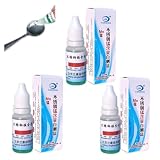
- Instant Material Verification: Improve your inspection process with stainless steel test liquid. Watch as it quickly identifies the grade and quality of any stainless steel material with just a drop. Stay confident in your results as you observe the reddening time for added assurance.
- Professionally Developed: After professional scientific formula, our stainless steel test liquid provides accurate and reliable testing, effectively identifying the authenticity of 304 stainless steel.
- Stainless Steel Test Liquid : Ensure stainless steel quality on-the-mark with our test liquid for procurement, marketing, and processing. Lightweight and compact, it's easy to carry to any location. Ideal anytime and anywhere for evaluating stainless steel. Perfect for professionals.
- Portable Testing: This stainless steel test liquid is suitable for stainless steel procurement, marketing, and processing. It is convenient to carry, light weight, and compact size. You can test the quality of stainless steel anytime and anywhere.
- Extensive Use: stainless steel test liquid can test various stainless steel products, such as food and beverage utensils, building materials, and sanitary ware. Whether you need to check the quality of your kitchenware, your construction projects, or your bathroom fixtures, this test liquid can help you do it easily and accurately.
Some chemicals are contaminants or residues, not reaction products
Environmental contamination and pesticide residues can be present in food without having formed through a reaction with it. In the United States, FDA monitors contaminants and enforces EPA pesticide tolerances. Calling every chemical found in food something that “reacted” with it confuses distinct routes of exposure.
Does a chemical reaction make food unsafe?
No. Chemical presence alone does not determine safety, and all food—including nutrients—is made of chemicals. FDA’s consumer guidance puts it simply: “The amount is what counts.” Risk assessment considers the chemical’s identity, the amount in food, and how much a person eats over time. For a particular concern, relevant details include the product or substance, its concentration, the food involved, and the amount consumed; the general question alone cannot determine whether a specific item is safe.
Rank #3

- Swab any sample, and test for Salmonella contamination.
- Suitable for testing food, food processing areas, solid or liquid samples, all surfaces and environments.
- Use this test to detect salmonella contamination in meats such as chicken, turkey, duck, beef, pork and many more.
- Test to detect salmonella contamination in fruits, vegetables, eggs, milk, powdered milk/formula, cheese, fish/seafood, drinks and beverages, processed foods such as charcuterie, pre-cut fruit products, canned foods, cereals, nut butters, frozen pot pies, stuffed chicken entrees, flour, peanut butter, salami sticks, prepackaged salads, and many more.
- Test for salmonella contamination on surfaces at home kitchens, food processing factories, grocery stores, daycare centers, cafeterias, schools, restaurants and hotels.
Acrylamide illustrates why evidence needs careful wording. FDA says the human health risk from the much lower levels found in food is unclear and continues to study it. EFSA’s 2015 risk assessment concluded, based on animal studies, that acrylamide in food potentially increases cancer risk across age groups. That is a hazard concern and a reason to consider exposure-reduction steps, not a quantified prediction of an individual person’s cancer risk. See FDA’s acrylamide questions and answers and EFSA’s 2015 communication.
How can you reduce acrylamide when cooking?
For the specific foods and cooking conditions covered by FDA’s advice, these steps can reduce acrylamide formation or exposure:
Rank #4

- IDENTIFY WHAT FOODS & DRINKS MAY BE CAUSING INTOLERANCE SYMPTOMS. Gluten and lactose intolerances occur when the digestive system struggles to process foods within those categories like milk and bread, but these intolerances can happen with any food or drink too. If your food intolerances aren’t handled properly, symptoms like acid reflux, constipation, diarrhea, headaches, and weight gain can occur.
- TESTS 1030 FOOD & BEVERAGE ITEMS. Your hair sample is compared against 30 food and drink categories, including acidity regulators, anti-caking agents, beverages, dairy, emulsifiers, fats, flavor enhancers, food dyes, fruits, grains, herbs, legumes, modified starches, mushrooms, nuts, preservatives, processing aids, proteins, seafood, seasonings, spices, stabilizers, superfoods, sweeteners, thickeners, and vegetables.
- NON-INVASIVE HAIR SAMPLE COLLECTION WITH FAST RESULTS. 1) Register your test kit on our 5Strands website or mobile app. 2) Collect 10-15 strands of hair from anywhere on your body. 3) Mail the sample to our certified U.S. lab with the included shipping materials. 4) We’ll send the results to your email and mobile app within 4 days of receiving your hair sample.
- CLEAR ANSWERS TO START AN ELIMINATION DIET. Each food item is categorized by 4 response levels so you have a concrete starting point to eliminate trigger foods, consume mid-level food triggers in moderation, and keep safe-listed foods in your current diet. Consistent implementation of your results gives your gut microbiome the space to rebalance, promoting proper digestion while alleviating symptoms.
- INDEPENDENTLY VALIDATED & PHYSICIAN RECOMMENDED. 5Strands is the only food intolerance test of its kind supported by independent third-party research. Every sample goes through a double-pass process in our U.S. lab to ensure accuracy, and our testing has helped over 345,000 people and pets uncover their food intolerances.
- Cook potato products to golden yellow rather than brown.
- Toast bread to light brown rather than dark brown.
- Soak raw potato slices in water for 15–30 minutes before frying or roasting, then blot them dry.
- Store potatoes in a cool, dark place outside the refrigerator.
These measures do not eliminate every process contaminant. FDA does not recommend cutting healthful whole-grain foods solely to reduce acrylamide. The advice is targeted to particular conditions; it is not a reason to avoid all browned food, packaged food, or chemicals.
Independent reader supportYour contribution helps us test, update, and keep practical guides available for everyone.What to do about a suspected accidental exposure
If food may have contacted a cleaner, sanitizer, pesticide, or another chemical accidentally, this general explanation cannot establish whether it is safe to eat. The exact product, concentration, food, and amount involved matter. Follow the product label and applicable local regulator guidance, and seek appropriate local advice for the specific exposure rather than guessing from the word “chemical.”
Free tools Windows power users keep installed
One-click scans. No signup required.
Quick Recap
Best Value
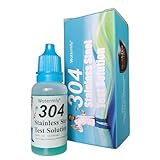
- INSTANT & ACCURATE IDENTIFICATION: Scientifically formulated reagent rapidly distinguishes between 200-series (Industrial Grade) and 300-series (Food/Medical Grade) stainless steel with clear, reliable results in just 2 minutes
- MATERIAL VERIFICATION FOR COOKWARE: Use this solution to verify your thermoses, pots, and utensils by testing whether they are made from 200-series or 300-series stainless steel alloys
- EASY 4-STEP PROCESS: No professional lab equipment or chemistry background required. Simply clean the surface, apply one drop, wait 2 minutes, and compare the color to the included chart for straightforward on-site testing
- COST-EFFECTIVE & LONG-LASTING: One 12ml bottle provides approximately 200 individual tests at just pennies per test, offering a fraction of the cost of laboratory analysis for both home users and professional quality inspectors
- VERSATILE APPLICATIONS: Whether shopping for new kitchenware, auditing your home, or performing industrial quality control on pipes and sheets, this portable solution serves as a material verification and fraud prevention tool
Product prices and availability are accurate as of the date/time indicated and are subject to change. Any price and availability information displayed on Amazon at the time of purchase will apply.

