
What’s actually slowing this PC down?
Pick the symptom - the matching free tool is one click away.
No—the Senate has not passed the Mental Health in Aviation Act of 2025. H.R. 2591 passed the House by voice vote on September 8, 2025, and was referred to the Senate Committee on Commerce, Science, and Transportation the next day. The proposal would encourage pilots to seek mental-health care and disclose conditions, while directing the FAA to review certification policies and expand examiner capacity. It is a bill, not current law.
What is the bill’s status?
Congress.gov lists H.R. 2591, the Mental Health in Aviation Act of 2025, as “Passed House.” Its action record shows House passage by voice vote on September 8, 2025, followed by receipt and committee referral in the Senate on September 9. Those actions do not amount to Senate passage. Congress.gov’s action history does not show that H.R. 2591 became law.
| # | Preview | Product | Price | |
|---|---|---|---|---|
| 1 |

|
Aviation Mental Health | $200.00 | Buy on Amazon |
| 2 |

|
This Is Your Captain Speaking: What You Should Know About Your Pilot’s Mental Health | $19.41 | Buy on Amazon |
| 3 |
|
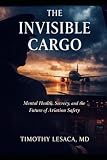
The Invisible Cargo: Mental Health, Secrecy, and the Future of Aviation Safety | $4.60 | Buy on Amazon |
| 4 |

|
Aviation Psychology | $55.97 | Buy on Amazon |
| 5 |

|
Aviation Psychology and Human Factors | $56.99 | Buy on Amazon |
A similarly titled Senate bill, S. 3257, was introduced on November 20, 2025, and referred to committee. Introduction is not approval by the Senate. The measures discussed below are proposed provisions, not enacted requirements.
What would H.R. 2591 change?
The House committee-reported bill would direct the FAA to update regulations, including 14 CFR Part 67 as appropriate, to encourage people involved in aviation to seek help for mental-health conditions or symptoms and disclose them. It would also require annual review and appropriate updates to policies, orders, guidance, and regulations governing mental-health special issuances for pilots and air traffic controllers.
Recommended Free Tools
#1 Best Overall
The bill’s objectives include considering additional medications for safe prescription, improving aviation medical examiners’ mental-health knowledge and training, potentially delegating additional authority, and improving the special-issuance process. The committee version also directs FAA action on mental-health recommendations from the agency’s Aviation Rulemaking Committee report, subject to the bill’s implementation provisions. It describes implementing recommendations to the greatest extent practicable within two years of enactment. These are proposed duties; the bill has not been shown to have been enacted.
The House Committee on Transportation and Infrastructure’s report, H. Rept. 119-242, specifies the following proposed funding for fiscal years 2026 through 2028:
| Proposed amount | Purpose in the House committee version |
|---|---|
| $13,740,000 each fiscal year | Recruit, select, train, and delegate authority to additional aviation medical examiners, including psychiatrists; expand oversight and capacity; and help address special-issuance backlogs. |
| $1,500,000 each fiscal year | Support a public-information campaign or similar education efforts to reduce stigma, increase awareness of services, and build trust with pilots and air traffic controllers. |
These are amounts specified in the House committee report, not evidence that the money has been appropriated, spent, or that the proposed programs have been implemented.
What can pilots do under current FAA guidance?
The FAA’s current messaging encourages pilots to seek care. Its Pilot Mental Fitness page says: “The FAA encourages pilots to seek help if they have a mental-health condition since most, if treated, do not disqualify a pilot from flying.” That is not a guarantee of certification: eligibility depends on the condition, treatment, and aeromedical review.
The FAA page describes medical-history disclosure and review by an aviation medical examiner (AME). An examiner may request additional psychological evaluation or refer a case to the FAA’s Office of Aerospace Medicine. The FAA also reports that “only about 0.1% of medical certificate applicants who disclose health issues are denied.” The page does not state the observation period, and the figure is not a denial rate for all applicants or specifically for applicants with mental-health diagnoses.
For medication and psychiatric-condition decisions, consult the FAA’s Guide for Aviation Medical Examiners, version dated March 25, 2026, and its psychiatric-conditions guidance, last updated July 29, 2026. FAA guidance generally treats psychotropic-drug use as disqualifying, with listed exceptions. Certain antidepressant cases may be considered individually through special issuance or special consideration; in that process, the AME cannot issue the certificate directly. The existence of a review pathway does not mean every medication or condition is compatible with flying.
Rank #4
What does special issuance mean in practice?
A special issuance is a case-specific route for FAA consideration when ordinary certification standards do not settle an applicant’s eligibility. It is not automatic approval, and undergoing evaluation or being considered for issuance is not the same as receiving a medical certificate. The FAA’s guidance describes review that may involve the AME and the Office of Aerospace Medicine, along with requested supporting evaluations.
For pilots, the practical point is to use the FAA’s current guidance and an AME to understand the applicable process before making assumptions about certification. The proposed bill would prompt review and improvement of that process; it does not itself authorize a pilot to fly while receiving treatment or change current medication criteria.
Free tools Windows power users keep installed
One-click scans. No signup required.
Best Value
How do the FAA committee recommendations fit in?
The FAA’s Mental Health and Aviation Medical Clearances Aviation Rulemaking Committee published its recommendations on April 1, 2024. The FAA said that day it was reviewing the recommendations and would determine next steps after the review. The committee report is advisory input, distinct from FAA rules already in effect and from legislation enacted by Congress. The committee recommendations report and the FAA’s April 1, 2024 statement describe those separate roles.
One recommendation addresses pilots and controllers using approved antidepressant monotherapy for uncomplicated depression or anxiety. The committee recommended revising requirements with the aim of shortening the minimum wait before reconsideration of certification after starting or changing an approved medication. The report emphasizes that being considered for issuance is not the same as receiving a certificate.
In its rationale, the committee report says short-term efficacy trials indicate antidepressants generally need at least four to six weeks to reach maximum therapeutic effects, and that studies indicate common neurocognitive effects in people with depression improve over time. Those are statements in the committee’s policy rationale, not individual treatment advice. The final report should not be read as a change to FAA policy on its own.
Quick Recap
What the proposal means for pilots
- Senate status: H.R. 2591 passed the House and was referred to a Senate committee; it has not been shown to have passed the Senate.
- Care and disclosure: The bill would direct the FAA to encourage help-seeking and disclosure, while the FAA already publicly encourages pilots to seek treatment.
- Certification: Current FAA review can allow case-specific consideration in some circumstances, but treatment or committee recommendations do not guarantee certification.
- Capacity and stigma: The House committee version proposes examiner-capacity and public-education funding; those provisions are not proof of spending or implementation.
Product prices and availability are accurate as of the date/time indicated and are subject to change. Any price and availability information displayed on Amazon at the time of purchase will apply.

