
Free tools Windows power users keep installed
One-click scans. No signup required.
Artificial intelligence is being used or developed for medical imaging, screening, clinical support, drug development, health research, disease surveillance, outbreak response, and health-system management. It can help people analyze information or automate defined tasks, but its presence in healthcare does not by itself show that it improves care. The benefit and risk depend on the specific tool, intended use, patients, and setting—and on whether the tool has been properly evaluated and is overseen.
Where is AI being used or developed in healthcare?
Healthcare AI covers a range of functions, from processing images to supporting research and public-health work. The examples below show the kinds of tasks involved; they do not establish that every system is effective or appropriate for every patient or setting.


| Application area | What AI may do | Example or qualification |
|---|---|---|
| Diagnosis and screening | Analyze medical images or other clinical data to identify patterns that may warrant further review. | The US Food and Drug Administration (FDA) lists authorized device functions including diabetic-retinopathy detection from retinal images and diagnostic information about skin cancer from an imaging system. |
| Image processing | Enhance or sharpen images to support clinical interpretation. | The FDA gives deep-learning software that sharpens images as an example of an AI-enabled device function. |
| Clinical support and treatment | Provide information to support a clinical decision or automate a narrowly defined treatment task. | FDA examples include a sensor that estimates heart-attack probability and algorithms that automate insulin dosing using continuous glucose-monitor readings. These are specific functions, not evidence that all systems perform equally well. |
| Drug development and health research | Support the analysis of health-related data or research processes. | WHO identifies drug development and health research as areas of potential application; the broad guidance does not establish comparative clinical outcomes. |
| Public health | Support disease surveillance, outbreak response, or other public-health functions. | These are application areas, not proof that a particular AI system improves detection or response. |
| Health-system management | Assist with operational or administrative work in healthcare settings. | The potential value depends on the task and implementation; the cited broad guidance does not quantify system-wide savings or effects. |
As of September 2026, the FDA reported that it had authorized over 1,600 AI-enabled medical devices for marketing in the United States. That dated agency count covers FDA-authorized devices, not all healthcare AI software, and it is not a measure of improved patient outcomes.
What benefits might AI offer—and what is not yet established?
WHO describes potential to improve diagnosis, treatment, health research, drug development, and public-health functions. The FDA likewise notes that AI-enabled devices may support clinical decision-making and health outcomes. These are potential benefits, not a general finding that AI improves care across healthcare.
Recommended Free Tools
#1 Best Overall
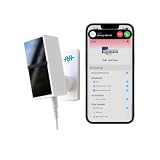
- 24/7 AI PASSIVE MONITORING: Detects falls, wandering, and nighttime movement without wearables, buttons, or check-ins.
- REAL-TIME CAREGIVER ALERTS: Sends emergency phone calls, push notifications, and texts through an encrypted mobile app instantly.
- COMPREHENSIVE DETECTION: Tracks falls, bed exits, room exits, sleep patterns, and activity history to provide a full picture of daily safety.
- AI SAFETY SCORE & ANALYTICS: Delivers personalized data insights, daily health trend summaries, and auto-detects alert periods based on sleep patterns.
- FLEXIBLE INSTALLATION: Works in any room including bedrooms, kitchens, and hallways, and is compatible with both private homes and senior living communities. Stick the device on the wall with the included command strip. No drilling needed.
A useful claim about clinical benefit needs evidence for the particular system and use: the task it performs, the population and setting in which it is used, how it was evaluated, and what it was compared with. A result for one tool or one task cannot automatically be applied to another. The broad WHO and FDA overviews do not provide a single comparative estimate of accuracy, cost savings, or lives saved across healthcare applications.
Why does intended use matter for regulation?
In the United States, the FDA regulates AI-enabled medical devices as medical devices under the Federal Food, Drug, and Cosmetic Act. Its risk-based approach considers a device’s intended use and technological characteristics. The FDA states that it does not regulate “AI as such”; it regulates medical devices, including AI-enabled devices. This describes the FDA’s US remit, not the law in other countries.
Rank #2

- 【All-in-One AI Recorder & Translator Device】 This Z02 ultimate wearable digital badge combines a voice recorder, 102-languages translator, meeting assistant, and smart AI assistant into one compact device. No hidden fees or subscriptions required, it supports instant translation and high-quality audio recording, making it perfect for breaking language barriers and capturing every key conversation on the go. Kindly Note: you need to download the dedicated “BagiBagi” App and connect to network to access AI voice dialogue, meeting minutes, memo and all intelligent functional features.
- 【Smart Meeting Assistant with Multi-Speaker Capture】 Designed for efficient meetings, it features real-time speaker distinction and dual recording modes: omnidirectional capture for group discussions and directional recording to focus on key speakers. With 8 powerful AI tools including meeting minutes, mind map organization, and AI summaries, it automatically sorts out key points, keywords, and action items to boost your work productivity.
- 【Ultra-Fast Transfer & Long-Lasting Performance】 No more slow-transfer anxiety! The device offers 10x faster transfer speed than standard Bluetooth, transferring 1-hour recordings in just 1 minute. It supports up to 25 hours of continuous recording and 21 days of standby time, so you never have to worry about running out of power or missing important moments.
- 【Personalized Wearable AI Assistant with Custom Wallpaper】 Make your badge uniquely yours with personalized wallpapers. You can upload custom static images, multi-picture sets, or even short videos to match your style. It also includes a full suite of daily tools: voice-controlled alarm reminders, memo creation, and a life encyclopedia AI chatbot that answers questions from recipes to home hacks, making it your go-to daily companion.
- 【One-Tap Control & Easy Operation for All Scenarios】 Enjoy hassle-free operation with intuitive gestures: double-tap the button to start instant recording, swipe up to wake up the AI chatbot, and swipe down to adjust screen brightness and volume. Lightweight and wearable, this multi-functional badge is perfect for business meetings, travel, school lectures, and daily use, helping you stay organized and connected wherever you go.
Regulatory status answers a specific question about a device and its intended use in a market. It should not be treated as a blanket endorsement of every use of the technology, nor as proof by itself that a device will improve outcomes in every clinical setting.
What risks and safeguards should patients and health organizations consider?
AI can influence health decisions, so a convincing output is not enough: people need to know what the system is for, what evidence supports it, how errors may affect care, and who remains responsible. WHO’s six principles for AI in health translate into practical questions:
Quick wins for a faster PC:
Repair Windows errors before they cause bigger problemsFix Now →Scan for outdated or missing drivers - takes under a minuteDriver Scan →Rank #3
| WHO principle | Question to ask |
|---|---|
| Protect human autonomy | Can patients and clinicians understand when AI is involved, retain meaningful control over decisions, and challenge or decline an AI-supported recommendation? |
| Promote human well-being, safety, and the public interest | What harms could follow from a false or missed output, and what safeguards, quality controls, and improvement processes are in place? |
| Ensure transparency, explainability, and intelligibility | Is sufficient information about the system documented before design or deployment, and can its intended function and limitations be communicated to the people who rely on it? |
| Foster responsibility and accountability | Who is responsible for decisions, monitoring, handling incidents, and acting when the system performs poorly? |
| Ensure inclusiveness and equity | Has the system been evaluated for relevant patient groups, and could its data or deployment leave some groups with worse access or results? |
| Promote responsiveness and sustainability | How will the system be monitored and maintained as data, clinical practice, and conditions change, and can the health service support it responsibly? |
Privacy, confidentiality, appropriate consent, and data protection matter wherever health information is used. Documentation and explainability can help people understand a system, but neither guarantees that a particular output is correct.
Why does generative AI need particular caution?
Large language models and large multimodal models raise distinct governance concerns. WHO’s 2025 guidance describes large multimodal models as systems that can take one or more types of input and produce outputs that need not be the same type as the input. WHO’s 2023 caution on large language models warns that health uses such as providing information, supporting decisions, or expanding diagnostic capacity require care; plausible-sounding output can include convincing disinformation.
Rank #4
WHO calls for clear evidence of benefit to be measured before these tools are used widely in routine health care and medicine. For a health organization considering a generative system, that means evaluating the specific task and workflow rather than assuming that fluent responses are accurate, safe, or suitable for clinical use.
Independent reader supportYour contribution helps us test, update, and keep practical guides available for everyone.What should a buyer or health organization check before adopting a tool?
Compare AI systems only when they are intended for the same task and population. Use these questions to assess a specific system before relying on it:
Best Value
- Purpose and population: What exact decision or task is the tool intended to support, for whom, and in what setting?
- Validation: How was performance evaluated, and was it tested beyond the data or setting used to develop it?
- Relevant groups: Is there evidence about performance for the patient subgroups who will use or be affected by it?
- Safety: What happens when the system is wrong, unavailable, or used outside its intended purpose?
- Data: Where does the data come from, how are privacy and confidentiality protected, and what consent or data protections apply?
- Human oversight: Who reviews outputs, can they challenge them, and is there a clear route to act when an error is suspected?
- Transparency and accountability: Is there enough documentation to understand intended use and limitations, and is responsibility for decisions and incidents defined?
- Market and regulatory status: What is the status for this intended use in the relevant jurisdiction? A US FDA status does not establish the regulatory position elsewhere.
- Monitoring and implementation: How will performance and safety be monitored over time, how are updates managed, and what training or workflow changes are required?
How is AI use in health research being governed?
AI raises ethical oversight issues in health research as well as in clinical care. WHO’s July 2026 report considers AI used in health-related data science, research conducted with AI tools, and research on AI tools. It highlights concerns including fairness, benefit sharing, power imbalances, and gaps in existing review systems.
The report also discusses risks affecting lower- and middle-income countries, including data colonialism and ethics dumping, alongside the need for capacity-building. These are governance concerns to consider when research involves health data or communities; the report is not a complete statement of law in any jurisdiction.
Quick Recap
Product prices and availability are accurate as of the date/time indicated and are subject to change. Any price and availability information displayed on Amazon at the time of purchase will apply.

