
Short answer: UpdraftPlus is the best starting point for most ordinary self-hosted WordPress websites because its free version supports scheduled backups, component-level restores, migration, and many off-site storage destinations. Duplicator is the better choice when migration or cloning is the main priority; Jetpack VaultPress Backup is especially appealing for WooCommerce and real-time cloud protection; BlogVault is the strongest fit for managed backup, staging, and agency workflows; WPvivid offers one of the most generous free feature sets; BackWPup suits users who prefer a traditional backup scheduler; and Solid Backups — NextGen is a cloud-first service rather than a conventional self-contained plugin.
The right choice depends on more than whether a plugin creates an archive. A dependable backup system must capture both the database and files, keep at least one copy away from the hosting account, run often enough for the site’s activity level, and provide a restore process you have actually verified.
Plan names, prices, storage limits, retention periods, WordPress compatibility, and included features change. Check the vendor’s current plan page and plugin documentation before purchasing or deploying a backup system.
Comparison at a glance
The seven options below cover different backup architectures and workflows. They are not ranked as universally best; each is strongest for a particular type of site owner.
Free tools Windows power users keep installed
One-click scans. No signup required.
#1 Best Overall
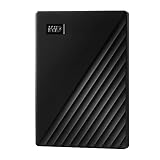
- Slim durable design to help take your important files with you
- Vast capacities up to 6TB[1] to store your photos, videos, music, important documents and more
- Back up smarter with included device management software[2] with defense against ransomware
- Help secure your important files with password protection and hardware encryption
- 3-year limited warranty
| Plugin or service | Best for | Main strengths | Main cautions |
|---|---|---|---|
| UpdraftPlus | Most ordinary WordPress sites | Strong free tier, scheduled backups, component-level restores, many remote destinations, migration support | Advanced storage, incremental backups, encryption, multisite, and some migration features require premium plans |
| Duplicator | Migration, cloning, packaging, and staging | Portable site packages, migration wizard, search and replace, staging-oriented workflows | Automated schedules and cloud integrations are primarily Pro features |
| Jetpack VaultPress Backup | Cloud convenience and WooCommerce | Off-site processing, redundant cloud storage, one-click restores, activity history, real-time options on eligible plans | Paid service; retention and storage depend on the plan; access can be affected by cancellation |
| BlogVault | Managed backup, staging, migration, and agencies | Incremental off-site backups, server-side processing, staging, centralized dashboard, WooCommerce and multi-site workflows | Costs more than a basic free plugin and has plan limits for retention, site size, and staging |
| WPvivid Backup & Migration | A feature-rich free setup | Scheduled backups, restoration, migration, and many cloud destinations in the free version | The broad feature set can require more configuration; advanced capabilities and support are paid |
| BackWPup | A straightforward free backup scheduler | Hourly-to-monthly schedules, full or partial backups, multiple destinations, local-plus-cloud copies, WP-CLI | Direct restoration from cloud destinations, encryption, migration, and advanced multisite features are Pro features |
| Solid Backups — NextGen | A cloud-first backup service | Off-host processing, cloud storage, timeline management, configurable retention, restore and archive downloads | It depends on SolidWP infrastructure and is not simply an independent archive plugin |
What a WordPress backup needs to protect
A WordPress site has two essential categories of data:
- The database: posts, pages, comments, users, settings, WooCommerce orders, customer records, and other structured content.
- The files: themes, plugins, media uploads, configuration files, and other site files. The
wp-contentdirectory is particularly important because it commonly contains uploads, themes, and plugins.
A database-only export will not restore the site’s images or theme files. A files-only archive will not restore posts, settings, orders, or users. For a complete recovery, configure a product to back up both unless you have a separate, tested method for protecting one of them.
Keeping the only copy on the same hosting account is also risky. A hosting failure, compromised account, accidental deletion, or storage quota problem can affect both the live site and its local backups. At least one copy should be stored off-site, preferably in a separate account or service. A practical 3-2-1 approach is to maintain three copies, on two types of storage, with at least one copy off-site. The exact arrangement can vary, but the principle is more important than following a slogan mechanically.
1. UpdraftPlus: best all-around starting point
UpdraftPlus is the most defensible default for a typical blog, brochure site, portfolio, or small business website. Its free WordPress plugin supports scheduled backups, restoration of individual components such as plugins, themes, and the database, and migration. It also supports a broad selection of remote destinations, including Dropbox, Google Drive, Amazon S3 or compatible storage, Rackspace Cloud, FTP, DreamObjects, OpenStack Swift, and email.
Pros
- Useful free version for scheduled database and file backups.
- Component-level restore can be more convenient than replacing the entire site.
- Many remote-storage choices make it easier to keep copies away from the web server.
- Migration support gives the plugin value beyond disaster recovery.
- The dashboard workflow is familiar to many WordPress administrators.
Cons
- Advanced features are divided between free and premium editions.
- Incremental backups, additional storage integrations, UpdraftVault, more granular retention, backup-to-multiple-locations, checksums, database encryption, multisite compatibility, and WP-CLI support are among the capabilities associated with premium plans.
- With a self-managed storage destination, the site owner must configure credentials, monitor jobs, and confirm that remote uploads work.
- A plugin-level backup does not automatically replace host or infrastructure snapshots.
Best fit: Choose UpdraftPlus if you want a familiar dashboard, a capable free starting point, several storage-provider choices, and the option to add premium features later. It is the broadest default recommendation for ordinary WordPress sites that do not need a fully managed backup service.
2. Duplicator: best for migration and cloning
Duplicator is particularly strong when backup means more than keeping an emergency copy. Its core workflow packages the site’s files and database into an archive that can be transferred and installed elsewhere. That makes it useful for changing hosts, moving between domains, cloning a site for development, or creating a staging copy.
The free edition is more focused on creating and installing packages than on providing a fully managed, automated cloud-backup system. Duplicator Pro adds scheduled backups, one-click restore points, secure file encryption, server-to-server import, larger-site support, search and replace, database and file-table filters, cloud destinations, multisite support, custom backup types, and staging-oriented features.
Pros
- Excellent package-and-installer model for migrations and clones.
- Useful search-and-replace tools when URLs or domains change.
- Well suited to developers, freelancers, agencies, and staging workflows.
- Pro supports scheduled backups, cloud destinations, multisite, and more controlled package contents.
- A package can be portable rather than tied entirely to one backup service.
Cons
- The free edition does not provide the same automated cloud-backup experience as Pro.
- Archive-based workflows can require more hands-on handling than a managed cloud service.
- Large sites can run into execution time, disk-space, or upload limitations during packaging and installation.
- A migration that succeeds on one host may still require testing on the target host, especially when server versions, permissions, or database settings differ.
Best fit: Choose Duplicator when the backup must also be a portable deployment package. It is the most natural shortlist candidate for a site move, staging clone, agency workflow, or developer who regularly copies WordPress installations.
Do these 3 things before closing this tab:
1Repair Windows errors before they cause bigger problems2Scan for outdated or missing drivers - takes under a minute3Clear out junk files and repair common Windows errorsRank #2

- 【Dual-Port Beast Mode】MOVE SPEED SP05 Solid State Drives slays with push-pull USB3.2 + Type-C ports—plug either side, no flipping, no drama. Yeet 1GB files in 2 seconds. Upgraded zinc alloy armor keeps it icy cool and looks like a cyberpunk gadget— drop-proof metal vibes.
- 【3-Stage Push-Pull Perfection】Glide the slider with a satisfying click—effortlessly switch between USB-A and USB-C in one smooth motion. No lost caps, no broken ports, just pure buttery-slick vibes. Survives gym bags, chaotic travel, or desks buried under half-empty coffee cups. (Pro hack: Push until it clicks to lock securely)
- 【SSD-Grade Chip & Metal Shell】MOVE SPEED SP05 integrates SSD-grade chips with a precision-engineered zinc alloy push-pull , enhancing heat dissipation via optimized airflow channels (max temp 122°F). The dust/drop/high-temp/anti-magnetic resistant build ensures durability for extreme environments.
- 【Plug & Slay Anywhere】This External SSD slaps into iPhones (shoot 4K vids straight to the drive), Androids, laptops, PS5, even your grandpa’s car stereo—zero setup, zero cables needed. Comes with a braided lanyard (clip it to keys, backpacks) so you can flex it on hikes, coffee runs, or while rage-quitting games.
- 【No Cap—What’s in the Box & 5-Year Care】Package includes: MOVE SPEED SP05 1TB SSD, premium braided strap (clip it to keys or flex on your bag’s zipper), and a “don’t stress” manual. Got drama? We’ve got 7/24 rage-free support and lifetime tech squad. our crew slays 90% issues in 24hrs.
3. Jetpack VaultPress Backup: best for cloud convenience and WooCommerce
Jetpack VaultPress Backup is a paid, cloud-backed backup service delivered through a WordPress plugin. Its architecture is designed to process backups off-site, store redundant copies on multiple servers, and provide one-click restores. The service also maintains an activity history, which can help identify what changed before a problem appeared.
It has particularly strong positioning for WooCommerce. Relevant plans support customer and order data, and Jetpack markets real-time, incremental, and differential backup modes on eligible plans. That distinction matters for stores: a once-daily backup may leave a long gap containing orders, customer changes, inventory updates, or product edits.
Pros
- Off-site processing reduces the backup workload on the WordPress host.
- Cloud storage and redundant infrastructure reduce dependence on one hosting server.
- One-click restoration is convenient for owners who do not want to assemble archives manually.
- Activity history can help correlate a broken site with a plugin update or other change.
- WooCommerce-oriented handling and real-time options make it a strong candidate for transaction-sensitive sites.
Cons
- Backup requires a paid Jetpack plan that includes the feature.
- Retention varies by plan. The documented ranges include periods such as 7 days, 30 days, 120 days, or one year, while some legacy or higher-tier arrangements may differ.
- Storage add-ons may be separately priced, and the service may stop creating new backups if a storage limit is exceeded and the minimum retention cannot be maintained.
- Users may not be able to delete individual old backups manually in the way they expect.
- Stored backup access can become unavailable after cancellation unless copies are downloaded first.
Best fit: Choose Jetpack VaultPress Backup if low-maintenance cloud protection matters more than controlling your own storage credentials, particularly for WooCommerce or a frequently changing publishing site. Confirm the exact retention, storage, real-time coverage, and cancellation rules for the plan you are considering.
4. BlogVault: best managed backup and staging platform
BlogVault is a managed backup and site-management service that works with a WordPress connector. It provides automatic incremental backups for the database, themes, plugins, media, and other WordPress files. Backup and restore processing runs on BlogVault’s servers, and backups are stored on BlogVault infrastructure rather than consuming the same resources as a purely local archive job.
BlogVault is more than a backup button. Its workflow includes staging, migration, dashboard management for multiple websites, and tools aimed at agencies and WooCommerce operators. The service also describes white-label capabilities, client reporting, an emergency connector, and WooCommerce real-time backup options.
The researched pricing page listed a Personal plan at $99 USD per year with daily backups, 30-day retention, a 20 GB site-size limit, one-click restore, one-click migration, one-day staging, secure cloud storage, and an emergency connector. Treat that information as a pricing snapshot rather than a permanent offer: plan names, limits, promotional discounts, and included features can change.
Pros
- Incremental, off-site backups can reduce the cost and workload of repeatedly transferring a complete site.
- Server-side processing reduces pressure on the live host.
- Staging and migration are integrated into the same service.
- A centralized dashboard is useful for agencies managing multiple clients.
- WooCommerce-oriented options and an emergency connector add value for business-critical sites.
Cons
- Recurring pricing is materially higher than starting with a free backup plugin.
- Retention, site size, backup frequency, staging duration, and other limits vary by plan.
- The site owner is dependent on a hosted service and its account access.
- Readers should not assume that a feature shown on a higher plan is included in the least expensive tier.
Best fit: Choose BlogVault when staging, migration, centralized management, support, and reduced maintenance justify a subscription. It is especially suitable for agencies, developers, stores, and business-critical sites where recovery is part of an ongoing maintenance process.
5. WPvivid Backup & Migration: best feature-rich free option
WPvivid’s free plugin combines manual backups, scheduled automatic backups, cloud storage, restoration, and migration. Its listed cloud destinations include Dropbox, Google Drive, Amazon S3, Microsoft OneDrive, DigitalOcean Spaces, FTP, and SFTP. Unlike some free tiers, the plugin’s listing states that migration and restoration are available without requiring Pro.
Recommended Free Tools
Rank #3

- USB-C and USB 3.1 compatible.Specific uses: Business, personal
- Innovative style with refined metal cover
- Password protection with 256-bit AES hardware encryption
- Formatted for Mac
Pros
- Generous free feature set for users who want more than a local archive.
- Scheduled backups, restoration, and migration are available in the free workflow.
- Many cloud destinations provide flexibility for different technical setups.
- Suitable for small businesses, technically comfortable site owners, and developers.
- Paid tiers provide a path to advanced staging, multisite, management, and support features.
Cons
- The large number of options can make initial configuration more complicated.
- Advanced staging, multisite, centralized management, and support features may require a paid edition.
- As with any backup plugin, users should keep the plugin current and review security advisories and changelogs before deploying it on a high-value site.
- Cloud credentials, retention, and successful remote uploads remain the owner’s responsibility unless a separate managed service is used.
Best fit: Choose WPvivid if you want scheduled off-site backups plus migration and restore without immediately paying for a service. It is a strong free alternative to UpdraftPlus for users willing to spend a little more time reviewing its settings.
6. BackWPup: best straightforward free scheduler
BackWPup Free uses a traditional backup-job model. It can create full database-and-file backups, database-only backups, or file-only backups; run jobs hourly, daily, weekly, or monthly; and send the same backup to multiple destinations. Free destinations include local website storage, Dropbox, FTP, Microsoft Azure, Amazon S3 or compatible storage, SugarSync, and Rackspace Cloud Files. WP-CLI support is also available for administrators who manage jobs from the command line.
Pros
- Clear scheduling choices from hourly through monthly.
- Supports full, database-only, and file-only jobs.
- Can send a backup to multiple destinations, making local-plus-cloud redundancy practical.
- A good fit for users who prefer explicit backup jobs over a more managed interface.
- WP-CLI support is useful for technical administrators and scripted maintenance.
Cons
- In the free version, direct restoration from a cloud destination is limited; documentation describes a workflow in which the backup is manually uploaded before restoration.
- Encryption, migration, advanced multisite capabilities, a standalone restore application, direct cloud restore, and premium support are associated with Pro.
- The job-based interface may require more configuration and monitoring than a managed cloud service.
- A successful local job does not prove that the remote transfer completed successfully.
Best fit: Choose BackWPup if you want a free scheduler with explicit backup scopes, multiple destinations, and WP-CLI support. It is less attractive if your main requirement is a simple one-click restore directly from cloud storage.
7. Solid Backups — NextGen: best cloud-first service alternative
Solid Backups — NextGen should be described accurately as a cloud backup service with a WordPress connector. It uses SolidWP infrastructure to process and store backups outside the hosting environment. Through Solid Central, users connect a site, configure retention, monitor backup activity on a timeline, download archives, and restore from a selected backup.
Outdated Drivers Are Slowing You Down
One free scan finds every outdated or missing driver and matches the right update for your exact hardware.Free scan · exact hardware matchPC Slower Than It Used to Be?
A free scan shows the junk files, broken settings and background clutter dragging Windows down - then fixes them in one click.Free scan · Windows 10 & 11The service supports retention of up to one year and allows exclusions to reduce the amount of data stored. Its architecture differs from older BackupBuddy-style expectations: although a plugin is involved, the core product is service-based and cloud-first rather than a completely self-contained plugin that simply writes an archive to the local server.
Pros
- Backup processing takes place away from the live hosting server.
- Cloud storage and timeline monitoring provide a centralized management model.
- Configurable retention can keep recovery points for longer than a basic default schedule.
- Users can restore selected backups or download archives for separate storage.
- Exclusions can help control stored data and backup size.
Cons
- It depends on SolidWP infrastructure and account access.
- Setup requires connecting the site through Solid Central and confirming host compatibility.
- It should not be evaluated as architecturally identical to a conventional self-contained backup plugin.
- Current plan pricing was not reliably exposed in the official material reviewed, so it should not be guessed.
Best fit: Choose Solid Backups — NextGen if you specifically want a cloud-first service that performs backup work away from the hosting server and you are comfortable with a centralized service relationship.
Which WordPress backup plugin should you choose?
- For a normal blog or business site: Start with UpdraftPlus. BackWPup is a sensible alternative if you prefer traditional scheduled jobs, while WPvivid is attractive if free migration and restore are priorities.
- For migration or cloning: Choose Duplicator, especially when the backup needs to become a portable package for a new host, domain, or staging environment.
- For WooCommerce: Compare Jetpack VaultPress Backup and BlogVault first. Look specifically for real-time or higher-frequency coverage, the treatment of orders and customer data, retention, and the exact restore behavior of the plan.
- For an agency: BlogVault is the strongest managed workflow among these choices because staging, migration, client reporting, and multi-site dashboard management are central to its offering. Duplicator is also compelling when the agency wants portable packages and hands-on control.
- For a cloud-first architecture: Consider Jetpack, BlogVault, or Solid Backups — NextGen rather than a plugin that primarily stores archives on the same host.
- For multisite: Check the specific edition carefully. UpdraftPlus premium, Duplicator Pro, and higher-tier or managed services may support multisite, but the free tier or entry plan should not be assumed to include it.
How to configure a backup that can actually save the site
1. Match the schedule to the site’s change rate
A static brochure site that changes once a month does not have the same recovery-point needs as a news site or online store. Daily backups may be reasonable for a low-change site. A publisher with several updates each day may need multiple backups per day. A WooCommerce store with ongoing orders, customer activity, and inventory changes may need real-time or higher-frequency coverage rather than a single daily snapshot.
Jetpack VaultPress Backup and BlogVault explicitly market real-time or transaction-sensitive capabilities, but confirm the exact plan, what data is captured, and how a restore behaves before relying on those features.
The Tool Desk
Outbyte PC Repair FREEClear out junk files and repair common Windows errorsFree Scan →Outbyte Driver Updater FREEFix the driver behind crashes, sound loss and screen glitchesFind Drivers →Rank #4

- Slim durable design to help take your important files with you
- Vast capacities up to 6TB[1] to store your photos, videos, music, important documents and more
- Back up smarter with included device management software[2] with defense against ransomware
- Help secure your important files with password protection and hardware encryption
- 3-year limited warranty
2. Protect both database and files
Use a full site backup unless you have a deliberate reason to separate jobs. If you create database-only or file-only jobs, label them clearly and make sure the complementary data is protected by another job. Include media uploads, themes, plugins, and configuration files as appropriate for the tool and host.
3. Send a copy away from the live server
Do not treat a backup stored only in the website’s hosting account as your disaster-recovery plan. Configure an external destination and confirm that the account has enough capacity for the selected retention period.
For technical users, S3-compatible backup storage is a flexible option supported by tools such as UpdraftPlus, WPvivid, BackWPup, and some Duplicator Pro workflows. Use a separate storage account or bucket where practical, restrict access, and verify the plugin’s compatibility and authentication requirements. Storage fees and configuration are separate from any plugin license, so include both in the operating cost.
4. Run the first backup and inspect the result
Do not stop at seeing a green success message. Confirm that the job contains a database archive and the expected files, that the remote copy exists, and that the archive size is plausible for the site. Check the job log for warnings about timeouts, permissions, skipped files, failed uploads, or storage limits.
5. Test restoration before an emergency
A backup is only useful if it can be restored. The safest test is a staging site or temporary installation. Restore the database and files, then check:
- the home page and several internal pages;
- images and other media;
- administrator login;
- forms, email notifications, and search;
- plugin and theme settings;
- for WooCommerce, products, orders, customer records, checkout, and payment-related integrations in a safe test environment.
Document which backup was used, how long the restore took, and any manual steps required. A restore that requires a particular premium plan, connector, storage credential, or manual upload should be documented while the site is healthy.
6. Keep recovery information outside WordPress
Record the backup-service account, storage credentials or access method, retention settings, administrator contacts, host details, and the location of downloadable archives in a secure recovery document. If the WordPress dashboard is unavailable, you still need a way to reach the backup and begin recovery.
7. Add a second recovery layer for important sites
For a business-critical site, a plugin backup should complement rather than automatically replace host-level snapshots. Managed WordPress hosting with backups can provide automated host-level recovery and staging in addition to a plugin-created off-site copy. That second layer is useful when a plugin is misconfigured, the WordPress installation is inaccessible, or a wider hosting incident affects the application. Check what the host actually retains, how restores work, and whether backups are stored separately from the live account.
What’s actually slowing this PC down?
Pick the symptom - the matching free tool is one click away.
Best Value

- 256GB ultra fast USB 3.1 flash drive with high-speed transmission; read speeds up to 130MB/s
- Store videos, photos, and songs; 256 GB capacity = 64,000 12MP photos or 978 minutes 1080P video recording
- Note: Actual storage capacity shown by a device's OS may be less than the capacity indicated on the product label due to different measurement standards. The available storage capacity is higher than 230GB.
- 15x faster than USB 2.0 drives; USB 3.1 Gen 1 / USB 3.0 port required on host devices to achieve optimal read/write speed; Backwards compatible with USB 2.0 host devices at lower speed. Read speed up to 130MB/s and write speed up to 30MB/s are based on internal tests conducted under controlled conditions , Actual read/write speeds also vary depending on devices used, transfer files size, types and other factors
- Stylish appearance,retractable, telescopic design with key hole
Staging is also valuable before major plugin, theme, or WordPress updates. Agencies and stores that need a repeatable update workflow may consider a WordPress staging service, but it is an optional operational layer, not a requirement for every small site. Duplicator, BlogVault, and Solid Backups — NextGen each have staging or staging-oriented workflows, with availability depending on the edition or plan.
Independent reader supportYour contribution helps us test, update, and keep practical guides available for everyone.Common backup failures and how to prevent them
| Failure | Why it happens | Prevention or recovery |
|---|---|---|
| The only backup is on the same host | A server failure, compromised account, or accidental deletion affects both copies | Send at least one copy to a separate cloud or storage account and periodically download an additional archive |
| The job backs up the database but not media | The administrator selected a database-only job or excluded uploads | Use a full backup or verify that files and database are covered by complementary jobs |
| The dashboard reports success but cloud storage is empty | Remote credentials, quota, permissions, or the upload step failed | Inspect logs, sign in to the destination, and perform a small test job before relying on the schedule |
| The archive is incomplete or times out | The site is large, the host limits execution time, or local disk space is insufficient | Use incremental or split backups where supported, exclude reproducible files carefully, increase resources if possible, or use a service with off-site processing |
| A restore is blocked after cancellation | The service retained backups inside an account that is no longer active | Download independent copies before canceling and confirm that the downloaded archive can be restored |
| The backup is too old for the business | The schedule does not match publishing, order, or inventory activity | Shorten the interval or use real-time or higher-frequency coverage where the plan supports it |
| The first restore is attempted on the live site | No staging or test restore was prepared | Restore to staging or a temporary installation first, then schedule a controlled production recovery |
Pricing, editions, and compatibility caveat
Free-versus-paid boundaries are central to this comparison. UpdraftPlus, WPvivid, and BackWPup all provide useful free starting points, but important capabilities such as incremental backups, direct cloud restoration, encryption, multisite support, advanced staging, or premium support may require payment. Duplicator’s automated backup and cloud features are primarily part of Pro. Jetpack VaultPress Backup and BlogVault are paid services, while Solid Backups — NextGen uses a service-based cloud architecture.
Prices and promotional discounts are especially volatile. The same is true of retention limits, site-size limits, storage allowances, supported WordPress versions, active-installation counts, and tested-version labels in plugin directories. Treat any price or feature list as a snapshot, and verify the current vendor documentation before committing a production site to a plan.
Frequently Asked Questions
Are WordPress backup plugins enough by themselves?
They can be enough for many small sites when configured correctly, but a plugin backup should not automatically be treated as a complete infrastructure-recovery plan. Keep at least one copy off-site, test restoration, and consider host-level snapshots or a managed backup service for business-critical websites.
Quick wins for a faster PC:
Fix the driver behind crashes, sound loss and screen glitchesFind Drivers →Clear out junk files and repair common Windows errorsFree Scan →Scan for outdated or missing drivers - takes under a minuteDriver Scan →How often should a WordPress site be backed up?
Use the site’s change rate and the amount of data you can afford to lose. Daily backups may suit a low-change site. A frequently updated publication may need several backups per day, while a WooCommerce store with ongoing orders and inventory changes may need real-time or higher-frequency coverage.
Which free WordPress backup plugin is best?
UpdraftPlus is the best general free starting point for many users. WPvivid is particularly attractive when free migration, restoration, and multiple cloud destinations matter. BackWPup is a good fit for users who prefer explicit scheduled jobs and multiple destinations, although direct restoration from cloud storage is a Pro feature.
Can I keep my only backup in the WordPress uploads folder?
You can create a local copy there, but it should not be your only copy. The same hosting account can be lost, compromised, or deleted along with the live site. Use a separate off-site destination and verify that the remote archive is present.
What should I test after restoring a backup?
Check pages, images, administrator access, forms, email, plugin and theme settings, and site search. For WooCommerce, also verify products, orders, customer data, checkout, and integrations in a safe test environment. Record any manual recovery steps for future emergencies.
The Bottom Line
For most WordPress owners, start with UpdraftPlus and configure a scheduled full backup to an off-site destination. Choose Duplicator when migration and cloning matter most, Jetpack VaultPress Backup for convenient cloud and WooCommerce protection, BlogVault for managed staging and agency operations, WPvivid for a broad free feature set, BackWPup for traditional scheduled jobs, or Solid Backups — NextGen when a cloud-first service architecture is the goal.
Whichever tool you select, verify the database and files are present, confirm an off-site copy exists, and perform a test restore before you need the backup.
Quick Recap
Product prices and availability are accurate as of the date/time indicated and are subject to change. Any price and availability information displayed on Amazon at the time of purchase will apply.

