
Do these 3 things before closing this tab:
1Fix the driver behind crashes, sound loss and screen glitches2Repair Windows errors before they cause bigger problems3Scan for outdated or missing drivers - takes under a minuteiTechGuides is reader-supported. When you buy through links on our site, we may earn an affiliate commission. As an Amazon Associate I earn from qualifying purchases. Learn more
Five episodes from Star Trek: The Original Series draw criticism today for how they frame gender, cultural interference, objectification, and Indigenous representation. The list below follows a mirror of a Polygon article; its arguments are editorial interpretations, not a viewer poll or a definitive ranking. “Aged poorly” describes how the episodes read through changing cultural expectations, not whether every part of them has lost value.
1. “What Are Little Girls Made Of?” (Season 1, Episode 8)
Andrea is an artificial woman designed to be beautiful and obedient. When Dr. Korby commands her to kiss Captain Kirk, the scene makes her function as a male-controlled companion before the story gives her feelings of her own. The episode raises questions about whether an artificial being can have an inner life, but its treatment of Andrea can feel limited beside the franchise’s later, more sustained exploration of android identity through Data.
| # | Preview | Product | Price | |
|---|---|---|---|---|
| 1 |
|
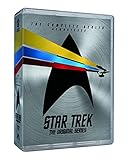
Star Trek: The Original Series: The Complete Series | $53.59 | Buy on Amazon |
| 2 |
![Star Trek Trilogy Collection [DVD]](https://m.media-amazon.com/images/I/51YMbQiSBML._SL160_.jpg)
|
Star Trek Trilogy Collection [DVD] | $14.95 | Buy on Amazon |
| 3 |
|
Star Trek: Original Motion Picture Collection | $16.09 | Buy on Amazon |
| 4 |

|
Star Trek: The Next Generation: The Complete Series | $84.99 | Buy on Amazon |
| 5 |
|
Star Trek: Voyager: The Complete Series | $85.30 | Buy on Amazon |
2. “The Apple” (Season 2, Episode 5)
The Enterprise crew intervenes in the Vaalians’ society, destroys the center of their culture, and decides what kind of life the inhabitants should have. The criticism is that the episode frames this intervention as liberation even though the Vaalians have not asked to be liberated. Read that way, the story’s confidence in the crew’s authority resembles cultural imperialism—a charge about the episode’s framing, rather than an uncontested description of its intent.
What’s actually slowing this PC down?
Pick the symptom - the matching free tool is one click away.
3. “Mudd’s Women” (Season 1, Episode 7)
Harry Mudd transports three women as prospective wives for miners, while the episode repeatedly emphasizes their attractiveness. Its resolution can feel patronizing: Eve’s confidence is treated as the problem to solve, rather than the social arrangement that values women chiefly for their looks. The result gives the women less room to define their own lives than the premise might have allowed.
#1 Best Overall
- Genre: TV Sci-Fi
- Number of Discs: 25
- Number of Tracks: 0
- Playback Duration: 4121
- Rating: NR
4. “The Paradise Syndrome” (Season 3, Episode 3)
The episode’s portrayal of Indigenous people relies on generalized cultural imagery rather than representing distinct peoples with specificity. Its casting of Sabrina Scharf and Rudy Solari as Indigenous characters in brownface is another concrete reason the episode can be difficult to watch. The story also gives Miramanee a tragic role within a plot that uses these broad stereotypes. Criticizing that portrayal does not mean treating Indigenous cultures as interchangeable; it means recognizing how the episode collapses them into familiar screen tropes.
5. “Turnabout Intruder” (Season 3, Episode 24)
The original series finale ties Janice Lester’s ambition to emotional instability and builds its conflict around the claim that women cannot serve as starship captains. That premise can make the episode’s gender politics especially conspicuous today. Kirk and Lester’s body-swap plot further leans on gender stereotypes in how it distinguishes their behavior. The list’s source quotes Lester saying, “Your world of starship captains doesn’t admit women”; the episode’s broader premise makes the exclusion explicit even without relying on that line.
Rank #2
- Genre: Science Fiction
- Number of Discs: 3
- Number of Tracks: 0
- Playback Duration: 381
- Rating: PG13
What “aged like milk” means in this list
These episodes are selected for story choices and portrayals, not for dated visual effects, and the list is not evidence of a measured consensus among viewers. A later 2026 Looper roundup also discusses “Turnabout Intruder” and “The Paradise Syndrome” as episodes that may unsettle modern viewers, but that is another publication’s criticism, not proof that all viewers share the same verdict.
The Tool Desk
Outbyte Driver Updater FREEFix the driver behind crashes, sound loss and screen glitchesFind Drivers →Outbyte PC Repair FREEClear out junk files and repair common Windows errorsFree Scan →Not every classic episode has aged the same way
The franchise’s older episodes can contain both dated assumptions and ideas that still resonate. In its retrospective on “The Devil in the Dark,” StarTrek.com highlights the Horta as an intelligent individual with understandable motivations and describes understanding through communication as a theme that endured through the episode’s development. That contrast is a reminder that reassessing an old series need not mean dismissing its entire catalog.
Quick Recap
Best Value
- Genre: TV Sci-Fi
- Number of Tracks: 0
- Playback Duration: 7778
- Movie Title: Star Trek - Voyager: The Complete Series
- Movie Year: 2020
Rank #4
- Genre: TV Sci-Fi
- Number of Discs: 48
- Number of Tracks: 0
- Playback Duration: 8082
- Rating: NR
Rank #3
Product prices and availability are accurate as of the date/time indicated and are subject to change. Any price and availability information displayed on Amazon at the time of purchase will apply.

