
What’s actually slowing this PC down?
Pick the symptom - the matching free tool is one click away.
There is no objective, universally accepted ranking of the greatest women in STEM. This unranked selection highlights 20 women whose documented work shaped mathematics, computing, science, medicine, engineering and spaceflight. It considers influence, originality or practical consequence, disciplinary breadth, and historical range—not awards alone.
Women whose work changed science and medicine
Florence Bascom — geology
Florence Bascom helped establish geology as a field of study through her research and teaching. Her career also opened academic pathways for women in a discipline where they had been underrepresented.



Nettie Stevens — genetics
Geneticist Nettie Stevens helped establish the role of sex chromosomes in determining biological sex. Her research contributed to the developing science of heredity.
Mary Agnes Chase — botany
Mary Agnes Chase became a leading authority on grasses. Her taxonomic publications and field research across the Americas made her work valuable to botanists studying plant diversity.
The Tool Desk
Outbyte PC Repair FREEClear out junk files and repair common Windows errorsFree Scan →Outbyte Driver Updater FREEFix the driver behind crashes, sound loss and screen glitchesFind Drivers →Mary Putnam Jacobi — medicine
Physician and researcher Mary Putnam Jacobi used evidence to challenge misconceptions about women’s health and physical capacity. Her work argued for evaluating medical claims through research rather than assumptions.
Alice Ball — chemistry
Chemist Alice Ball developed a more effective treatment for leprosy before antibiotics. Her work provided an important therapeutic advance at a time when treatment options were limited.
Rosalyn Yalow — physics and medicine
Physicist Rosalyn Yalow helped develop radioimmunoassay, a method that made it possible to measure minute quantities of biological substances. The technique had lasting value in medical research and diagnosis. She later became the second woman to receive the Nobel Prize in Physiology or Medicine.
Gertrude B. Elion — biochemistry and pharmacology
Biochemist Gertrude Elion advanced rational drug design: developing medicines by understanding how they act on biological targets, rather than relying only on trial and error. Her work contributed to treatments for serious diseases.
Esther Lederberg — microbiology
Microbiologist Esther Lederberg discovered lambda bacteriophage, a virus that infects bacteria. The phage became an important tool in molecular genetics, helping researchers investigate how genes work and are regulated.
Barbara McClintock — genetics
Geneticist Barbara McClintock discovered that genes can move within chromosomes, a phenomenon now known as transposition. Her work reshaped understanding of genetic organization and earned her the Nobel Prize in Physiology or Medicine.
Virginia Apgar — anesthesiology and neonatology
Anesthesiologist Virginia Apgar developed the Apgar score, a quick assessment of a newborn’s condition after birth. It gave medical teams a practical, shared way to evaluate infants and decide whether they needed immediate care.
Helen Brooke Taussig — cardiology
Cardiologist Helen Brooke Taussig helped advance surgery for congenital heart defects associated with “blue baby syndrome.” Her clinical insight helped guide a procedure that improved prospects for children with these conditions.
Crashes, No Sound, or Screen Glitches?
Random freezes, missing sound and display glitches usually trace back to one bad driver. Find and replace yours safely.Free scan · under a minutePC Slower Than It Used to Be?
A free scan shows the junk files, broken settings and background clutter dragging Windows down - then fixes them in one click.Free scan · Windows 10 & 11Women who expanded astronomy and our understanding of the universe
Henrietta Swan Leavitt — astronomy
Working at the Harvard College Observatory, Henrietta Swan Leavitt discovered a relationship between the brightness and pulsation period of Cepheid variable stars. That relationship gave astronomers a way to estimate distances beyond the solar system and became a key tool for measuring the scale of the universe.
Cecilia Payne-Gaposchkin — astrophysics
Cecilia Payne-Gaposchkin established that stars are composed primarily of hydrogen and helium. Her work transformed the understanding of stellar composition and is a landmark in astrophysics.
Vera Rubin — astronomy
Vera Rubin’s observations of how galaxies rotate supplied powerful evidence for dark matter: unseen mass inferred from its gravitational effects. Her work changed how astronomers explain the structure and motion of galaxies.
Andrea Ghez — astrophysics
Andrea Ghez used observations of stars near the center of the Milky Way to establish that they orbit an extremely compact, massive object—a supermassive black hole. She shared the 2020 Nobel Prize in Physics for work on the discovery of a supermassive compact object at the galaxy’s center.
Mathematics, computing and engineering behind major advances
Katherine Johnson — mathematics and spaceflight
Mathematician Katherine Johnson joined NASA’s predecessor, the National Advisory Committee for Aeronautics (NACA), in 1953 and worked in the segregated West Computing section at Langley. Her orbital calculations contributed to Mercury and Apollo missions. NASA says that in 1960 she and engineer Ted Skopinski coauthored a report applying orbital equations to a spaceflight with a specified landing position—the first time a woman in her division received author credit on a research report.
NASA also recounts Johnson’s memory that astronaut John Glenn asked her to check the computer’s calculations before his 1962 orbital flight. That account illustrates how human mathematical expertise and emerging computing systems worked together; Johnson’s contributions were part of collaborative programs, not a claim that any one person made a mission possible alone. NASA’s biography of Katherine Johnson, last updated June 28, 2024, describes her 33-year career and says she authored or coauthored 13 reports.
Mary Golda Ross — aerospace engineering
Mary Golda Ross was a mathematician and aerospace engineer whose work contributed to the development of advanced aircraft and spaceflight concepts. She is recognized as a pioneering Indigenous woman in engineering.
Gladys West — mathematics
Mathematician Gladys West made important contributions to modeling Earth’s shape and gravitational field. That geodetic work helped lay groundwork for accurate satellite positioning systems, including GPS.
Best Value
Women who widened the boundaries of spaceflight
Sally Ride — astronautics and physics
Physicist and astronaut Sally Ride became the first American woman to fly in space. Her 1983 mission helped make women’s participation in U.S. human spaceflight visible to a wider public.
Mae Jemison — medicine and spaceflight
Physician and astronaut Mae Jemison became the first African American woman in space, flying aboard the Space Shuttle Endeavour in 1992. Her career crossed medicine, engineering and exploration.
Christina Koch — electrical engineering and spaceflight
Electrical engineer and astronaut Christina Koch has contributed to long-duration spaceflight and NASA’s exploration program. Claims about a first woman to travel around the Moon depend on the status and completion of specific missions, so they should be checked against NASA’s current mission records rather than treated as an established accomplishment here.
Why this is a selection, not a definitive ranking
Institutional collections offer useful starting points, not exhaustive or globally representative accounts of women’s work. The National Women’s History Museum’s biographies and STEM collection, NASA’s Women at NASA (updated February 10, 2025), and Smithsonian collections document many of the figures and fields represented here. Their coverage, like any curated list, reflects selection rather than a universal measure of achievement.
Do these 3 things before closing this tab:
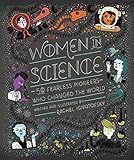
1Clear out junk files and repair common Windows errors2Scan for outdated or missing drivers - takes under a minute3Repair Windows errors before they cause bigger problemsFor more profiles, Rachel Ignotofsky’s Women in Science is an illustrated book featuring 50 women across STEM. It is a further-reading option, not a ranking or a complete history.
Quick Recap
Product prices and availability are accurate as of the date/time indicated and are subject to change. Any price and availability information displayed on Amazon at the time of purchase will apply.

