
The best 3D rendering software for professionals depends on the job: V-Ray is the strongest all-around choice, Blender with Cycles is the best value, Redshift is the best GPU-first option, and Unreal Engine is the best programmable real-time platform. Arnold, RenderMan, Corona, OctaneRender, Maxwell, Karma, KeyShot, Lumion, D5 Render, Enscape, and Twinmotion fit narrower professional workflows.
The 15 products below are ranked by professional fit, not by a pretend universal speed score. Offline renderers, real-time visualization tools, CAD-focused product renderers, USD-native systems, and programmable engines optimize for different outcomes.
The most important decision is not simply image quality. Match the renderer to the DCC or BIM host, CPU and GPU hardware, VRAM, scene size, shader requirements, animation workload, and the difference between interactive previews and final offline output.
Key takeaways
- V-Ray is the strongest all-around professional choice because it combines mature host-application integration with interactive and final-quality rendering across architecture, design, animation, and visualization.
- Redshift is the best GPU-first production renderer, while OctaneRender is the strongest fit for unbiased GPU path tracing and spectrally oriented look development.
- Blender with Cycles offers the best all-in-one value for independent artists, small teams, education, and studios that need modeling, animation, shading, rendering, compositing, and scripting together.
- Arnold, RenderMan, and Karma are better judged by pipeline fit: Arnold for Autodesk and Maya-centered VFX, RenderMan for feature-animation production, and Karma for Houdini Solaris and USD workflows.
- Lumion, D5 Render, Enscape, Twinmotion, and Unreal Engine prioritize real-time iteration, design review, presentations, immersive media, or interactivity rather than exactly duplicating an offline film-rendering pipeline.
How should professionals choose 3D rendering software?
Professionals should choose a renderer according to the host application, scene complexity, CPU and GPU hardware, required image quality, animation workload, and whether the priority is interactive feedback or final offline output. A renderer that is excellent for a Maya VFX pipeline may be a poor choice for a BIM-based client review, even if both tools produce photorealistic images.
#1 Best Overall

- Wacom Intuos Small Graphics Drawing Tablet: Enjoy industry leading tablet performance in superior control and precision with Wacom's EMR, battery free technology that feels like pen on paper
- Works With All Software: Wacom Intuos tablet can be used in any software program to explore new facets of digital creativity; draw, paint, edit photos/videos, create designs, and mark up documents
- What the Professionals Use: Wacom's industry leading pen technology and pen to paper feeling makes it the preferred drawing tablet of professional graphic designers
- Software and Training Included: Only Wacom gives you software with every purchase. Register your Intuos tablet and gain access to some of the best creative software and Wacom's online training
- Wacom is the Global Leader in Drawing Tablet and Displays: For over 40 years in pen display and tablet market, you can trust that Wacom to help you bring your vision, ideas and creativity to life
This ranking is therefore based on professional fit rather than a single speed or image-quality benchmark. No controlled comparative benchmark was conducted for these 15 products, so the list does not claim that one renderer is universally fastest or objectively superior in every scene.
The broad categories are useful starting points. Offline production renderers generally prioritize shading depth, complex scenes, predictable final frames, and pipeline integration. Real-time visualization tools prioritize live synchronization, rapid iteration, walkthroughs, presentations, and client communication. Product-visualization tools prioritize CAD import and physically plausible materials, while USD- and engine-centered tools prioritize scalable scene description, programmability, and interactive experiences.
How do the 15 best 3D rendering software options compare?
| Rank and software | Best professional fit | Rendering approach | Host or ecosystem | Main qualification |
|---|---|---|---|---|
| 1. V-Ray | Broad architecture, design, animation, and visualization work | Interactive viewport and final production rendering | Multiple professional DCC integrations; V-Ray 7 Update 3 highlights SketchUp, Rhino, and 3ds Max viewport workflows | More technical than turnkey real-time presentation tools |
| 2. Arnold | Autodesk-centered VFX and animation | CPU and GPU production rendering | Maya and Autodesk-oriented pipelines | GPU feature support and device requirements must be checked |
| 3. Redshift | GPU-first animation, motion design, and VFX | GPU-accelerated biased rendering | Maya, 3ds Max, Blender, Cinema 4D, Katana, Houdini, and ZBrush integrations | Performance depends heavily on GPU memory and compatibility |
| 4. RenderMan | High-end feature animation and VFX | Production ray tracing with interactive shading and lighting | Maya, Houdini, Katana, and Blender plugins | Pipeline-oriented rather than beginner-oriented |
| 5. Chaos Corona | Accessible architectural photorealism | CPU rendering with interactive tools and a linked GPU workflow | 3ds Max and Cinema 4D | Host-app scope and CPU/GPU mode matter |
| 6. OctaneRender | GPU look development, motion design, and immersive media | Unbiased GPU path tracing | GPU-centered host-plugin ecosystem | GPU memory, RTX support, and compatibility are critical |
| 7. Maxwell Render | Product, architectural, and design visualization requiring physically grounded light | Unbiased spectral ray tracing | Design and visualization workflows | Physical behavior is prioritized over instant previews |
| 8. Blender with Cycles | Independent artists, education, small teams, and all-in-one production | Eevee real-time rendering, Cycles path tracing, and Workbench previews | Integrated Blender modeling, animation, shading, rendering, compositing, and scripting | Interoperability with a larger studio pipeline varies |
| 9. Karma | Houdini and USD-native look development and lighting | Karma CPU or Karma XPU using CPU and GPU resources | Houdini Solaris, USD, and MaterialX | Its strengths are clearest inside a USD workflow |
| 10. KeyShot | Product and industrial visualization | Physically correct product rendering with fast interactive iteration | CAD import for design, engineering, and marketing teams | Not a replacement for a full VFX or animation pipeline |
| 11. Lumion | Straightforward architectural presentation | Real-time visualization with ray-tracing options | Architecture, landscape, urban planning, and interior-design workflows | Less pipeline-centric than offline production renderers |
| 12. D5 Render | Fast real-time path-traced architectural iteration | Real-time path tracing with AI-assisted tools | CAD/BIM integrations and an AEC asset library | GPU and supported-integration requirements apply |
| 13. Enscape | Embedded design review and client communication | Real-time rendering inside the design workflow | Supported modeling and BIM host applications | Current host support and licensing should be verified |
| 14. Twinmotion | Accessible real-time visualization and immersive presentations | Unreal Engine-powered real-time rendering with Lumen, Nanite, and Path Tracer workflows | CAD/BIM synchronization, asset library, images, panoramas, and VR video | Simpler than Unreal but less programmable |
| 15. Unreal Engine | Interactive visualization, virtual production, simulation, games, and configurators | Hybrid real-time ray tracing plus a separate Path Tracer | Unreal projects, hardware ray tracing, Lumen, and Movie Render Queue | Larger learning and pipeline investment |
What are the 15 best 3D rendering software options for professionals?
1. V-Ray — best all-around professional renderer
V-Ray is the safest broad recommendation for studios that need one mature renderer across architecture, design, animation, and visualization. V-Ray is especially attractive when a team values established host-application workflows, sophisticated materials and lighting, interactive previews, and high-quality final frames rather than a narrowly specialized engine.
Chaos’s V-Ray 7 Update 3 announcement, dated April 15, 2026, highlights real-time rendering inside the V-Ray viewport for SketchUp, Rhino, and 3ds Max, alongside AI-powered tools and collaboration improvements. Those capabilities make V-Ray more useful during design iteration, although the product remains more technical than a presentation-first real-time application.
Choose V-Ray if: your studio works across several visualization disciplines, needs a proven production workflow, or wants interactive and final-quality rendering in the same broad ecosystem. Do not choose V-Ray solely because of a claimed speed ranking; no independent comparison is established here.
2. Arnold — best for Autodesk-centered VFX and animation
Arnold is the strongest fit for Maya and Autodesk-centered film, VFX, and animation pipelines. Arnold’s production value comes from predictable integration and its ability to handle demanding effects, including complex shading networks, subsurface scattering, hair, atmospherics, instancing, and procedurals.
Autodesk’s Arnold GPU documentation explains CPU/GPU device switching and documents GPU feature limitations. Arnold GPU can therefore be valuable for supported workloads, but professionals should confirm feature compatibility for the exact scene instead of assuming that GPU Arnold always outperforms CPU Arnold or supports every CPU-renderer feature.
Choose Arnold if: Maya is the center of the pipeline and the team needs production-grade shading, hair, volumes, procedurals, and predictable VFX integration.
The Tool Desk
Outbyte PC Repair FREERepair Windows errors before they cause bigger problemsFix Now →Outbyte Driver Updater FREEFix the driver behind crashes, sound loss and screen glitchesFind Drivers →3. Redshift — best GPU-first production renderer
Redshift is the best GPU-first choice for artists and studios that prioritize fast iteration, animation, motion design, and production-oriented control over quality and performance. Maxon describes Redshift as a GPU-accelerated, biased renderer, meaning the renderer gives users deliberate control over quality and speed trade-offs instead of treating every render as a purely unbiased simulation.
Maxon’s Redshift product documentation lists integrations across Maya, 3ds Max, Blender, Cinema 4D, Katana, Houdini, and ZBrush. That coverage makes Redshift more flexible than a renderer tied to one DCC, but the GPU-first design also makes graphics memory, driver support, and supported application versions central buying decisions.
Choose Redshift if: the studio already has capable GPUs, needs rapid production feedback, and wants a renderer with broad DCC integration. Redshift is a poor fit if the available workstation cannot hold the project’s geometry, textures, and shading data in usable GPU memory.
4. RenderMan — best for feature-animation and VFX pipelines
RenderMan is the strongest recommendation for high-end feature animation and VFX teams that are willing to work within a pipeline-oriented ecosystem. Pixar’s official product material says RenderMan is used for all Pixar production rendering and describes modern ray tracing, interactive shading and lighting, and production robustness.
What’s actually slowing this PC down?
Pick the symptom - the matching free tool is one click away.
Rank #2

- Word-first 16K Pressure Levels: The upgraded stylus features 16,384 levels of pressure sensitivity and supports up to 60 degrees of tilt, delivering smoother lines and shading for a natural drawing experience. With no battery or charging needed, it operates like a real pen, making it easy for beginners to create effortlessly. This functionality helps novice artists develop their skills and explore their creativity without the intimidation of complex tools
- Designed for Beginners: This drawing pad desinged with 8 customizable shortcuts for both right and left-hand users, express keys create a highly ergonomic and convenient work platform
- Perfectly Adapted for Android: The XPPen Deco 01 V3 art tablet supports connections with Android devices running version 10.0 and above. It is recommended to download the XPPen Tools Android application, which adapts to your smartphone's screen aspect ratio, ensuring accurate mapping. It also supports mapping on Android screens with different aspect ratios in portrait mode
- Large Drawing Space, Bigger Bold Inspiration: This expansive drawing pad has10 x 6.25-inch helps you break through the limit between shortcut keys and drawing area
- Easy Connectivity for Beginners: The Deco 01 V3 offers USB-C to USB-C connectivity, plus adapters for USB C. This ensures easy connection to various devices, allowing beginner artists to set up quickly and focus on their creativity without compatibility concerns. Whether using a laptop, tablet, or desktop, the Deco 01 V3 provides a seamless experience, making it an ideal choice for those just starting their digital art journey
Pixar’s RenderMan overview also lists plugins for Maya, Houdini, Katana, and Blender. RenderMan is therefore a serious choice for studios that need deep lighting and shading workflows, but the production-pipeline emphasis makes it less suitable as a first renderer for someone who primarily wants quick architectural presentations.
Choose RenderMan if: feature-animation depth, production reliability, and integration with a formal VFX or animation pipeline matter more than the shortest learning curve.
5. Chaos Corona — best accessible architectural photorealism
Chaos Corona is designed for artists who want convincing architectural imagery without building a highly technical GPU-first pipeline. Corona is aimed primarily at 3ds Max and Cinema 4D users and provides CPU rendering, physically plausible results, interactive rendering, LightMix, render elements, and resumable rendering.
Chaos’s Corona feature documentation also describes a Vantage-linked GPU workflow. Corona’s core recommendation remains its artist-friendly CPU workflow, while the linked GPU option gives users another path for interactive work. The distinction matters because Corona should not be described as interchangeable with a GPU-native renderer such as Redshift or OctaneRender.
Choose Corona if: architectural realism and ease of use are more important than broad DCC coverage, maximum GPU utilization, or a film-VFX pipeline.
6. OctaneRender — best unbiased GPU path tracing
OctaneRender is the best fit for artists who specifically want GPU-based unbiased path tracing for look development, motion design, immersive media, and visually demanding materials. OTOY positions OctaneRender as an unbiased, spectrally correct GPU renderer with out-of-core geometry support, machine-learning optimizations, and RTX hardware acceleration.
OTOY’s OctaneRender product page supports the feature positioning, but vendor-reported speed multipliers should not be treated as independent benchmark results. Out-of-core support can help with large scenes, but it does not eliminate the need to examine GPU memory, texture sizes, host compatibility, and the performance cost of moving data outside dedicated graphics memory.
Choose OctaneRender if: the visual character of unbiased GPU path tracing and rapid look development is central to the work, and the studio can support the required GPU hardware.
Quick wins for a faster PC:
Scan for outdated or missing drivers - takes under a minuteDriver Scan →Repair Windows errors before they cause bigger problemsFix Now →7. Maxwell Render — best for physically accurate light simulation
Maxwell Render is the specialist choice for product, architectural, and design work where physically grounded light behavior matters more than the shortest possible preview time. Maxwell’s official feature description focuses on unbiased spectral ray tracing intended to simulate real-world light and materials.
Maxwell Render’s feature documentation also emphasizes interactive feedback for lighting, materials, and cameras. Maxwell is a good choice when a designer wants to understand how materials and illumination behave under a physically oriented model, but teams seeking instant iteration or a GPU-first animation workflow may prefer another renderer.
Choose Maxwell if: physical light simulation is a primary deliverable and the team accepts a workflow that may prioritize accuracy and predictability over immediate preview speed.
8. Blender with Cycles — best value and all-in-one ecosystem
Blender is the strongest all-in-one value recommendation for independent artists, small teams, education, and studios that want modeling, shading, animation, rendering, compositing, and scripting in one application. Blender reduces the need to move a scene between separate modeling, rendering, and compositing packages, although interoperability with a larger studio pipeline still needs to be tested.
Recommended Free Tools
Rank #3

- Customize Your Workflow: The 6 customizable press keys on Huion H640P drawing tablet for pc let you assign your most-used commands—like undo, zoom, brush switch, or save—so you can keep your hands on the tablet and your mind on the art. Whether you're a digital painter switching brushes, or a comic artist zooming in and out, these keys keep your workflow smooth and uninterrupted. Plus, the Huion driver lets you save different shortcut profiles for different apps, so you never have to reconfigure when switching software.
- Professional Pen Performance: Huion H640P drawing pad for computer comes with the battery-free PW100 stylus that's always ready when inspiration strikes. With 8192 levels of pressure sensitivity, every light sketch, or bold stroke responds naturally to your hand—just like a real pen. The 5080 LPI resolution and 233 PPS report rate deliver lag-free, precise strokes, so you can draw confidently without second-guessing your cursor. The pen side buttons help you switch between pen and eraser instantly.
- Compact and Portable: Huion H640P computer graphics tablet features a compact, ultra-portable design at just 0.3 inches thin and 0.61 lbs light, so it slides easily into your backpack—perfect for sketching in coffee shops, taking notes in class, or editing on the go between home and studio. The 6x4 inch active area offers enough room for natural pen movements while fitting comfortably on crowded desks, or lecture hall seats.
- Stable Compatibility: Huion H640P graphic drawing tablet works seamlessly with Mac, Windows, Linux PCs, and Android smartphones/tablets (OS version 6.0 or later). Left-handed friendly, and you just need to flip the tablet and adjust the settings in the driver. Please note: H640P does NOT support iPhone/iPad.
- Move Beyond the Mouse: Huion Inspiroy H640P is a pen tablet that replaces your mouse for more natural, precise control. Freehand draw, take notes, or even play OSU—everything you do with a mouse, you can do better with a pen. The precise tip makes it ideal for detailed photo editing, graphic design, or signing PDF. Meanwhile, the ergonomic pen grip helps you avoid the strain that comes from hours of using a mouse.
The Blender manual distinguishes three rendering paths: Eevee as a physically based real-time renderer, Cycles as a physically based path tracer, and Workbench as a layout and preview renderer. Blender also supports interactive viewport rendering and multiple CPU and GPU backends for Cycles, so Blender can serve both preview and final-frame workflows.
Choose Blender with Cycles if: the team needs a complete creative application, wants flexible CPU/GPU rendering choices, or is building a pipeline around scripting and open-ended experimentation.
Optional learning resource: The publisher information for Blender rendering book identifies Blender for Beginners Part 2 from Packt, covering Blender 4.5 animation, lighting, rendering, compositing, and optimization. Verify the current edition, marketplace availability, geography, and terms before purchasing.
9. Karma — best Houdini and USD-native renderer
Karma is the best choice for Houdini artists and studios building modern USD-based look-development or lighting pipelines. SideFX integrates Karma deeply with Houdini Solaris and USD, which makes Karma more compelling inside that ecosystem than as a general-purpose renderer selected independently of the DCC.
Free tools Windows power users keep installed
One-click scans. No signup required.
SideFX’s Karma documentation describes Karma CPU and Karma XPU, with XPU using CPU and GPU resources. Karma also supports MaterialX, AOVs, volumes, deep images, production statistics, and distributed rendering. Those capabilities matter to studios that need structured scene description and production diagnostics rather than only a quick still image.
Choose Karma if: Houdini Solaris, USD, MaterialX, AOVs, and scalable lighting workflows are already part of the studio’s technical direction.
10. KeyShot — best product and industrial visualization tool
KeyShot is the strongest product-visualization choice when the central task is communicating a physical product to design, engineering, or marketing stakeholders. KeyShot emphasizes CAD import, physically correct materials and lighting, fast design iteration, animations, and exploded views.
KeyShot’s official product material positions the software around product communication rather than a full film or VFX pipeline. The workflow is particularly useful when designers need to bring CAD data into a visually credible scene, explore finishes and lighting, and create marketing or review imagery without assembling a large animation-rendering pipeline.
Windows Errors? Fix Them Before They Spread
Repair common Windows errors and clear accumulated junk for a smoother, more stable PC - no reinstall needed.Free scan · no reinstallOutdated Drivers Are Slowing You Down
One free scan finds every outdated or missing driver and matches the right update for your exact hardware.Free scan · exact hardware matchChoose KeyShot if: product design review, industrial design, CAD data, material variants, and marketing visuals are more important than deep character animation, USD lighting, or programmable interactive experiences.
11. Lumion — best straightforward architectural presentation workflow
Lumion is aimed at architects, landscape architects, urban planners, and interior designers who need attractive imagery and presentations without adopting a deeply technical offline-rendering workflow. Lumion combines real-time model import, a broad asset library, ray-tracing options, panoramas, VR, and multiple output modes.
The supplied Lumion product material identifies current Lumion Pro 2026.1 features and workflows. Because product editions, supported integrations, system requirements, and licensing can change, professionals should confirm the exact regional product and hardware requirements before purchase.
Choose Lumion if: the priority is quickly turning an architectural model into polished stills, panoramas, walkthroughs, or VR presentations for clients and stakeholders.
Do these 3 things before closing this tab:
1Scan for outdated or missing drivers - takes under a minute2Repair Windows errors before they cause bigger problems3Fix the driver behind crashes, sound loss and screen glitchesRank #4

- PLEASE NOTE:XPPen Artist13.3 Pro drawing tablet Need to connect with computer,you need to use it with your computer or laptop, the 3 in 1 cable is included
- Drawing Tablet with Screen: Tilt Function- XPPen Artist 13.3 Pro supports up to 60 degrees of tilt function, so now you don't need to adjust the brush direction in the software again and again. Simply tilt to add shading to your creation and enjoy smoother and more natural transitions between lines and strokes
- Graphics Tablets: High Color Gamut- The 13.3 inch fully-laminated FHD Display pairs a superb color accuracy of 88% NTSC (Adobe RGB≧91%,sRGB≧123%) with a 178-degree viewing angle and delivers rich colors, vivid images, and dazzling details in a wider view. Your creative world is now as powerful as it is colorful
- Drawing Pad: One is enough- The sleek Red Dial on the display is expertly designed with creators in mind, its strategic placement allows for natural drawing postures. With just one wheel, you can effortlessly zoom in and out, adjust brush sizes, and flip the canvas—all tailored to suit the habits of everyday artists. The 8 customizable shortcut keys allow you to personalize your setup, streamlining your workflow and enhancing creative efficiency
- Universal Compatibility & Software Support:supports Windows 7 (or later), Mac OS X 10.10 (or later), Chrome OS 88 (or later), and Linux systems. Fully compatible with major creative software including Photoshop, Illustrator, SAI, and Blender 3D. Register your device to access additional programs like ArtRage 5 and openCanvas for expanded creative possibilities.
12. D5 Render — best fast real-time path-traced archviz iteration
D5 Render is a strong choice for architecture and interiors teams that want rapid visual iteration with a modern real-time path-tracing workflow. D5 combines CAD/BIM integrations, AI-assisted material and atmosphere tools, an AEC asset library, and output for stills, videos, panoramas, virtual tours, and VR/XR.
D5 Render’s official product page supports that workflow positioning. D5’s own user-count or speed statements should not be converted into independent performance claims; actual results depend on the scene, GPU, integration, materials, and output settings.
Choose D5 Render if: a design team wants live feedback, path-traced presentation quality, and direct CAD/BIM-oriented iteration without building an Unreal Engine project.
13. Enscape — best embedded real-time design review workflow
Enscape is best when the designer wants to stay close to the host modeling or BIM application during design review and client communication. Its embedded, interactive approach is more important than treating Enscape as a standalone replacement for every offline production renderer.
Enscape’s official real-time rendering training material describes a workflow intended to keep pace with design work and realistic-rendering tasks. Current host-application support, operating-system requirements, and licensing should be checked before publication or purchase because those details are changeable.
Choose Enscape if: the main need is an interactive design-review layer inside a supported architecture or BIM workflow, rather than a standalone VFX pipeline.
14. Twinmotion — best accessible real-time visualization and presentation tool
Twinmotion is an accessible real-time visualization tool for architects, designers, filmmakers, and other storytellers who need polished presentations and immersive media quickly. Twinmotion supports images, panoramas, standard and 360-degree VR videos, interactive presentations, CAD/BIM synchronization, and a large asset library.
Twinmotion’s official product page also highlights Unreal Engine technology, Lumen, Nanite, and Path Tracer workflows. Twinmotion is simpler to approach than a full Unreal Engine project, but that accessibility comes with less programmability and less control over custom interactive systems.
Choose Twinmotion if: the team needs quick architectural or design presentations, synchronized CAD/BIM data, and immersive output without committing to Unreal Engine development.
15. Unreal Engine — best programmable real-time and hybrid rendering platform
Unreal Engine is the strongest option for studios that need interactive visualization, virtual production, simulation, games, configurators, or a highly programmable real-time platform. Unreal is not the easiest conventional renderer for every architect or product designer, but it becomes compelling when the rendered scene must behave like an application or interactive experience.
Epic’s Unreal Engine documentation distinguishes the hybrid real-time ray tracer from the separate Path Tracer and describes hardware ray tracing, Lumen, and Movie Render Queue workflows. Hardware ray tracing requires supported hardware and suitable project settings, so Unreal should be evaluated as both a renderer and a larger real-time production platform.
Choose Unreal Engine if: interactivity, simulation, virtual production, configurators, games, or custom logic is part of the deliverable. Choose Twinmotion, Lumion, D5 Render, or Enscape instead when the deliverable is primarily a fast design presentation.
Outdated Drivers Are Slowing You Down
One free scan finds every outdated or missing driver and matches the right update for your exact hardware.Free scan · exact hardware matchWindows Errors? Fix Them Before They Spread
Repair common Windows errors and clear accumulated junk for a smoother, more stable PC - no reinstall needed.Free scan · no reinstallBest Value
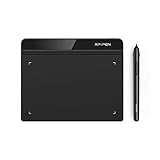
- Battery-Free Pen: StarG640 drawing tablet is the perfect replacement for a traditional mouse! The XPPen advanced Battery-free PN01 stylus does not require charging, allowing for constant uninterrupted Draw and Play, making lines flow quicker and smoother, enhancing overall performance
- Ideal for Online Education: XPPen G640 graphics tablet is designed for digital drawing, painting, sketching, E-signatures, online teaching, remote work, photo editing, it's compatible with Microsoft Office apps like Word, PowerPoint, OneNote, Zoom, Xsplit etc. Works perfect than a mouse, visually present your handwritten notes, signatures precisely
- Compact and Portable: The G640 art tablet is only 2 mm thick, it's as slim as all primary level graphic tablets, allowing you to carry it with you on the go
- Chromebook Supported: XPPen G640 digital drawing tablet is ready to work seamlessly with Chromebook devices now, so you can create information-rich content and collaborate with teachers and classmates on Google Jamboard’s whiteboard; Take notes quickly and conveniently with Google Keep, and effortlessly sketch diagrams with the Google Canvas
- Multipurpose Use: Designed for playing OSU! Game, digital drawing, painting, sketch, sign documents digitally, this writing tablet also compatible with Microsoft Office programs like Word, PowerPoint, OneNote and more. Create mind-maps, draw diagrams or take notes as replacement for mouse
Which tools are offline renderers, real-time tools, or hybrid systems?
Offline renderers and real-time visualization tools solve related but different problems. An offline renderer can spend more time calculating a final frame and typically gives a production team deeper control over complex shading, sampling, volumes, effects, and compositing outputs. A real-time tool trades some of that pipeline depth for immediate feedback, live navigation, synchronized design changes, and presentation features.
| Workflow group | Strongest candidates | What the group prioritizes | Best starting point |
|---|---|---|---|
| Offline production rendering | V-Ray, Arnold, Redshift, RenderMan, Corona, OctaneRender, Maxwell Render | Final-frame quality, shading depth, complex scenes, and production integration | V-Ray for broad versatility; Arnold or RenderMan for VFX pipelines |
| Integrated or all-in-one rendering | Blender with Cycles, Karma, KeyShot | Unified application workflows, USD or CAD context, and design communication | Blender for broad creative work; KeyShot for products; Karma for Houdini/USD |
| Real-time architectural visualization | Lumion, D5 Render, Enscape, Twinmotion | Live iteration, model synchronization, assets, walkthroughs, panoramas, and client review | Enscape for embedded review; D5 or Lumion for dedicated archviz presentation |
| Programmable real-time and hybrid rendering | Unreal Engine | Interactive experiences, simulation, virtual production, configurators, and custom logic | Unreal Engine when the deliverable must behave like an application |
V-Ray increasingly overlaps the two categories through interactive viewport rendering, and Blender, Karma, and Unreal provide more than one rendering mode. The overlap does not make all tools equivalent: the host application, shader system, scene description, and production pipeline still determine the practical choice.
How do CPU, GPU, VRAM, and compatibility change the choice?
Hardware changes the recommendation because renderer performance is not determined by a single GPU benchmark. GPU memory, CPU core count, operating system, host DCC, shader compatibility, scene size, animation requirements, and the need for interactive previews all matter.
- GPU-first choices: Redshift, OctaneRender, Arnold GPU, Cycles GPU, Karma XPU, D5 Render, and Unreal Engine can benefit strongly from a capable graphics system, but each has its own feature and compatibility requirements.
- CPU-oriented choices: Corona’s documented core workflow is CPU rendering, Arnold supports CPU rendering and device switching, and Karma provides Karma CPU alongside XPU.
- Flexible choices: Blender Cycles supports multiple CPU and GPU backends, while V-Ray supports interactive viewport workflows and broad host integration. Flexibility still requires testing the actual scene and shader stack.
- VRAM-sensitive scenes: large geometry, high-resolution textures, complex instancing, volumes, and deep shading networks can exceed available graphics memory. Out-of-core features may help in some GPU workflows, but they do not make memory constraints irrelevant.
- Real-time projects: D5, Lumion, Twinmotion, Enscape, and Unreal should be tested with the intended model, lighting, assets, and output resolution rather than an empty demonstration scene.
Arnold’s GPU documentation explicitly documents CPU/GPU switching and GPU feature limitations. SideFX’s Karma documentation distinguishes CPU and XPU engines, while Epic’s Unreal documentation makes supported hardware and project settings relevant to hardware ray tracing. These are reasons to compare compatibility and workflow, not just advertised speed.
What’s actually slowing this PC down?
Pick the symptom - the matching free tool is one click away.
Which 3D rendering software is best for each professional use case?
| Professional need | Recommended first choice | Why | Alternative to consider |
|---|---|---|---|
| Best overall professional renderer | V-Ray | Broad versatility across architecture, design, animation, and visualization with mature host workflows | Blender with Cycles for an all-in-one pipeline |
| Best GPU-first renderer | Redshift | GPU acceleration, production controls, and broad DCC integrations | OctaneRender for unbiased GPU path tracing |
| Best value and all-in-one option | Blender with Cycles | Modeling, shading, animation, rendering, compositing, and scripting in one ecosystem | KeyShot for focused product visualization |
| Best architectural photorealism for an artist-friendly workflow | Chaos Corona | Physically plausible results, interactive rendering, LightMix, and CPU-oriented accessibility | V-Ray for broader professional coverage |
| Best product renderer | KeyShot | CAD import, product materials, design iteration, animations, and exploded views | Maxwell Render when spectral physical light behavior is the priority |
| Best Autodesk and Maya VFX renderer | Arnold | Autodesk-centered integration and sophisticated effects support | RenderMan for a feature-animation pipeline |
| Best feature-animation renderer | RenderMan | Pixar production heritage, modern ray tracing, and deep pipeline orientation | Arnold for Maya-centered VFX |
| Best Houdini and USD option | Karma | Solaris, USD, MaterialX, AOVs, volumes, deep images, and CPU/XPU modes | RenderMan for broader high-end VFX integration |
| Best embedded design-review tool | Enscape | Interactive rendering stays close to the modeling or BIM host | D5 Render for real-time path-traced archviz |
| Best straightforward architectural presentation tool | Lumion | Assets, ray tracing, panoramas, VR, and multiple presentation outputs | Twinmotion for CAD/BIM synchronization and immersive media |
| Best programmable real-time platform | Unreal Engine | Interactive experiences, simulation, virtual production, configurators, and hybrid ray tracing | Twinmotion for a simpler presentation-first workflow |
What should professionals verify before buying?
- Confirm the host application. Check the exact integration with Maya, 3ds Max, Cinema 4D, Blender, Houdini, SketchUp, Rhino, CAD, or BIM software. A renderer’s general product list is not a substitute for checking the version used by the studio.
- Match the renderer to the hardware. Record available GPU memory, CPU cores, operating system, driver support, and whether the renderer needs a particular GPU backend. GPU-first software is a poor choice when the workstation cannot hold the scene comfortably.
- Test representative scenes. Use the actual shaders, textures, volumes, hair, instancing, animation, lighting, and output resolution. A simple still image can conceal compatibility problems that appear in a production sequence.
- Check feature parity. CPU and GPU modes do not necessarily support identical features. Arnold GPU limitations, Corona’s CPU-centered workflow, Karma CPU versus XPU, and Unreal hardware ray-tracing requirements are examples of why the exact feature matrix matters.
- Decide whether the deliverable is an image or an experience. V-Ray, Arnold, Redshift, RenderMan, Corona, OctaneRender, and Maxwell are strong final-rendering candidates. Enscape, Lumion, D5 Render, and Twinmotion are optimized for interactive design communication, while Unreal Engine is intended for programmable real-time experiences.
- Plan for large jobs. Studios producing animation may need distributed rendering or a cloud render farm. Confirm renderer support, scene-transfer requirements, geography, pricing, security, and licensing before committing production work to an external provider.
- Verify current commercial terms. Prices, editions, free tiers, supported GPUs, host integrations, system requirements, and license conditions are volatile. This article does not state current prices or claim a current free tier without a fresh verification pass.
What are the final recommendations?
Choose V-Ray for the broadest professional recommendation, Redshift for a GPU-first production workflow, Blender with Cycles for an integrated value-oriented ecosystem, Corona for accessible architectural realism, KeyShot for CAD-centered product visualization, Arnold or RenderMan for high-end VFX and animation, Karma for Houdini/USD, and Unreal Engine for programmable real-time work.
Choose Lumion, D5 Render, Enscape, or Twinmotion when the main deliverable is rapid architectural communication rather than a deeply pipeline-oriented offline render. Before purchasing any product, verify the current edition, license, host integration, system requirements, GPU support, and feature compatibility against a representative production scene.
For skills development, Chaos provides official V-Ray tutorials and learning resources. A book, course, or certification can shorten the learning curve, but training should support the selected workflow rather than determine the renderer before the studio has checked its DCC and hardware requirements.
Frequently Asked Questions
Is V-Ray the best 3D rendering software for professionals?
No. V-Ray is the strongest broad recommendation, but the best 3D rendering software for professionals depends on the host application, hardware, scene type, and whether the studio needs offline final frames or real-time interaction. Arnold, Redshift, Blender, RenderMan, Corona, Karma, KeyShot, and the real-time tools are better fits for specific workflows.
Do these 3 things before closing this tab:
1Scan for outdated or missing drivers - takes under a minute2Repair Windows errors before they cause bigger problems3Fix the driver behind crashes, sound loss and screen glitchesWhich 3D rendering software is best for GPU rendering?
Redshift is the best GPU-first production renderer, while OctaneRender is the strongest choice for unbiased GPU path tracing. Arnold GPU, Blender Cycles, Karma XPU, D5 Render, and Unreal Engine also use GPU rendering, but feature support, VRAM requirements, and hardware compatibility differ.
Can real-time rendering software replace an offline renderer?
Real-time tools can replace an offline renderer for many architectural presentations, design reviews, walkthroughs, panoramas, and interactive experiences. Real-time software is not automatically a replacement for the deeper shading, effects, and pipeline control required by every film, VFX, animation, or complex final-frame workflow.
What should I check before choosing professional 3D rendering software?
Professionals should verify host-application support, CPU/GPU modes, GPU memory, CPU capacity, operating-system and driver requirements, shader compatibility, scene size, animation support, licensing, and current pricing. Testing a representative production scene is more reliable than choosing from a single vendor benchmark.
The Bottom Line
Bottom line: There is no universal best 3D renderer. V-Ray is the safest broad choice, Blender with Cycles offers the strongest all-in-one value, Redshift leads GPU-first production, Arnold and RenderMan fit VFX pipelines, Karma fits Houdini/USD, KeyShot fits products, and real-time tools such as D5 Render, Enscape, Twinmotion, Lumion, and Unreal Engine win when iteration or interactivity matters most.
Quick Recap
Product prices and availability are accurate as of the date/time indicated and are subject to change. Any price and availability information displayed on Amazon at the time of purchase will apply.

